
Most pitch decks either ignore IP or treat it like a trophy slide: a logo of a patent office, a patent number, and a proud line that says “patented.”
That does not help you raise.
Investors do not fund “patents.” They fund future advantage. They want to know one thing: can your team keep winning once the market notices you? Your IP story is how you answer that—clearly, calmly, and without turning your deck into a legal document.
This article will show you exactly how to talk about IP in a pitch deck so it feels real, useful, and fundable. I’ll keep the intro short (this is it), and then we’ll get straight into the practical part.
Also, if you want Tran.vc to help you shape an IP plan that investors actually respect—and cover up to $50,000 in-kind patent and IP services for deep tech, AI, and robotics—apply anytime here: https://www.tran.vc/apply-now-form/
What investors actually mean when they ask about IP
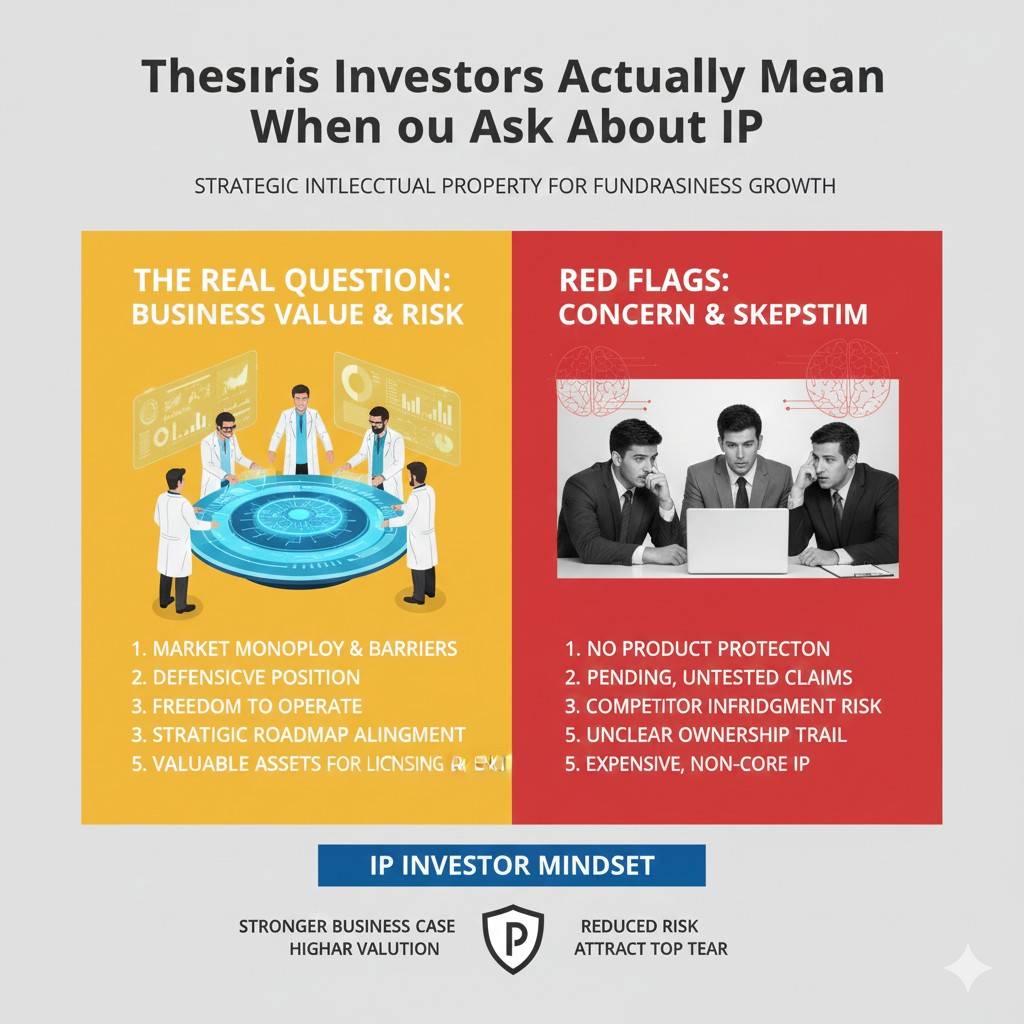
When an investor asks, “Do you have IP?” they are rarely asking, “Do you have a patent granted?”
They are asking questions like:
- Can someone copy this in six months and sell it cheaper?
- If a big company sees traction, can they clone the idea and crush you?
- Is there anything truly hard here, or is it only marketing and speed?
- If you run into a lawsuit, will it slow you down?
- If you raise money, what are you buying—growth, or time until you get copied?
If you answer those fears well, your IP story lands. If you only say “we filed a patent,” your story stays thin.
So the goal is not to “show patents.” The goal is to show defense and control.
Control over your core tech.
Control over your right to operate.
Control over your ability to build a moat while you scale.
That is why your IP story belongs in the deck. Not as a legal brag, but as a business weapon.
And that brings us to the first big shift.
The mindset shift: stop talking about IP as a document
Founders often treat IP like a document that lives in a folder. Investors treat IP like a system that protects the business.
In a pitch deck, you want IP to feel like part of the product strategy, not an extra item.
Here is the simplest way to frame it:
Your product creates value.
Your IP helps you keep it.
That’s it.
Every time you mention IP, tie it back to one of these business outcomes:
- You can charge more because the hard part is protected
- You can sell to enterprise because risk is lower
- You can partner because ownership is clear
- You can scale because copycats have a harder time
- You can defend margins because the core is not easy to copy
When you make that link, IP stops sounding like legal noise and starts sounding like leverage.
If you want help building that leverage early, this is exactly what Tran.vc does with technical teams—IP strategy plus filings, guided by real patent attorneys—before you even raise a full seed. Apply here: https://www.tran.vc/apply-now-form/
Where IP belongs in a pitch deck (and why most founders place it wrong)
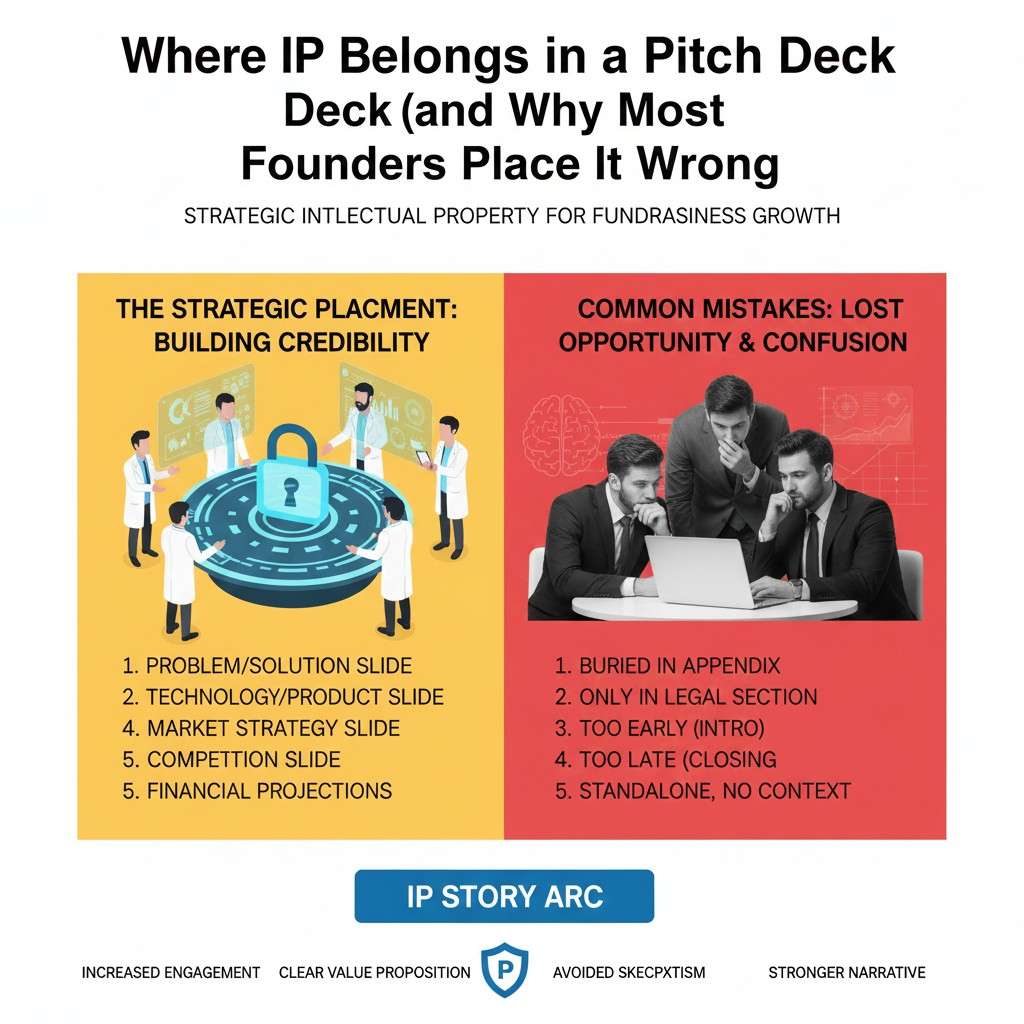
Many decks throw IP near the end, right before the “Thank you” slide. That placement sends a signal: “This is not important.”
A better approach is to treat IP as support for a claim you already made.
For example:
- If you claim your approach is unique, your IP supports that uniqueness.
- If you claim defensibility, IP is part of how you defend.
- If you claim high margins, IP helps protect them.
- If you claim long-term platform value, IP helps lock it in.
So instead of “Here is our IP slide,” think: “Where does an investor feel uncertain, and where can IP reduce that doubt?”
In practical terms, IP usually fits in one of these places:
After the “Solution” slide
Because the investor is thinking: “Why won’t this be copied?”
After the “Traction” slide
Because traction invites copying. The better you do, the more you need a plan.
Inside the “Go-to-market” story
Because enterprise deals, partnerships, and OEM routes often need IP clarity.
Inside the “Competition” story
Because the question is not “who else exists,” but “what stops them?”
You can still have a dedicated IP slide, but it should not feel random. It should feel like the missing puzzle piece that makes your earlier claims believable.
The simplest structure for your IP story (that investors can follow fast)
You do not need ten bullets. You need a tight story with a few clear points.
A strong IP story in a deck usually has four parts:
- What is the core invention?
Not the whole product. The core “hard thing.” - Why is it hard to copy?
Because of data, physics, process, timing, integrations, or protected methods. - What protection do you have (or will you have)?
Patents, trade secrets, copyrights, trademarks, know-how, agreements. - What business outcome does that protection support?
Faster deals, higher pricing, safer partnerships, stronger moat.
Notice the order. It starts with the tech and ends with the business.
That is what investors want.
Now let’s make it even more tactical.
Describe Your Core Invention Without Giving Away the Recipe
Talk about the “job” your invention does

When you describe your invention in a pitch deck, your goal is not to teach someone how to rebuild it. Your goal is to show that there is a real technical leap inside your product. That leap should sound like a clear “job” your system does better than other options.
A simple way to do this is to describe the outcome first, then hint at the technical approach at a high level. You can say what category of method you use without sharing the exact steps, parameters, or data pipeline details. Investors are not grading you on code. They are grading you on whether you have a defendable edge.
Use a plain sentence investors can repeat
If an investor cannot repeat your invention back to a partner in one breath, it is too complicated for a deck. You want a clean sentence that carries the “what” and the “why it matters.” Keep it calm and direct, like you are explaining it to a smart friend who is not in your exact niche.
For example, instead of saying, “We use a proprietary architecture with novel attention routing,” you can say, “We built a new way to route sensor signals so the robot stays stable even when conditions change fast.” This kind of line is easier to trust because it ties to a real-world result.
Separate “product features” from “patentable novelty”
A common mistake is treating the full product as the invention. Most products have many features, but only a few parts are truly novel and protectable. Your deck should highlight those few parts. This makes your IP story stronger because it feels focused rather than inflated.
Think of it as the smallest set of ideas that, if copied, would remove your advantage. That is the area you want to protect, and that is what you should describe as your core invention. If you are not sure what that set is, that is exactly the kind of work Tran.vc does with technical teams early. You can apply anytime here: https://www.tran.vc/apply-now-form/
Explain Why Your Tech Is Hard to Copy
Show the real friction a copycat would face
Investors are trying to measure how fast a competitor can catch up. If your only defense is “we move fast,” they will assume the catch-up time is short. Your job is to show the friction. Friction can come from engineering complexity, data needs, manufacturing steps, safety testing, or tight integration with hardware and customers.
In a deck, you do not need to sound dramatic. You just need to be specific. “Hard to copy” becomes believable when you point to a real bottleneck. For deep tech, bottlenecks are often about time and iteration, not just intelligence.
Connect difficulty to time, cost, and risk
A strong way to explain defensibility is to tie it to business constraints. Even if a large company can eventually build something similar, investors want to know if that path is expensive, slow, or risky. If the cost is high, a competitor may decide it is not worth it. If the risk is high, they may wait until you prove the market, which gives you a head start.
So you can frame it like this: “To replicate this, a team would need months of tuning, access to similar edge-case data, and a full test setup. That is costly and slow, and mistakes are visible in production.” That gives an investor something solid to hold.
Avoid vague words that sound like marketing
Words like “unique,” “proprietary,” and “revolutionary” do not help unless you also show the reason behind them. Investors have seen those words on thousands of slides. If you want to use them, pair them with a clear explanation that brings it down to earth.
A good rule is: if a sentence could be copied into any deck without changing the meaning, it is too vague. Replace it with a sentence that includes one real constraint, one real trade-off, or one measurable result.
Decide Which IP Types You Should Mention in the Deck
Treat patents as one tool, not the whole plan
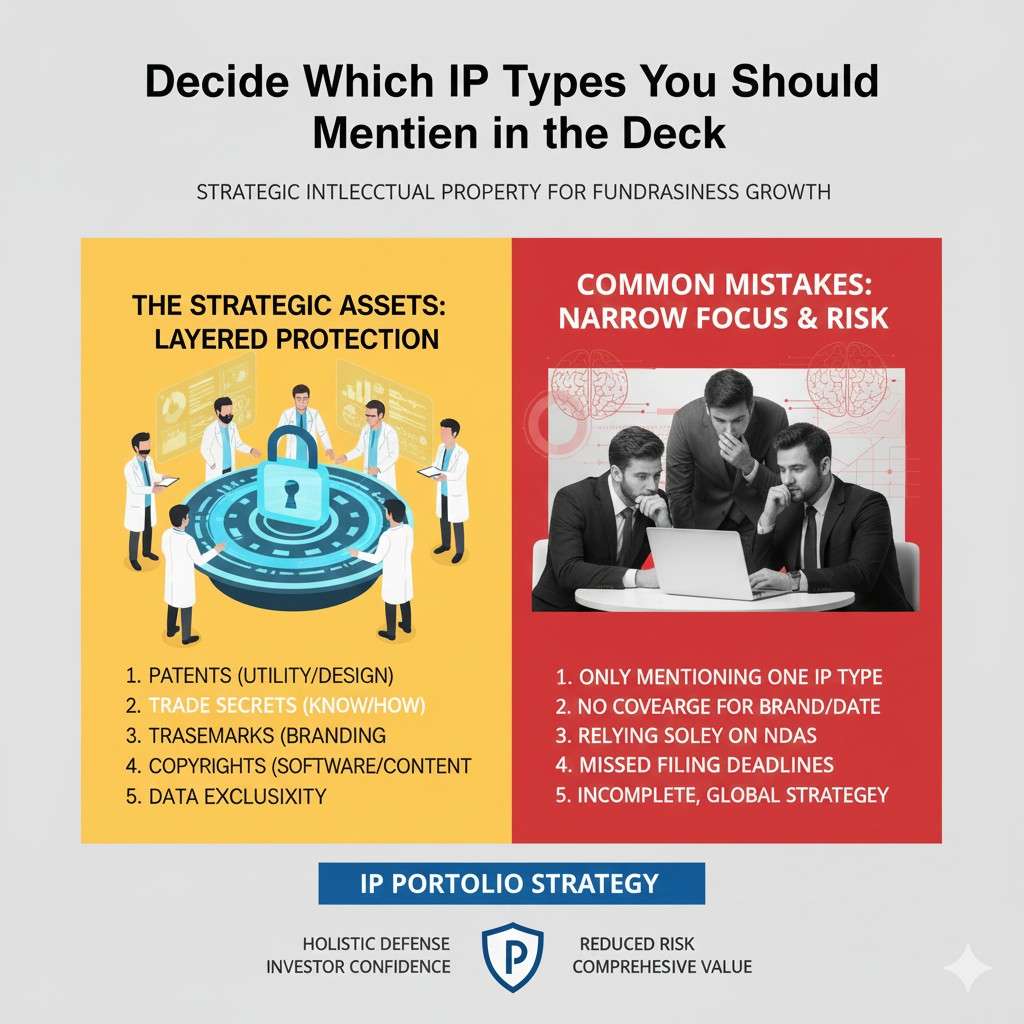
Patents can be powerful, but only when they are tied to the right technical surface. A patent that covers a narrow feature may not protect the core advantage. On the other hand, a well-planned patent set can block key methods, reduce risk in enterprise sales, and make partnerships easier.
In your deck, you should talk about patents as part of a broader protection plan. That plan can include trade secrets, internal know-how, data assets, and careful contracts. Investors like founders who understand that defense is layered.
Use trade secrets when the invention is hard to reverse engineer
Some inventions are better kept as trade secrets, especially when they are difficult to observe from the outside. For example, if your advantage comes from a training process, a tuning method, or internal decision logic, a trade secret approach can make sense. The key is that you must be able to keep it secret, and your team must have good habits around access and documentation.
In the deck, you do not need to describe your internal controls in detail. You can simply say that certain methods are protected as trade secrets and are not exposed in shipped products. That tells an investor you are thinking about protection in a mature way.
Mention copyrights and trademarks only when they matter
Copyrights matter when your software code, datasets, or content assets are a meaningful part of the business. Trademarks matter when brand is a key driver of sales or trust. For many deep tech startups, trademarks are not a big investor topic early, unless you are already in market and your name is becoming known.
So keep these short and relevant. You do not want your IP section to feel like a legal checklist. You want it to feel like strategy.
Build an “IP Slide” That Does Not Feel Like Legal Homework
Start with what the IP protects, not what you filed
A common weak slide says, “Provisional filed,” “PCT planned,” and a list of dates. That may be accurate, but it does not answer the investor’s real question. Instead, start by stating what your IP actually protects in business terms. Think: the method, the system, the workflow, the control loop, the model behavior, or the hardware-software link.
Once you explain what is protected, the filing status becomes supporting proof instead of the main point. That is how you keep the slide readable and meaningful.
Use one clear “coverage” statement per invention area
You do not want ten tiny bullets. You want a small number of strong statements that map to your most important invention areas. Each statement should describe the protected idea and why it matters. This helps the investor see coverage rather than paperwork.
For example, you can communicate that you are protecting the sensing method, the planning method, and the safety fallback method as three separate invention areas. That is much more useful than listing patent numbers with no story.
Add a simple line about timing and next steps
Investors like to see that you are not “done,” but you are also not improvising. A short line about next steps is enough. You can mention that you have an active filing plan tied to product milestones and customer rollouts. That shows discipline without turning the deck into a schedule.
If you want a strong filing plan built with real patent attorneys, Tran.vc is designed for exactly that stage. You can apply anytime here: https://www.tran.vc/apply-now-form/
Handle the “Do You Have Patents?” Question Without Getting Trapped
If you have filings, show intent and focus
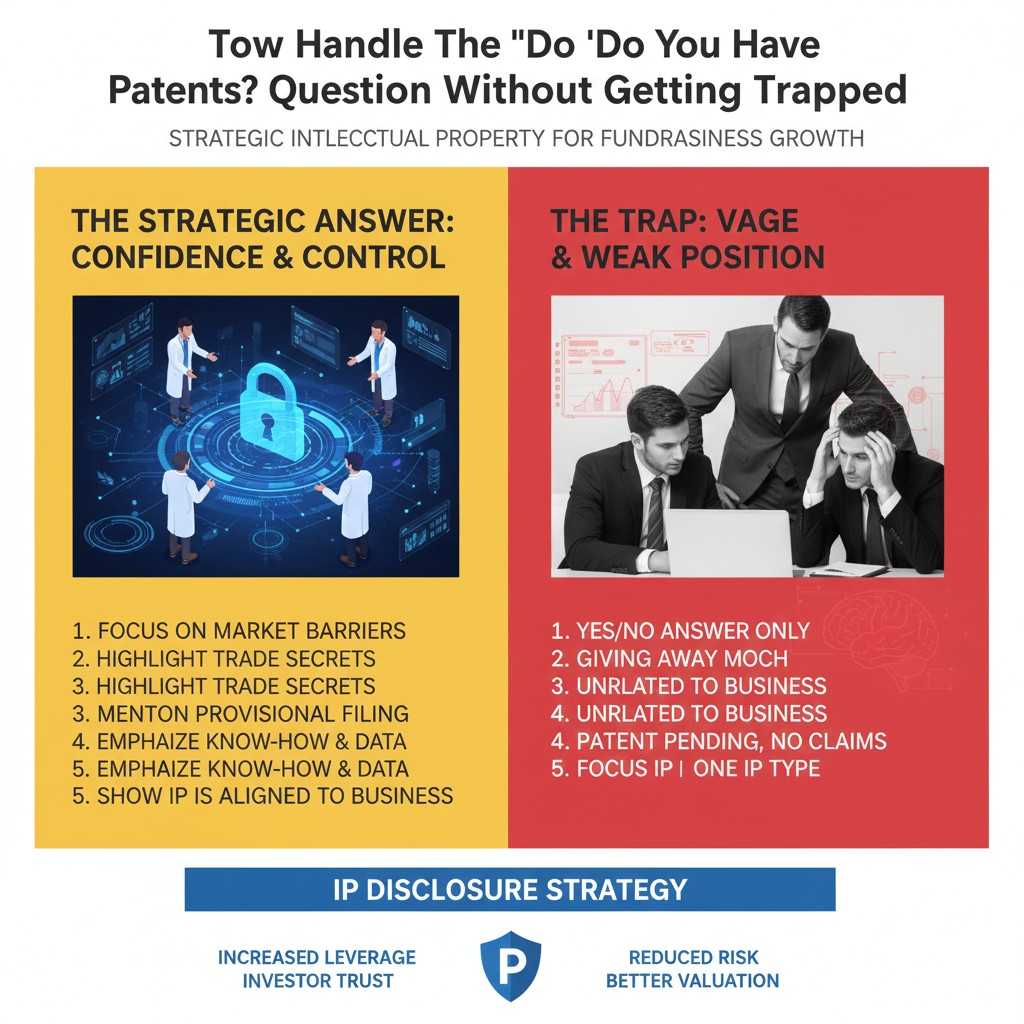
If you have already filed, do not oversell it. You can say what you filed around, what it covers at a high level, and why that area is central to your advantage. Keep the tone steady. Investors trust founders who speak plainly about where they are and what they are doing next.
Also remember that early filings are often provisional. That is normal. What matters is whether the invention choice is smart and whether you have a plan to convert and expand coverage as the product becomes real.
If you do not have filings yet, show a credible path
If you do not have patent filings yet, do not panic and do not hide. Many strong teams raise before filing, especially if they are still shaping the product. The key is to show that you know what should be protected and that you can execute quickly.
A calm way to say it is: “We have identified the core invention areas and are preparing filings tied to our next product milestone.” Then you link it to why it matters: customer trust, partner discussions, or long-term moat. That is a business answer, not an apology.
Never claim protection you do not have
This is simple but important. Do not say “patented” if you are not. Do not imply a granted patent when you have only filed. Investors do catch this, and it creates trust damage that is hard to repair. Be accurate, be clear, and keep moving.
Use IP to Strengthen Your Competition Story
Shift the focus from “who exists” to “who can really win”
Most competition slides list logos and features. That helps an investor understand the market, but it does not explain why you will stay ahead. This is where IP should quietly do its work. Instead of framing competitors as “worse,” frame your position as harder to replace.
You can explain that others may reach similar outcomes, but they use different paths that are slower, more expensive, or less reliable. When you tie this difference to a protected method or system, your competitive story becomes more solid without sounding defensive.
Show how IP limits strategic moves by competitors
A strong IP story does not say, “No one else can do this.” It says, “Here are the paths others would need to take, and here is why those paths are unattractive.” This helps investors think in strategic terms instead of feature checklists.
For example, you might explain that competitors can only compete by changing hardware, collecting years of data, or accepting lower performance. If your IP covers the most efficient path, that becomes a quiet but powerful constraint on the rest of the market.
Keep the tone factual, not aggressive
Investors prefer calm confidence over bold claims. You do not need to attack competitors or predict lawsuits. You only need to show that your approach has structural advantages. When you present IP as part of that structure, it feels credible and mature.
Weave IP Into Your Go-To-Market Story
Explain why IP makes selling easier, not harder
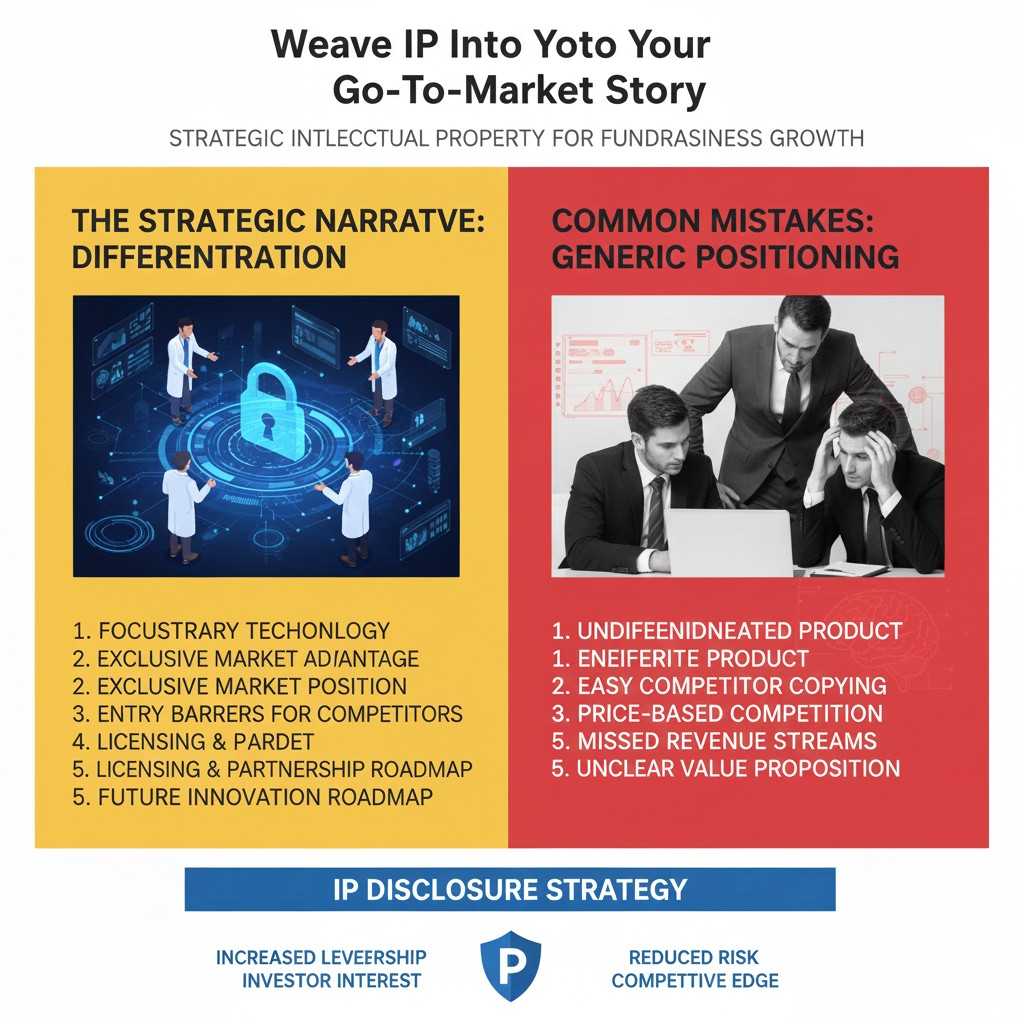
If you have already IP only matters in court. In reality, IP often matters most in sales. Enterprise buyers, partners, and OEMs care deeply about risk. They want to know who owns the tech, who is responsible if something breaks, and whether the product will still exist in five years.
When you talk about IP in your go-to-market story, frame it as a trust signal. You are showing that your company is built to last, not just to demo well.
Link protection to deal size and deal speed
If your IP reduces perceived risk, it can shorten sales cycles and unlock larger contracts. You can explain that customers are more willing to integrate deeply when ownership and protection are clear. This is especially true in robotics, AI infrastructure, and regulated environments.
In a deck, this might show up as a short explanation of why certain buyers are comfortable committing early. That is a business outcome investors understand immediately.
Show how IP supports partnerships and platforms
If your strategy includes partnerships, licensing, or platform expansion, IP clarity is essential. Partners want to know what they can build on and what stays with you. A clear IP boundary makes collaboration easier, not harder.
You can briefly explain that your IP structure allows partners to innovate around your core without owning it. That signals long-term thinking and reduces friction in growth plans.
Answer IP Questions in the Room Without Going Defensive
Treat questions as interest, not doubt

When investors ask about IP during a pitch, it usually means they are leaning in. They are testing how deeply you understand your own advantage. The worst response is to become vague or overly technical. The best response is calm, simple, and grounded in business logic.
You can always bring the answer back to outcomes: stability, cost, performance, safety, or speed. That keeps the conversation useful and on track.
Know where to stop
You do not need to answer every technical follow-up in the room. If a question starts to move toward implementation details, it is fine to say that you are happy to go deeper in a follow-up. Investors respect founders who protect sensitive details while still being open.
What matters is that you show confidence in the existence and value of the invention, not that you reveal every layer of it.
Be consistent across slides and conversation
One of the fastest ways to lose trust is to describe your IP differently in different parts of the pitch. Make sure your language stays consistent. The same core invention should sound the same in the product story, the IP discussion, and the Q&A.
Consistency signals that the story is real and well thought through.
Common IP Mistakes That Quietly Hurt Your Pitch
Treating IP as a checkbox
When IP feels like a slide added at the last minute, investors notice. It suggests that protection was not part of the original product thinking. Even if you are early, your deck should show that you are building with defense in mind.
This does not require filings on day one. It requires intention and clarity.
Overloading the deck with legal detail
The opposite mistake is turning the deck into a legal summary. Long patent titles, claim language, and filing histories slow the pitch down and distract from the story. Remember that a pitch deck is a sales document, not a legal one.
Your job is to make the investor want to learn more, not to exhaust them.
Using IP language that sounds copied
If your IP slide sounds like it could belong to any startup, it is not doing its job. Generic language does not inspire confidence. Specific, simple explanations do. This is why working with people who understand both tech and fundraising matters.
Tran.vc was built around this exact gap. They help founders shape IP that matches the business story and investor expectations. You can apply anytime here: https://www.tran.vc/apply-now-form/
How to Evolve Your IP Story as You Grow
Early stage: show awareness and direction
At the earliest stage, investors want to see that you know what matters and that you are not blind to risk. Your IP story should focus on identifying the core invention and showing a plan to protect it as the product matures.
Clarity is more important than completeness at this stage.
Seed stage: show execution and coverage
As you move into a seed round, your story should show progress. This might include filings, expanded coverage, or clearer boundaries between what is protected and what is open. The narrative should feel tighter and more confident.
You are no longer just planning. You are building assets.
Growth stage: show leverage and optionality
Later, IP becomes a lever. It can support licensing, partnerships, or strategic exits. At this stage, your deck may talk about how IP opens doors rather than just blocks competitors.
That is when IP becomes a growth tool, not just a shield.
Final Thought: IP Is a Business Story First
Your pitch deck is not the place to prove you understand patent law. It is the place to show that you are building something that lasts. IP helps you tell that story when it is framed around advantage, control, and trust.
If you treat IP as part of your product strategy from the beginning, investors will feel it. If you treat it as paperwork, they will feel that too.
If you want hands-on help building an IP-backed foundation—without giving up control early or chasing VC money too soon—Tran.vc is built for founders like you. They invest up to $50,000 in-kind in patent and IP services and work alongside you to turn technical ideas into real assets.
You can apply anytime here: https://www.tran.vc/apply-now-form/