
Research is not the hard part.
Most technical founders can build something new. They can prove it works in a lab. They can write the paper. They can show a demo that makes smart people nod.
The hard part is turning that research into something you own.
A patent portfolio is not a stack of forms. It is a shield. It is leverage. It is the reason a bigger company cannot copy you the moment you show progress. It is also the reason serious investors take you more seriously, even if your product is still early.
But here is the problem: research and patents do not “line up” by default.
Research is made to be shared. Patents are made to be protected. Research papers are judged by what is new and true. Patents are judged by what is new, useful, and clearly claimed.
So the goal is not “file a patent.” The goal is to build a defensible patent portfolio that matches how your product will win in the real world.
At Tran.vc, this is exactly what we help with. We invest up to $50,000 in in-kind patent and IP services for AI, robotics, and deep tech startups, so you can build a moat early—before you raise your seed round. If you want help turning your research into a real portfolio, you can apply anytime here: https://www.tran.vc/apply-now-form/
Before we get into the full playbook, I want to set a simple frame you can use right now.
The “portfolio mindset” in plain words
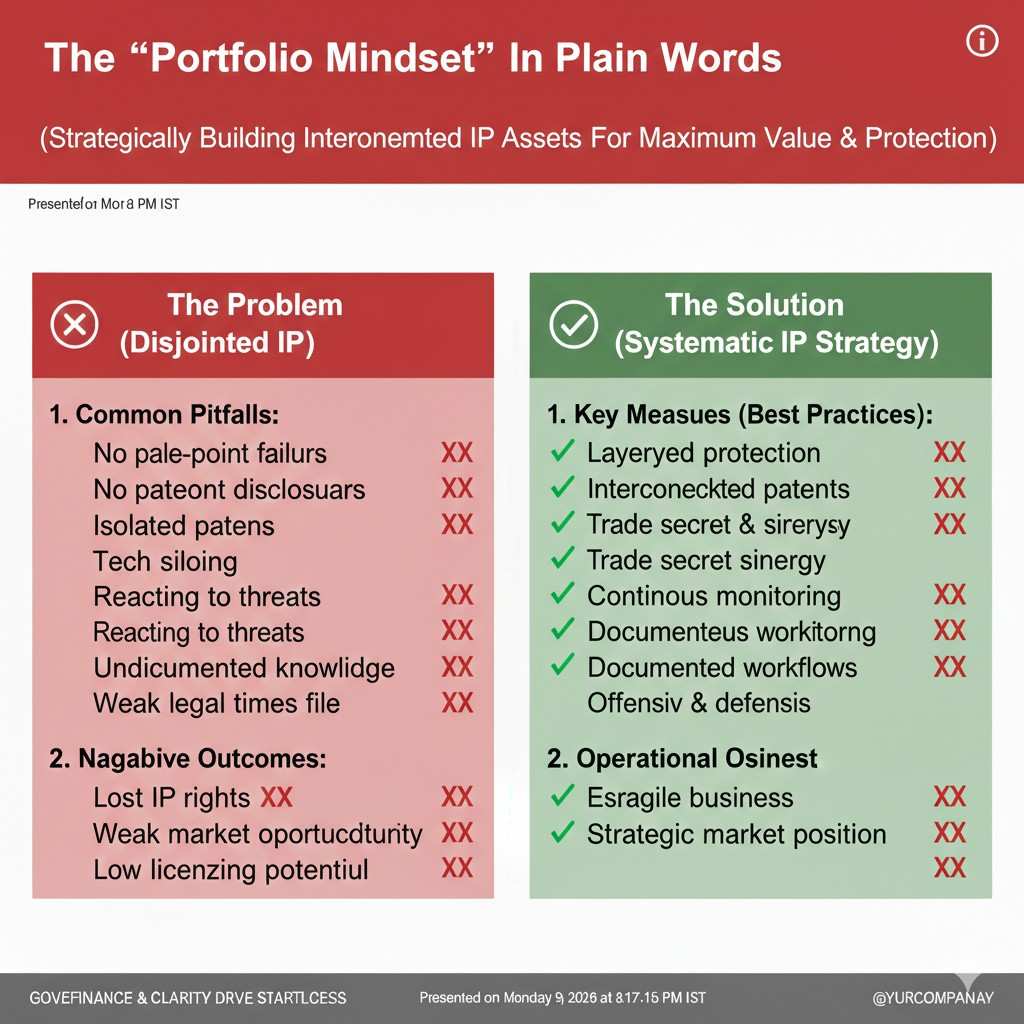
A single patent can be useful. But one patent rarely stops a strong copier.
A portfolio does.
A portfolio works like a fence with more than one layer. Even if someone slips past one part, they hit the next. And the next. A good portfolio does three things at the same time:
It protects what you built today
It protects what you will ship next
It blocks the easiest workarounds
That is “defensible.”
And you do not get there by accident. You get there by making a few smart moves early, while your research is still fresh, and while your team still knows every design choice you made.
Step one: stop treating research like “one invention”
Most founders look at their research and see one big idea.
Patent strategy works better when you break that big idea into smaller parts that are easier to defend.
Think of your research like a machine made of parts:
There is the main method you invented.
There is the way you collect or label data.
There is the way you train, tune, or adapt.
There is the way you deploy in the real world.
There is the way you make it faster, safer, cheaper, or more reliable.
There is the way you measure success and correct errors.
Each of those can produce patent value.
In fact, the “main idea” is often the easiest thing for others to copy around. The strongest patents often come from the things you almost forgot to mention, like:
The trick that makes it stable
The step that makes it run on edge hardware
The safety rule that prevents failure
The data pipeline that makes accuracy hold up in messy conditions
The control logic that keeps a robot from doing something dangerous
If you only patent the big concept, you leave the door open.
If you patent the working details, you start building a wall.
The key question you should ask today
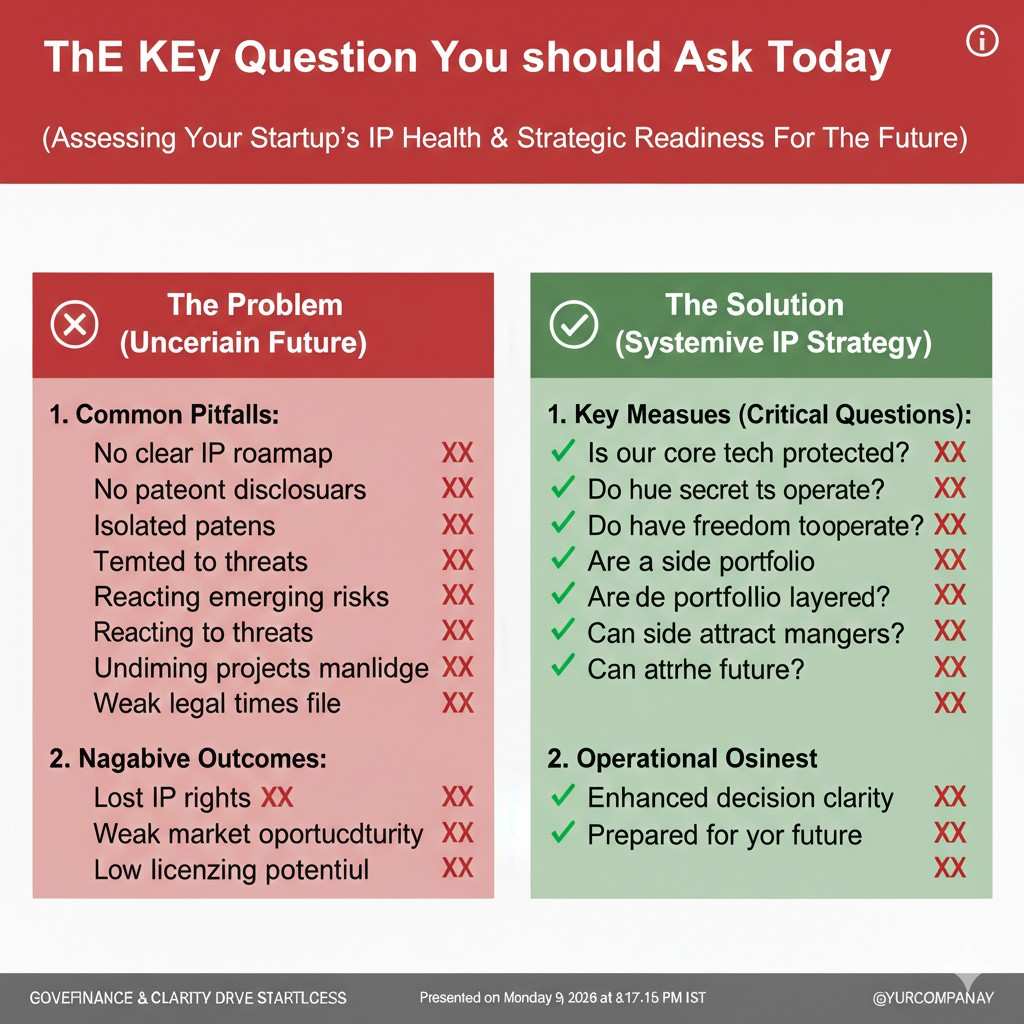
When you imagine a competitor copying you, what would they copy first?
They will not copy your whole stack. They will copy the shortest path to the same outcome.
That path is what you must protect.
So take your research and ask one simple question:
“What parts would someone keep, even if they changed everything else?”
Those parts are usually your best patent targets.
A real-world example (simple and practical)
Let’s say your research is a robotics system that picks items in a warehouse using vision + grasp planning + feedback control.
The paper might focus on a new grasp planning method.
But in the market, your advantage might actually come from:
How you generate training data from real picking failures
How you detect and recover from slip in milliseconds
How you decide when to re-grip versus re-plan
How you calibrate cameras cheaply in the field
How you handle reflective objects or deformable items
How you prove safety in shared spaces
Those are all patentable areas, depending on what is truly new.
And notice what happened: we moved from “one patent” to “a portfolio map.”
That is the mindset.
Step two: protect before you publish, present, or post
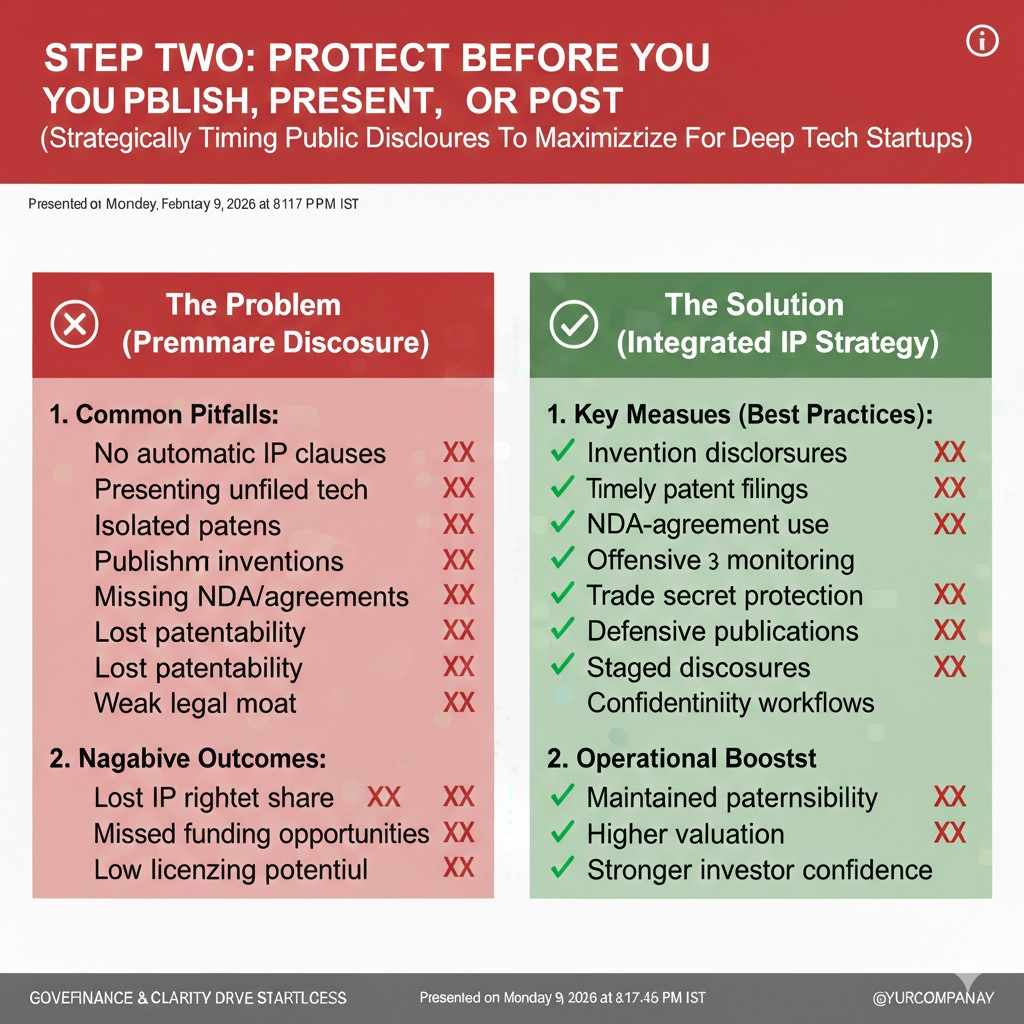
This part is where many teams lose years of value.
If you publish a paper, show a poster, put slides online, demo at a meetup, submit an abstract, or even share too much in a sales call—your ability to patent can shrink fast, especially outside the US.
I am not giving legal advice here, but the practical rule is simple:
If you want to patent it, file first.
Even a well-timed provisional filing can protect you while you keep moving. But it must be done right. A weak provisional can be worse than none because it gives false confidence.
If you are planning a paper, a thesis defense, a conference talk, a product launch, or an open-source release, that is a flashing signal to do an IP sprint.
This is a place where Tran.vc often saves founders. We help you move fast, get the right coverage, and avoid common traps—without you having to become an IP expert. If you want that help, you can apply anytime: https://www.tran.vc/apply-now-form/
Step three: turn your lab notes into “claim-ready” building blocks
Patents live and die by claims. Claims are the legal lines that define what you own.
But you do not need to write claims yourself to start thinking in a way that leads to strong claims.
Here’s a founder-friendly way to do it:
Pick one key result from your research.
Now write, in plain words, the shortest “recipe” that produces that result.
Not a story. Not a motivation. Just the steps.
For example:
Input arrives from sensors.
System filters noise in a specific way.
Model produces a prediction.
Controller uses the prediction with a certain rule.
Robot takes an action.
System checks success and updates a variable.
That recipe is the seed of a strong patent.
Now ask:
What parts of this recipe are optional?
What parts are required?
Which parts are your “secret sauce”?
Which parts are only there because your lab setup forced them?
Your strongest claims will usually sit on:
The required parts that produce the result
The parts that make it work in real conditions
The parts that are hard to design around
A quick warning about “performance claims”
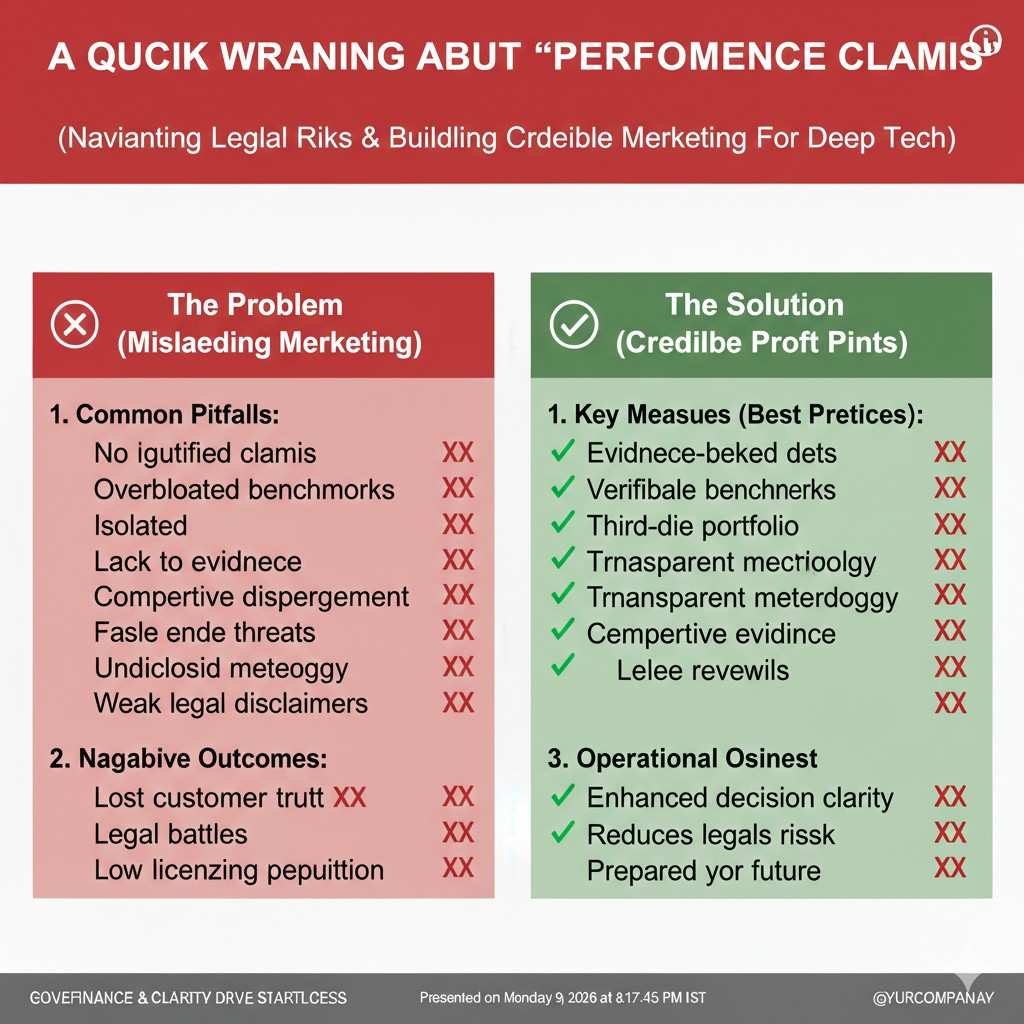
Founders love to say: “We are 20% more accurate.” “We are 2x faster.” “We reduce error by half.”
That can be helpful in a patent, but performance alone usually does not protect you.
A competitor can say: “We don’t get 20%. We get 18%.” Or they can measure differently.
What protects you is the structure of how you get the performance.
So when you talk about results, tie them to the steps that create them.
That is how your patent becomes harder to dodge.
Step four: decide what you want to block
A portfolio is not just about what you built. It is about what you want to stop others from doing.
There are three common “block goals” for deep tech startups:
- Block the obvious copy
This is the company that takes your method and applies it to the same use case. - Block the easy workaround
This is the company that makes one small change and says, “Different enough.” - Block the platform player
This is the big company that tries to make your feature “free” inside their system.
To build a portfolio that holds up, you have to plan for all three.
That means you will often need patents that cover:
The core method (so the obvious copy is blocked)
Variations around the method (so the workaround is blocked)
System-level use (so the platform player has less room)
This is why one patent is not enough.
Step five: link your patents to your product path
A lot of patents look smart but do not match the business.
If your next 18 months are about shipping an on-device model, but your patent filings only cover cloud training, you have a gap.
If your roadmap is about moving from one robot to many robots, but your IP ignores fleet learning and updates, you have a gap.
Your portfolio should follow your product path like a shadow.
A simple way to do this:
Look at your product plan and find the next big technical risks.
Where will you spend the most engineering time?
Where might you hit failures?
Where will you invent new fixes?
Those are future patents.
If you file only on what you already finished, you are always late.
The best teams file as they learn.
Why Tran.vc focuses on this early
At pre-seed, time and focus are limited. You cannot do everything.
But IP is one of the few things you can build early that keeps paying you back.
It helps you raise.
It helps you partner.
It helps you defend.
It helps you sell later.
That is why Tran.vc invests in patent and IP services as in-kind seed funding—so you can build real assets early, without burning cash on the wrong steps.
If you want to explore if this fits your company, apply here: https://www.tran.vc/apply-now-form/
Map the Research Into Patentable Pieces
Start with outcomes, not the math
Most research teams describe their work through models, proofs, and benchmarks. That is normal in a lab setting.
But patents become stronger when you begin with the outcome your work creates in the real world. The outcome is the “job” your system does that others struggle to do the same way.
So before you touch equations or code, write a plain sentence that starts with: “Our system makes it possible to…” Then finish it with a real outcome, like safer motion, faster planning, better detection, lower compute cost, or more stable control.
That one sentence gives your IP work a clear center. It also prevents you from filing broad ideas that sound impressive but do not protect your real advantage.
Turn one research result into many protectable points
A research paper often looks like one big idea. In practice, it usually contains many smaller ideas that can each become a patent asset.
Your goal is to split the work into parts that can stand on their own. These parts are easier to claim, easier to defend, and harder to copy around.
Look for pieces like data steps, training steps, inference steps, feedback steps, and safety steps. Also look for system choices that make the method usable outside the lab.
When you break your work into pieces, you stop thinking “one patent.” You start thinking “portfolio.”
Separate the core from the helpers
Every system has a core move and a set of helper moves. The core is the main engine. The helpers are the things that make the engine run in real conditions.
Many founders only try to patent the core. That can leave them exposed, because competitors often copy the helper moves first and still reach similar results.
So make a clean split. List what must exist for your system to work at all, and what makes it work well in the field.
In robotics and AI, the helper moves are often where the strongest patents live, because they are tied to real constraints like noise, drift, latency, failure recovery, and safety.
Create a “portfolio map” in simple words
A portfolio map is just a one-page view of what you will protect over time. It keeps you from filing random patents and hoping it works out.
Use a plain structure in your mind: what happens before the model runs, what happens while it runs, and what happens after it runs.
Before includes sensing, data handling, and setup. While includes prediction, planning, and control. After includes checks, corrections, and learning from mistakes.
This map becomes the base for a defensible portfolio because it naturally creates multiple layers of protection.
Capture Inventions While the Work Is Still Fresh
Use invention capture as a weekly habit
The worst time to “remember” what you invented is six months later. By then, the details are fuzzy and the decisions feel obvious.
Strong patent work depends on crisp detail. That detail is easiest to capture while the system is still being built and tested.
A simple habit helps: once a week, pick one change you made that improved results and write down why it worked. Not in a long report, but in clear, human words.
Over time, these notes become a gold mine for patent drafting because they show what you tried, what failed, and what finally solved the problem.
Focus on the hard parts you had to solve
Many teams think inventions are only big “new algorithms.” That is not how real defensible portfolios are built.
Inventions often live inside the hard parts you struggled with for weeks. The bug you finally fixed. The edge case you finally handled. The trick that reduced compute enough to run on-device.
Those hard parts are valuable because they show a practical barrier. If you had to fight through it, a competitor will have to fight through it too.
Patents that cover these barriers tend to be harder to design around, because they tie directly to real-world pain.
Record alternatives you rejected
One of the biggest hidden assets in research is the set of alternatives you tested and rejected. Most teams throw that history away.
But rejected alternatives are useful for patents because they reveal the boundary of your invention. They show what does not work, and why your approach is different.
This helps in two ways. It helps your attorney draft broader coverage because they can describe variations. It also helps later when you need to defend novelty and non-obviousness.
So when you reject an approach, do not just delete it. Save a short note on what you tried and what broke.
Tie every invention to a measurable benefit
A patent does not need to be about a benchmark score, but it should connect to a real benefit.
That benefit could be faster runtime, lower memory use, safer operation, improved stability, lower sensor cost, or less calibration effort.
This connection matters because it makes your invention feel useful, not abstract. It also makes it easier to explain the business value to investors and partners later.
When you tie inventions to benefits, your portfolio becomes a story of practical advantages, not a set of technical puzzles.
Align Patents With Publishing, Demos, and Hiring
Treat disclosure like a one-way door
In research culture, sharing is the default. In patent strategy, sharing too early can close doors, especially outside the United States.
The practical lesson is simple: disclosure is often a one-way door. Once the key idea is public, patent options may shrink.
That does not mean you should never publish. It means you should file first, then share.
So if your team has a planned conference talk, paper submission, public demo, blog post, open-source release, or even a detailed customer deck, treat that date like a deadline for an IP sprint.
Build a “file before you talk” workflow
Founders get into trouble when filing feels like a big, slow event. The fix is to make it part of the operating system of the company.
When something important is about to be shown, you run the same sequence every time. You identify the key new parts, you capture them in writing, and you file in time.
This reduces stress because you stop making last-minute calls. It also prevents accidental leaks, like a teammate posting a diagram online that includes the heart of your system.
A clear workflow also makes it easier to bring new team members in, because everyone knows the rules for what can be shared and when.
Use patents to support recruiting, not slow it down
Hiring strong engineers is easier when you can show that the company protects what it builds.
Top candidates often care about whether the work will matter and whether it will be valued. A thoughtful IP plan signals seriousness.
At the same time, you never want patents to slow down building. The goal is quick capture, clear drafting, and then getting back to shipping.
When IP work is done well, it feels like a helpful log of your best engineering decisions, not a distraction from product.
Protect the “how,” not just the “what”
Many teams share the “what” in a demo but accidentally reveal the “how.”
For example, saying “we can pick objects reliably” is one thing. Showing the exact sensing pipeline, the feedback loop timing, and the recovery logic is another.
Competitors do not need your full code to copy you. They need the key structure. A slide with one diagram can sometimes be enough.
So when you prepare public materials, train yourself to ask: “Does this reveal the structure that makes it work?” If yes, you file first or you simplify what you show.
If you want Tran.vc’s help building this into your process, you can apply anytime here: https://www.tran.vc/apply-now-form/
Convert Technical Work Into Claim-Ready Building Blocks
Describe the invention as a repeatable process
A strong patent starts with a clear description of what happens, step by step.
You do not need to write legal language. You just need to describe the process as a repeatable method that someone could follow.
For example, instead of saying “we use a model to predict grasp points,” describe the flow. What inputs go in, what is computed, what constraints are applied, and what action is taken.
This forces clarity. It also creates the raw material that later becomes claims and figures.
Identify what must be true for the invention to work
Every invention has a small set of conditions that make it succeed. Your job is to surface those conditions.
Is the invention dependent on a specific type of sensor? Does it require a specific training setup? Does it rely on a feedback signal at a certain speed?
If you do not identify these conditions, your patent might become either too narrow or too vague.
When you know what must be true, you can protect the core while still leaving room for variations that keep the patent broad.
Separate “required steps” from “preferred steps”
In a lab, you often choose one clean setup because it is easy to test.
In patents, you want to describe the required steps, and then also describe preferred options that still fall under your invention.
This matters because competitors will try to change “non-required” parts to escape your claims.
If you describe options up front, your coverage becomes stronger. You are telling the story that the invention is not one narrow setup. It is a family of workable approaches.
Watch out for weak protection based only on performance
It is tempting to build a patent around results like “20% improvement” or “2x speed.” Those are great for marketing, but they are easy for others to argue around.
A competitor can claim they get a different number, or they measured differently.
So use performance to support the invention, but protect the structure that creates the performance. Protect the steps, the relationships, and the control logic.
That is what makes your IP harder to dodge.