
Most technical teams lose valuable inventions in plain sight.
Not because they are not smart. Not because they do not build new things. But because they do not have a simple way to capture what they just created, at the exact moment it becomes real.
A clean invention disclosure system fixes that. It gives your team a repeatable habit: when something new is built, it gets written down fast, in a clear way, with enough detail that a patent attorney can protect it later. You stop guessing. You stop relying on memory. You stop “meaning to document it someday.”
And if you are building in AI, robotics, hardware, chips, or any deep tech, this matters early. Even before revenue. Even before a seed round. Because the first company that writes it down and files it properly often wins the right to defend it.
At Tran.vc, this is the work we do with founders. We invest up to $50,000 in-kind IP and patent services so you can build a real moat while you build the product. If you want help setting up a system like this the right way, you can apply anytime here: https://www.tran.vc/apply-now-form/
Setting up an Invention Disclosure System
Why this matters more than most founders think
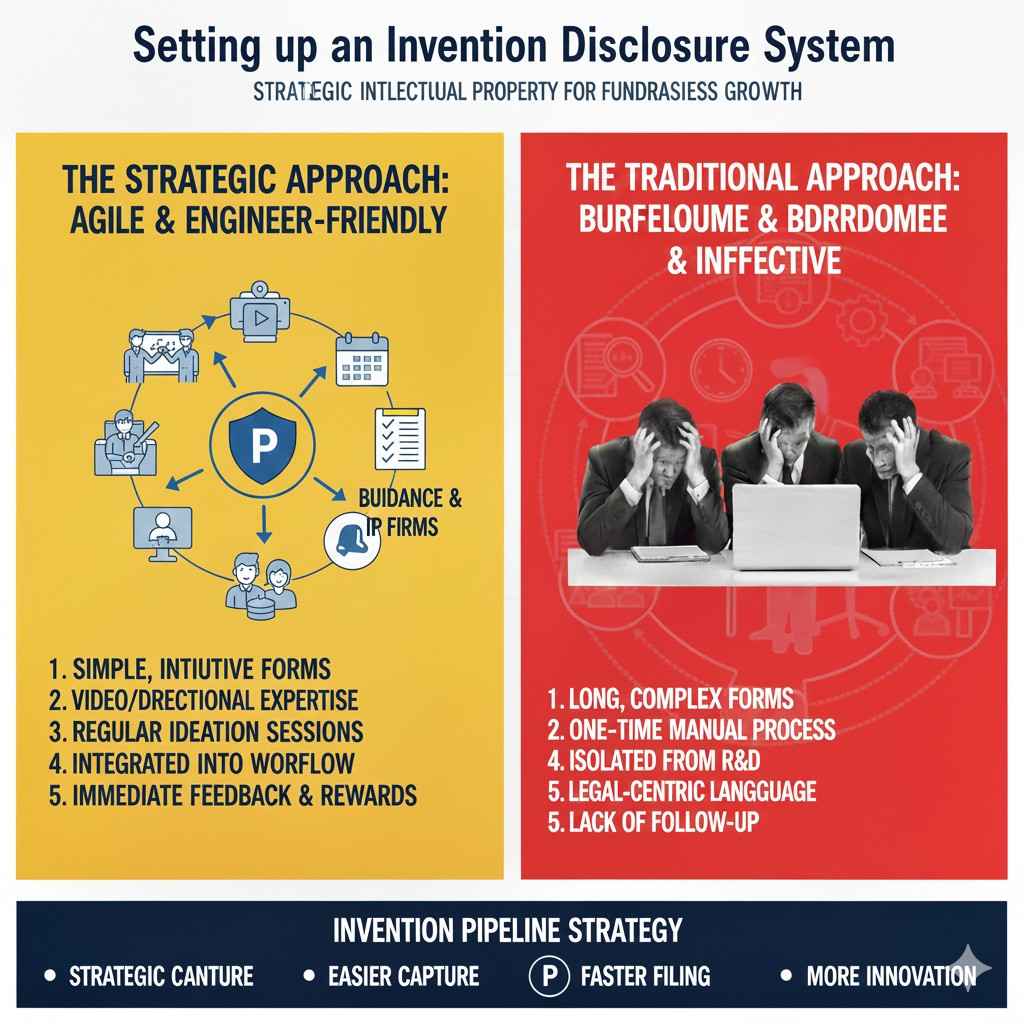
If you are building in AI, robotics, or any hard tech, you are creating new methods every week. Some are small. Some are big. But many are “first time” in the market. The problem is not invention. The problem is capture. If you do not capture it, it fades, changes, or gets rebuilt in a new way that makes it harder to explain what was truly new.
A good invention disclosure system keeps your best work from slipping away. It turns scattered ideas into a clear record. It also makes patent work faster and cheaper because you are not trying to rebuild the story months later from code commits and half-remembered meetings.
This is one of the simplest ways to build a moat early. You do not need a large legal budget to start. You need a repeatable habit that your team can follow without pain. If you want Tran.vc to help set this up with you, you can apply anytime at https://www.tran.vc/apply-now-form/
What an invention disclosure system really is
Think of an invention disclosure system as a pipeline. It starts the moment someone on the team says, “This is new,” or “This solved a hard problem,” or “I have not seen this done this way before.” That moment is the signal. The system should make it easy to turn that signal into a short, structured write-up.
That write-up is not a patent. It is not a legal document. It is a bridge between engineering and legal work. It helps a patent attorney understand what is new, why it matters, what makes it different, and how it works under the hood.
A strong system also creates trust inside the company. Engineers feel heard. Product leaders see what is being invented. The company stops relying on one person’s memory or one person’s notes. Everything important has a home.
What happens when you do not have one
Without a system, inventions get treated like normal work. They get shipped, refactored, and blended into the product. Later, when you try to file, you realize you cannot cleanly explain what the “new part” was. Or you find out the inventor left the company and no one can answer key questions.
Another common issue is timing. If you wait until fundraising to think about patents, you will feel rushed. Rushed filings usually mean weak filings. Weak filings usually mean poor coverage. And poor coverage usually means you paid for something that looks good on a slide, but does not help you when a competitor copies you.
A calm, steady disclosure habit prevents that. It also helps you pick better patent targets because you can see patterns in what your team keeps inventing. That clarity is hard to get when everything lives in random docs and Slack threads.
The goal of this blog and what you will build
Over the next sections, you will build a practical invention disclosure system that a real startup can run. It will be simple enough that engineers do not hate it. It will be structured enough that patent counsel can use it. It will be light enough that you can start it this week, not next quarter.
You will also learn how to label inventions, route them to the right reviewer, decide which ones deserve patent work, and store them in a way that keeps your company safe. The focus is action. Not theory.
If you want a hands-on partner, Tran.vc does this with founders as part of our in-kind IP investment. You can apply anytime at https://www.tran.vc/apply-now-form/
Designing the system so engineers actually use it
Start with the real enemy: friction
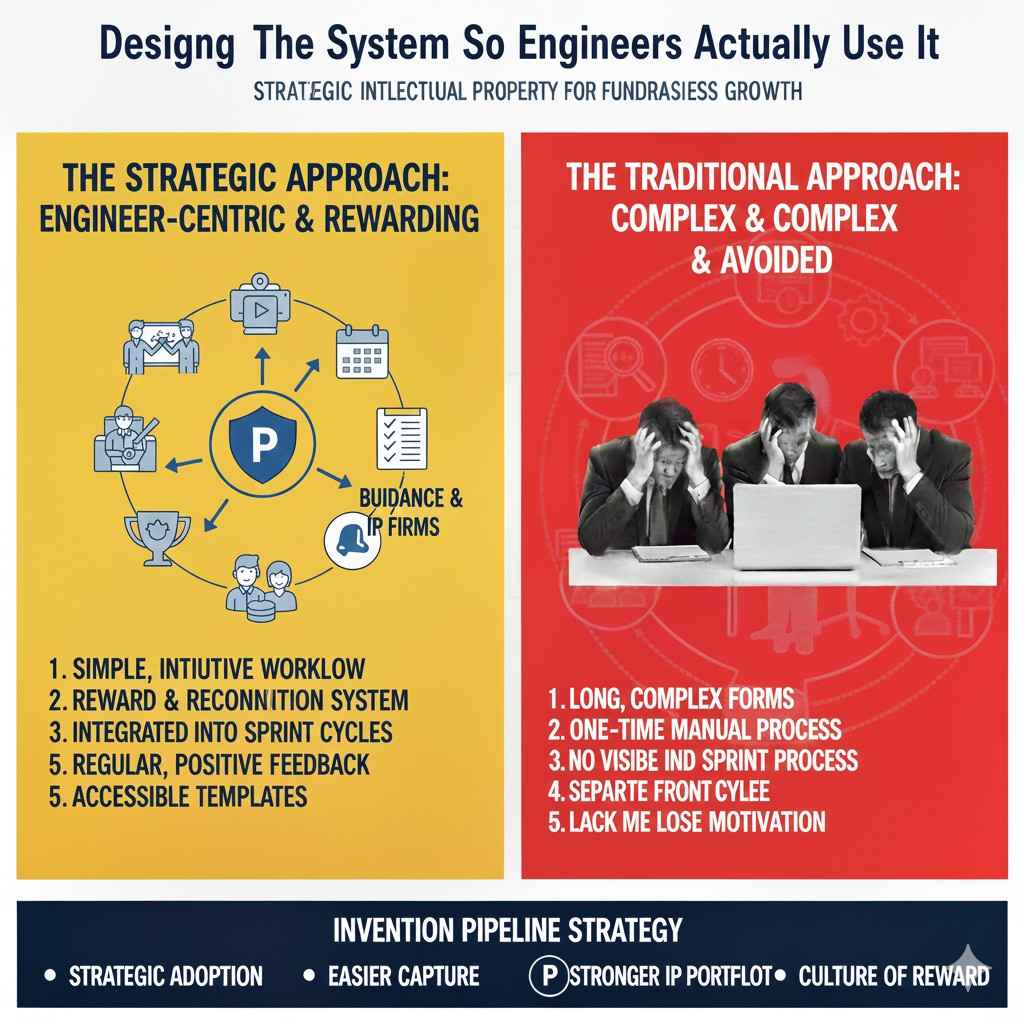
The biggest risk is not that your team will refuse to write disclosures. The bigger risk is that they will do it once, then stop. They stop when it feels like extra work, when it feels unclear, or when it feels like no one reads what they submit.
So the first design rule is simple. The system must be easier than doing nothing. That does not mean it must be “fun.” It means it must be quick, predictable, and rewarding. Quick means the first draft takes under thirty minutes. Predictable means the questions never change. Rewarding means someone responds and the inventor sees the result.
If you can hit those three points, adoption becomes normal. If you miss any one of them, the system slowly dies.
Pick one place where disclosures live
Many teams try to spread this across tools. A form in one place, a spreadsheet in another, and review notes in email. That creates confusion. People do not know where to go. Reviewers lose track. Founders forget what is pending.
Choose one home. It can be a simple database tool, a doc folder with a naming rule, or a lightweight IP platform. The tool matters less than the habit. What matters is that everyone can access it, everyone can find things, and the system feels stable over time.
When the home is clear, the disclosure becomes a routine step. “New invention” is no longer a vague idea. It is a place you go and a set of questions you answer.
Make the disclosure form short, but not shallow
If your disclosure form is too long, engineers will rush it. If it is too short, it will not help your patent attorney. The right balance is a form that asks only the questions that unlock a strong draft later.
The best way to do this is to focus on the “story” of the invention. What problem did you face. Why were the obvious fixes not good enough. What new approach did you create. What parts are required for it to work. What parts are optional improvements.
When you ask questions that follow the story, the answers come naturally. When you ask legal-sounding questions, people freeze or give empty replies. The form should feel like a smart technical interview, not a law exam.
Decide who owns the system inside the company
A disclosure system fails when it belongs to “everyone.” It works when one person owns it. This does not mean that person writes disclosures. It means they maintain the calendar, watch submissions, route reviews, and close loops with inventors.
In early-stage startups, this owner is often the CTO, a technical founder, or a head of engineering. In some teams, a strong ops lead can own the process as long as they can coordinate with technical reviewers.
Ownership matters because inventions do not wait. If the system owner does not treat it as important work, the team will learn that it can be ignored. The owner sets the tone by responding fast and making decisions visible.
Choose a review rhythm that fits your team
Most startups do not need a complex weekly committee. But they do need a steady rhythm. If you review disclosures “whenever,” then nothing moves. If you review them on a fixed schedule, the team learns the timing and uses it.
A simple rhythm works well. For example, set a short review block every two weeks. That time is used to read new disclosures, ask follow-up questions, and decide next steps. The key is to keep it moving. The longer a disclosure sits, the weaker it becomes because the context fades.
When the rhythm is stable, disclosure becomes part of the company’s operating system, like sprint planning or shipping releases.
What should be inside an invention disclosure
The problem and why it matters
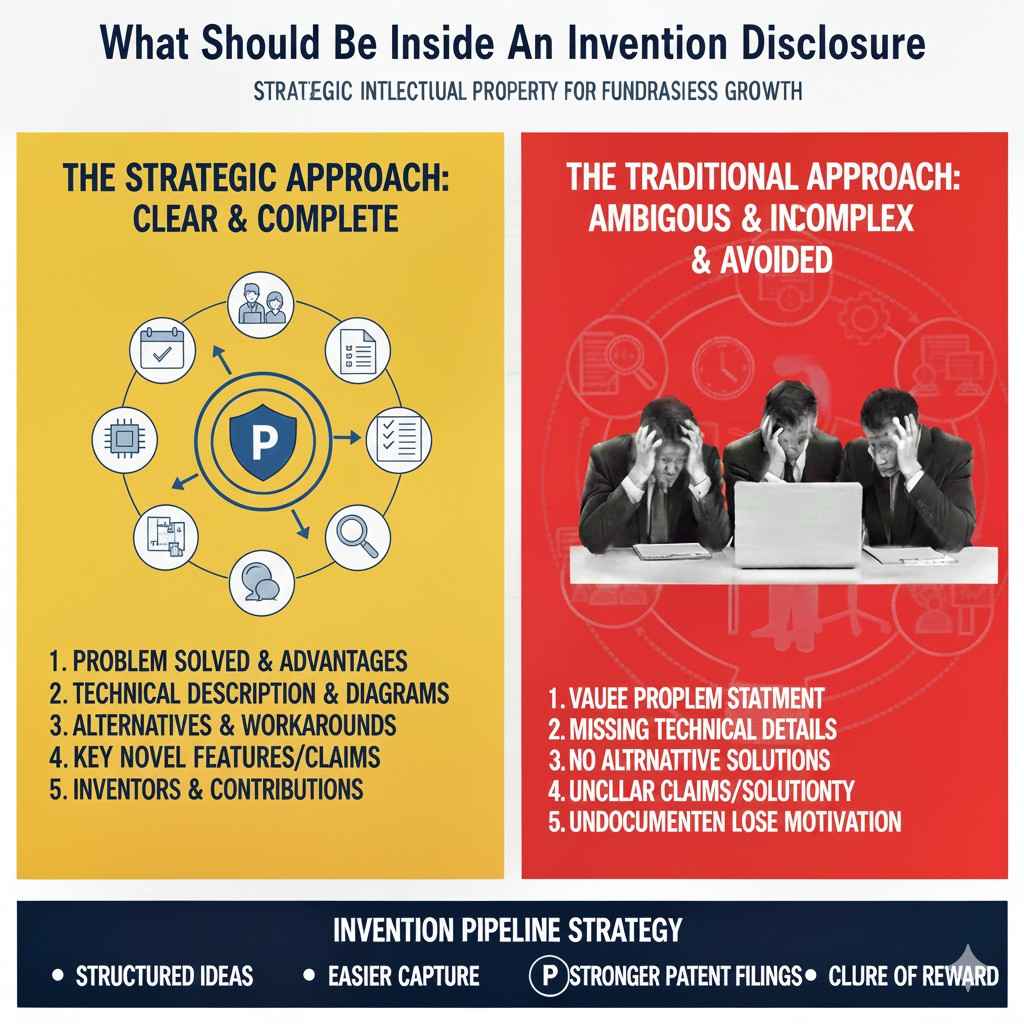
A strong disclosure begins with the problem. Not a vague problem like “model accuracy.” A specific problem like “inference latency on edge hardware while keeping accuracy above X.” The more specific the problem, the easier it is to show why your solution is meaningful.
This section should explain the pain in plain words. What broke. What was too slow. What was too costly. What made the old approach fail in your real setting. If you can explain this clearly, the rest of the disclosure becomes easier to write and easier to protect.
The old ways and why they were not enough
Patents become stronger when you can show contrast. That does not mean you need a full literature review. It means you should name the most likely alternatives. What would a smart engineer try first. What did you try. What were the limits.
This helps later when a patent attorney writes the background and frames the inventive step. It also helps you avoid filing on something that is obvious, because your own form forces you to check whether your approach is truly different.
The core idea, explained like a blueprint
This is the heart. It should be written so another technical person could rebuild the approach. Not every detail, but enough structure that the key steps are clear.
For software, this often means describing the flow, inputs, outputs, and main modules. For AI, it may include training steps, data handling, model architecture choices that matter, and the way the system adapts or controls behavior. For robotics, it may include sensors, control loops, calibration methods, and safety checks.
The best disclosures use simple diagrams or short pseudo-steps, but they do not drown in code. Code changes. The concept is what you want to protect. The disclosure should make the concept easy to see.
The boundaries: what is required and what is optional
A common mistake is to describe one exact implementation. That can lead to narrow protection. A better approach is to separate what is required from what is optional.
Required elements are the parts without which the invention stops working. Optional elements are enhancements, special cases, or tuning steps that make it better. This separation helps a patent attorney draft broader claims, because they can describe the invention at different levels.
If you do this well, you will often uncover more than one invention inside one project. That is normal. One team sprint can contain several patent-worthy ideas.
The results: what improved and how you measured it
This section does not need perfect metrics. It needs honest signal. What got faster. What got cheaper. What got more reliable. What changed in real tests.
Even simple measurements help. If you have a benchmark, include it. If you have internal test results, include them. If the results are qualitative, explain the real impact, such as “reduced failure cases in low light” or “stopped drift after long runs.”
Results help later in prosecution, and they help you choose what to file. Some disclosures sound clever but deliver no value. Others deliver clear value and should be prioritized.
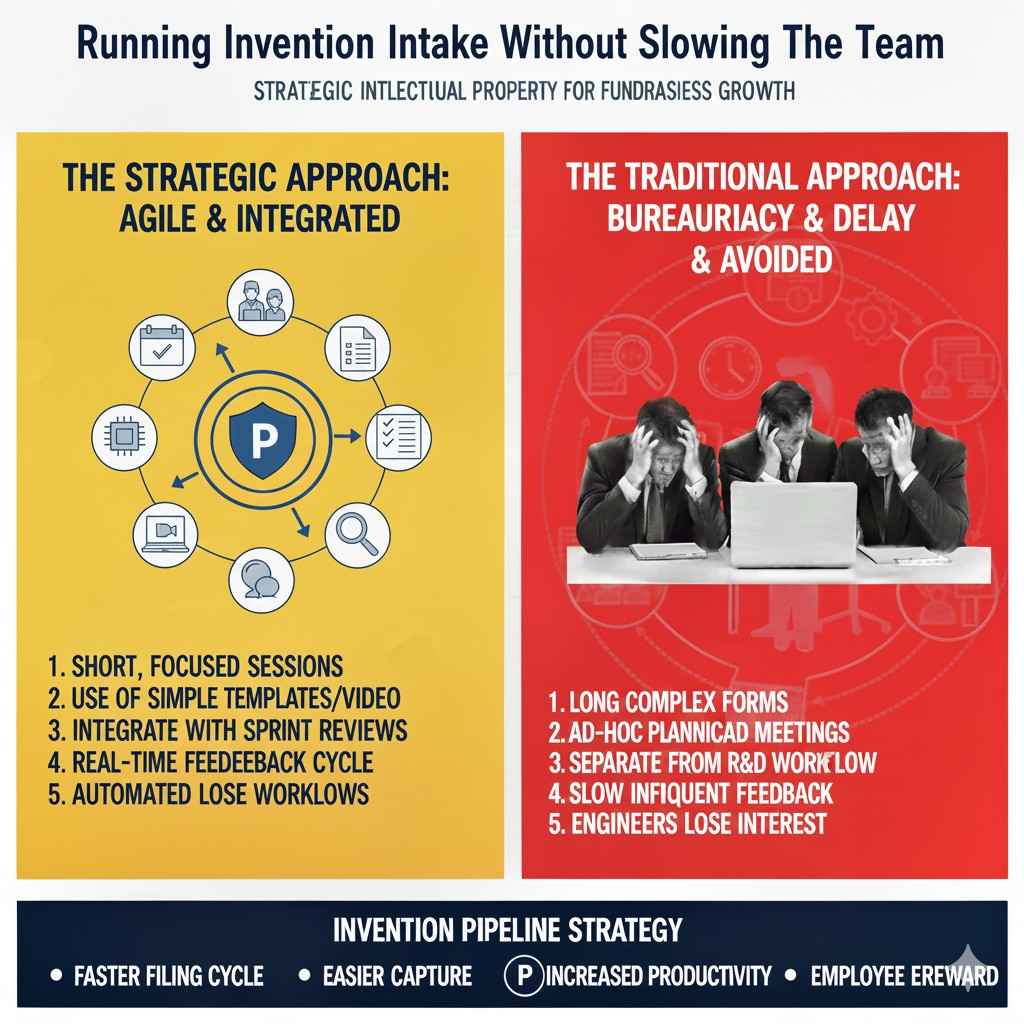
Running invention intake without slowing the team
Turning invention capture into a normal habit
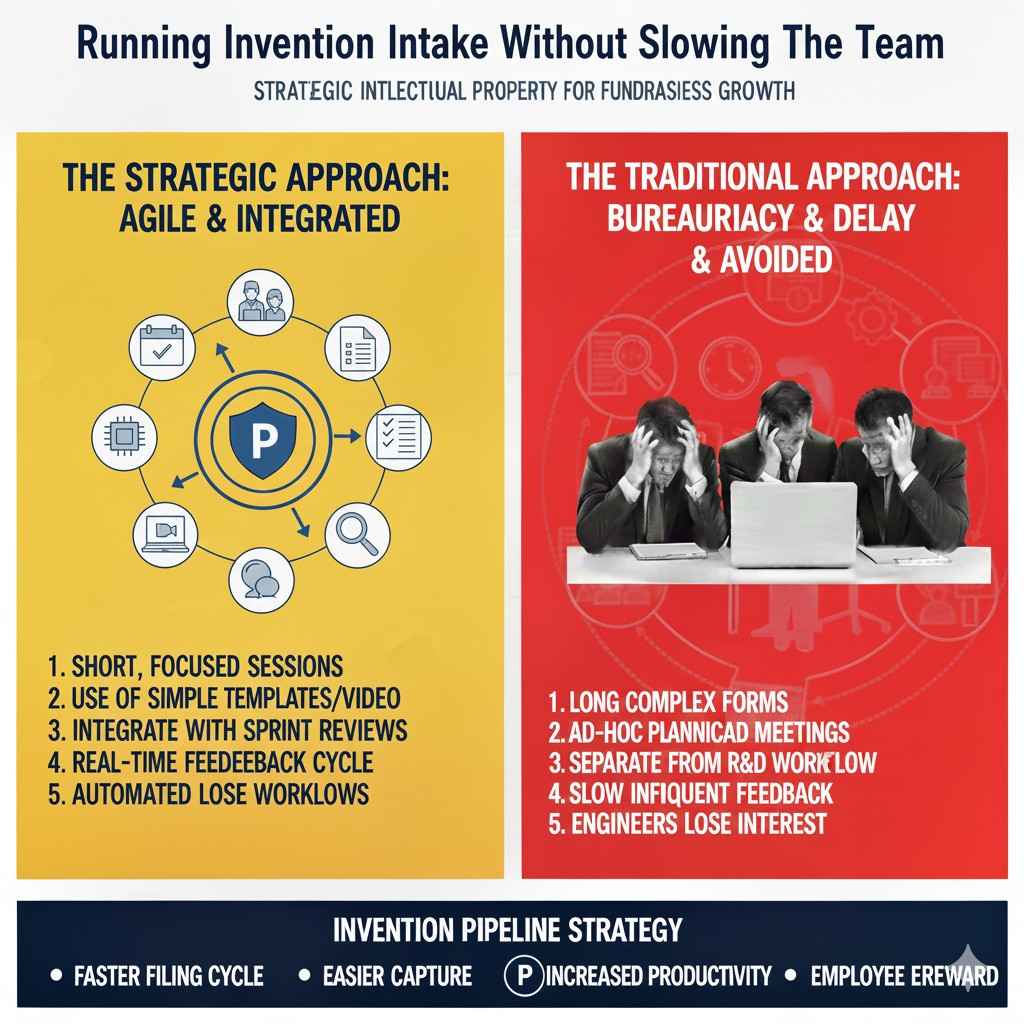
The hardest part of any disclosure system is the first step. That moment when an engineer finishes something new and has to decide whether it is “worth” writing down. If that decision feels heavy, most people skip it.
The system should remove the need to judge. The rule should be simple and clear. If something new was built to solve a real technical problem, it gets disclosed. No debate. No filtering at the source. Filtering happens later.
When this rule is stated clearly, the team stops overthinking. They stop asking for permission. They treat disclosure the same way they treat writing tests or pushing code. It becomes part of the job, not an extra task.
When disclosures should be submitted
Timing matters more than most teams realize. The best disclosures are written close to the moment of invention. When details are fresh. When trade-offs are still remembered. When the “why” has not been lost.
A good practice is to submit a disclosure when a new approach first works, not when it is fully polished. You do not need a finished product. You need a working idea. Waiting for perfection often means waiting too long.
This also protects you from public disclosure risks. If your team shares demos, talks, or code externally, having an internal disclosure on file before that happens gives you a safer position later.
Who can submit a disclosure
Anyone who contributes to an invention should be allowed to submit. Not just founders. Not just senior engineers. Some of the best ideas come from people closest to the problem.
Allowing broad submission also builds trust. People feel ownership. They feel seen. They are more likely to flag new ideas instead of keeping them to themselves or assuming they do not matter.
At the same time, submission does not mean approval. It simply means the idea enters the system. Decisions come later, through review.
What happens right after submission
Silence kills systems. If someone submits a disclosure and hears nothing for weeks, they will not submit another one. The system must respond fast, even if the response is simple.
A short acknowledgment goes a long way. Let the inventor know the disclosure was received, when it will be reviewed, and who will look at it. This sets expectations and shows respect for their time.
After review, close the loop again. Even if the decision is “not now,” explain why in plain words. People accept no when they understand the reason.
Reviewing disclosures with clarity and fairness
The purpose of review is not rejection
Many teams treat review as a gate to block weak ideas. That mindset creates fear. Instead, review should exist to understand, clarify, and shape ideas.
Most disclosures are not ready for filing as-is. That is normal. Review helps identify missing details, hidden assumptions, or related ideas that could strengthen the filing. The goal is to improve, not dismiss.
When inventors see review as collaboration, they engage more deeply. They give better follow-up answers. They care about the outcome.
Who should be in the review room
Early on, keep the group small. One technical leader who understands the system deeply. One product-aware person who sees market relevance. Sometimes a patent advisor or attorney if available.
Too many voices slow things down. Too few voices create blind spots. The right group can ask sharp questions without turning review into a debate.
As the company grows, you can adjust the group. But in the early stages, speed and clarity matter more than formality.
The questions reviewers should ask
Good review questions are simple and focused. Is this new compared to what we knew before. Does it solve a real problem in a non-obvious way. Can we explain it clearly to someone outside the team.
Another key question is scope. Is this one invention or several. Sometimes one disclosure contains multiple ideas that deserve separate treatment. Review is the moment to split or combine thoughtfully.
Reviewers should also ask about timing. Is this something we need to protect now. Or can it wait while we gather more data. Not every idea needs immediate filing. But every idea needs a clear decision.
Documenting review outcomes
Every review should end with a written outcome. Even a short note. Filed, revise and resubmit, hold for later, or archive. This creates a clean trail.
This trail becomes valuable later. When investors ask about your IP strategy, you can show not just patents, but a disciplined process. That builds confidence. It shows you are intentional, not reactive.
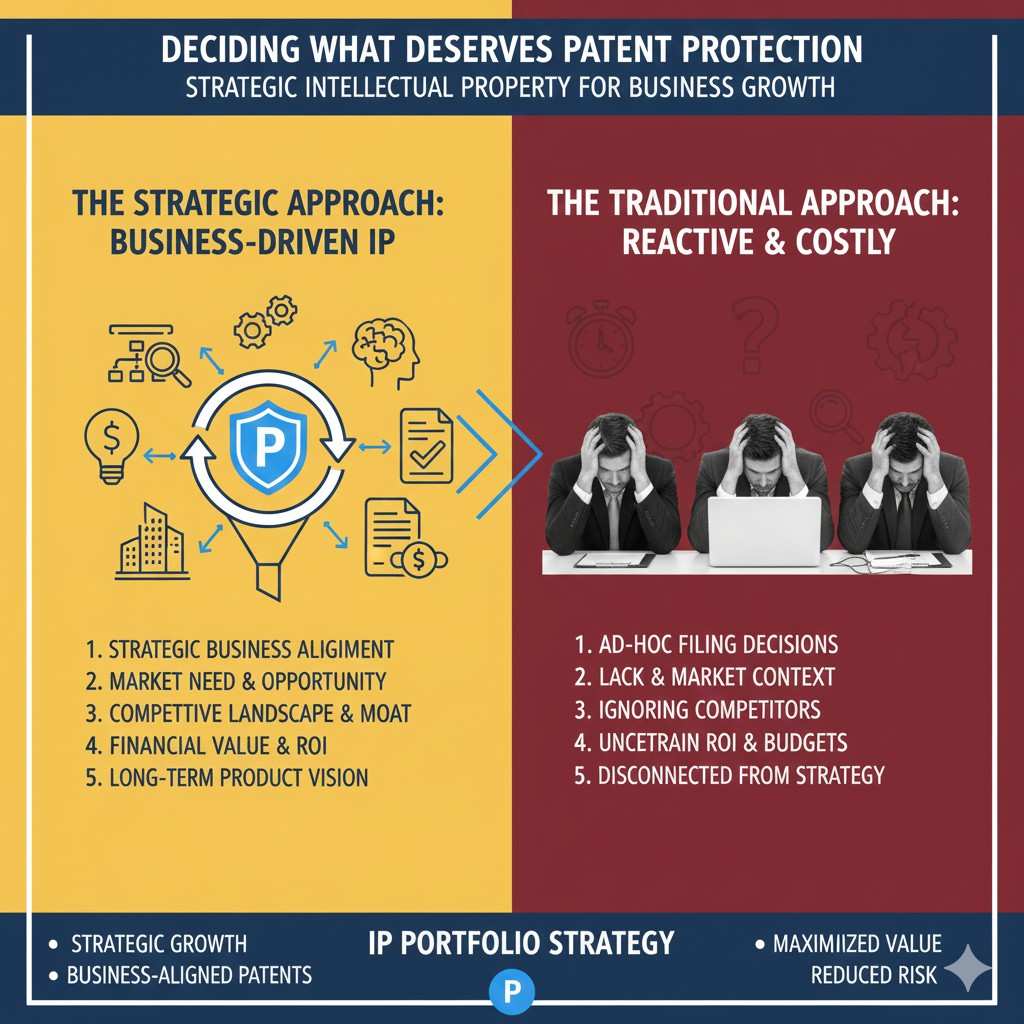
Deciding what deserves patent protection
Not every invention should be patented
This is an important truth. Patents cost time and money. Filing everything is not a strategy. Choosing wisely is.
Some ideas are better kept as trade secrets. Some are too narrow. Some will change too fast. A good disclosure system helps you see this clearly before you spend resources.
The goal is not volume. The goal is coverage. You want patents that protect the core of what makes your company hard to copy.
Signals that an invention is worth filing
Strong candidates often share a few traits. They solve a problem that competitors also face. They are hard to design around. They touch a core system, not a surface feature.
They also tend to have a longer life. If the idea will still matter in two or three years, it is a better filing target than something tied to a short-term experiment.
Reviewers should look for these signals in the disclosure and in follow-up discussion.
Aligning filings with business direction
An invention does not exist in isolation. It lives inside a company with a roadmap. When deciding to file, ask how this idea supports where the company is going.
Does it protect a key product line. Does it strengthen your position with a certain customer type. Does it support a platform approach.
This alignment makes patents more valuable in fundraising and partnerships. Investors care less about clever ideas and more about defensible paths to growth.
Timing filings to keep flexibility
Filing too early can lock you into details that later change. Filing too late can risk losing rights. The sweet spot depends on how stable the idea is.
A good system allows you to file provisional applications when needed. This gives you a priority date while keeping room to refine. Your disclosures become the raw material for those provisionals.
This is where working with experienced IP partners matters. At Tran.vc, we help founders make these timing calls so they do not overcommit or wait too long. If that support would help you, you can apply anytime at https://www.tran.vc/apply-now-form/
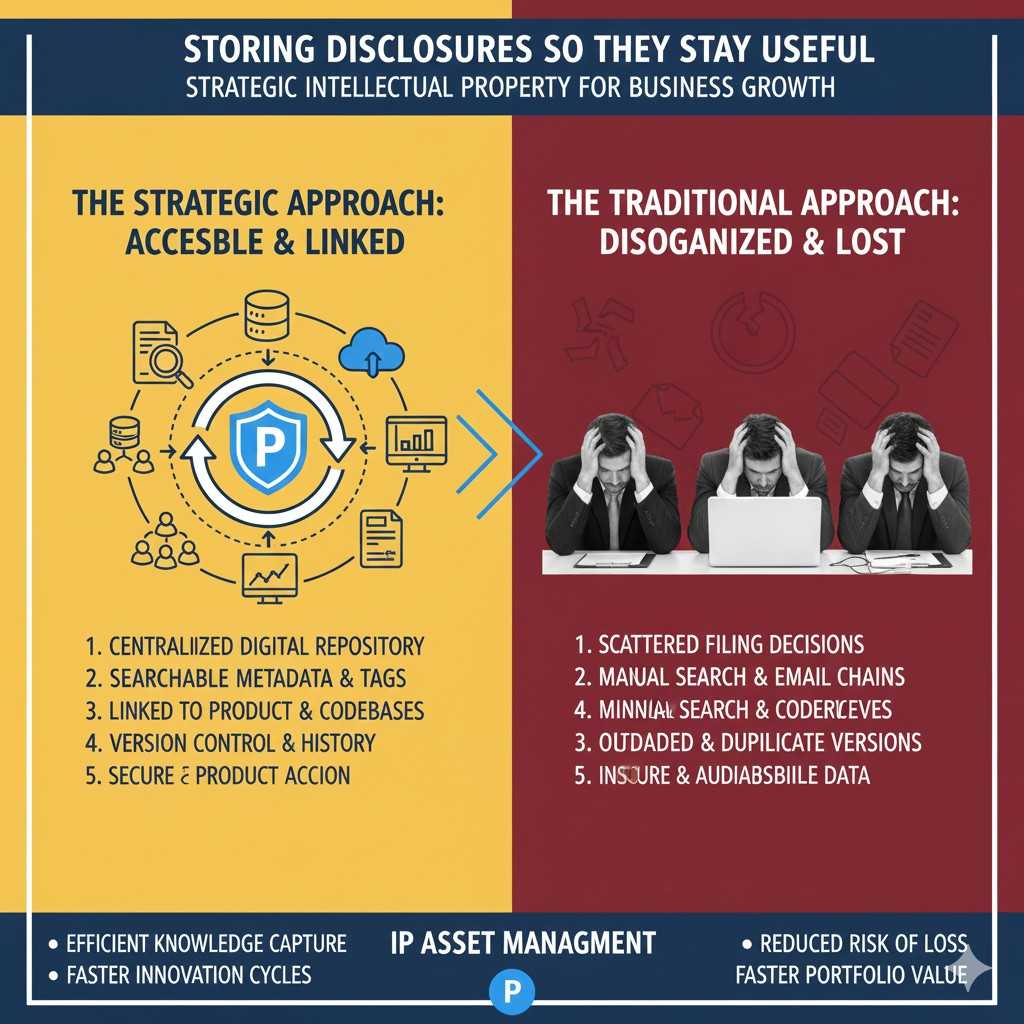
Storing disclosures so they stay useful
Why storage is not just about compliance
Many teams treat storage as an afterthought. A folder somewhere. A database no one checks. That wastes the effort you put into writing disclosures.
Good storage turns disclosures into assets. You can search them. You can link them to patents. You can review them when planning new features.
Over time, this becomes a map of your company’s technical evolution. That is powerful knowledge.
What good storage looks like
You should be able to answer simple questions fast. How many disclosures do we have. Which ones turned into filings. Which ones are pending. Which ones were archived.
You should also be able to find related ideas easily. Tagging by domain, product area, or problem type helps. This does not need to be complex. It just needs to be consistent.
Consistency beats fancy tools. A simple system used well beats a complex system used poorly.
Protecting confidentiality and access
Disclosures contain sensitive information. Access should be controlled. Not everyone needs to see everything.
At the same time, inventors should be able to see their own submissions and outcomes. Transparency builds trust.
Set clear rules early. Who can read. Who can edit. Who can export. These decisions are easier to make early than later.