
The Most Common Pre-Seed Fundraising Mistakes (and How to Avoid Them)
Introduction
Raising your first round of funding often feels like the biggest step in building a startup.
Many founders think the hardest part is convincing investors. They spend months working on pitch decks, warm introductions, and investor meetings. They read blogs about venture capital and watch videos about how to “close the round.”
But the real challenge starts much earlier than that.
Pre-seed fundraising is not only about asking for money. It is about building a company that investors believe should exist. When investors look at early startups, they are not only looking at the product. They are looking at the thinking behind it. They are asking simple questions.
Does this team understand the problem?
Are they building something that is hard to copy?
Are they building with care and intention?
Many founders rush into fundraising before these questions have clear answers. They believe speed is everything. They believe the goal is to raise money as fast as possible.
In reality, the opposite is often true.
The strongest startups take time to build a strong base before they raise outside money. They protect their technology. They think deeply about the product they are building. They build something real before they start selling the story.
This is one reason why many early founders struggle with pre-seed fundraising. Not because their idea is bad. Not because investors are unfair.
But because small mistakes at the beginning quietly weaken the company.
These mistakes are very common. In fact, almost every founder makes at least one of them during the early stage.
Some founders start fundraising too early. Others focus on hype instead of real technology. Some forget to protect their inventions. Some build products that are easy for larger companies to copy.
And some founders chase venture capital before they build any real leverage.
The good news is that these mistakes are avoidable.
If you understand them early, you can build your company in a much stronger way. You can protect what you create. You can raise funding from a position of strength instead of desperation.
This article will walk through the most common pre-seed fundraising mistakes founders make today. More importantly, it will show you how to avoid them.
At Tran.vc, we work with early technical founders every day. Many are building powerful technology in AI, robotics, and deep tech. These founders often have strong ideas and strong technical skills. But many have never raised money before. They are learning the startup game for the first time.
That is where the right support makes a big difference.
Tran.vc helps founders turn early ideas into strong, IP-backed companies before they raise large rounds of funding. Instead of pushing founders to chase investors right away, we help them build real assets first. That includes strong patent strategy, early filings, and smart product positioning.
This early work often becomes the foundation that investors look for later.
Tran.vc invests up to $50,000 in in-kind patent and IP services to help startups protect their technology and build stronger companies from day one. The goal is simple. Help founders raise funding with leverage, not pressure.
If you are building in AI, robotics, or deep tech, you can apply anytime here:
In the sections that follow, we will explore the most common mistakes founders make at the pre-seed stage. These lessons come from real founder journeys and years of early-stage experience.
Understanding them now could save you months of struggle later.
And more importantly, it could help you build a company that investors truly believe in.
Mistake #1: Raising Money Before Building Real Leverage
Why Early Fundraising Feels Like the Right Move
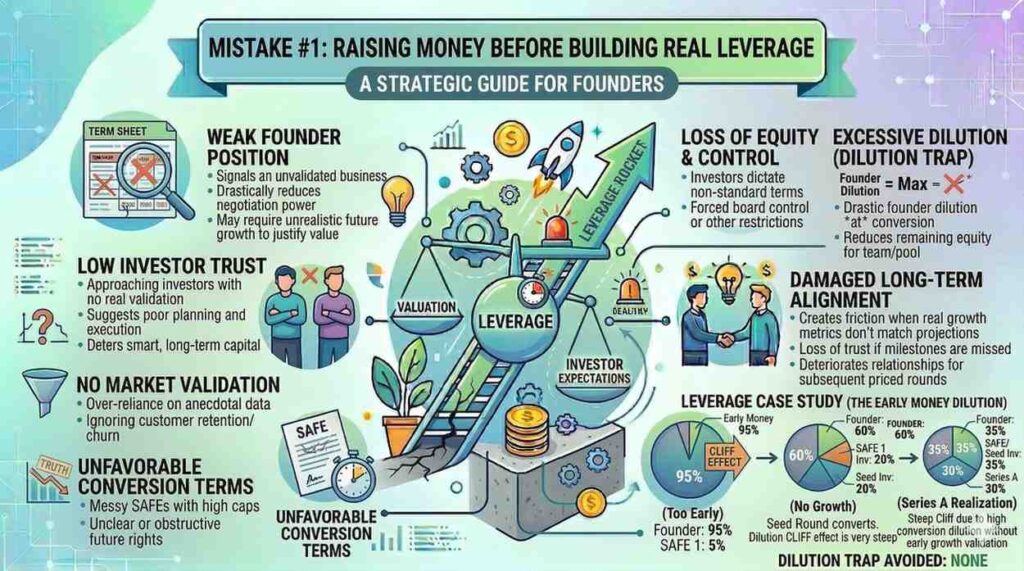
Many first-time founders believe fundraising should begin as soon as the idea forms. The thinking is simple. If you raise money quickly, you can move faster, hire people, and build the product.
This belief is very common in the startup world.
Stories about companies raising millions in early rounds make fundraising look like the first milestone of success. Founders see headlines about large pre-seed rounds and assume the same path applies to every startup.
But these stories rarely show what happened before the funding.
Most companies that raise early money already have strong leverage. The founders may have deep technical expertise, previous exits, strong intellectual property, or a prototype that shows real promise.
To outside observers, it looks like they raised money instantly. In reality, they spent months or years building the foundation that made investors confident.
When founders skip this stage, fundraising becomes extremely difficult.
Investors are not only investing in an idea. They are investing in the strength of the company being built around that idea.
Without leverage, the conversation becomes very hard.
What Investors Actually Look For at Pre-Seed
At the pre-seed stage, investors know the company is still early. They are not expecting large revenue or a finished product.
But they are still looking for signals that the startup is worth backing.
They want to see thoughtful problem selection. They want to see technical insight. They want to see that the founders understand the space deeply.
Most importantly, they want to see that the startup is building something defensible.
This is where many founders make a critical mistake.
They focus heavily on storytelling instead of building assets. They polish pitch decks, design beautiful slides, and spend weeks rehearsing their pitch.
But when investors ask deeper questions, the company has very little underneath the story.
There is no intellectual property.
There is no technical moat.
There is no strong reason why competitors cannot copy the idea.
From the investor’s point of view, the risk becomes too high.
The Problem With “Just an Idea”
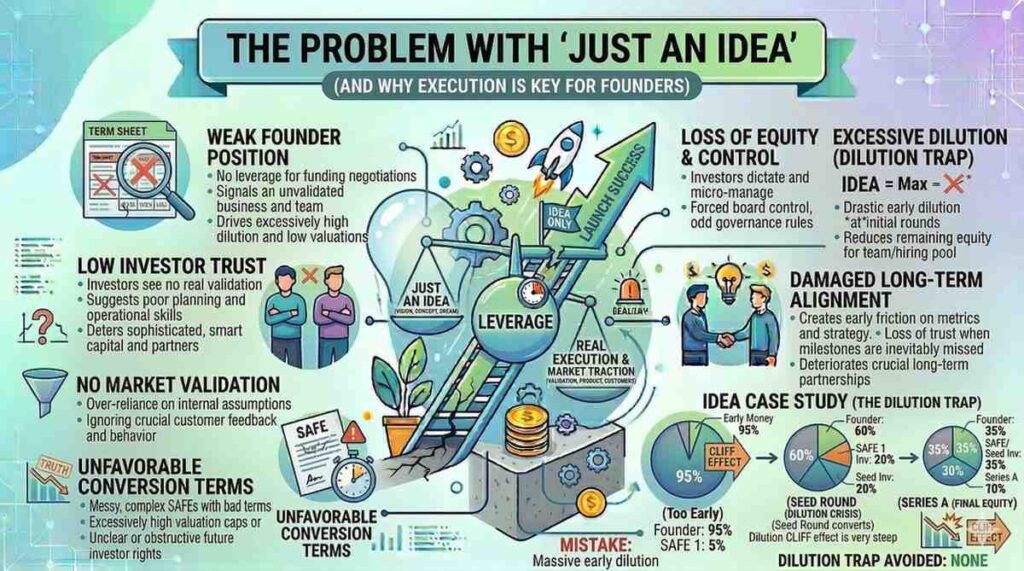
Ideas alone rarely attract serious investment.
This may sound surprising to many founders because the startup world often celebrates bold ideas. But investors know something important that many first-time founders learn later.
Ideas are easy to copy.
Execution matters more, but even strong execution is not always enough if the product itself is easy to replicate.
This problem becomes even more important in deep tech, AI, and robotics.
Technical breakthroughs take time to develop. They require careful thinking, experimentation, and protection. Without protection, larger companies can quickly replicate the technology and move faster due to their scale.
That is why intellectual property plays such a critical role in early deep tech startups.
Patents and IP strategy create early protection around the technology being built. They signal to investors that the founders are not only building a product. They are building assets.
Assets create leverage.
Why Leverage Changes the Fundraising Conversation
When founders approach investors without leverage, the discussion often revolves around risk.
Investors begin asking questions like:
Why has no one built this already?
What prevents another company from copying it?
What unique advantage does this team have?
Without clear answers, these conversations stall.
But when founders build leverage first, the tone of the conversation changes completely.
Now investors see a company that is already creating defensible value. The technology has direction. The intellectual property is being protected. The founders have taken the time to think about long-term advantage.
Suddenly the company looks much more serious.
Fundraising stops feeling like begging for capital. Instead, it becomes a conversation about growth.
Building Leverage Before You Raise
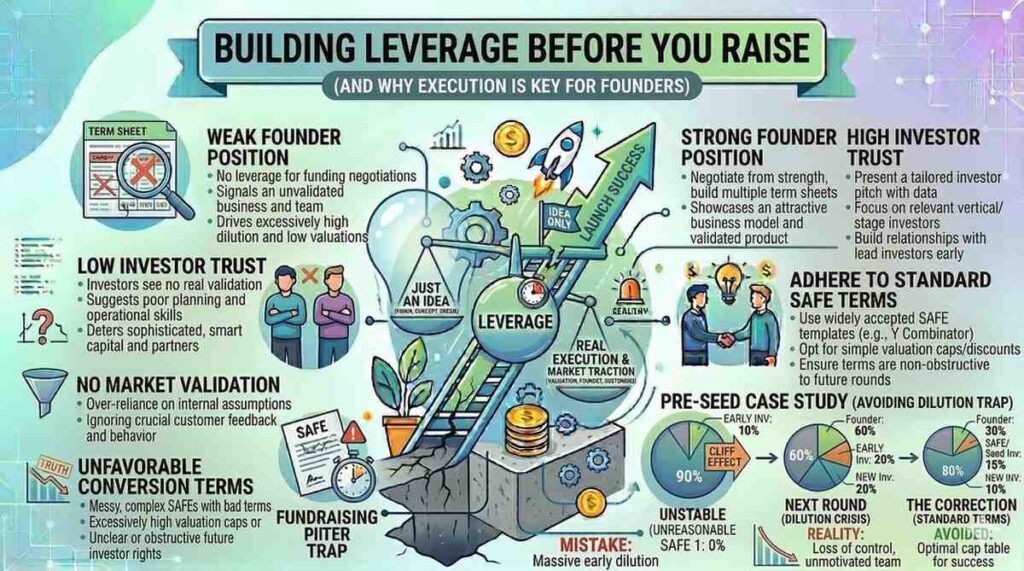
Strong founders understand that fundraising should support momentum, not create it.
The early stage of a startup should focus on building meaningful advantages.
This often includes technical experimentation, early prototypes, and a deeper understanding of the problem space. For technical founders, this period is also the right time to think about intellectual property.
Filing patents early can protect core inventions before the technology becomes widely visible. It also helps founders define what makes their work unique.
Investors notice this immediately.
When a startup demonstrates that it has protected its innovations, it signals maturity and long-term thinking. It shows that the founders are not simply chasing a trend. They are building something they plan to defend and grow.
This is exactly where many deep tech startups gain their first real advantage.
How Tran.vc Helps Founders Build Leverage Early
At Tran.vc, we believe technical founders should not have to choose between building technology and protecting it.
Many early teams delay patent strategy because they assume it is expensive or complicated. In reality, waiting too long can weaken the company’s position.
Competitors may file similar patents. Investors may question the defensibility of the technology. Valuable innovations may remain unprotected.
That is why Tran.vc focuses on helping founders build their intellectual property foundation early.
Instead of investing only cash, Tran.vc provides up to $50,000 in in-kind patent and IP services. This support helps startups develop a thoughtful patent strategy and begin protecting their inventions from the beginning.
The goal is not simply to file paperwork.
The goal is to help founders build companies with strong technical moats that investors respect.
When founders approach fundraising after building this foundation, the conversation changes dramatically. Investors see a startup that is serious about protecting what it builds.
This creates confidence.
And confidence often opens doors.
If you are building a startup in AI, robotics, or deep technology, you can apply to work with Tran.vc here:
The earlier you start building your IP strategy, the stronger your company becomes.
A Better Way to Approach the Pre-Seed Stage
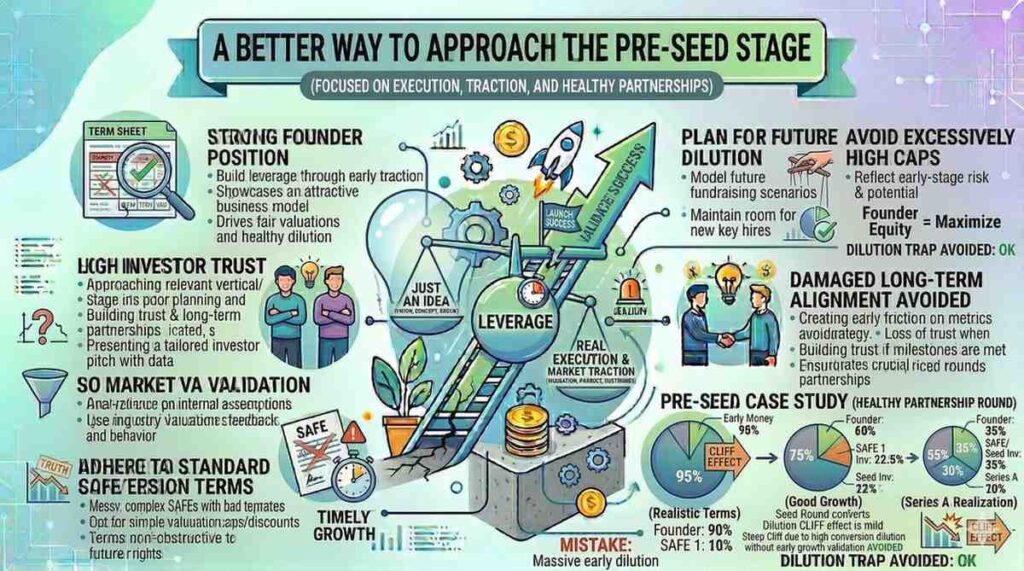
The pre-seed stage should not be rushed.
It is a unique window where founders can shape the foundation of their company without external pressure. During this time, thoughtful decisions can create advantages that last for years.
Building leverage is one of the most important steps in that process.
When founders focus on protecting their ideas, understanding their technology deeply, and building early proof of value, fundraising becomes much easier later.
Investors prefer startups that have taken the time to build something real.
And when that foundation includes intellectual property and defensible technology, the startup immediately stands out.
Pre-seed funding should amplify strong foundations, not compensate for weak ones.
Founders who understand this early often avoid one of the biggest fundraising mistakes in the startup world.
They do not rush to raise money.
Instead, they build something worth funding.
Mistake #2: Building Technology Without Protecting Intellectual Property
Why Many Founders Ignore IP in the Early Stage
Many founders spend months building powerful technology but never stop to protect it.
This happens for a simple reason. Intellectual property often feels like something that comes later. Founders assume patents are only necessary after the company becomes successful.
At the beginning, most teams are focused on building the product. They are writing code, training models, designing hardware, and testing prototypes. Everything moves fast.
Legal protection rarely feels urgent.
Some founders even believe patents slow them down. Others think patents are only useful for large companies with big legal teams.
But in deep tech, AI, and robotics startups, this assumption can create serious problems later.
The early stage is actually the most important time to think about intellectual property.
Once a technology becomes public, protecting it becomes much harder.
The Hidden Risk of Unprotected Innovation
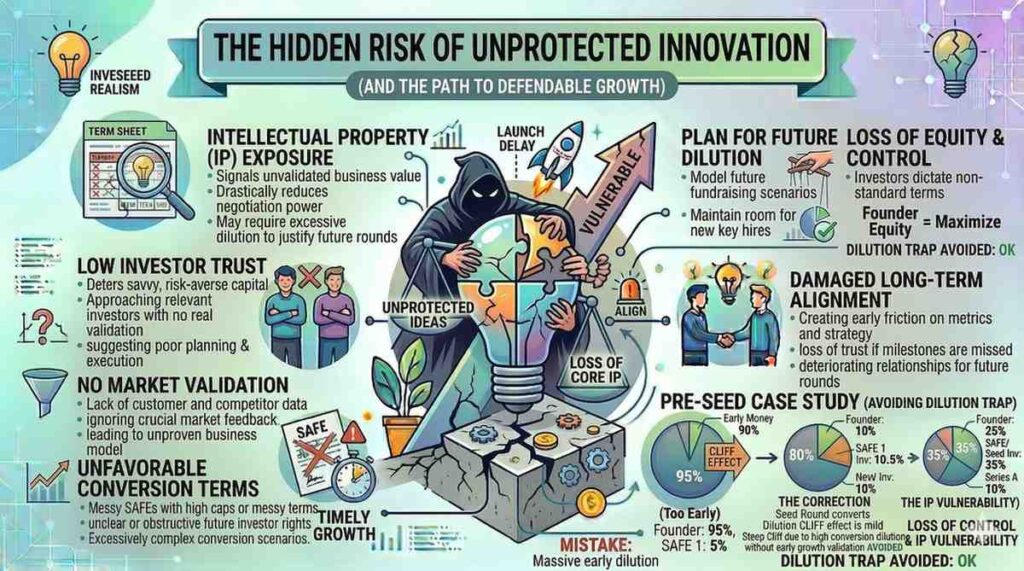
When startups release new technology without protecting it, they expose themselves to a quiet risk.
Competitors can study the idea, understand the technical approach, and build similar solutions. Larger companies with more resources can often move faster once they see what works.
This is especially common in software and AI.
A startup may spend a year developing a novel algorithm or system. But without protection, another team can replicate the core idea and build a competing version very quickly.
The original founders lose their advantage.
Investors are very aware of this risk.
When investors evaluate deep tech startups, one of the first questions they ask is whether the innovation is defensible. They want to understand whether the company owns something unique.
If the technology has no protection, the startup becomes vulnerable.
Even if the idea is strong, investors may worry that competitors will eventually dominate the market.
Why Intellectual Property Signals Seriousness
Strong intellectual property does more than protect technology.
It sends a signal.
When founders build a thoughtful patent strategy early, it shows they are thinking long term. It shows they understand the value of what they are creating.
Investors notice this immediately.
A startup with clear intellectual property looks different from one that only has a pitch deck. The company appears more deliberate. The technology feels more substantial.
IP becomes a visible sign that the founders are building real assets.
This is especially powerful for technical teams.
Engineers, scientists, and researchers often create valuable inventions without realizing how important they are. A single algorithm, architecture design, or robotics system may contain multiple patentable innovations.
Protecting these ideas early can transform them into strategic advantages.
The Timing Problem Most Founders Miss
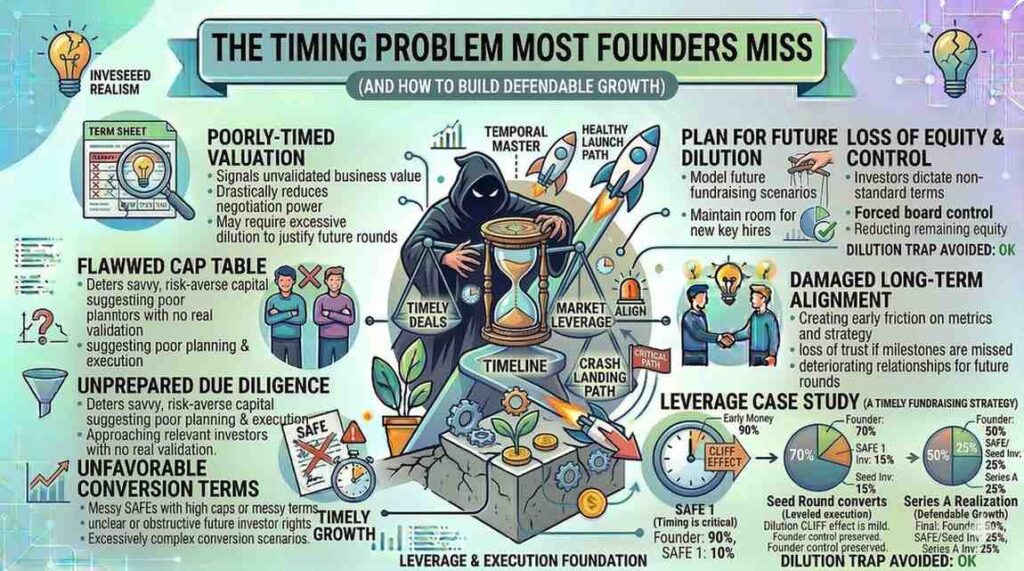
One of the most common misunderstandings around patents involves timing.
Many founders believe they can always file patents later. They assume they can focus on building the product first and handle legal protection after they gain traction.
Unfortunately, this approach often creates problems.
Patent rights can be affected once the technology becomes public. Publishing research, sharing technical details, or releasing products can limit what can be protected later.
This means waiting too long may reduce the ability to secure strong patents.
The best time to begin thinking about intellectual property is often during the early stages of development.
At this point, the technology is still evolving. Founders can identify the most important innovations and design a strategy to protect them properly.
This approach creates clarity.
Instead of filing random patents later, the startup builds a focused IP portfolio around its core technology.
How Strong IP Changes Investor Perception
When startups approach investors with protected technology, the conversation becomes very different.
Investors see a company that has taken the time to secure its innovations. They see a team that understands the long-term value of what it is building.
The company feels more stable.
This is particularly important in sectors like AI infrastructure, robotics systems, hardware platforms, and deep technical software.
These companies often require years of development before reaching full market maturity. Investors want confidence that the startup will maintain an advantage during that time.
Intellectual property provides that confidence.
It does not eliminate competition, but it creates barriers that protect the company’s position.
This protection can significantly increase investor interest.
Why Patent Strategy Is More Important Than Just Filing
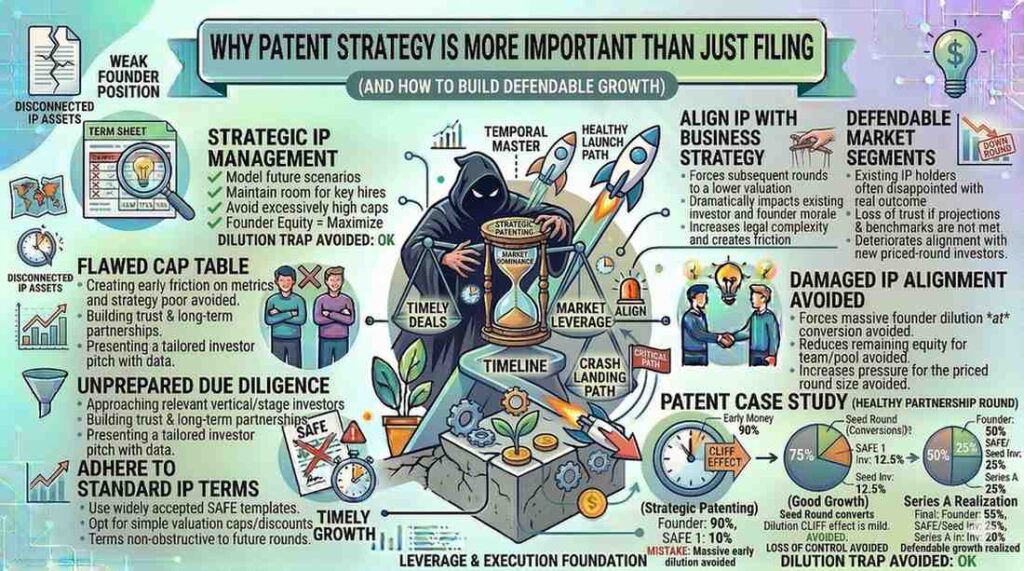
Many founders assume intellectual property simply means filing patents.
But the real value comes from strategy.
A thoughtful IP strategy identifies the core innovations within a startup’s technology and protects them in a structured way. It focuses on the areas that create the strongest competitive advantage.
Not every technical feature needs a patent.
Instead, the goal is to secure protection around the fundamental ideas that power the product.
For example, a robotics company may develop a unique motion control method. An AI startup may invent a new model architecture or training process.
These breakthroughs often represent the heart of the company’s technology.
Protecting them properly ensures that competitors cannot easily copy the same approach.
Without strategy, patents can become scattered and ineffective.
With strategy, they become a moat.
The Real Challenge for Early Founders
Despite the importance of intellectual property, many early founders struggle to access the right resources.
Patent attorneys are expensive. Legal processes can feel confusing. Technical founders may not know where to begin.
This often leads startups to postpone IP work until after fundraising.
But by that time, valuable opportunities may already be lost.
The truth is that intellectual property should not be treated as a luxury.
For deep tech startups, it is part of building the company itself.
The sooner founders begin thinking about it, the stronger their foundation becomes.
How Tran.vc Helps Founders Protect What They Build
Tran.vc was created to solve exactly this challenge.
Many early technical founders have powerful ideas but lack access to strong patent support during the earliest stages. Traditional venture capital often enters after the company has already built significant assets.
Tran.vc focuses on helping founders build those assets first.
Instead of providing only cash, Tran.vc invests up to $50,000 in in-kind patent and IP services. This allows startups to develop a clear intellectual property strategy with experienced professionals.
Founders receive guidance on how to identify patentable innovations, structure filings properly, and build a defensible technology foundation.
This early support can dramatically strengthen the company’s position before fundraising begins.
By the time startups approach investors, they already have protected technology and a clear IP roadmap.
That level of preparation creates trust.
Investors can see that the company is not simply experimenting. It is building something durable.
If you are developing new technology in AI, robotics, or deep tech, you can apply to work with Tran.vc here:
Protecting your innovation early can shape the entire future of your startup.
A Different Way to Think About Innovation
The startup world often celebrates speed.
Build quickly. Launch quickly. Raise quickly.
But for technical founders, long-term thinking often creates stronger companies.
Innovation becomes far more valuable when it is protected.
Patents turn discoveries into assets. Intellectual property creates barriers that allow startups to grow without constant fear of imitation.
Founders who understand this early rarely regret the effort.
They build companies that own their technology instead of simply using it.
And that ownership often becomes one of the most powerful advantages during fundraising.