
Great. I’ll start with a short introduction section written in a human, conversational tone while keeping it formal and strategic.
Valuation Caps at Pre-Seed: How Founders Should Think
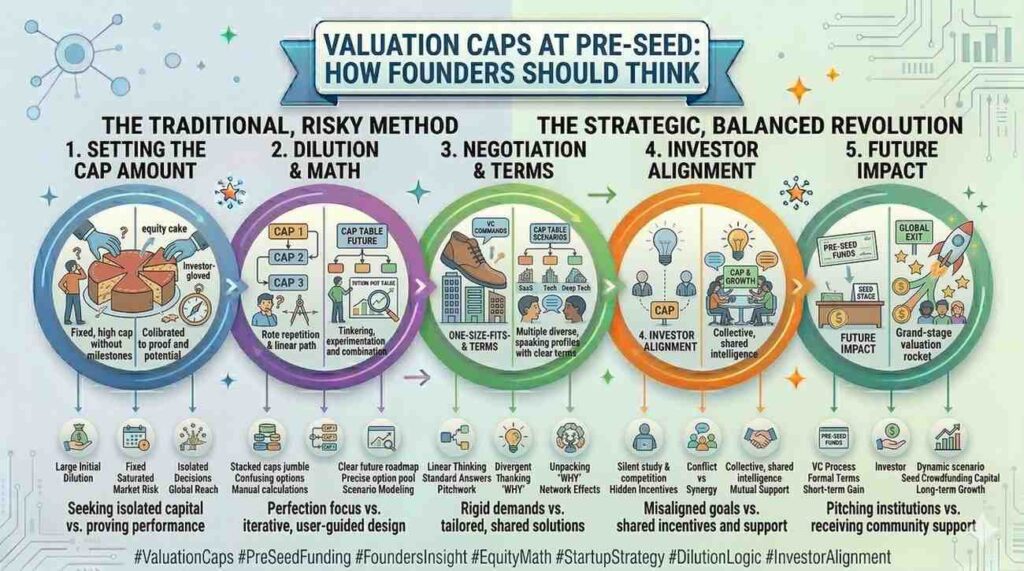
Most first-time founders hear the words valuation cap very early in their fundraising journey.
Usually it comes up during a conversation about SAFE notes or convertible notes. An investor says something like, “We’ll invest with a $6M cap,” and suddenly the founder nods along—even if they are not fully sure what that really means.
This happens all the time.
At the pre-seed stage, companies are often just an idea, a prototype, or a small team with strong technical talent. There may be no revenue yet. There may not even be a finished product. Because of this, traditional company valuation becomes difficult. Investors and founders need a simple way to move forward without arguing endlessly about numbers.
That is where valuation caps come in.
But here is the problem: many founders treat the cap like a badge of honor. They chase the highest number possible. They compare their cap to other startups on social media. They see it as a signal of prestige.
This way of thinking often leads to problems later.
A valuation cap is not just a number that looks good in a pitch deck. It quietly shapes how much of your company you will give away when the next round happens. It affects investor expectations. It can also influence how easy—or difficult—your next fundraise becomes.
In other words, a cap is not just about today. It is about the future structure of your company.
That is why founders need to think about it carefully.
At Tran.vc, we work with early technical founders every day—AI engineers, robotics builders, deep tech researchers, and software architects who are turning powerful ideas into companies. Many of them are raising their first real capital. Many are hearing the term “valuation cap” for the first time.
What we tell them is simple.
Do not treat valuation caps like a trophy.
Treat them like a strategic tool.
When used well, a valuation cap can help you move fast, bring the right partners into your company, and set up a healthy seed round later. When used poorly, it can create pressure that makes future fundraising harder than it needs to be.
This article will walk you through how founders should actually think about valuation caps at the pre-seed stage. Not from theory, but from the real world of startup building.
We will talk about why caps exist, how investors really think about them, the mistakes founders make, and how technical teams—especially in AI, robotics, and deep tech—can structure early rounds in a way that protects their long-term ownership.
Because the goal at pre-seed is not to win a negotiation.
The goal is to build a company that lasts.
And if you are a technical founder who is building something truly new, protecting your intellectual property and your ownership from day one matters more than almost anything else.
That is exactly why Tran.vc works differently. Instead of pushing founders to raise fast and give away large chunks of equity early, we help them build real assets first—strong patent strategies, protected technology, and clear technical moats that investors respect.
If you are building something in AI, robotics, or deep tech, you can apply anytime here:
https://www.tran.vc/apply-now-form/
Our team invests up to $50,000 worth of patent and IP services to help founders turn raw innovation into defensible companies before the big fundraising begins.
Because when your technology is protected, your leverage changes.
And that changes the way investors look at your valuation.
Valuation Caps at Pre-Seed: How Founders Should Think
Why founders hear about valuation caps so early
Most first-time founders hear the term valuation cap during their very first fundraising conversations. It often comes up when investors talk about SAFEs or convertible notes. The conversation moves quickly, and the number is mentioned almost casually.
Many founders nod and move forward without fully understanding how much this number will shape their future ownership. At the early stage, everyone is trying to move fast. There is pressure to close the round and get back to building.
But the valuation cap quietly affects the structure of your company in a deep way. It determines how early investors convert their money into equity when the next priced round happens.
Because of that, it deserves careful thinking from the very beginning.
Why the cap is more than just a fundraising number
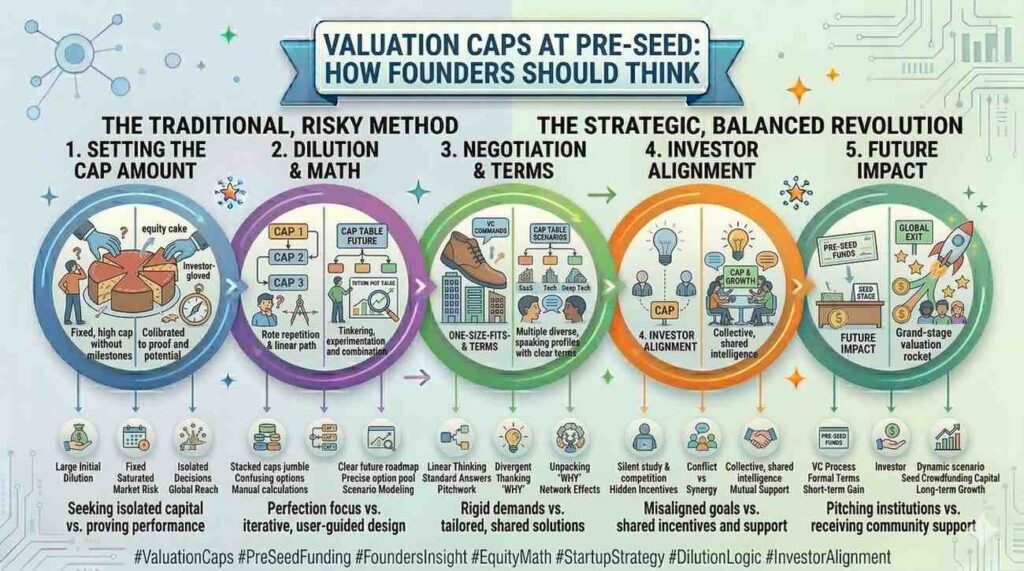
Some founders treat the cap as if it is a signal of status. They want the highest cap possible because they believe it shows strength to the market. They compare their numbers with other startups and feel proud when the cap is higher.
But the number itself does not build your company.
The cap is a structural decision. It affects dilution. It shapes how investors view your company later. And it often sets expectations that can either help or hurt you when you raise your seed round.
Thinking about caps the right way means stepping back and understanding why they exist in the first place.
At Tran.vc, we see this conversation every week with technical founders building serious technology in AI, robotics, and advanced software. Many of them are brilliant engineers who have built something powerful but have never raised capital before.
Our role is to help them understand how these early decisions influence their long-term control and leverage.
If you are building something deeply technical, protecting your ownership and your intellectual property should be part of the same strategy.
That is exactly why Tran.vc invests up to $50,000 in patent and IP services for early-stage startups. Instead of pushing founders to raise quickly, we help them build real technology assets first.
If you are working on something new in AI, robotics, or deep tech, you can apply anytime here:
https://www.tran.vc/apply-now-form/
What a Valuation Cap Actually Means
The simple idea behind the cap
A valuation cap is a limit placed on the future valuation at which an investor’s money converts into equity.
At the pre-seed stage, many investments happen through SAFEs or convertible notes. These are not priced equity rounds. Instead of assigning an exact valuation to the company today, investors agree that their investment will convert later.
The cap sets the maximum company valuation used when that conversion happens.
For example, imagine an investor invests $500,000 in your startup with a $6 million cap. Later, you raise a seed round at a $10 million valuation.
The early investor does not convert at $10 million. They convert as if the company were valued at $6 million. This gives them more equity for the risk they took earlier.
That is the core purpose of the cap.
It rewards early investors who take a bigger risk before the company has traction.
Why investors prefer capped SAFEs at pre-seed
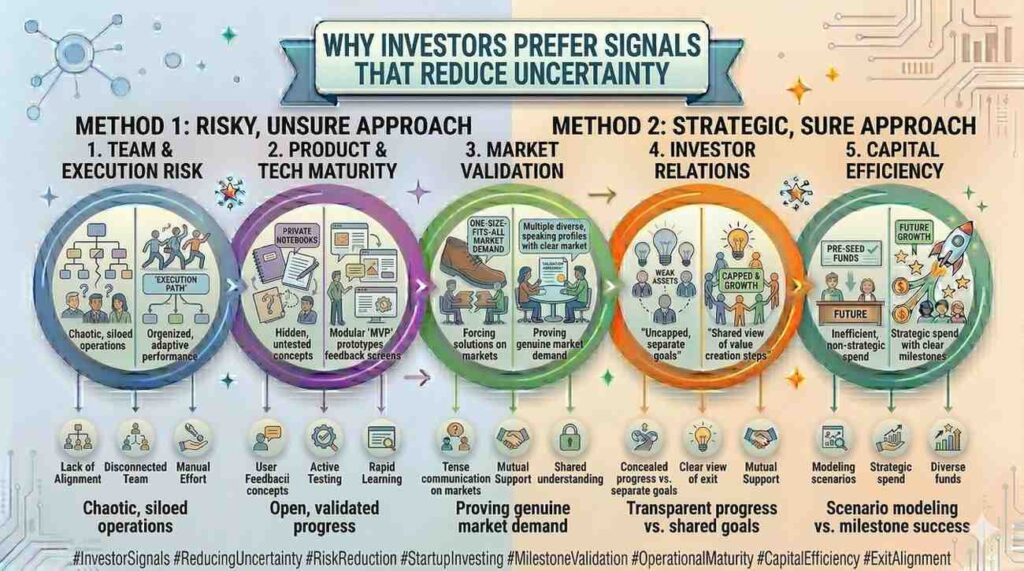
Investors like valuation caps because they provide protection. When they invest very early, the company might only have a prototype or a small team.
There is still a lot of uncertainty.
The cap ensures that if the startup grows quickly and raises a higher valuation later, the early investor still receives a fair share of equity relative to the risk they took.
Without a cap, an investor might put money into a company very early and then see their investment convert at a very high valuation later. In that case, their ownership could end up being very small.
Caps create balance between founders and early investors.
They allow the company to raise money quickly without long valuation debates, while still giving investors a clear upside.
Why caps exist instead of fixed valuations
At the pre-seed stage, it is very difficult to determine an exact valuation for a startup.
There may be no revenue. The product may still be in development. Market demand might not yet be proven.
Because of this, pricing the company precisely can turn into a long negotiation that slows everything down.
Convertible instruments solve this problem.
They allow founders to raise capital quickly while delaying the full valuation discussion until the company has more traction.
The valuation cap simply provides a boundary within that system.
But even though caps make early fundraising simpler, founders should not treat them casually.
The number still shapes future ownership, and that is why it deserves careful thought.
How Valuation Caps Shape Your Future Ownership
The hidden dilution founders often miss
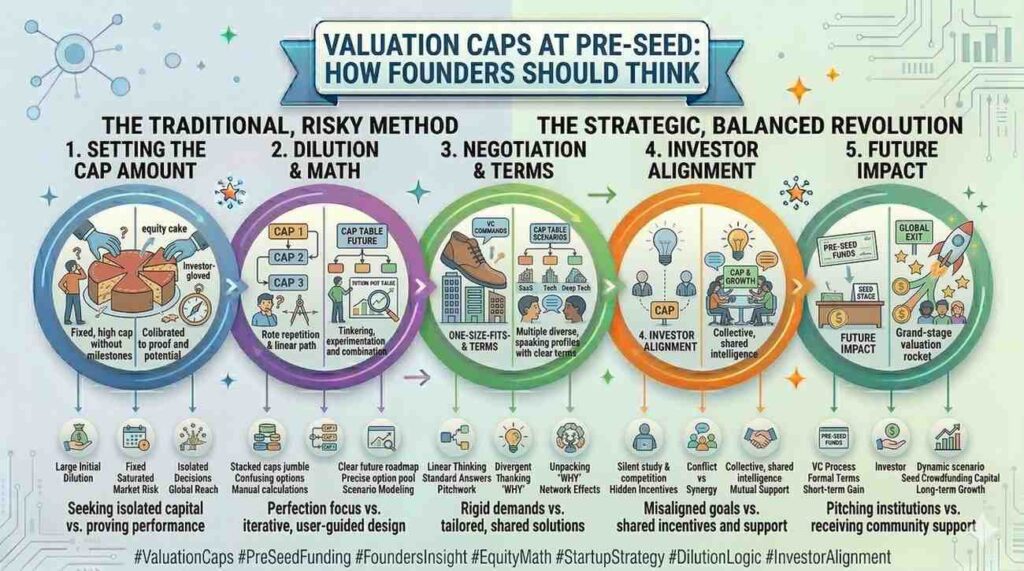
Many founders think dilution only happens during priced rounds. They assume the real impact begins when venture capital firms invest during the seed or Series A stage.
In reality, dilution begins much earlier.
Every SAFE or convertible note with a valuation cap represents future equity that will appear on your cap table later.
The more money raised through capped instruments, the more ownership will be allocated when the conversion happens.
If founders do not model this carefully, they may discover during the seed round that early investors already control a larger percentage of the company than expected.
This is one of the most common surprises in early-stage fundraising.
Why stacking SAFEs can create problems
It is common for founders to raise pre-seed capital in small pieces. They may close multiple SAFE agreements over several months with different investors.
Each agreement may have a slightly different valuation cap.
Individually, these deals might seem small and harmless. But together they accumulate.
When the seed round finally arrives, all of those SAFEs convert at once. The result can be a sudden and significant shift in the ownership structure.
Founders sometimes realize that a large portion of the company has already been allocated before the seed investors even arrive.
This situation can create tension during negotiations with new investors.
It can also reduce the founders’ control earlier than they intended.
Why strong technical assets change the conversation
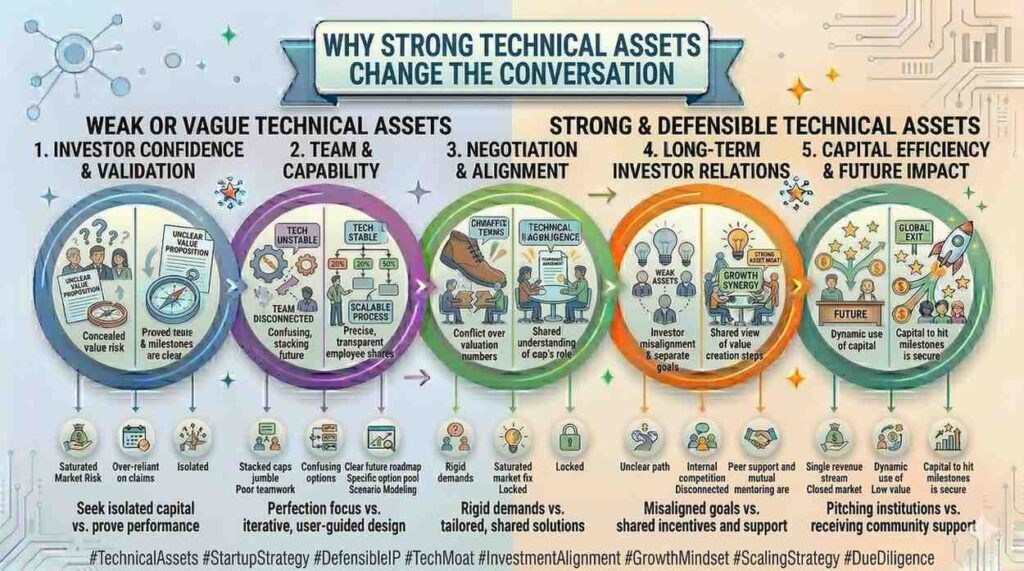
The best way to maintain strong ownership is not simply negotiating harder.
The real leverage comes from building something investors respect and cannot easily copy.
For deep tech founders, that leverage often comes from intellectual property.
A clear patent strategy shows investors that the company is building defensible technology. It signals that the innovation is not just code that can be replicated in a few months.
When a startup has protected technology, investors often view the company very differently.
The perceived risk drops, and that can influence the way investors think about valuation caps and ownership.
This is exactly where Tran.vc focuses its work with early founders.
Instead of encouraging founders to rush into fundraising, we help them build strong intellectual property foundations first. That includes patent strategy, filings, and guidance from experienced patent attorneys who understand startup growth.
By turning your technology into protected assets early, you give yourself more leverage when fundraising conversations begin.
If you are building something technical and want to protect it from the start, you can apply to work with Tran.vc here:
https://www.tran.vc/apply-now-form/
How Investors Actually Think About Valuation Caps
Early investors are pricing risk, not just your company
When founders hear an investor propose a valuation cap, it can sometimes feel like a negotiation about how good the startup is. Many founders instinctively try to push the number higher because they believe it reflects the worth of their idea.
But investors are usually thinking about something different.
They are not just trying to estimate the value of the company today. They are trying to price the risk they are taking by investing early.
At the pre-seed stage, there is often very little certainty. The product may still be in development. Customers might not exist yet. The market may still need validation.
From the investor’s point of view, this stage carries the highest level of uncertainty in the entire startup journey.
Because of that, the valuation cap becomes a way to balance that risk.
If the startup succeeds and raises the next round at a higher valuation, the early investor’s lower cap ensures they receive a meaningful share of the company for believing in the idea early.
This is why arguing aggressively about the cap rarely works in a founder’s favor.
The better approach is to understand the investor’s perspective and focus on building enough credibility that the risk appears smaller.
Investors look for signals that reduce uncertainty
A founder might believe their idea is brilliant. But investors must evaluate hundreds of opportunities every year.
They rely on signals that help them judge whether a startup is likely to succeed.
Some signals come from the team. Strong technical founders, especially those with deep experience in AI, robotics, or engineering, immediately stand out.
Other signals come from traction. Even small signs of customer interest can reduce uncertainty.
But one of the most powerful signals comes from defensible technology.
When a startup shows that it is building something technically difficult and protected by intellectual property, investors start to see a stronger long-term advantage.
This changes the way they think about risk.
Instead of viewing the company as just another early idea, they see a startup building a real technological moat.
That shift can influence how investors think about valuation caps, ownership, and long-term partnership.
Why thoughtful founders focus on long-term alignment
The healthiest early deals are not built on squeezing the highest possible cap from investors.
They are built on alignment.
A good investor should feel excited about supporting the company for many years. They should believe they are getting fair ownership for the risk they are taking.
At the same time, founders should retain enough ownership to remain motivated and in control of the company’s long-term direction.
When both sides feel the structure is fair, the relationship tends to work better over time.
The goal is not to “win” the negotiation.
The goal is to create a partnership that allows the company to grow.
At Tran.vc, we spend a lot of time helping founders think about this balance before they start fundraising.
Instead of focusing only on numbers, we help technical teams strengthen their technology position through clear patent strategies and intellectual property protection.
This creates stronger alignment when investors enter the conversation.
If you are building something deeply technical and want to structure your startup the right way from the beginning, you can apply here:
https://www.tran.vc/apply-now-form/
Common Mistakes Founders Make with Valuation Caps
Treating the cap like a trophy
One of the most common mistakes founders make is treating the valuation cap like a badge of prestige.
They compare their numbers with other startups in their network. They celebrate when they secure a higher cap than a friend’s company.
On the surface, this may feel like a win.
But a higher cap does not automatically make the company stronger.
In some cases, an unrealistic cap can actually create problems during the next fundraising round.
If the seed round valuation ends up being close to the cap, early investors receive very little benefit for their risk. That can create tension with investors who expected stronger upside.
Healthy startup financing works best when both sides feel rewarded for their contribution.
Raising too much money too early
Another mistake founders often make is raising more pre-seed capital than they actually need.
When early capital comes through SAFEs with valuation caps, each investment adds future dilution.
It may not feel significant in the moment. The round might be spread across several investors, each contributing a modest amount.
But over time, the cumulative effect can become meaningful.
When the seed round arrives and all the SAFEs convert, founders sometimes realize they have already given away a larger portion of the company than expected.
This situation can reduce flexibility during later fundraising.
Careful founders think about how much capital they truly need to reach the next meaningful milestone.
Raising only what is necessary keeps the ownership structure healthier.
Ignoring the cap table early on
Many founders delay thinking about their cap table until they begin preparing for their seed round.
This can be risky.
Even at the pre-seed stage, it is important to understand how different scenarios will affect ownership later. Simple modeling can reveal how SAFEs, caps, and future rounds interact.
Without this visibility, founders may unknowingly create a complicated ownership structure that becomes difficult to manage.
Experienced founders often start thinking about the cap table earlier than expected.
They understand that ownership decisions made during the first year can influence the company for a decade.
How Founders Should Think About Setting a Cap
The cap should reflect your stage of progress
The right valuation cap depends heavily on the stage of the company.
A startup that is still forming the founding team will naturally receive a different cap compared to a company with a working prototype and early customer interest.
Progress reduces risk.
The more progress a startup can demonstrate, the more comfortable investors become with higher caps.
This is why many founders focus intensely on building meaningful milestones before raising significant capital.
Even a small product demonstration or early technical breakthrough can change the conversation.
The cap should support the next fundraising round
One of the most practical ways to think about valuation caps is by looking ahead to the next round.
The seed round will eventually establish a priced valuation for the company.
If the cap is set too high relative to what the market is willing to pay at the seed stage, it can create awkward dynamics during conversion.
Seed investors want to see that early investors were rewarded for taking early risk.
When the relationship between the cap and the seed valuation feels reasonable, the transition becomes smoother.
This is why thoughtful founders often choose caps that leave room for both growth and investor upside.
The strongest caps are supported by real technology
The best way to justify a strong valuation cap is not through storytelling alone.
It comes from building something that is technically difficult to replicate.
In fields like artificial intelligence, robotics, and advanced software systems, innovation can move very quickly. Competitors can appear within months.
When a startup has a clear intellectual property strategy protecting its core technology, the situation changes.
Patents signal that the company is not simply building features. It is developing novel technology that competitors cannot easily copy.
This type of protection strengthens the company’s negotiating position with investors.
That is one of the core reasons Tran.vc focuses on helping early founders build IP-backed companies.
Instead of asking founders to give away large portions of equity early, we invest up to $50,000 worth of patent strategy and IP services to help startups secure their technological advantages.
When your technology is protected, investors view the company differently.
If you are building something meaningful in AI, robotics, or deep tech, you can apply to work with Tran.vc here:
https://www.tran.vc/apply-now-form/