
Most founders think VC funding is about money. It is not.
At the pre-seed stage, it is about leverage.
If you are building in AI, robotics, deep tech, or advanced software, the real question is not “How do I raise?” The real question is “How do I build something worth funding?”
That is what this guide is about.
If you are early, maybe just an idea and some code, this will help you understand what VCs actually look for, how pre-seed funding really works, what mistakes destroy leverage, and how to raise without losing control too soon.
And if you are serious about building something defensible from day one, you can apply anytime at https://www.tran.vc/apply-now-form/
The Truth About Pre-Seed VC Funding
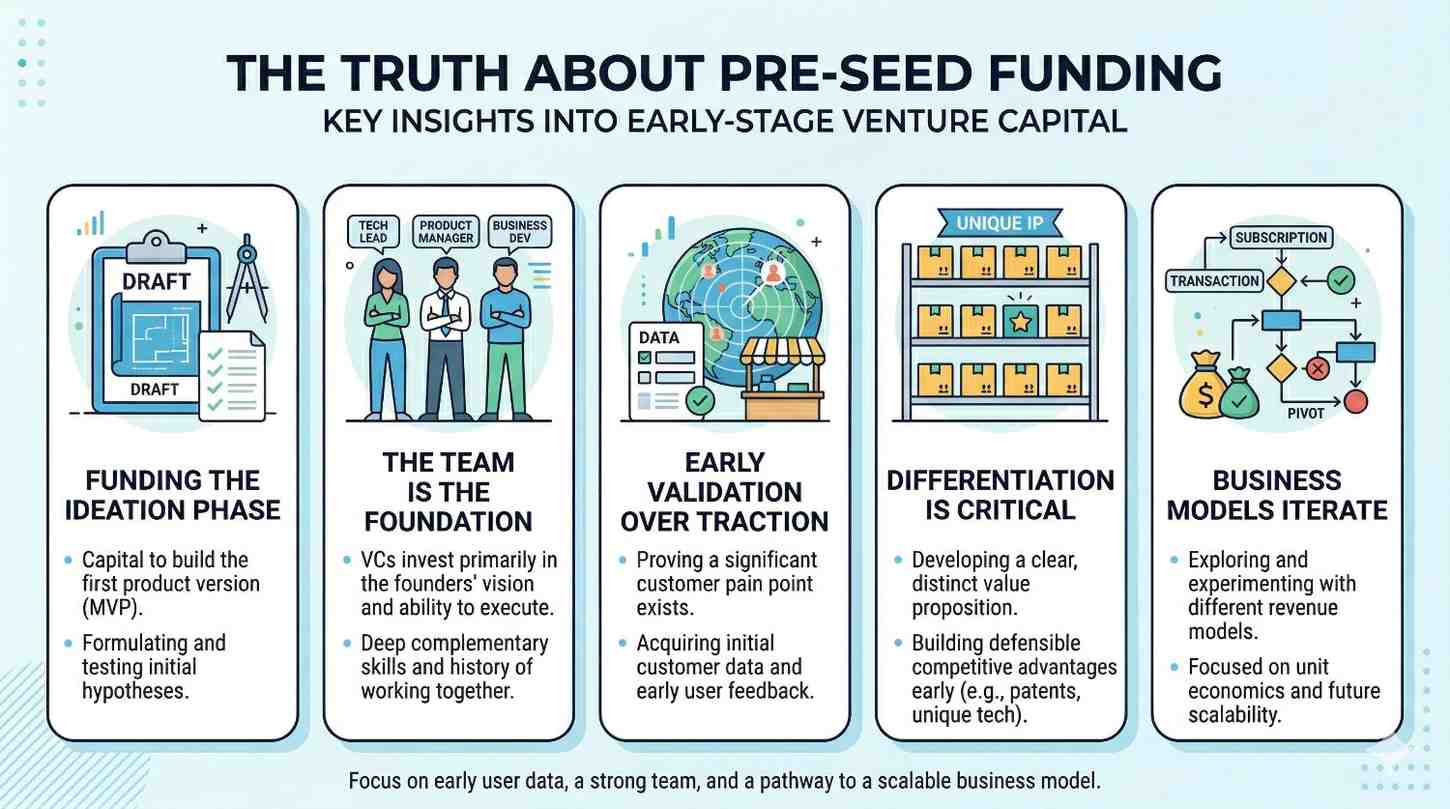
Let’s start with something most founders learn too late.
Pre-seed investors are not buying your product. They are buying your potential.
At this stage, you usually do not have revenue. You may not even have customers. Sometimes you do not have a finished product. What you have is a direction. A technical insight. A belief that something hard can be built.
VCs invest in three things at pre-seed:
First, the founder.
Second, the size of the opportunity.
Third, whether you can build something others cannot copy.
Most founders focus only on the second one. They talk about how big the market is. They show slides with huge numbers. They say the market is worth billions.
That does not win checks.
What matters more is whether you have a real edge.
If you are building an AI system, what is unique in your model?
If you are building robotics, what is different in your control system, hardware design, or integration?
If you are building deep tech, what do you know that others do not?
VCs want to know: why you?
Not just why now. Why you.
And here is the part many technical founders miss: if your edge is not protected, it is not real leverage.
If anyone can copy your core insight, then you are just moving fast. And speed alone is not a moat.
That is why smart pre-seed funding is not only about capital. It is about building defensibility early.
This is where many deep tech founders get stuck. They are strong builders. They can write code. They can design systems. But they do not think about IP strategy until much later.
By then, it is often too late.
If you want to raise from strong VCs later, your early decisions matter more than you think.
What Pre-Seed Actually Means in 2026
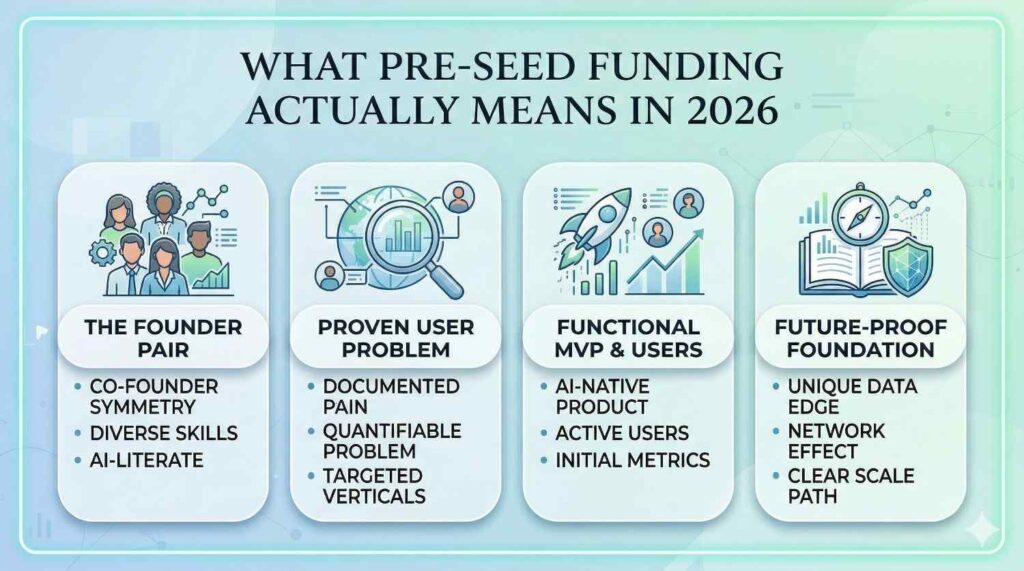
Pre-seed used to mean friends and family. Today, it is more structured.
Pre-seed is usually the first institutional capital you raise. It can range from $250,000 to $3 million depending on the market and your background.
But here is the key: pre-seed is not about scaling. It is about proving.
You are proving that:
You can build the core technology.
There is a real problem.
Your approach is not random.
You understand your market.
And you have a path to something defensible.
If you are building AI infrastructure, pre-seed may be used to train your first serious model and file initial patents.
If you are building robotics, pre-seed might fund your first working prototype and protect your core mechanisms.
If you are building a deep tech platform, it may allow you to validate feasibility and secure early IP around your methods.
The best pre-seed rounds give you enough time to:
Build.
Test.
Protect.
Position.
Notice that “scale” is not in that list.
Scaling comes later.
Many founders fail at pre-seed because they try to act like they are at Series A. They talk about growth hacks and viral loops when they have not even locked down their technical edge.
At this stage, clarity beats hype.
VCs know early metrics can be noisy. What they look for is depth.
Depth of thinking.
Depth of technical skill.
Depth of understanding.
If you can show that you have thought deeply about your architecture, your defensibility, and your long-term moat, you stand out.
This is one reason why IP matters much more in deep tech than in consumer apps.
When your product is technical, your moat must be technical.
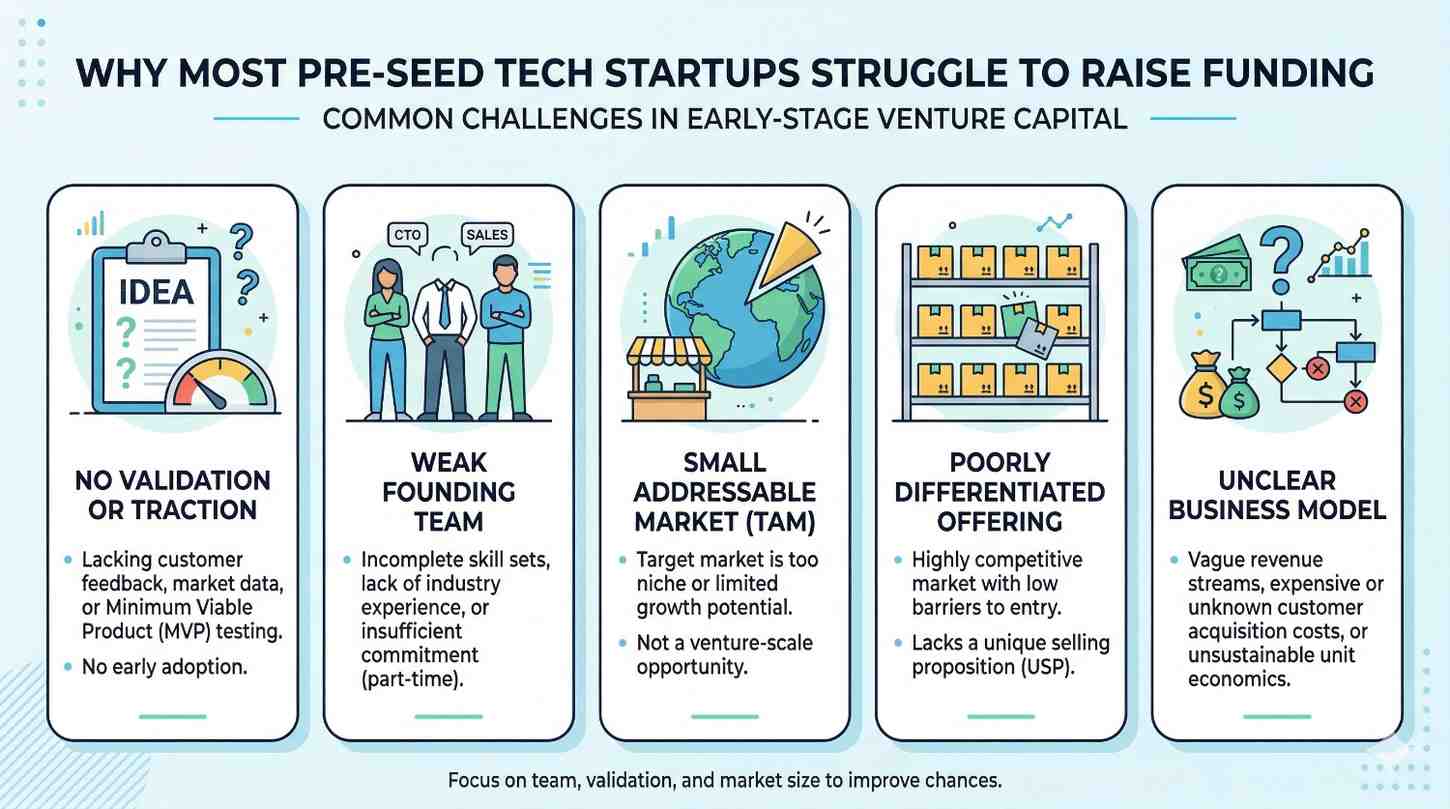
Why Most Pre-Seed Tech Startups Struggle to Raise
Let’s be honest.
Raising is hard.
It is harder now than it was a few years ago. Capital is still available, but investors are more careful. They have seen too many rushed startups with no real edge.
Here are patterns that quietly kill pre-seed rounds.
First, founders chase money before clarity.
They build a pitch deck too early. They start booking meetings before they understand their own strategy. When investors ask sharp questions, they give vague answers.
Second, they cannot explain their technical advantage in simple words.
If you cannot explain your core innovation clearly, investors assume it is not strong enough. Complexity is not the same as depth.
Third, they have no IP plan.
When asked about patents, many say, “We will file later.” That signals risk. If your tech is real and novel, why would you wait?
Fourth, they raise too much, too early.
It sounds strange, but it happens. Founders push for a large round without having built the foundation. That means giving up more equity for less leverage.
Smart founders focus on building value before valuation.
And here is something few people say out loud: investors are more confident when they see that you are protecting what you build.
It shows maturity. It shows long-term thinking. It shows that you are not just chasing hype.
This is especially true in AI and robotics, where technical differentiation can be subtle but powerful.
When your code, model architecture, hardware design, or training pipeline is backed by strong IP strategy, the conversation changes.
Instead of “Can someone copy this?”
It becomes “How big can this get?”
That shift is powerful.
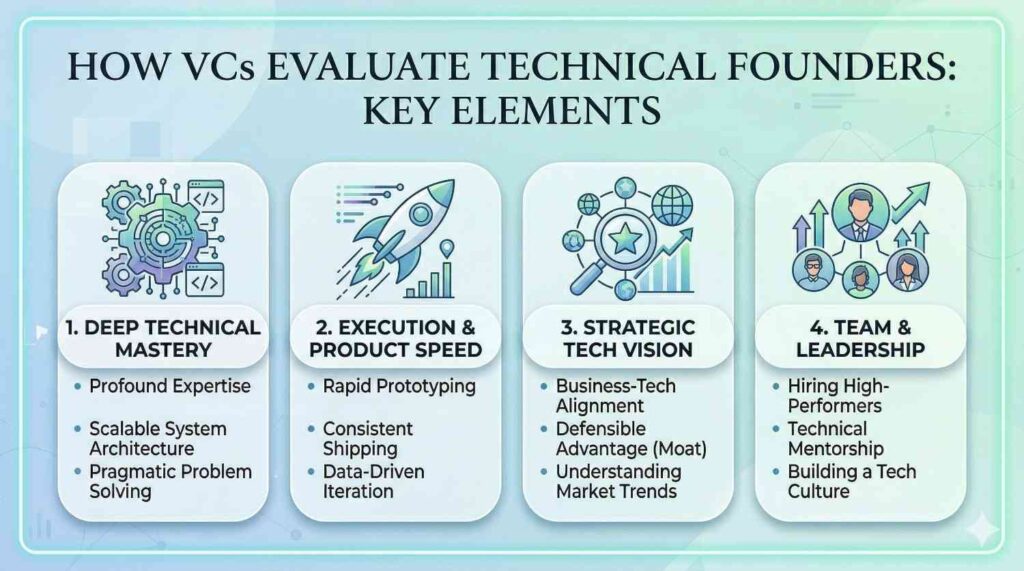
How VCs Evaluate Technical Founders
If you are a technical founder, you may think investors care mostly about business skills.
They care. But at pre-seed, technical clarity matters more.
VCs often ask themselves a quiet set of questions during a meeting:
Is this founder building something hard?
Do they truly understand the problem?
Are they ahead of others technically?
Can they recruit strong talent?
Will they protect what they build?
Notice the last question again.
Strong investors think long term. They imagine what happens if your startup works. They imagine competitors. They imagine larger players entering the space.
If there is no barrier, your startup becomes fragile.
But if there is IP, proprietary systems, and deep know-how that is protected early, your company becomes more investable.
This is why pre-seed is not just about proving demand. It is about building foundations that hold under pressure.
If you are building something in AI today, you are in a crowded space. Models are improving fast. Tools are widely available. Talent moves quickly.
Your advantage may not last unless you make it durable.
Durability is what investors pay for.
The Role of IP in Pre-Seed VC Funding
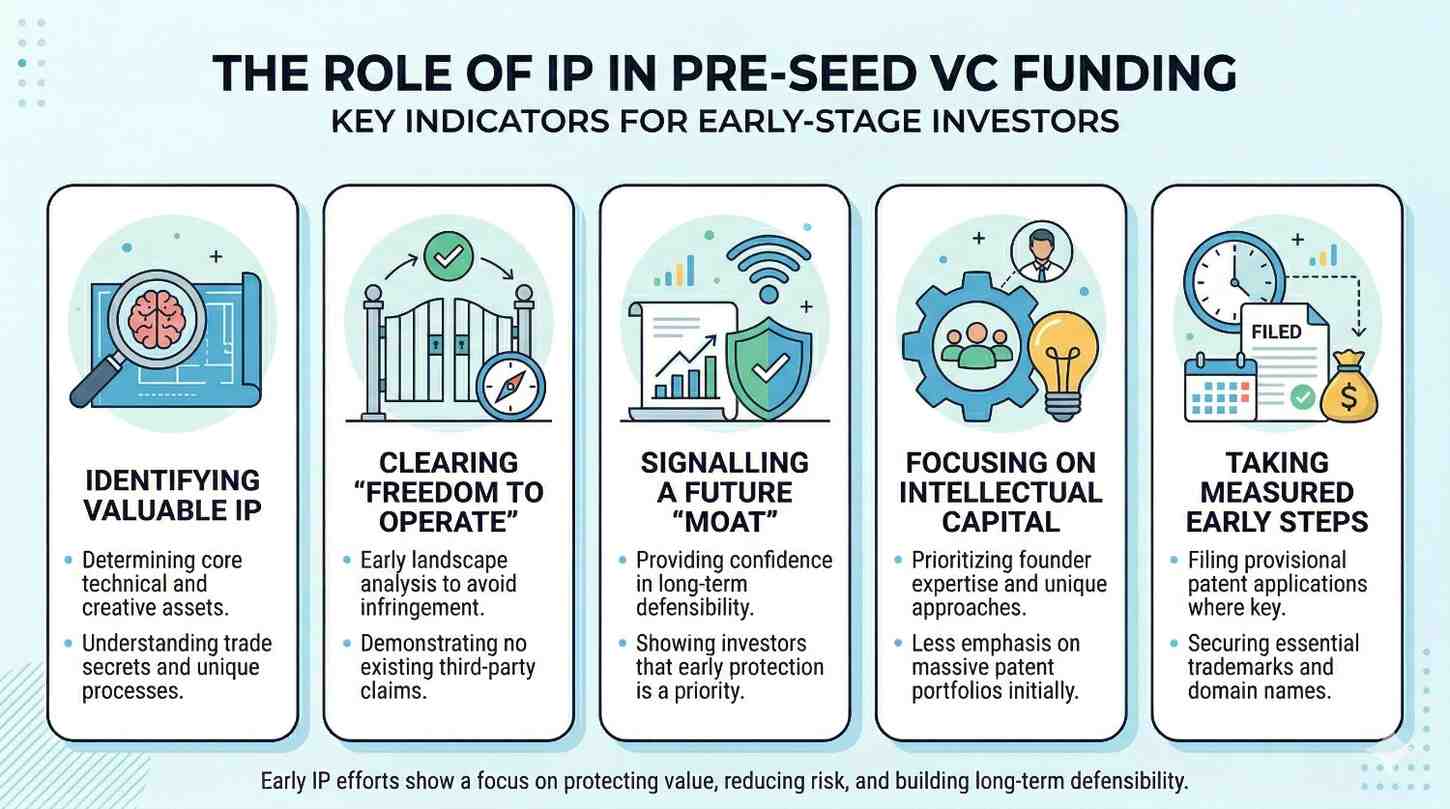
Let’s slow down here.
Many founders hear “patents” and think of big corporations or expensive law firms.
That is outdated thinking.
For deep tech startups, patents and IP strategy are tools. They are leverage.
They help you:
Signal seriousness to investors.
Block direct copies.
Increase valuation in future rounds.
Create negotiation power.
Attract strong partners.
But IP is not just about filing paperwork. It is about strategy.
What do you protect?
When do you file?
How broad should the claims be?
How does your IP align with your product roadmap?
This requires experience.
If you file too narrow, competitors can work around you.
If you file too broad without support, it gets rejected.
If you wait too long, you lose priority.
Smart founders think about IP early, even before revenue.
That does not mean filing dozens of patents blindly. It means building a clear map of what makes your technology unique and how to protect it.
This is where the right pre-seed partner makes a difference.
Not all investors help here. Most write checks and move on.
But if you can work with a partner who understands both startups and patent strategy, you gain more than capital.
You gain structure.
Building Leverage Before You Raise Big
Here is a simple idea that changes everything:
Raise with leverage, not desperation.
Leverage comes from strength.
Strength can be:
A working prototype.
Early customer validation.
Strong technical IP.
A clear roadmap.
A focused vision.
If you rush to raise before building strength, you accept terms you would not accept later.
If you build strength first, you negotiate differently.
For technical founders, leverage often comes from two areas: real technology and protected innovation.
When investors see that your core invention is filed and strategically positioned, they know you are serious.
When they see that you have thought ahead about competition, they feel safer.
Safety leads to better terms.
This is one reason why some founders choose to “seed-strap” early. Instead of raising a large round immediately, they build carefully, protect their core tech, and grow with intention.
That way, when they do raise, they are not just an idea. They are an asset.
If you are building in AI, robotics, or deep tech, this approach can be powerful.
And if you want support building that foundation properly, you can apply anytime at https://www.tran.vc/apply-now-form/
Tran.vc works with technical founders to turn raw innovation into protected, fundable companies. Not just with capital, but with real IP strategy and hands-on guidance.
How to Structure Your Pre-Seed Round
Start With a Clear Funding Goal
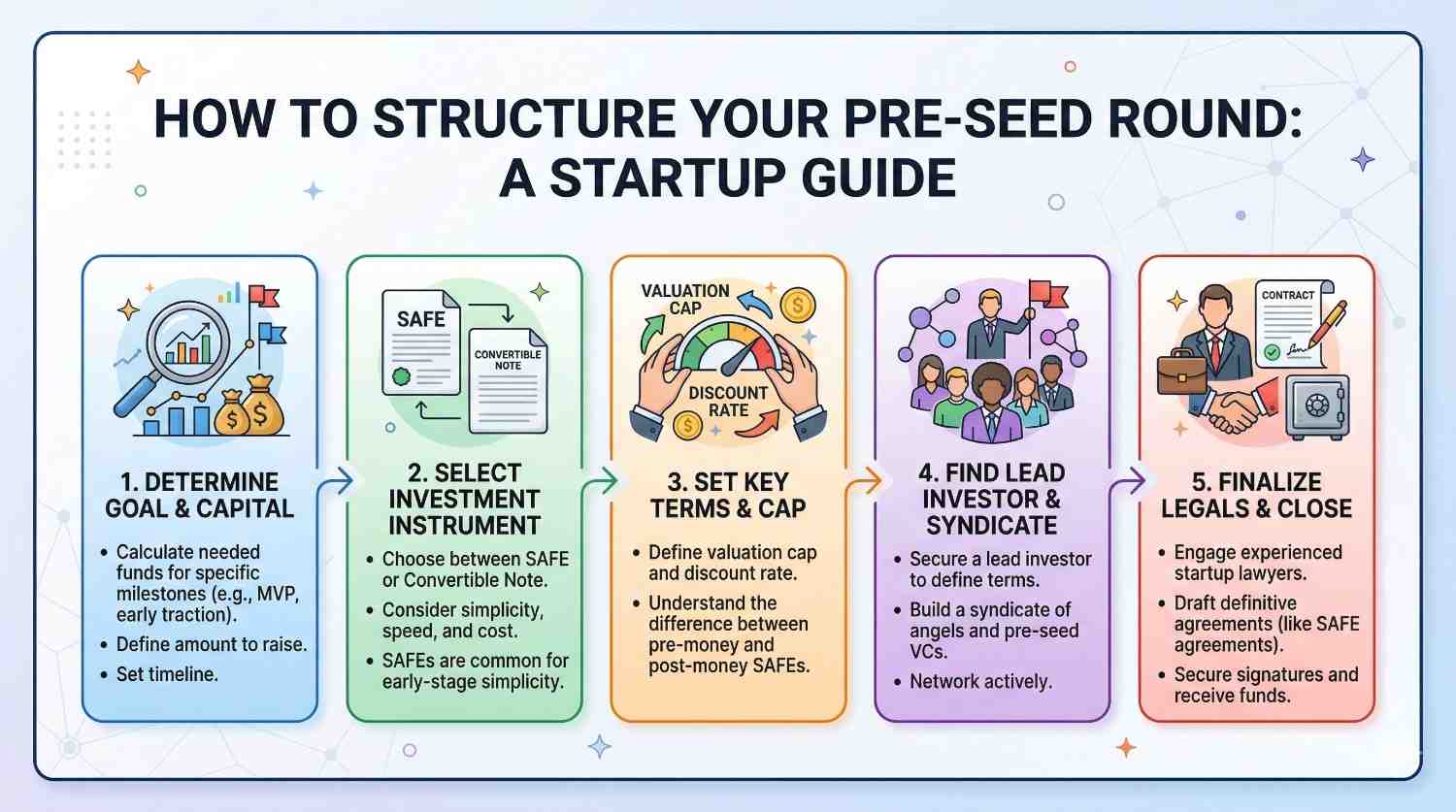
Before you speak to a single investor, you need to know why you are raising. Not how much. Not at what valuation. But why.
Pre-seed money is fuel for a very specific mission. It should move you from uncertainty to proof. That proof may be a working prototype, early design wins, pilot customers, or filed patents around your core system.
When founders say, “We are raising to grow,” it sounds weak. Growth of what? Revenue? Team? Code? Without a sharp goal, money gets spent but value does not increase.
A strong funding goal sounds like this: “We are raising to complete our core AI model, validate it with three design partners, and file two foundational patents.” That is specific. It shows direction. It gives investors confidence that their capital has purpose.
If you cannot define what changes after the round closes, you are not ready to raise.
Decide How Much Is Enough
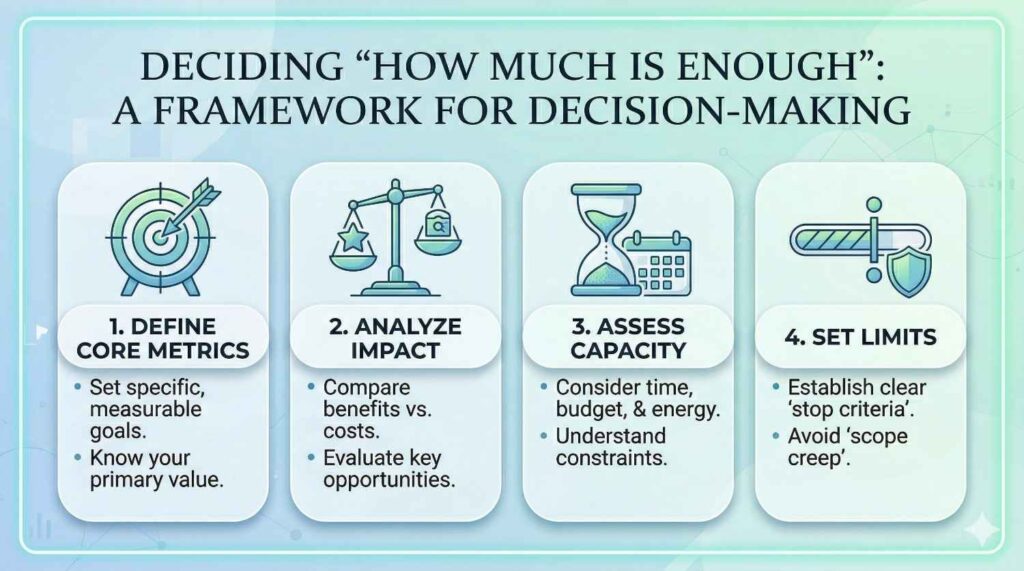
Many founders either raise too little or too much.
If you raise too little, you run out of time before proving anything meaningful. That forces you back into the market with weak leverage.
If you raise too much, you give away more equity than needed at your most fragile stage.
The right amount usually gives you 12 to 18 months of focused execution. It covers core development, small team growth, legal setup, and most importantly, IP protection.
For deep tech startups, remember that patent filings, technical validation, and hardware builds cost real money. If you ignore those costs in your planning, you will feel pressure later.
Raise enough to build strength. Not just to survive.
Understand Equity and Valuation Early
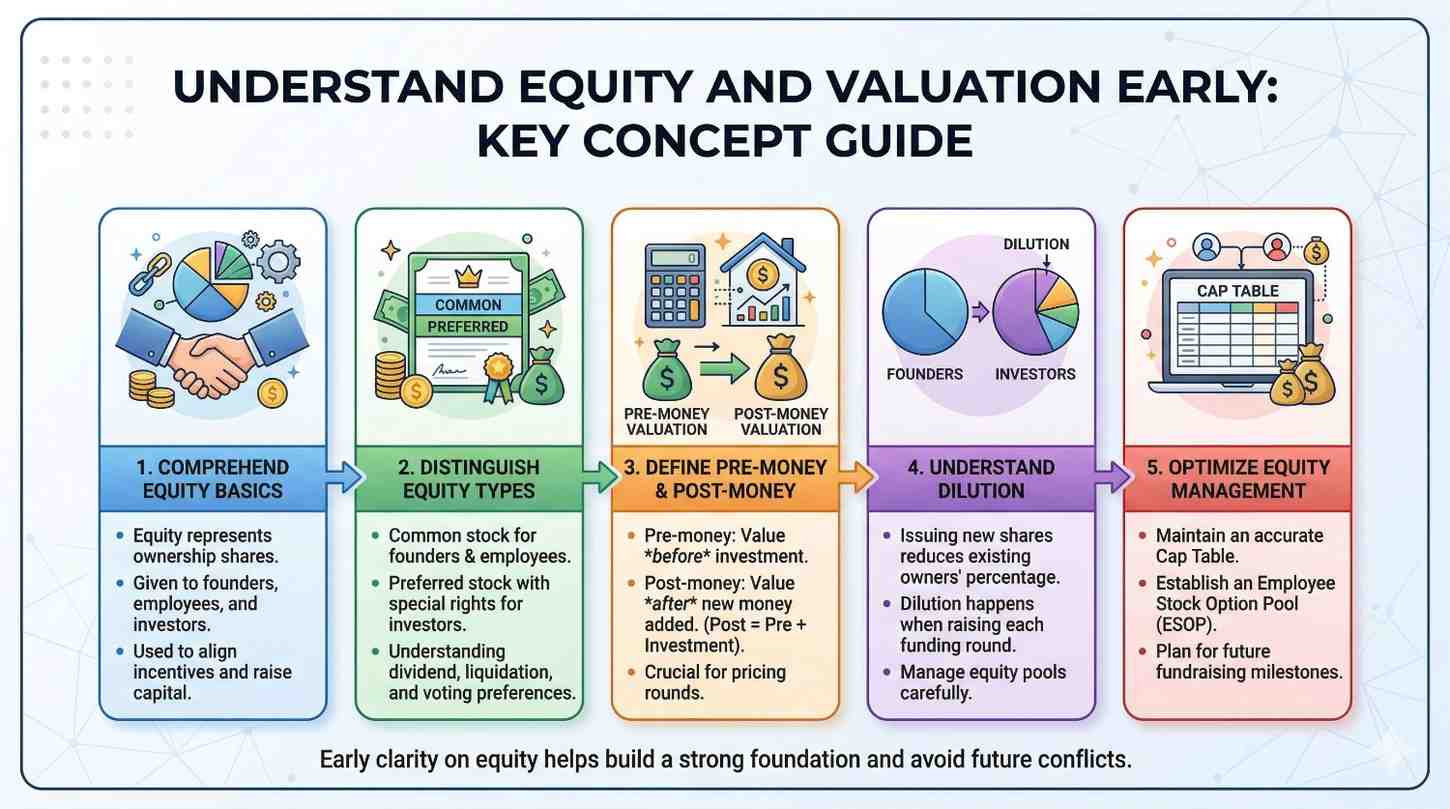
Equity is not just a number. It is control. It is future flexibility. It is how much of your upside you keep.
At pre-seed, valuations vary widely. Some founders get high numbers because of strong backgrounds. Others raise at modest valuations because they are earlier.
The mistake is focusing only on valuation and ignoring structure.
For example, is the round priced equity or a convertible instrument? What rights do investors get? Do they take a board seat? Are there special control provisions?
You do not need to become a lawyer. But you must understand the basics. A high valuation with heavy control terms can hurt you more than a fair valuation with clean structure.
Good investors want you to win long term. If terms feel aggressive or confusing, slow down. Ask questions. Bring in experienced counsel.
Your goal at pre-seed is to set up a clean path to your seed round. Not to maximize ego today.
Keep the Cap Table Simple
A messy cap table scares future investors.
If you fill your pre-seed round with too many small checks, complex side agreements, and unclear rights, you create friction later.
Strong VCs at seed stage look closely at ownership structure. They want clarity. They want to see that founders still hold meaningful equity. They want to know that early investors are aligned.
This is another reason why picking the right early partner matters more than squeezing in every possible check.
A focused round with aligned investors often beats a crowded one.
If you are unsure how to design your pre-seed structure properly, this is where experienced support becomes critical. You can always apply to Tran.vc at https://www.tran.vc/apply-now-form/ to build your round on strong ground from day one.
How to Approach VCs Strategically
Stop Pitching. Start Positioning.
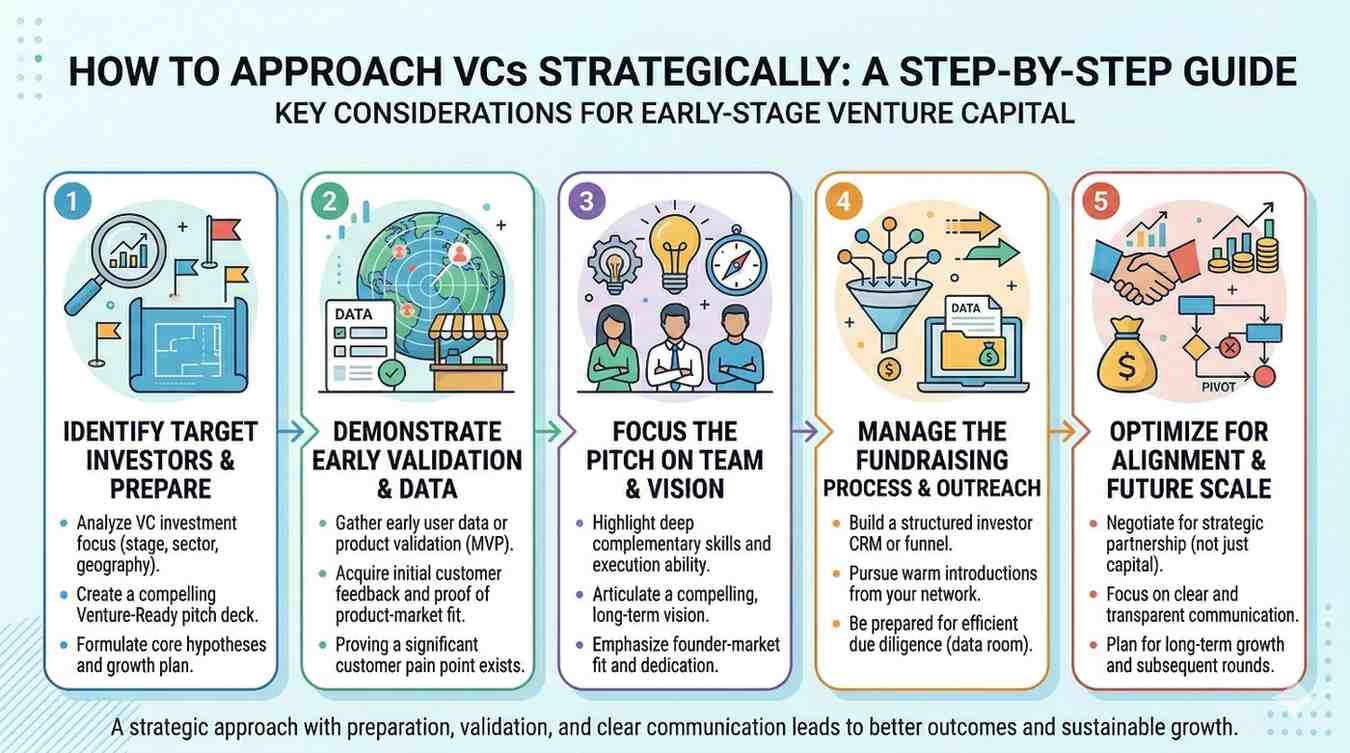
Most founders approach fundraising like a sales campaign. They send decks to dozens of investors and hope for meetings.
That approach rarely works in deep tech.
Instead of asking, “Who will give us money?” ask, “Who deeply understands what we are building?”
If you are building robotics systems for industrial automation, you need investors who understand hardware cycles, integration challenges, and IP defensibility. If you are building AI infrastructure, you need investors who respect technical depth.
When you speak to the right investors, conversations feel different. They ask sharper questions. They understand nuance. They see the long-term play.
Quality of investor matters more than quantity of meetings.
Build a Tight Narrative
Your story must be simple and sharp.
You are solving a clear problem.
Your technical approach is different.
You have insight others do not.
You are protecting that insight.
There is a large outcome if you win.
But do not turn this into buzzwords. Speak plainly. Explain your architecture in a way a smart non-expert can understand. If you cannot explain your innovation without hiding behind jargon, investors will feel it.
Clarity builds trust.
When discussing your technology, connect it directly to defensibility. Explain what part of your system is unique. Show that you are not just combining existing tools.
And if you have already filed or planned patents around your core invention, say it clearly. That signals maturity.
Run a Process, Not Random Meetings
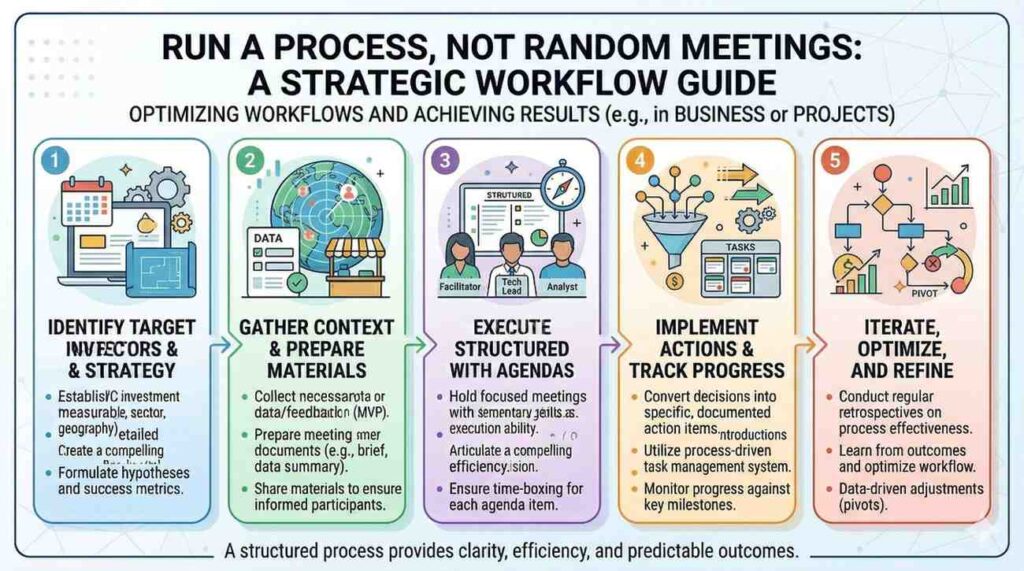
Fundraising is not casual. It is a process.
You want to cluster meetings within a short time window. This creates momentum. If one investor shows interest, others move faster.
If you spread meetings over months, you lose energy and urgency.
Prepare your materials before you begin. Your deck should show technical depth, clear milestones, and how funds will be used. Your data room should include incorporation documents, early product demos, and any IP filings or drafts.
When investors see organized founders, they relax. Organization signals competence.
And competence attracts capital.
Handle Rejection the Right Way
You will hear “no.” Everyone does.
The key is to learn without losing direction.
Some feedback is useful. Some is noise. If multiple investors question your market size, examine it carefully. If one investor does not understand deep tech cycles, that may not reflect your reality.
Stay calm. Stay focused.
Do not pivot your entire company because one person passed.
Strong founders filter feedback. They adjust where needed, but they do not lose their core insight.
Common Mistakes in Pitch and Positioning
Overpromising and Underdelivering
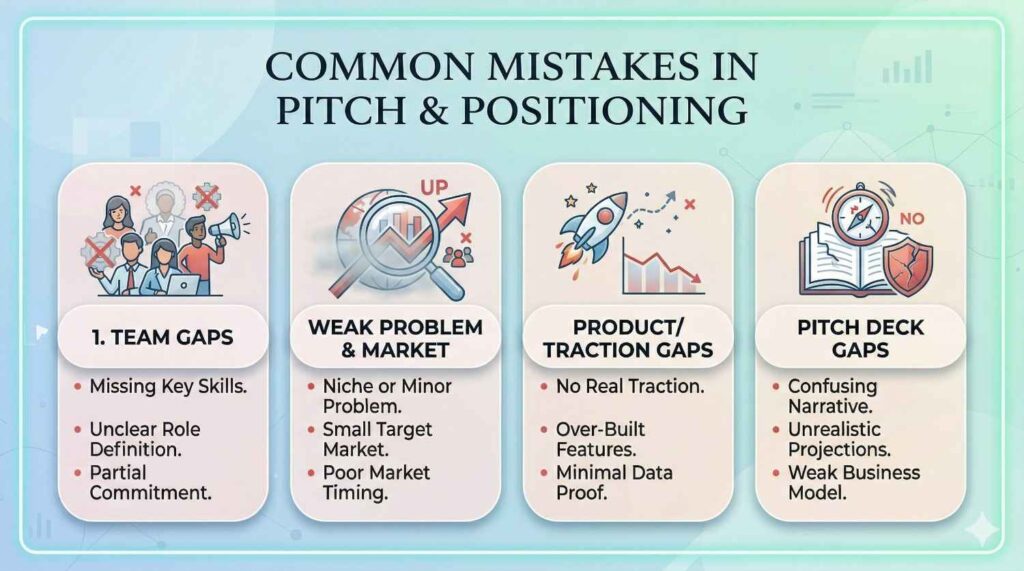
It is tempting to paint a massive future. Billion-dollar projections. Rapid adoption curves. Fast global expansion.
At pre-seed, this feels hollow.
Investors know early numbers are guesses. What they want is thoughtful planning. They want to see that you understand risks, technical hurdles, and timelines.
If you are building robotics hardware, say clearly that development cycles take time. If you are training complex AI models, explain computational limits and validation plans.
Realism builds credibility.
When you show that you understand difficulty, investors trust that you can manage it.
Ignoring the Competitive Landscape
Some founders say, “We have no competitors.”
That is almost never true.
You may not have direct clones. But customers are solving the problem somehow. That is your competition.
Explain how others approach the problem. Show why your method is better. Show what technical edge you have.
Then tie that edge back to protection. If your advantage is in a novel training method, hardware design, or control system, explain how you plan to defend it.
Competition is not a weakness. It proves the problem is real.
Treating IP as an Afterthought
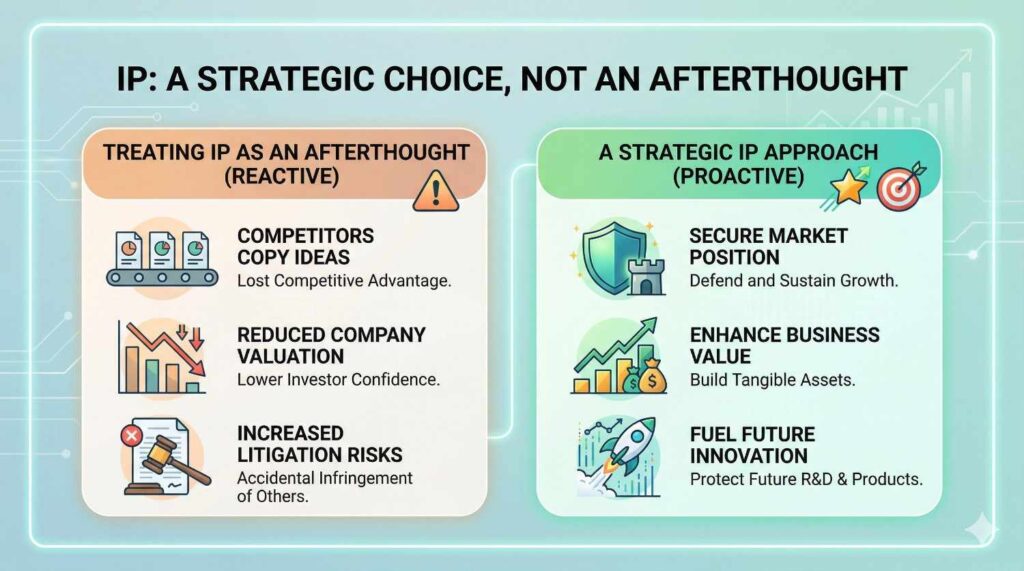
This mistake quietly reduces valuation.
If you are building deep tech and cannot answer basic questions about your IP strategy, investors worry.
They ask: Who owns the code? Have founders assigned IP to the company? Have you filed provisional patents? Is there freedom to operate?
If you hesitate, confidence drops.
Even early-stage startups can have a clear IP roadmap. You do not need dozens of patents. You need focus.
Protect the core. Map the future filings. Align IP with product direction.
When you walk into a VC meeting with that clarity, you stand out.
Tran.vc was built exactly for this stage. Instead of writing a check and stepping back, they invest up to $50,000 in in-kind patent and IP services to help you build a real moat early.
If you are serious about building something defensible in AI, robotics, or deep tech, you can apply anytime at https://www.tran.vc/apply-now-form/