
Most founders think “IP” means “we filed a patent.” Most VCs do not see it that way.
When a VC looks at your IP, they are quietly asking one simple question: Can this team keep winning even when the market gets loud and crowded? Not “Is this interesting?” Not “Is this smart?” But: Is this protected in a way that makes the business harder to copy, easier to defend, and easier to fund?
A strong IP portfolio is not a stack of documents. It is a clear story—told through patents, trade secrets, and smart choices—that shows:
- what you own,
- why it matters,
- how it blocks copycats,
- how it supports revenue,
- and how it grows as your product grows.
And here is the key: VCs do not reward IP because it exists. They reward it when it creates leverage. Leverage in sales. Leverage in pricing. Leverage in partnerships. Leverage in fundraising. Leverage in exits.
This article will show you what that “leverage” looks like in real life—especially for AI, robotics, and deep tech startups. We’ll talk about what VCs notice fast, what makes them nervous, and what makes them lean in and say, “This is defendable.”
If you are building something technical and you want to turn it into real assets early—without burning months and cash—Tran.vc can help. Tran.vc invests up to $50,000 in in-kind patent and IP services so you can build a real moat before you are forced to raise on weak terms. You can apply anytime here: https://www.tran.vc/apply-now-form/
What a Strong IP Portfolio Looks Like to a VC
The question every VC is silently asking
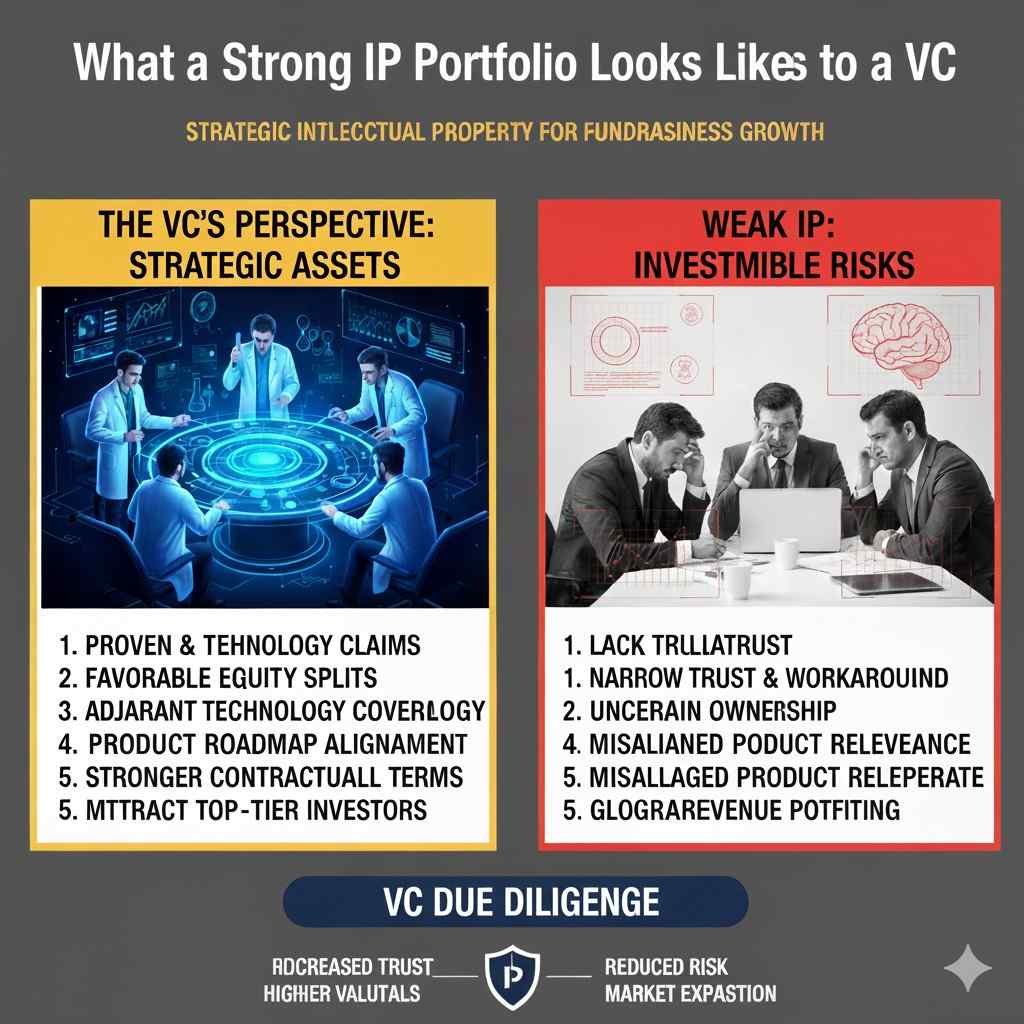
A VC is not reading your patents the way a patent examiner does. They are not scoring you on legal language or how many pages you filed. They are asking a business question that hides inside an IP question.
That question is simple: can you keep your advantage when smart teams chase your space. If the answer is yes, the VC sees safety, speed, and upside. If the answer is unclear, they see risk that will show up later as price pressure, churn, and weak negotiating power.
When VCs say “defensible,” they do not mean “nobody can build anything similar.” They mean your path to compete is unfair in a real way. Your IP can be one of the strongest proofs that your advantage is not just temporary.
If you are building AI, robotics, or deep tech and you want to turn your work into assets early, Tran.vc helps you do that with up to $50,000 in in-kind patent and IP services. You can apply anytime here: https://www.tran.vc/apply-now-form/
Why “we filed a patent” is not the same as “we have strong IP”
Many teams file one patent because it sounds like the correct startup move. VCs have seen this pattern so many times that it rarely moves the needle on its own. One filing can be useful, but only if it sits inside a plan.
A strong IP portfolio feels connected. It matches the product, the roadmap, and the market you are going after. It shows what you will protect next, and why those pieces matter for revenue and long-term power.
Think of it like a map. A single patent is one pin on the map. A portfolio is the shape of the territory you intend to own. VCs want to see that shape, even if you are early.
What a “strong portfolio” looks like in plain terms
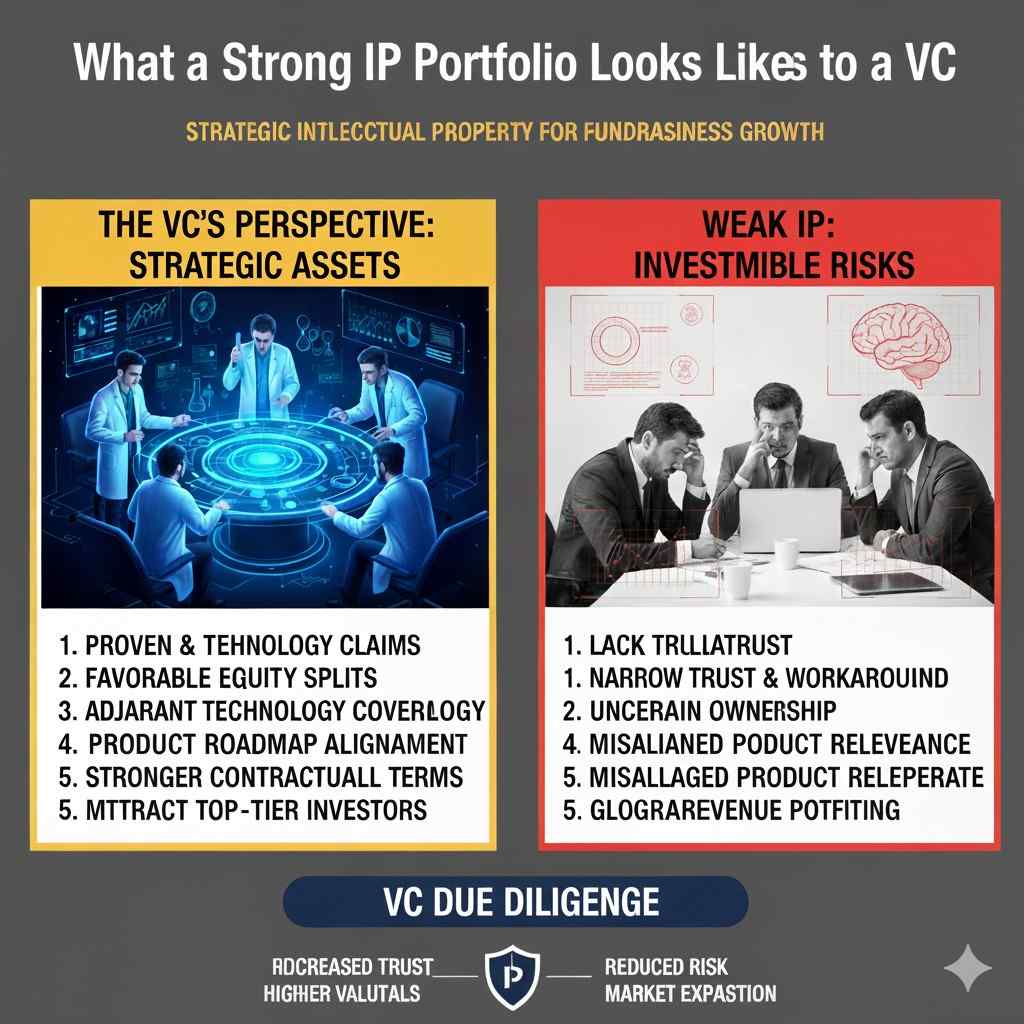
A strong portfolio is not “a lot of patents.” It is the right coverage in the right places, written in a way that holds up when you scale. The best portfolios are built around the parts of the system that create outcomes.
If you are doing robotics, that might be sensing, control loops, calibration, edge cases, and failure recovery. If you are doing AI, that might be data pipelines, model training methods, evaluation systems, and deployment constraints that others will struggle to match.
The point is not to protect everything. The point is to protect the things that would hurt the most if someone copied them. VCs are watching for that kind of judgment.
How VCs evaluate IP without saying it out loud
Most VCs will not tell you their exact rubric. But after enough meetings, you can see the same signals show up again and again. They are trying to measure strength fast, because they are comparing you to other teams.
They look for a clear link between your IP and your business outcomes. They also look for signs that you understand the difference between a patent, a trade secret, and a simple feature that is not protectable.
They also look for how you think. If your answers show you treat IP as a check-the-box task, they assume you will treat other hard topics the same way. If your answers show you are building with intention, they feel more confident backing you.
The first signal: the portfolio matches the product you are actually shipping
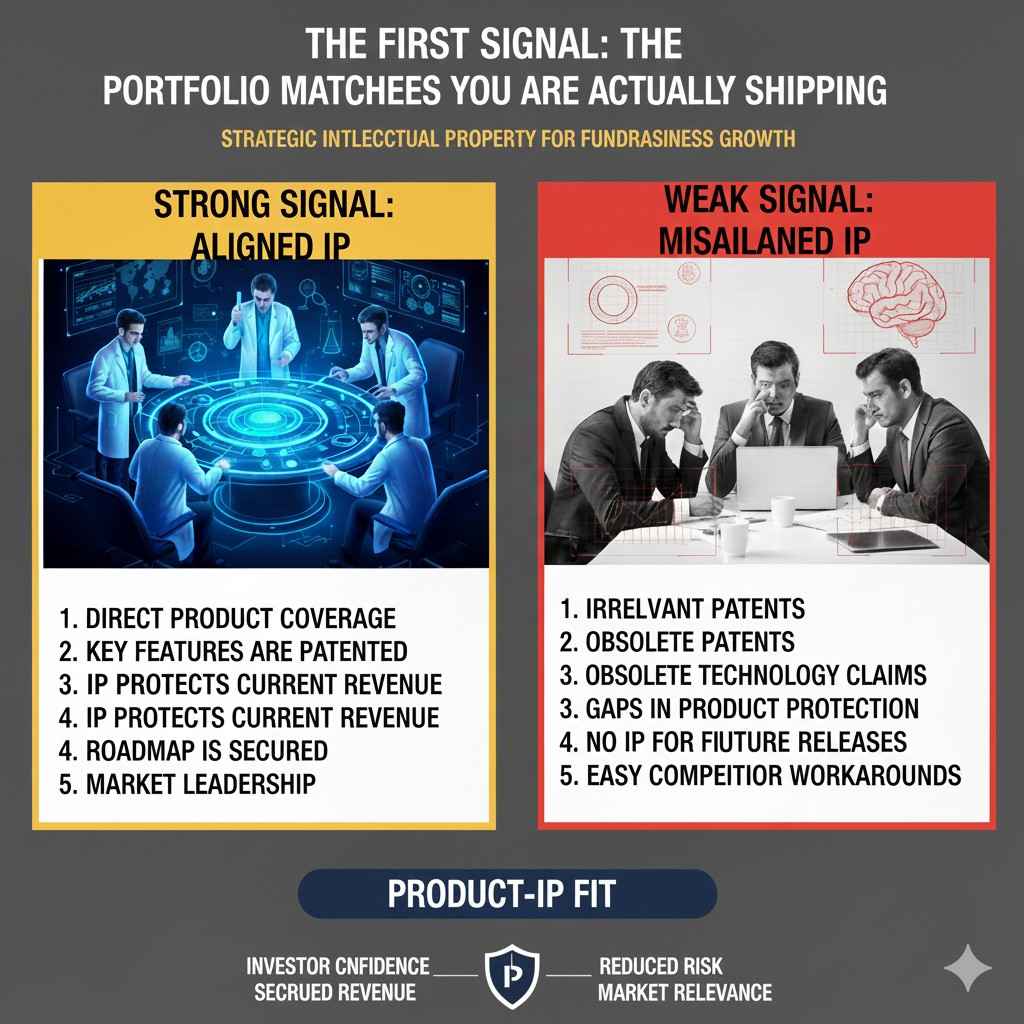
A common mistake is filing patents around ideas that are not in the product, or are not even on the roadmap. That happens when founders file too early without a clear strategy, or when they file what sounds “cool” instead of what matters.
A VC notices this mismatch quickly. It can feel like you are trying to impress rather than protect. It can also raise a concern that your team is scattered or not yet sure what the core product is.
When the portfolio matches the product, the story becomes clean. You can point to a specific feature or capability, explain why it creates value, and then show how your filings defend it. That makes an investor relax, because the IP starts to look real.
The second signal: there is a strong “core” and then supporting coverage
Strong IP usually has a center. That center is the technical reason your solution works better, cheaper, faster, or more reliably than what is out there. The core might be an algorithmic method, a system architecture, a hardware design, or a workflow that removes a painful bottleneck.
Around that core, strong portfolios build supporting claims that make copying harder. This support layer can cover variations, edge cases, and different ways the system can be implemented. VCs like this because it suggests you are not protecting a single narrow trick.
This is how portfolios start to become moats. Not because they are huge, but because they create a fence around the thing that matters, and then widen that fence over time.
The third signal: your IP plan can survive product changes
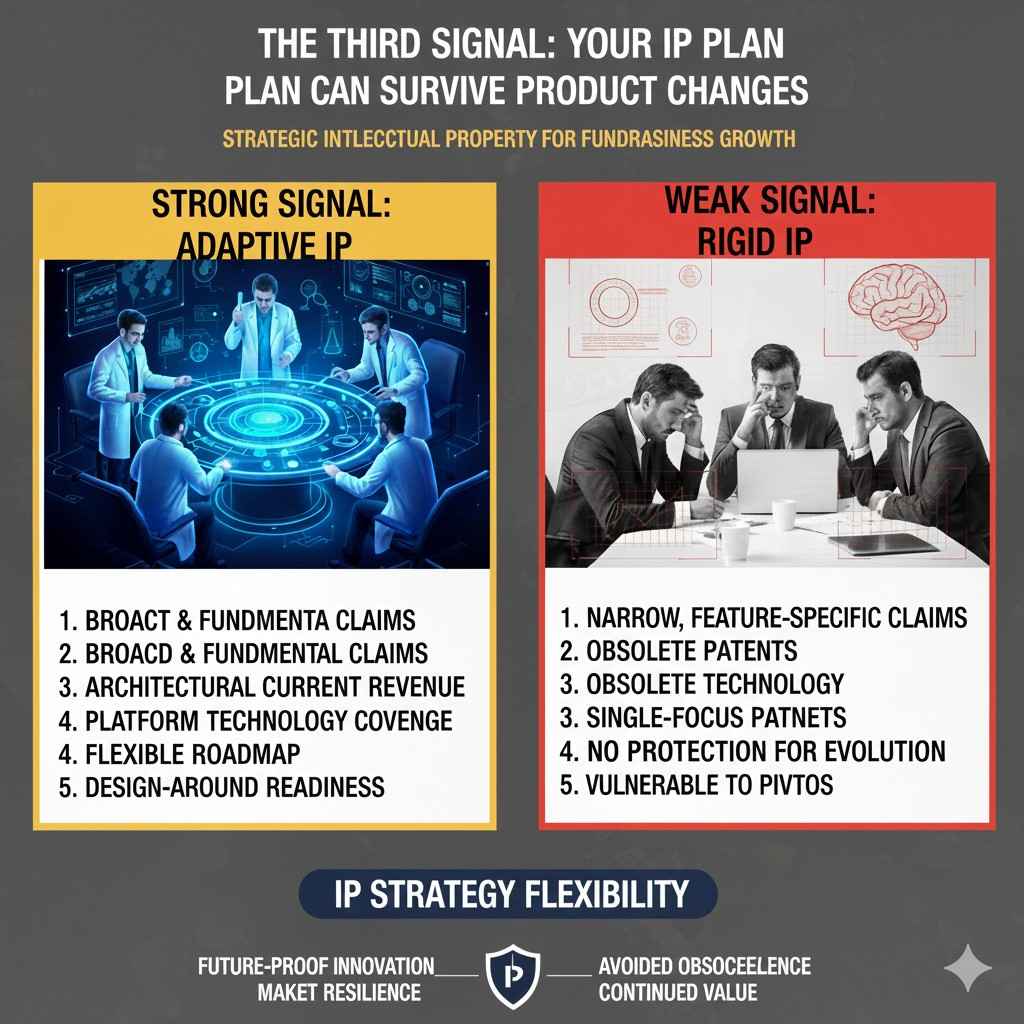
Early products change. VCs know that. So a portfolio that only protects a very specific version of today’s product can feel fragile. If you pivot, your patents might become useless.
A stronger approach protects the underlying method or system benefit, not just the current packaging. That way, even if you change your UI, change your sensor stack, or move from one customer segment to another, the protected core still matters.
This is one reason VCs respect founders who can explain their claims in plain language. If you can explain the principle behind the invention, you are more likely to protect it in a way that lasts.
The fourth signal: you know what to patent and what to keep secret
Some teams try to patent everything. Other teams keep everything secret. Both approaches can be weak if done without care. VCs want to see that you understand the tradeoffs.
Patents are public. They can be great when you need clear ownership, when you want to block competitors, or when you need something tangible for diligence. Trade secrets can be great when the value is in process, data handling, or know-how that is hard to reverse engineer.
When you can explain why you chose each path, it shows maturity. It also shows you are not just reacting to advice from random people online. You are making choices that fit your product and your market.
The fifth signal: your claims are written to matter in the real world

A patent can be “granted” and still be weak. VCs have learned this the hard way. A weak patent is one that is too narrow, too easy to design around, or not aligned with what others must do to compete.
A strong patent is uncomfortable for competitors. It covers a path they must take if they want the same outcome. It also covers variations that a clever engineer might try in order to avoid your exact method.
You do not need to be a patent lawyer to understand this. As a founder, you can think in terms of “If they build something similar, what must they also do?” A VC wants to hear you talk that way.
The sixth signal: the portfolio is staged, not rushed
A smart portfolio grows in steps. Early on, you might file one or two key inventions that anchor the story. Later, as the product hardens, you file continuations, improvements, and broader system-level coverage.
If you rush and file too much too early, you can waste money and lock yourself into narrow language before you fully understand the market. If you wait too long, you risk losing priority, exposing details in demos, or letting competitors file first.
VCs like staged plans because staged plans fit startup reality. They show you are careful with resources, but still serious about building a lasting asset base.
Where Tran.vc fits in this picture
Many strong technical teams struggle with this because they do not have the time or the pattern recognition. They are building product, chasing pilots, hiring, and trying to survive. In that chaos, IP either becomes neglected or becomes a shallow checkbox.
Tran.vc exists to solve that exact problem. Tran.vc invests up to $50,000 in in-kind patenting and IP services so you can build real protection early, with guidance from people who have done this before. You keep building, and the IP work moves in parallel with real strategy behind it.
If you want to build a portfolio that a VC will respect, apply anytime here: https://www.tran.vc/apply-now-form/
What a Strong IP Portfolio Looks Like to a VC
What diligence really feels like from the VC side
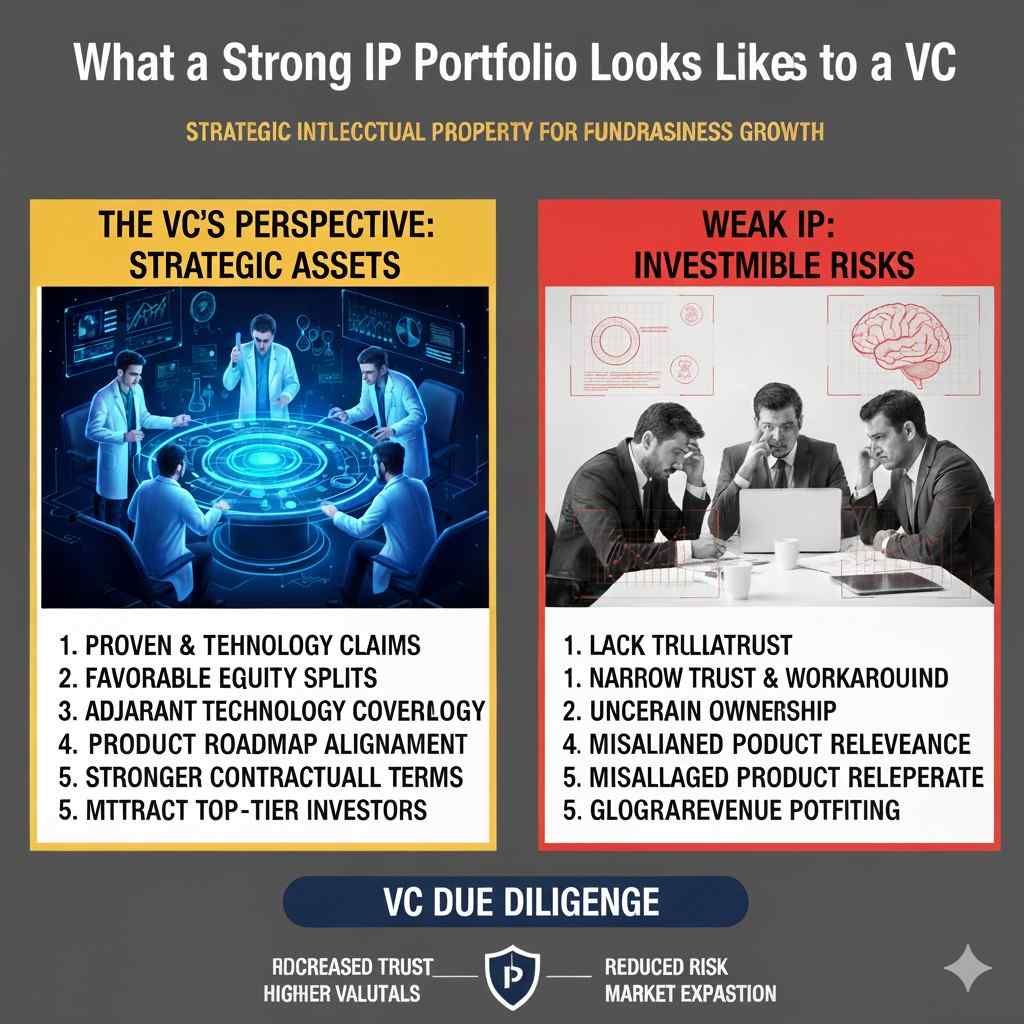
When a VC moves from “this is interesting” to “we might invest,” the tone changes. Meetings get tighter, questions get sharper, and people who were quiet suddenly join the call. That is diligence.
IP diligence is rarely a single event. It is a series of small checks that add up to one big decision: is this company building something it can truly own. A VC wants to know if your advantage can last longer than your launch moment.
In deep tech, AI, and robotics, IP diligence often starts earlier than founders expect. Even pre-seed investors may ask about filings, inventions, and ownership because the technical work is the business.
The quickest way VCs “score” your IP in their head
Most investors do a fast mental sort. They place your IP into one of three buckets: helpful, unclear, or risky. They may not use those words, but you can feel the outcome in their follow-up questions.
Helpful means your IP story reduces fear. It supports pricing power, slows copycats, and makes partnerships easier. Unclear means the investor is not sure whether the IP has real bite, so they keep probing. Risky means something is off, and now they are looking for what else might be off too.
The goal is not to sound legal. The goal is to sound grounded. When you explain IP as a set of business levers, VCs listen differently.
The difference between “protecting features” and “protecting outcomes”
Many weak portfolios are built around features. A feature is something like a UI flow, a common workflow, or a small improvement that others can change without losing the benefit. When you patent features, competitors can often step around them.
Strong portfolios are built around outcomes. An outcome is the real value you deliver, like reducing failure rates in a robot arm, cutting inference cost while keeping accuracy, or improving safety in a human-in-the-loop system. If you protect the method that creates the outcome, you make it harder to copy what customers pay for.
This is one of the cleanest signals to a VC that you know what matters. You are not just filing. You are choosing targets that match the business.
What “bad IP” looks like in a real diligence conversation
Bad IP is not only “no patents.” Bad IP is any IP setup that creates doubt. It can be patents that do not match the product, filings that read like broad marketing claims, or ownership that is messy.
A common example is a startup that says it has “AI patents,” but cannot explain the invention beyond “we use machine learning.” Investors have seen that story too many times, and it does not land.
Another example is a team with patents that cover a concept, but not the working system. If the claims do not touch the actual engineering steps that make the product work, the patents become decorative. VCs call that “paper IP,” even if they do not say it to your face.
The most common red flag: unclear ownership
Ownership problems can kill deals. If a VC suspects that the company does not fully own its inventions, everything slows down. Sometimes it ends the process.
This risk often comes from founders who built early versions while employed elsewhere, used contractors without clear assignment, or collaborated with a university lab without understanding the rules. None of this makes you a bad founder. It just means the paperwork can get complicated.
A strong IP portfolio includes clean ownership from day one. It is not glamorous, but VCs care because lawsuits and disputes are expensive, distracting, and hard to price into an early investment.
How to talk about ownership in a way that builds trust
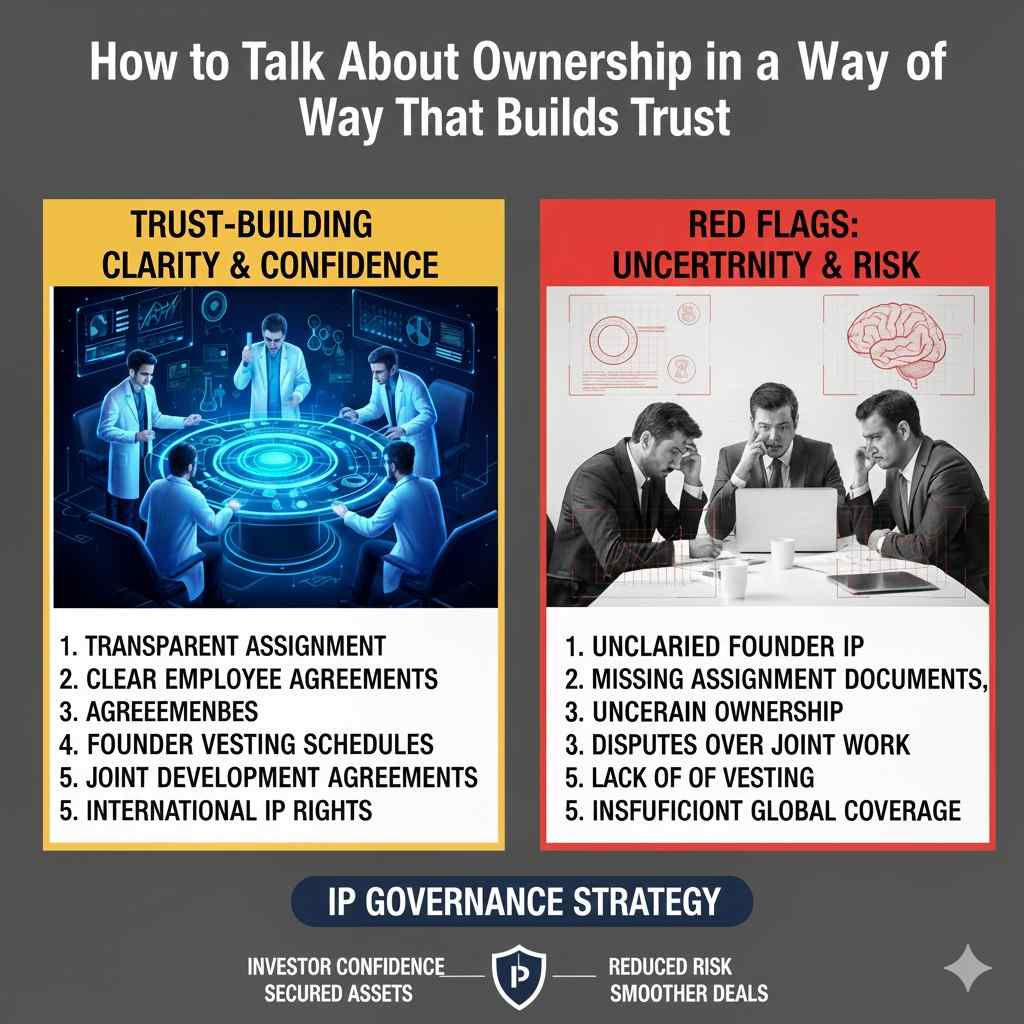
You do not need to overexplain. You need to be clear. A VC wants to hear that all inventors have signed assignment to the company and that any third-party work is covered by agreements that transfer rights.
If there are gray areas, naming them early is usually better than hiding them. Investors are used to early-stage mess. What they do not like is surprise mess. When you show you understand the risk and have a plan to fix it, you look more investable.
This is also where experienced IP help matters. The right guidance can prevent you from stepping into traps that are easy to avoid but painful to unwind later.
Another red flag: public disclosure before filing
Many founders do not realize how easy it is to disclose an invention. A conference talk, a detailed blog post, a public demo video, even a slide deck sent widely can create issues.
VCs worry about disclosure because it can shrink your options. In some places, public disclosure before filing can block you from getting a patent at all. Even when it does not block you, it can create arguments for why your invention is not new.
A strong portfolio strategy includes a simple habit: file or at least lock down key inventions before you go loud. It keeps your future choices open.
Why “we can just move fast” is not a comfort line
Speed matters, but it is not a moat by itself. VCs have learned that fast movers can still be copied by big teams with distribution.
When a founder says, “We are not worried, we will just out-execute,” an investor may hear, “We do not have a protection plan.” In software-only markets, speed can work for a while. In deep tech, once others see value, they catch up.
If you pair speed with strong IP choices, you get the best of both worlds. You move fast now and reduce the chance you are crushed later by a better-funded copy.
What “good IP” looks like when a VC digs deeper
Good IP becomes clearer the more you look at it. The story stays consistent across the pitch, the product, and the filings. The claims line up with the hard parts of the system.
Good IP also has a timeline. It shows what is filed, what is next, and what is still being held as a trade secret. When VCs see a timeline, they see a team that is building assets, not just features.
In deep tech, strong IP often includes multiple layers. There might be a core method claim, then system claims, then application claims tied to specific markets. That layered feel makes it harder to attack and easier to defend.
How to make your IP feel “real” without sounding like a lawyer
The best way is to tie it to pain and value. Instead of saying, “We have a provisional filed,” you say, “We filed around our failure recovery method that cuts downtime by half in real deployments.”
Instead of saying, “We have three patents pending,” you say, “One covers our calibration approach, one covers our safety checks, and one covers how we train models on sparse field data without breaking performance.”
This kind of explanation helps the VC understand why your inventions matter. It also shows you are not hiding behind patent counts. You are showing the substance.
The role of claim scope, explained in simple words
Claim scope is basically how wide your fence is. A narrow fence protects one exact path. A wide fence protects many similar paths.
If your fence is too narrow, a competitor can step around it with small changes. If your fence is too wide, it may not stand because it can run into prior work. A strong portfolio finds smart middle ground, and then builds additional fences over time.
VCs do not need you to explain the legal details. They need you to show you understand the goal: protect what others must do to deliver the same value.
Why investors like portfolios that show “future room”
A strong early filing can become a platform for more filings. This is valuable because startups learn as they ship. What you discover in pilots often becomes the best invention material.
Investors like to see that your first filings are not dead ends. They like to see room for continuations, improvements, and expansions into new use cases. It signals that your moat can grow, not freeze.
This is also why waiting until you are “done” is risky. You do not need perfection to file. You need clarity on what is new, what is valuable, and what you want to own.
How Tran.vc helps founders avoid these diligence traps
Tran.vc is built for technical founders who want to build real leverage early. Instead of giving you cash and stepping away, Tran.vc invests up to $50,000 in in-kind patent and IP services so your protection plan is handled with care.
That means you are not guessing what to file, when to file, or how to describe your inventions in a way that holds up later. You are building a portfolio that can survive diligence, support fundraising, and block copycats as you scale.
If you want that kind of early advantage, you can apply anytime here: https://www.tran.vc/apply-now-form/