
Most founders think pre-seed investors are looking for traction, revenue, or a polished pitch deck.
They are not.
At the pre-seed stage, investors are looking for signals. Signals that you can build. Signals that you understand the problem deeply. Signals that your technology can turn into something no one else can easily copy.
If you are building in AI, robotics, or deep tech, the bar is even higher. Not because investors want perfection. But because hard tech is expensive, slow, and easy to misunderstand. A small mistake early can cost years later.
At Tran.vc, we work with technical founders before they raise their first round. We invest up to $50,000 in patent strategy and IP services instead of writing a small check and hoping for the best. We do this because we know what early investors truly look for. And most founders miss it.
In this article, I will walk you through what pre-seed VCs actually care about, how they think, and how you can prepare before you start pitching. If you are serious about building a real company, not just raising money, this will help.
If you are ready to build the right way from day one, you can apply anytime here:
https://www.tran.vc/apply-now-form/
Pre-Seed Is Not About Proof. It Is About Potential.
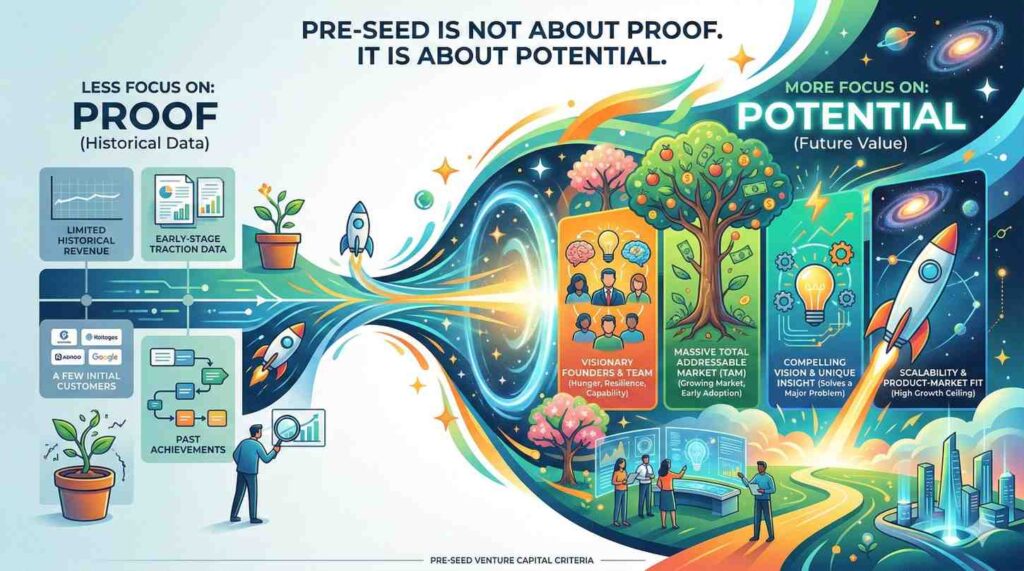
At the pre-seed stage, you usually do not have revenue. You may not even have users. Sometimes you do not have a finished product.
So what are investors judging?
They are trying to answer one simple question:
“Is this team capable of turning this idea into something big?”
That is it.
They look at three main things, even if they do not say it directly:
First, the founder.
Second, the problem.
Third, the edge.
Let’s start with the founder.
The Founder Signal: Can You Actually Build This?
At pre-seed, you are the product.
Your code might change. Your roadmap will change. Your market may even shift. But you are the one constant.
Investors want to know:
Can you build the core technology yourself?
Do you understand the problem at a deep level?
Will you stay committed when things get hard?
In AI and robotics, this matters even more. If you are building a new model architecture, a control system, or a hardware-software stack, investors want to see that you are not guessing. They want proof that you have lived with this problem for a long time.
This does not mean you need a PhD. It means you need depth.
Have you worked in this field before?
Have you built similar systems?
Have you broken things and fixed them?
When you pitch, do not just explain what you are building. Explain why you are the right person to build it.
Talk about the failed experiments.
Talk about the insight that changed your direction.
Talk about the technical wall that took you months to break through.
Pre-seed investors listen for obsession. Not excitement. Obsession.
They can feel the difference.
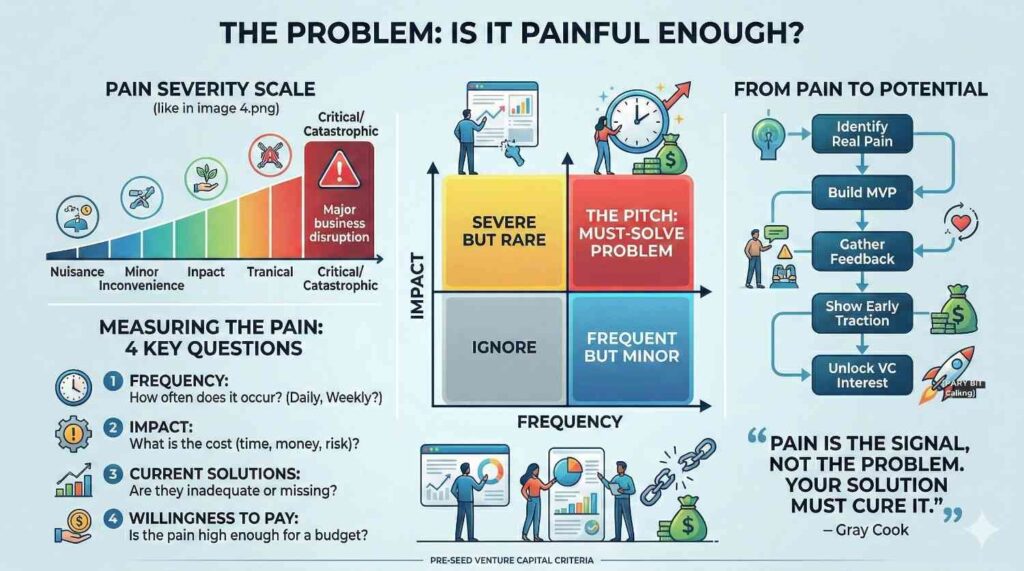
The Problem: Is It Painful Enough?
Many founders describe problems that are “interesting.”
Pre-seed VCs look for problems that hurt.
There is a huge gap between a nice-to-have tool and a must-have solution.
If you are building AI for logistics, do you reduce costs by 2%? Or do you save companies millions by fixing a broken system?
If you are building robotics for manufacturing, are you helping a small team move faster? Or are you solving a labor shortage that threatens entire supply chains?
Investors want to see pain that is urgent, expensive, and clear.
They also want to see that you understand the buyer. Not just the user.
Who writes the check?
Why would they say yes?
What budget does this come from?
At pre-seed, you do not need large contracts. But you do need sharp insight.
One strong design partner is better than ten vague conversations.
One deep pilot with clear feedback is better than a hundred LinkedIn likes.
If you cannot clearly explain why someone would pay for this, investors will hesitate. Not because the tech is weak. But because the business is unclear.
The Edge: Why Can’t Others Copy This?
This is where most founders struggle.
They say things like:
“We will move fast.”
“We have first-mover advantage.”
“We will build community.”
These are not real moats.
In AI and robotics, your real edge often lives in your IP.
Your algorithms.
Your system design.
Your hardware integration.
Your training data approach.
Your novel method.
Pre-seed investors look for defensibility early. They want to know that if you succeed, you can protect it.
This does not mean you need granted patents before you raise. But you do need a strategy.
Do you know what part of your system is truly unique?
Have you mapped what can be protected?
Have you checked if someone else already owns it?
Too many founders treat IP as something to think about later. That is risky.
If you raise money, build traction, and then discover you cannot protect your core technology, you are exposed.
At Tran.vc, this is where we spend most of our time. We help founders turn technical insight into structured, defensible IP from day one. Not as paperwork. As strategy.
When a pre-seed VC sees that your core innovation is being protected thoughtfully, it changes the conversation. You move from “interesting project” to “serious company.”
If you are building something technical and want to do this the right way, apply here:
https://www.tran.vc/apply-now-form/
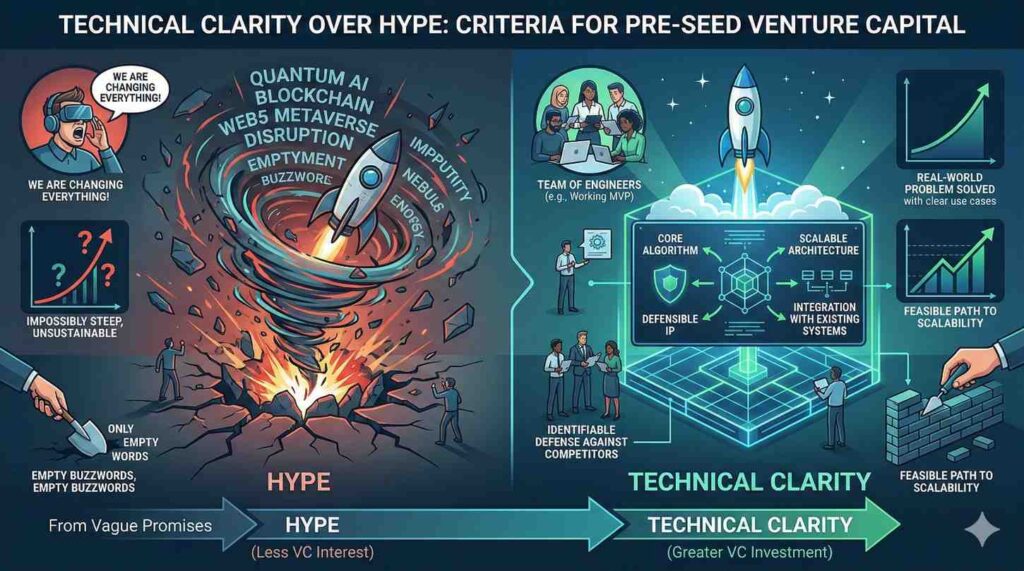
Technical Clarity Over Hype
Pre-seed investors who focus on deep tech have seen hundreds of pitch decks.
They can tell when something is over-polished and under-built.
If you rely too much on buzzwords, you lose trust.
Instead of saying:
“We use advanced AI to transform industries.”
Say:
“We built a custom model that reduces false positives by 40% compared to current tools.”
Specific numbers. Clear outcomes. Simple language.
If you cannot explain your system in plain words, investors will assume you do not fully understand it.
Clarity builds confidence.
Hype destroys it.
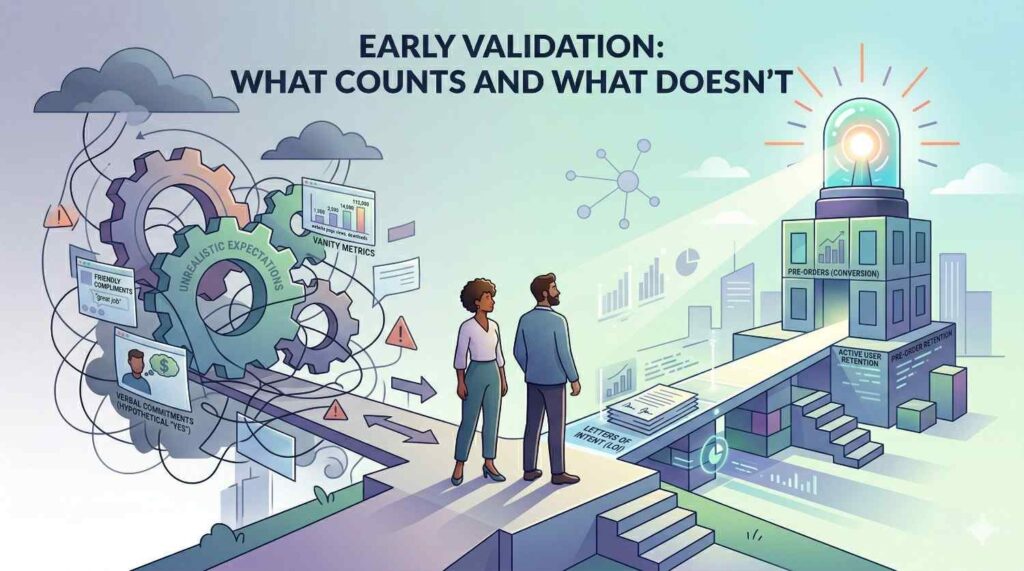
Early Validation: What Counts and What Doesn’t
Founders often ask, “How much traction do I need before raising pre-seed?”
The honest answer is: less than you think, but more than zero.
You do not need revenue.
You do not need scale.
You do need proof that someone cares.
That proof can come in different forms.
A letter of intent.
A paid pilot.
A research collaboration.
Strong feedback from real buyers.
What does not count?
Friends saying it sounds cool.
Online signups with no engagement.
A waitlist with no context.
Investors are trying to reduce risk. Every real-world signal helps.
Even better is when validation informs your IP strategy.
If customers say your speed is what matters most, then that performance layer might be your moat.
If they care about integration, your system architecture might be key.
The more your technology aligns with real demand, the stronger your story.
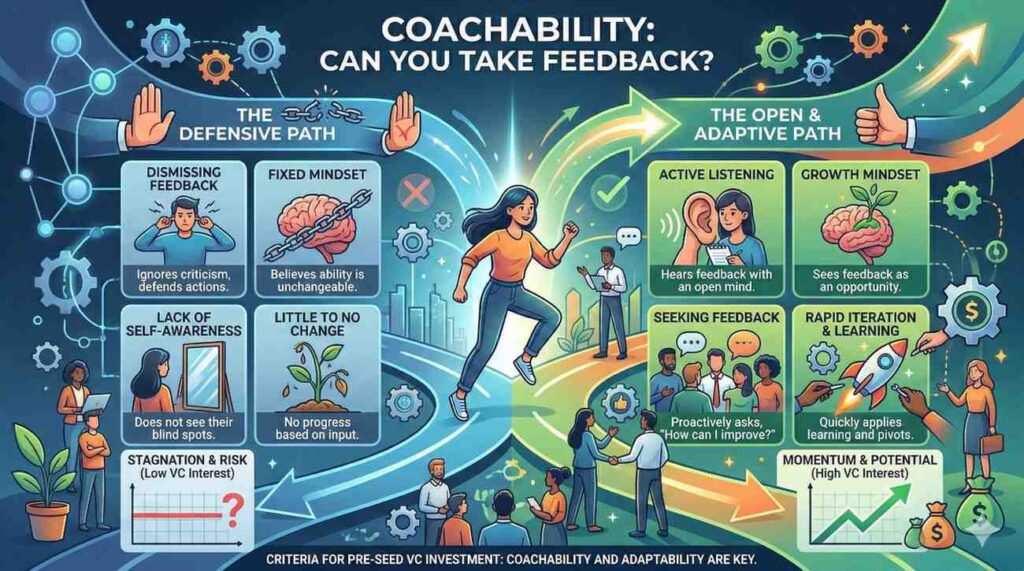
Coachability: Can You Take Feedback?
This is rarely written in blog posts, but it matters a lot.
Pre-seed VCs watch how you respond to questions.
Do you become defensive?
Or do you engage?
If someone challenges your assumptions, do you dismiss them?
Or do you think it through?
At the pre-seed stage, investors are not just backing your idea. They are backing a long journey.
Markets change. Tech evolves. Plans break.
They want founders who can adapt without losing vision.
Confidence is good. Arrogance is dangerous.
You can say, “We do not know yet.” That is fine.
You can say, “We tested that and here is what happened.” That is strong.
Pretending to know everything is a red flag.
Capital Efficiency: How Far Can You Stretch a Dollar?
Pre-seed investors know you are early. They do not expect miracles.
But they do look at how you use resources.
Are you hiring too fast?
Are you spending on branding before core tech is stable?
Are you chasing press instead of product?
In deep tech, burn rate can get out of control quickly.
Smart founders build lean systems. They automate. They test small before scaling. They protect what matters.
This is what we call “seed-strapping” at Tran.vc. Growing with intention. Building leverage before raising large rounds.
When investors see that you respect capital, they feel safer investing.
Market Size: Is This Worth Building for 10 Years?
Big Enough to Matter
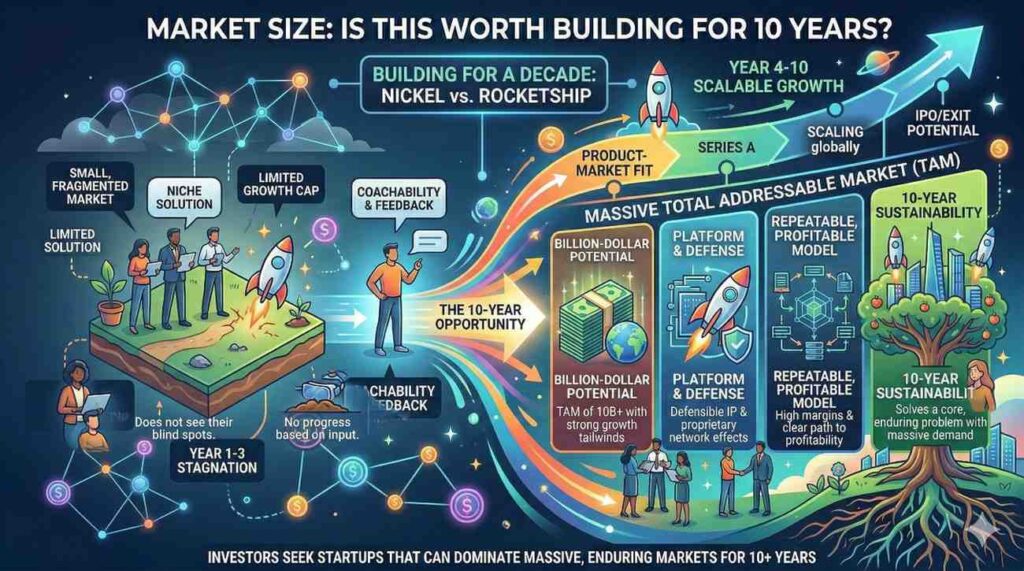
Pre-seed investors are not looking for small wins.
They are thinking long term.
If this works, can it become a company worth hundreds of millions, or even billions? That is the lens. They are not asking whether you can build a nice product. They are asking whether this can grow into a large and meaningful business.
In AI and robotics, markets can look small at first. A niche use case. A specific industry. A narrow problem. But strong founders show how that small entry point expands into something larger over time.
You may start with warehouse robotics for mid-sized distributors. But can that expand into enterprise logistics? Can the same core system apply to other physical workflows? Investors want to see that the first wedge is focused, but the long-term vision is wide.
They are not funding a feature.
They are funding a platform in disguise.
If your market is truly small, be honest. Then show how your technology can extend beyond it. Paint the picture carefully, with logic, not hype. The path must feel realistic.
When you prepare your pitch, ask yourself one hard question:
If everything works perfectly, how large can this become?
If the answer is unclear, refine it before you start raising.
Depth Over Noise
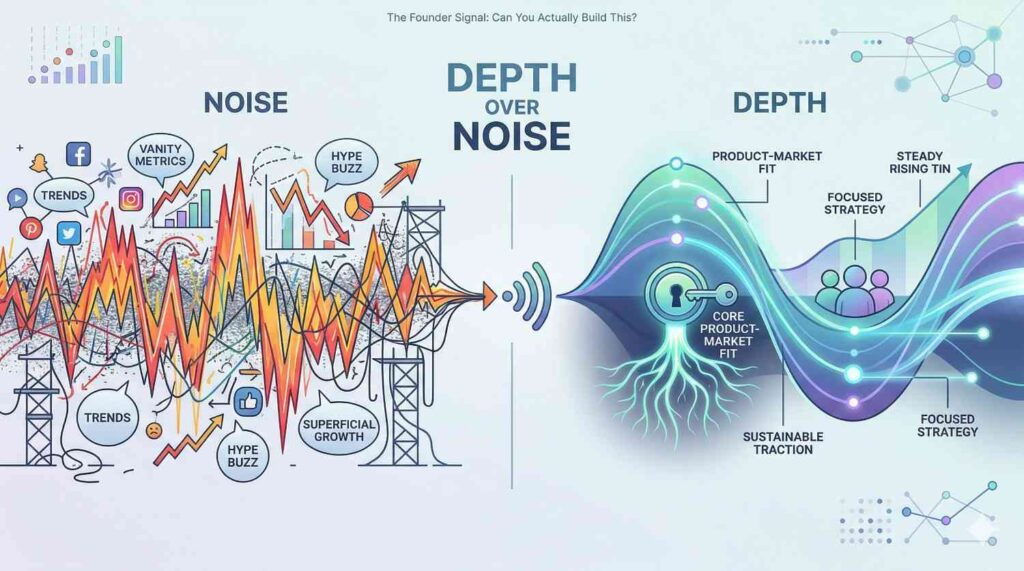
Many founders throw around large numbers. “The market is $200 billion.” “AI spending is growing fast.” These statements sound impressive but often feel empty.
Pre-seed VCs are not impressed by generic reports. They care about the slice you can realistically own.
Who exactly will pay you first?
How many of them exist?
What will they pay per year?
When you can answer these clearly, investors feel grounded. It shows that you have done real thinking, not just copied slides from a market research site.
Strong founders connect market size directly to product design. If the market is highly regulated, they show how they plan to navigate it. If sales cycles are long, they show how they will survive them.
The more specific you are, the more believable you become.
If you are building in a technical field and want help shaping this story in a way that aligns with strong IP and long-term value, you can apply here:
https://www.tran.vc/apply-now-form/
Timing: Why Now?
Technology Shift
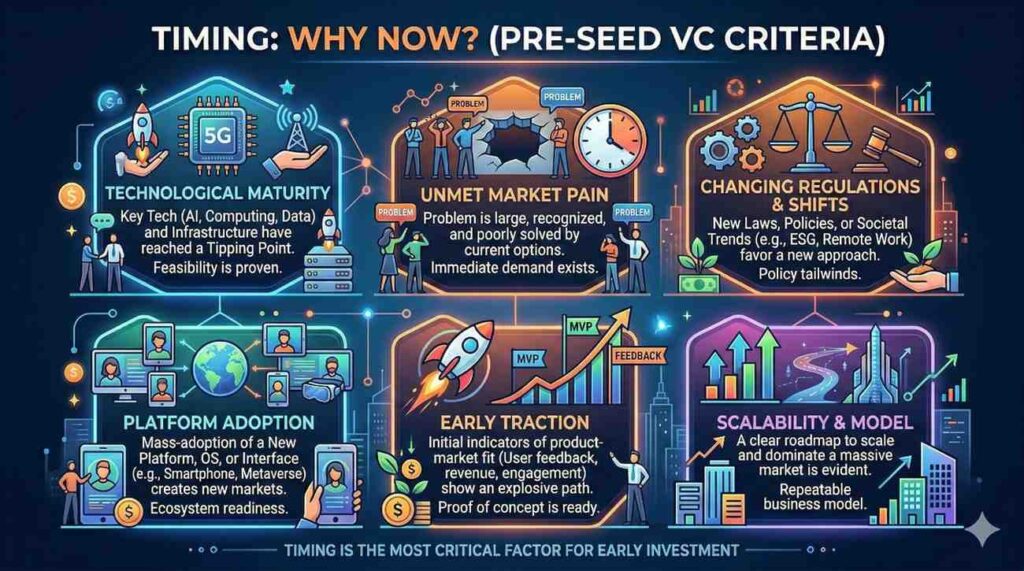
Even great ideas fail when timing is wrong. Pre-seed investors study timing closely because early-stage startups depend heavily on it.
In AI, timing often revolves around compute costs, model breakthroughs, or access to data. In robotics, it may relate to sensor prices, hardware supply chains, or labor shortages.
You need to explain what changed recently that makes your company possible today. Maybe GPUs became cheaper. Maybe a new open-source framework unlocked new performance. Maybe regulations shifted.
Without a timing trigger, your startup feels random.
When you clearly show the shift, investors see momentum behind you. They feel that the market is ready, not just your code.
Market Readiness
Technology alone is not enough. Buyers must also be ready.
Have companies already tried solving this problem? Why did previous attempts fail? What is different now?
If you are replacing manual labor with automation, is the labor shortage severe enough to push adoption? If you are introducing AI into a conservative industry, are leaders now under pressure to modernize?
Pre-seed VCs want to see that the pain has matured. The cost of inaction must be higher than the cost of change.
When you connect technology shifts with buyer readiness, your story becomes powerful. It shows that you are not early by accident. You are early with purpose.
Competitive Landscape: Who Else Is in the Arena?
Direct and Indirect Competition
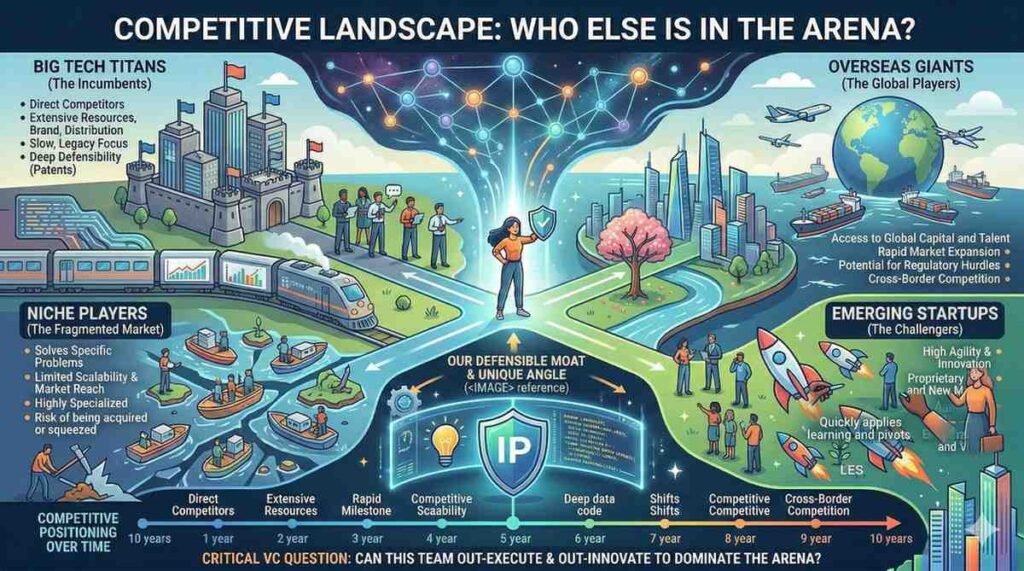
Some founders say, “We have no competitors.” This is almost never true.
If no one is solving the problem, investors may wonder if the problem is real. Usually, competition exists in indirect forms.
Manual processes.
Consulting firms.
Legacy software.
In-house tools.
You need to map the landscape clearly. Who are the main players? What do they do well? Where do they fall short?
Pre-seed VCs are not scared of competition. In fact, competition often proves that demand exists. What worries them is unclear positioning.
When you explain how your approach is technically different, the conversation becomes stronger. Maybe your model architecture reduces compute costs. Maybe your robotic design lowers maintenance time. Maybe your integration layer simplifies deployment.
The difference must be concrete, not emotional.
Your True Differentiator
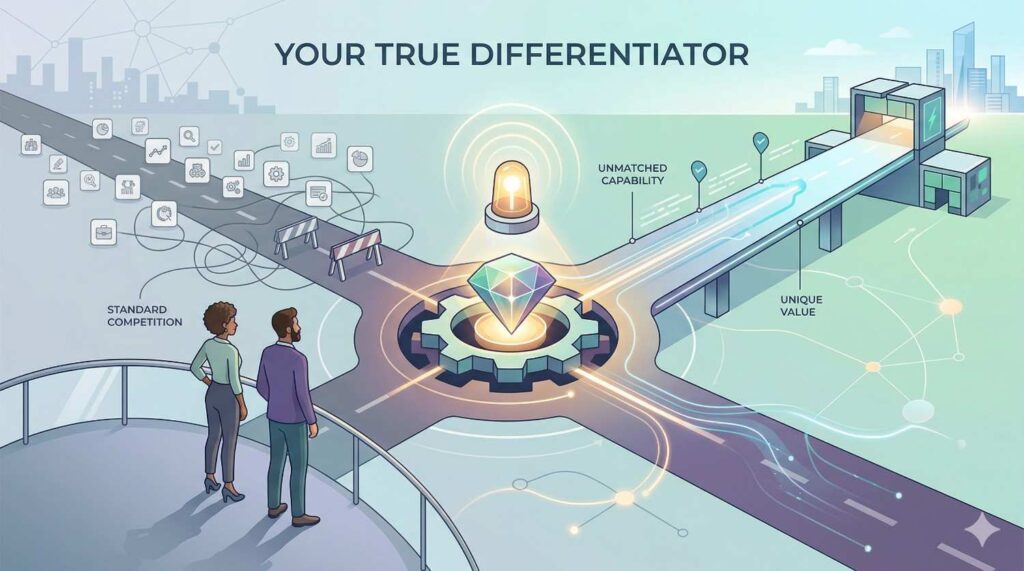
Your real edge often sits below the surface. It may not be visible in a demo. It might live in your system design, your training method, or your data collection process.
This is where IP strategy becomes critical.
If your core innovation is not protected, competitors with more capital can copy and outspend you. Pre-seed VCs understand this risk. They look for signs that you have thought about it early.
Have you identified patentable elements?
Do you know what claims you could file?
Have you assessed freedom to operate?
These are not questions for later rounds. They matter now.
At Tran.vc, we help founders answer these questions before they raise large checks. We invest in patent strategy and filings so that when you walk into investor meetings, you are not just pitching an idea. You are presenting an asset.
If you want to build that kind of leverage from the start, apply here:
https://www.tran.vc/apply-now-form/
Product Vision: Can This Become a Category Leader?
From Feature to Platform
Pre-seed VCs think in decades, not quarters. They ask whether your first product can grow into a broader ecosystem.
Your initial solution may be narrow by design. That is smart. But what sits behind it?
Is there a core engine that can power multiple use cases?
Is there a data layer that compounds over time?
Is there a hardware platform that supports new modules?
When investors see a path from a focused entry point to a larger system, they get excited. It shows ambition grounded in logic.
Do not present ten future products. Instead, show how your current architecture naturally expands. The future should feel like a continuation, not a jump.
Compounding Advantage
In deep tech, advantage compounds when learning accumulates. Your model improves with more data. Your robot becomes more reliable with more deployments. Your system grows smarter over time.
Explain how your startup becomes stronger with scale. Not just bigger, but better.
Pre-seed investors want to know that the first customer makes the second easier to win. They want to see flywheel effects rooted in technology, not just marketing.
If your system learns, adapts, or improves with usage, make that clear. That is a powerful signal.
IP Strategy: The Silent Valuation Driver
Why IP Matters Early
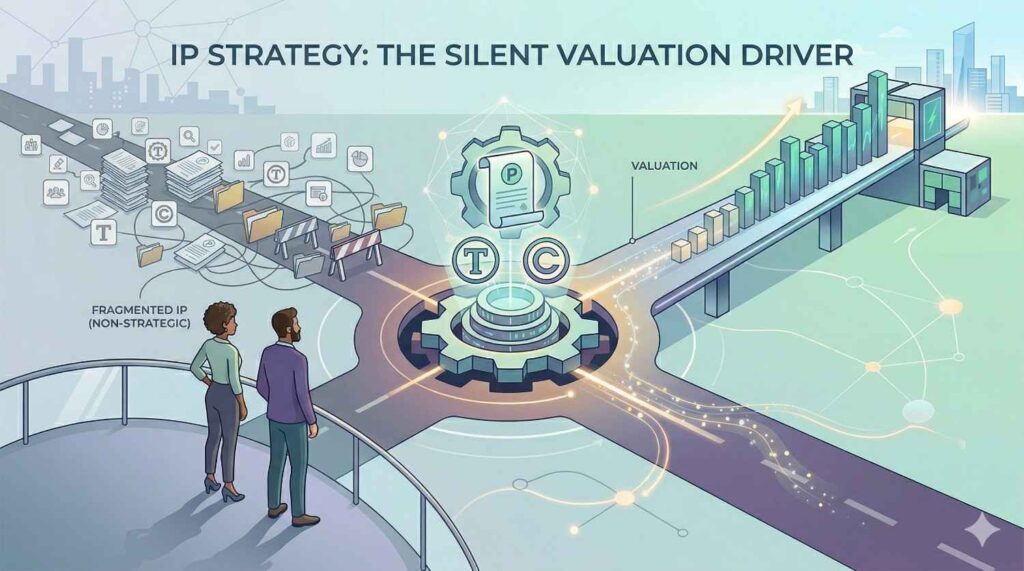
Many founders treat patents as paperwork for later. This mindset costs them leverage.
At pre-seed, valuation is based on belief. If you can show that your core innovation is protected or at least strategically mapped, belief increases.
IP reduces perceived risk. It signals seriousness. It shows that you are building something defensible.
Especially in AI and robotics, where development cycles are long and capital needs are high, protection matters. Investors do not want to fund something that can be cloned in six months.
When you build IP early, you shape the narrative. You define what is novel. You set the boundaries of your technology.
That changes how investors view you.
How IP Impacts Fundraising
A thoughtful patent strategy can affect valuation more than founders expect.
When investors see provisional filings aligned with your product roadmap, they see foresight. When claims are drafted around core technical advantages, they see barriers to entry.
This does not mean filing random patents. It means aligning filings with business goals.
What part of your stack creates the most value?
What part is hardest to replicate?
What part will matter most in five years?
Answering these questions early strengthens your position in negotiations.
At Tran.vc, we invest up to $50,000 in in-kind patent and IP services precisely because this stage matters. We help founders convert raw technical work into structured, defensible assets that investors respect.
You do not have to figure this out alone.
If you are building in AI, robotics, or deep tech and want to raise from a position of strength, apply here:
https://www.tran.vc/apply-now-form/