
Raising pre-seed capital for a deep tech startup is not like raising money for a simple app. You are not selling a landing page and a dream. You are building real technology. It may take years to mature. It may need labs, testing, patents, and strong technical proof. Most investors do not understand that world.
That is why many deep tech founders struggle at the pre-seed stage. Not because their idea is weak. But because they try to raise money the same way software startups do.
In this guide, we will walk through how to raise pre-seed capital the right way as a deep tech founder. We will talk about how to prepare, how to position your technology, how to protect your ideas, how to approach investors, and how to raise with strength instead of fear.
If you are building in AI, robotics, hardware, biotech tools, advanced materials, or any technical field that takes real research and engineering, this is for you.
Let’s begin with the most important truth.
Deep tech is different. And your fundraising strategy must reflect that.
Deep Tech Is Not a Fast App Game
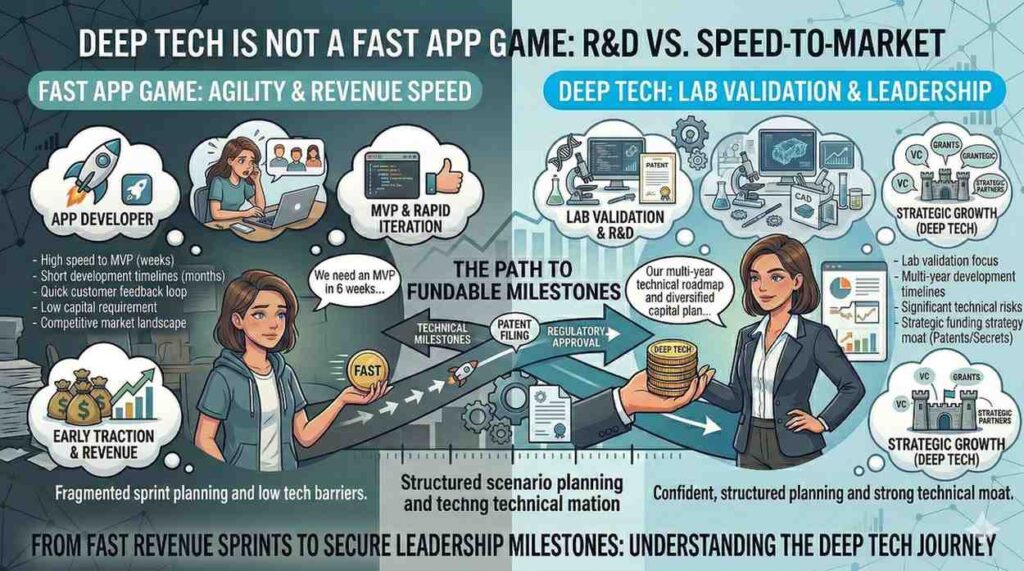
Many founders believe pre-seed funding is about traction. They think they need thousands of users or strong revenue to raise. That advice works for consumer apps. It does not work the same way for deep tech.
Deep tech is built on science, engineering, and defensible ideas. Investors at the pre-seed stage are not just buying early revenue. They are buying technical depth and future advantage.
If you are building a robotics platform, an AI model with new architecture, or a hardware system with unique performance, your value is not in how many users you have today. It is in what your technology can become.
But here is the problem.
Most investors cannot judge complex technology easily. If they do not understand it, they feel risk. When they feel risk, they pass.
Your job is to remove that fear.
You do that in three ways:
You explain the problem clearly.
You show why your solution is different.
You prove that your technology can be protected.
That last part is often ignored.
And it is the reason many deep tech founders raise weak rounds or give away too much equity too early.
Before You Raise, Build the Right Foundation
The biggest mistake founders make is trying to raise before they are ready.
Not emotionally ready. Structurally ready.
When a serious investor looks at your company, they are asking silent questions.
Is this team capable?
Is this technology real?
Can this become a large company?
Can competitors copy it?
Is there real ownership here?
You must prepare answers to those questions before you begin pitching.
This does not mean you need a finished product. But you need clarity.
You need to clearly define:
What exact problem are you solving?
Who cares deeply about this problem?
Why has this problem not been solved before?
What is technically new in your approach?
Why are you the right team to solve it?
Deep tech investors care about technical risk, market risk, and execution risk. At pre-seed, technical risk matters most.
If you can show that the hardest part of the science or engineering is already understood by your team, investors feel safer.
This is where many founders underestimate the power of intellectual property.
Intellectual Property Is Leverage at Pre-Seed
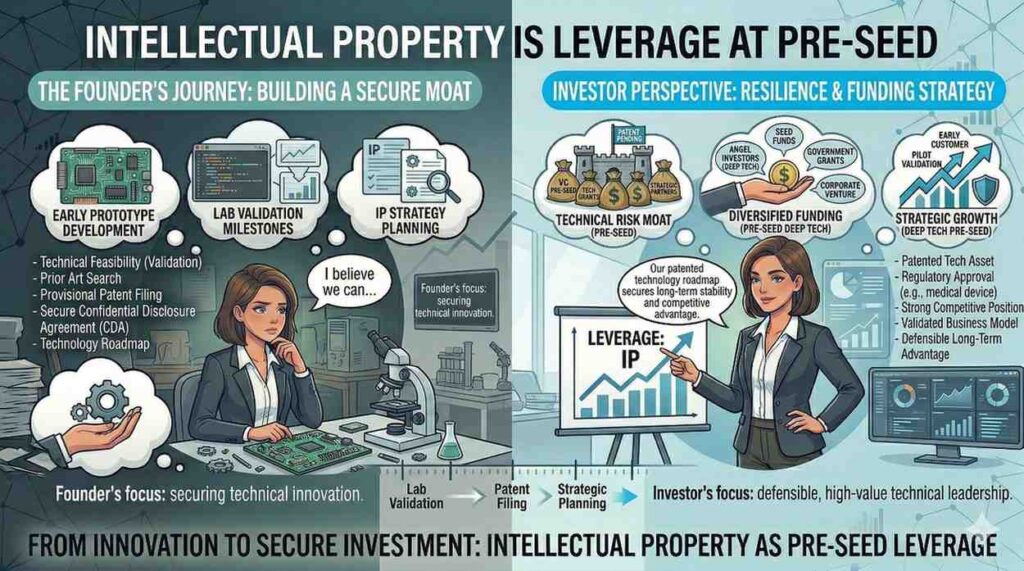
At the pre-seed stage, you may not have revenue. You may not have customers. But you can have ownership of your core ideas.
Patents are not just legal documents. They are signals.
They show that your innovation is real.
They show that you are thinking long term.
They show that competitors cannot easily copy your work.
They show investors that you understand value creation.
When a deep tech startup approaches investors without any IP strategy, it creates doubt.
Investors start wondering:
What if someone bigger builds this faster?
What if a large company copies the core idea?
What if this is just academic research with no moat?
A strong patent strategy answers those concerns early.
This is why firms like Tran.vc focus heavily on IP from day one. Instead of pushing founders to chase fast money, they help build the protective layer first. They invest up to $50,000 in in-kind patent services and IP support so technical founders can turn their research into protected assets before raising larger rounds.
When you walk into a pre-seed meeting with filed patents, a clear IP roadmap, and structured ownership, the conversation changes. You are no longer just a hopeful founder. You are building a defensible company.
If you are serious about raising pre-seed capital for deep tech, you should think about IP before you think about pitch decks.
You can apply anytime to explore this support at https://www.tran.vc/apply-now-form/
Pre-Seed Is About Story and Structure
Now let’s talk about the pitch itself.
Pre-seed investors are not expecting perfection. They are looking for conviction, clarity, and logic.
You need to tell a story that makes sense.
Start with the problem. But do not describe it in technical language. Explain it in simple terms. Make it painful. Make it urgent.
Then explain why current solutions fail. Show the gap clearly.
After that, introduce your solution. Not with buzzwords. Not with hype. Just with facts.
Explain what is technically different. Explain what advantage it creates. Show proof where possible. Even early lab results, simulations, prototypes, or pilot tests can help.
Then talk about scale. How big can this become? What industries can it affect? Why now?
Deep tech investors think long term. They want to know if your technology can define a category.
But there is one more thing they care about deeply.
Founder commitment.
Are you fully committed?
Have you left your previous role?
Have you invested your own time and money?
Are you building this for the long run?
Pre-seed capital is trust capital. It is belief in the future. You must show that you are all in.
Choosing the Right Pre-Seed Investors
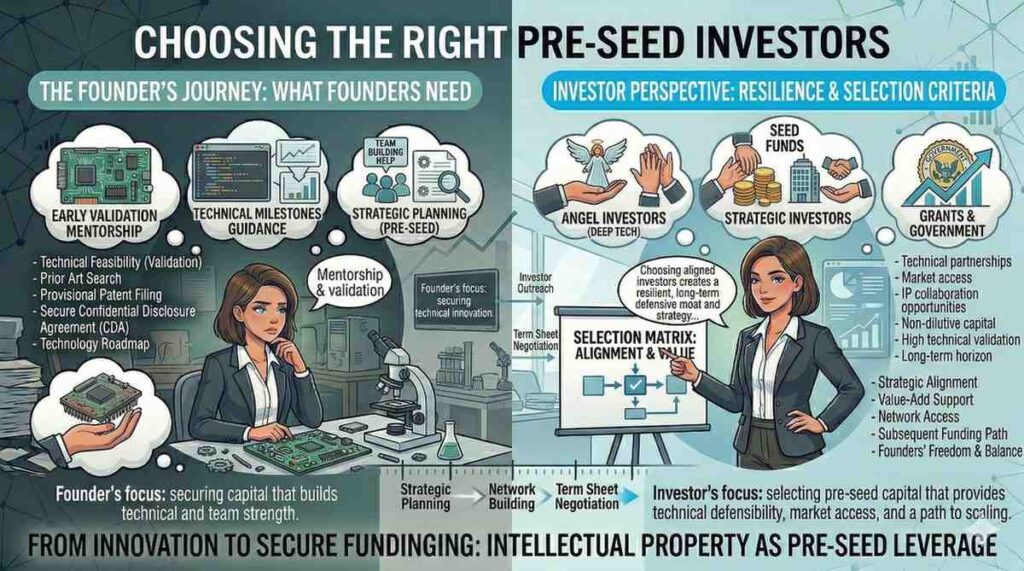
Not all money is equal.
Some investors understand deep tech. Some do not.
If you pitch a complex robotics platform to a consumer app investor, they may pass simply because it feels unfamiliar. That does not mean your idea is bad. It means you are in the wrong room.
Deep tech pre-seed investors usually have one of three backgrounds:
They have built technical companies before.
They have engineering or science experience.
They focus only on research-driven startups.
You should study their past investments carefully. Look at what they funded. Look at the founders they support.
When you approach the right investor, your conversation becomes easier. You spend less time defending basic technical choices. You can go deeper. You can speak as engineers.
This alignment saves months of wasted effort.
Tran.vc, for example, was built by operators and engineers who have filed patents themselves and built real companies. They understand that raising too early without protection can weaken a founder’s position. Their model is built around helping founders gain leverage first, then connect to strong seed investors from a position of strength.
If you are building something technical and want to raise pre-seed capital without losing control too early, you can apply here: https://www.tran.vc/apply-now-form/
How Much Should You Raise at Pre-Seed?
This is a question many founders ask.
The answer depends on your technical roadmap.
Deep tech often requires more capital than simple software. But raising too much too early can dilute you heavily and create pressure before your technology is ready.
At pre-seed, your goal is not to build a full company. Your goal is to reduce the biggest risks.
Ask yourself:
What is the single biggest technical risk?
What experiment, prototype, or milestone would reduce that risk?
How much capital is required to reach that milestone?
Raise enough to reach that point with buffer. Not more.
Smart deep tech founders raise in stages. Each stage removes risk and increases valuation. This keeps dilution under control.
If you build strong IP early and show technical progress, your leverage increases naturally. You negotiate from strength.
That is the difference between chasing capital and attracting it.
Building Investor Outreach That Actually Works
Start With Warm Introductions
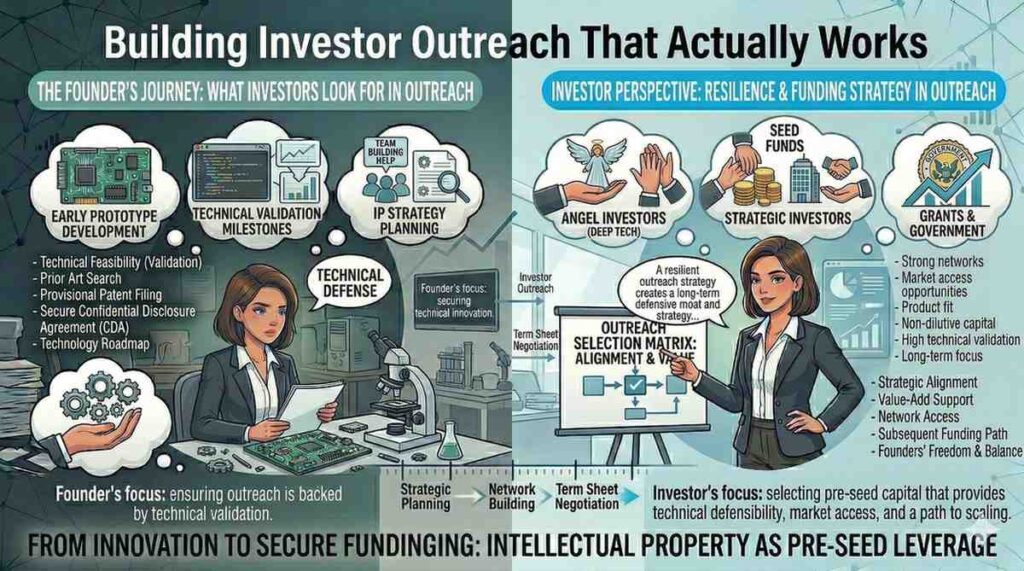
Cold emails can work, but warm introductions work better.
At the pre-seed stage, trust matters more than numbers. Investors are not just judging your idea. They are judging you. A warm intro reduces doubt before the first call even begins.
Start by mapping your network carefully.
Former colleagues, university professors, startup mentors, accelerator managers, and even other founders can open doors. Many deep tech investors trust referrals from people they already respect.
Do not send a long message when asking for an intro.
Share a short, clear note explaining what you are building, what stage you are at, and why you believe the investor is a good fit. Make it easy for the connector to forward your message.
When you approach the right investor through a trusted path, your conversation begins at a higher level.
You are no longer trying to prove you are serious. You are discussing how to build something meaningful.
If you need help positioning your company before outreach, you can apply to Tran.vc at https://www.tran.vc/apply-now-form/. They work closely with founders to refine strategy before investor conversations begin.
Craft a Clear and Technical Outreach Message
When you reach out, clarity wins.
Deep tech founders often hide behind complex language. That creates distance. Investors need to understand the value quickly, even if the technology itself is advanced.
Your first message should explain the problem in plain words.
Then briefly explain your solution and what makes it technically unique. Mention any early results, patents filed, or research background that strengthens credibility.
Keep the tone professional but confident.
You are not begging for money. You are offering a chance to participate in something valuable. That shift in mindset changes how you write and how investors respond.
Build a Targeted Investor List
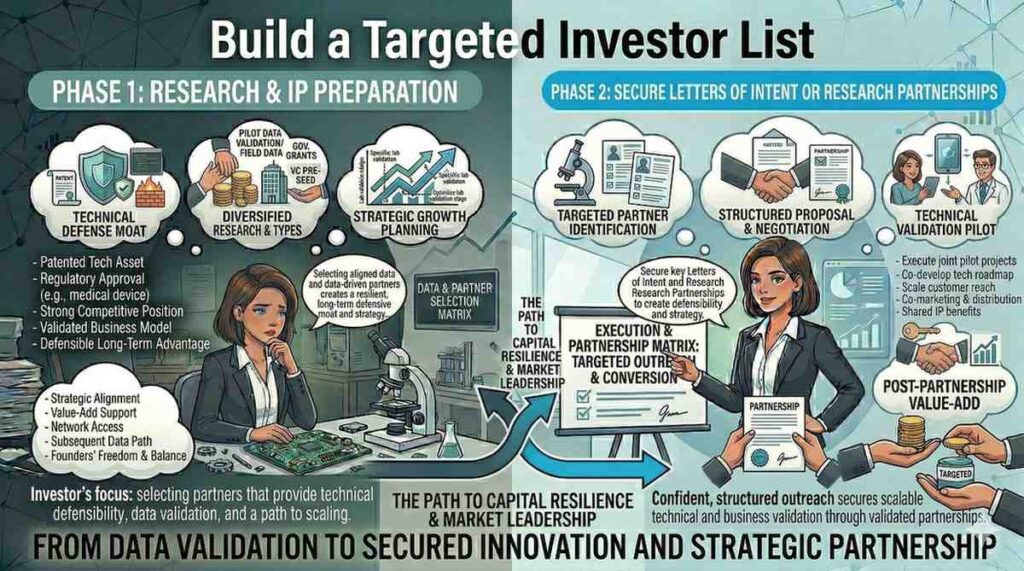
Raising pre-seed capital is not about emailing hundreds of funds.
It is about identifying a focused group of investors who truly understand deep tech and are comfortable with technical risk.
Research their past deals carefully.
Look at whether they have backed robotics companies, AI infrastructure startups, hardware platforms, or research-heavy teams. If you cannot see technical investments in their history, they may not be the right fit.
Create a structured outreach plan.
Schedule conversations over a short time window instead of spreading them across many months. When investors sense momentum, interest increases naturally.
A focused and well-timed outreach strategy often creates better results than random pitching.
Creating Early Traction Without a Finished Product
Demonstrate Technical Proof
Deep tech does not always allow fast user growth.
However, you can still show progress in meaningful ways. Investors need proof that your technology works, even if it is early.
Technical proof can come in many forms.
Lab data, simulations, controlled testing results, pilot studies, performance benchmarks, or working prototypes all count as traction at this stage.
Document your results clearly.
Present them in a simple format. Explain what was tested, what success looks like, and how your results compare to existing methods.
When investors see measurable improvement, they begin to imagine long-term potential.
Secure Letters of Intent or Research Partnerships
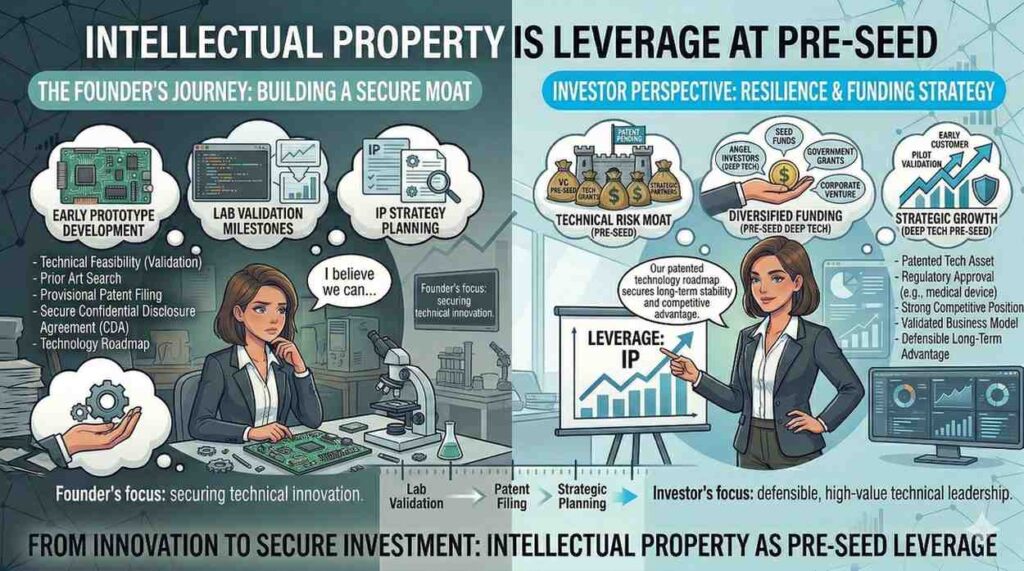
Even before full commercialization, you can build credibility through partnerships.
Universities, research labs, and early enterprise partners may be willing to test your system or express interest.
A letter of intent from a serious partner signals demand.
It shows that your technology is not just interesting in theory. Someone is willing to explore it in practice.
Approach potential partners with honesty.
Be clear that you are in development. Many organizations are open to collaboration when they see long-term value.
These early signals of interest reduce market risk in the eyes of investors.
Protect Your Core Innovation
While building traction, you must protect what matters most.
If you publicly share technical details without a protection strategy, you risk weakening your future position.
Filing provisional patents early can secure priority while giving you time to refine your system.
This step signals seriousness to investors and prevents competitors from easily copying your approach.
Tran.vc specializes in helping founders design strong IP strategies from day one.
They invest up to $50,000 in in-kind patent and IP services to ensure your innovation becomes a defensible asset before large fundraising begins.
If you are preparing to raise pre-seed capital and want to strengthen your foundation, you can apply at https://www.tran.vc/apply-now-form/.
Structuring Your Pre-Seed Round Wisely
Decide Between Priced Rounds and Convertible Instruments
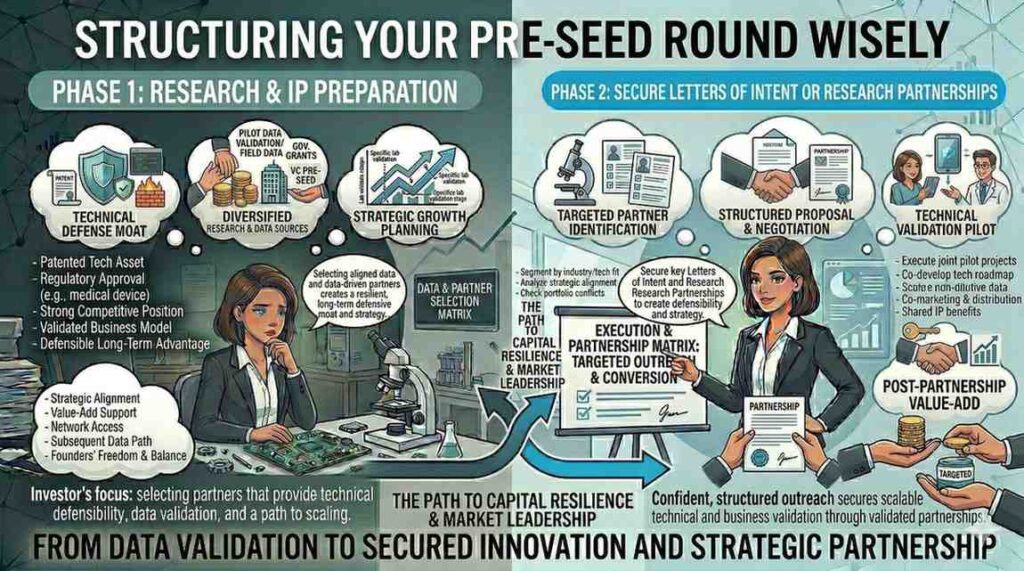
At the pre-seed stage, many startups use convertible notes or SAFEs.
These structures delay valuation discussions and allow you to raise capital faster.
However, deep tech founders must think carefully.
If your technology requires longer development cycles, setting the wrong cap can create heavy dilution later.
A priced round provides clarity on ownership but requires stronger negotiation early.
Convertible instruments offer flexibility but must be structured carefully to protect founder equity.
There is no universal answer.
Your decision should reflect your roadmap, your capital needs, and your long-term ownership goals.
Avoid Over-Dilution in the First Round
Giving away too much equity early can limit your flexibility later.
Deep tech companies often need multiple funding rounds due to longer research timelines.
If founders lose significant ownership at pre-seed, they may struggle to maintain control through future stages.
Investors also prefer to see committed founders with meaningful equity stakes.
Raise what you need to reach a clear milestone.
Avoid inflating your round size simply because interest is strong. Strategic discipline protects your long-term position.
This is where IP becomes powerful.
When your company owns protected technology, your valuation discussions shift. You negotiate from evidence, not hope.
Build a Strong Cap Table From Day One
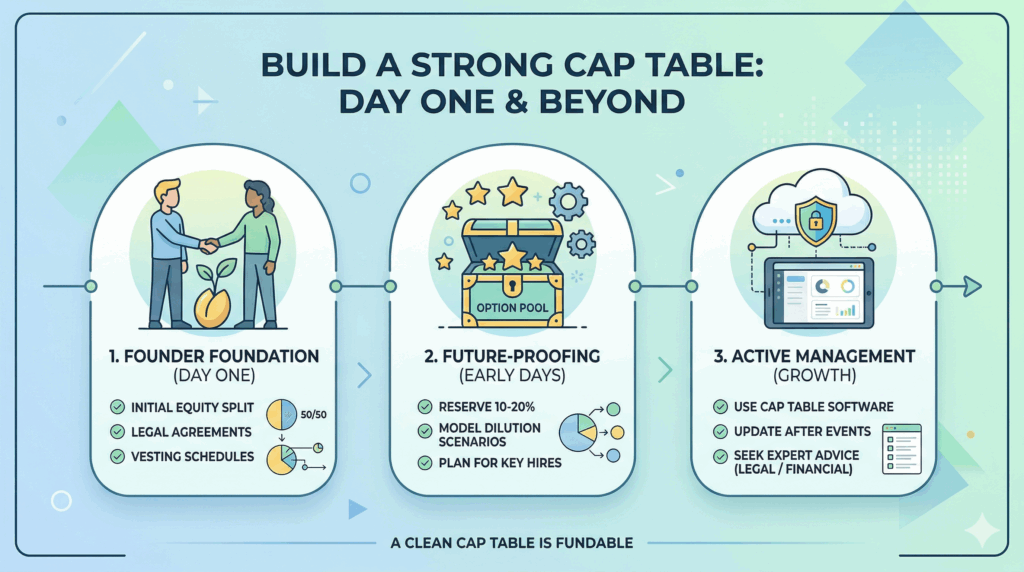
Your cap table tells a story.
Investors look closely at who owns what and how clean your structure is.
Avoid bringing in too many small investors with complicated terms.
Keep your early investor group focused and aligned with your vision.
Clarity today prevents legal and strategic issues tomorrow.
A clean structure builds confidence for future institutional investors.
If you want guidance in building a strong foundation before raising larger rounds, Tran.vc works closely with founders to prepare strategically. You can apply anytime at https://www.tran.vc/apply-now-form/.
Negotiating Terms With Confidence
Understand What Investors Really Want
Pre-seed investors are looking for asymmetric upside.
They know the risk is high, but they want the potential return to justify it.
They also want clarity, honesty, and strong communication.
If you openly discuss risks and mitigation plans, trust increases.
You do not need to oversell.
In fact, exaggerated promises often weaken credibility in deep tech discussions.
Present data, show your roadmap, and explain how capital will reduce key risks.
When investors see structured thinking, negotiations become smoother.
Prepare for Diligence Early
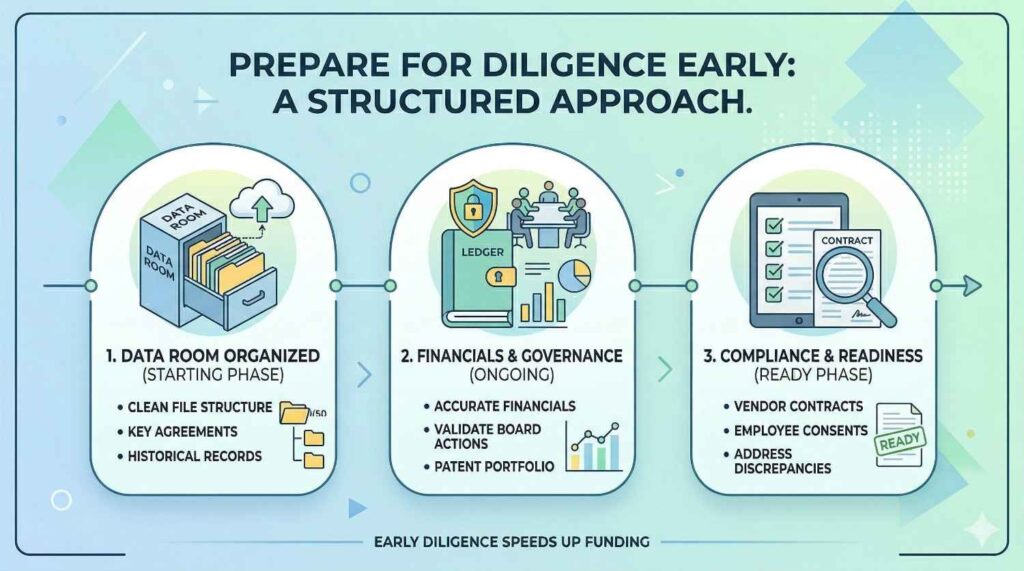
Even at pre-seed, investors may review technical documents, incorporation records, and IP filings.
Being prepared shortens timelines and builds confidence.
Organize your documents clearly.
Keep research notes, patent drafts, team agreements, and financial projections structured and accessible.
Preparation shows discipline.
Discipline signals execution strength.
Maintain a Long-Term Perspective
Fundraising is not just about closing a round.
It is about building long-term relationships with people who will sit on your board and influence major decisions.
Choose investors who respect deep tech timelines.
Choose partners who understand that meaningful innovation takes patience.
Raising pre-seed capital should strengthen your company, not pressure it into shortcuts.
If you want to raise from a position of strength rather than urgency, consider building your IP foundation first. Tran.vc was designed to support technical founders in exactly this phase.
You can apply and start the conversation at https://www.tran.vc/apply-now-form/.
Build Investor Demand Before You Raise
Start Conversations Early
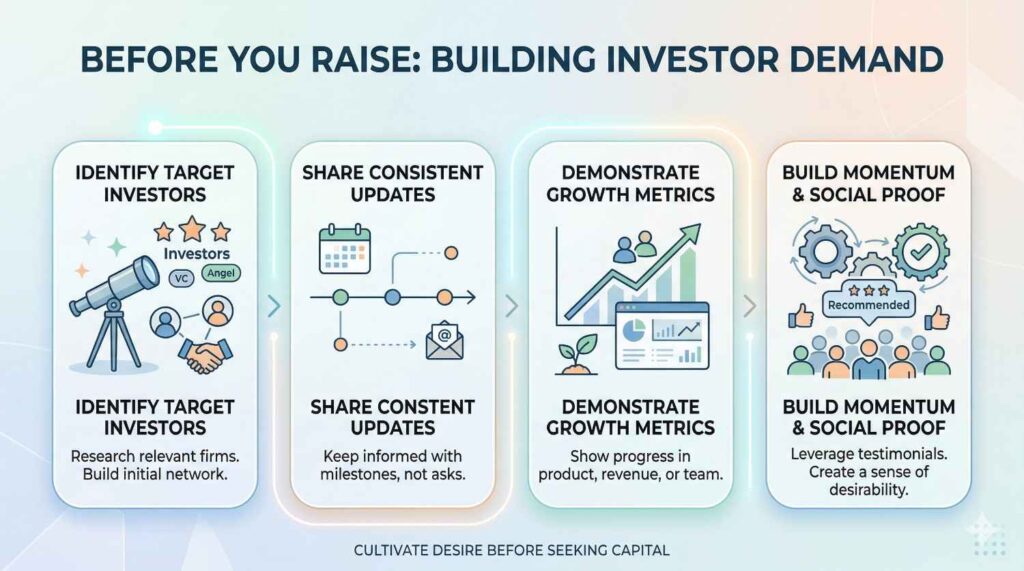
Most founders wait until they are “ready” to raise before talking to investors. This is one of the biggest mistakes at the pre-seed stage. If your first interaction with an investor is your pitch, you are already behind.
Strong fundraising starts months before you ask for money. You begin by sharing your thinking, your progress, and your direction. You invite investors into your journey early, without asking for anything.
This changes the dynamic. Instead of pitching cold, you are continuing a conversation. Investors feel familiar with your work. They have seen your progress over time. That familiarity builds trust.
Trust reduces friction. And when friction is low, decisions happen faster and often on better terms.
Use Progress as Your Story
You do not need a perfect pitch to create interest. You need visible progress. Each update you share should make your company feel more real and more valuable.
Talk about what you are building and why it matters. Share insights from your experiments. Highlight technical breakthroughs, even small ones. If you have filed patents, mention that clearly. It signals long-term thinking and seriousness.
When investors see consistent progress, they begin to imagine where your company could go. That imagination drives interest. Interest turns into demand when your round opens.
Demand is what gives you leverage in pricing your round.
Create Soft Competition
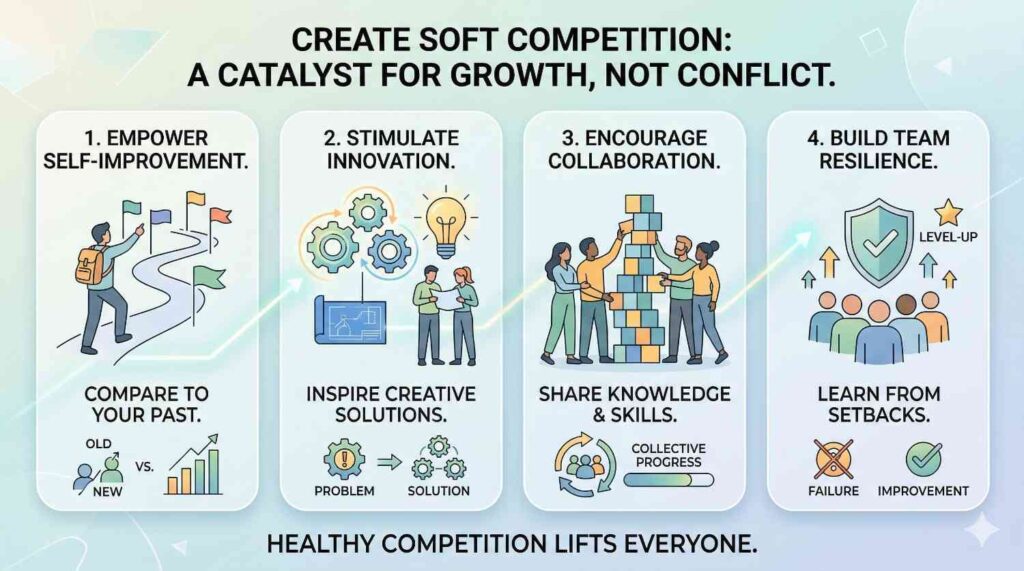
You do not need to create artificial pressure. You need to create awareness. When multiple investors are aware of your progress, they naturally start paying attention to each other.
If one investor shows interest, others take notice. This is how soft competition forms. It is not loud or aggressive, but it is powerful.
Soft competition often leads to faster commitments and better terms. Investors do not want to miss out on something that others value. That fear of missing out works in your favor.
But it only works if you build relationships early and keep them warm.
Keep the Door Open, But Stay Selective
Not every investor is the right fit. Some may push for more control. Others may not understand your technology. Some may not add value beyond capital.
You should stay open to conversations, but selective in your choices. The goal is not to maximize the number of investors. The goal is to find the right partners.
When you choose carefully, you protect your company’s direction. You also increase your chances of raising future rounds at better valuations.
Tran.vc works closely with founders during this stage. They not only help you build IP but also guide you on how to position your company for the right investors. If you want support that goes beyond capital, you can apply anytime at https://www.tran.vc/apply-now-form/.
Align Your Story with Real Value
Keep Your Narrative Simple
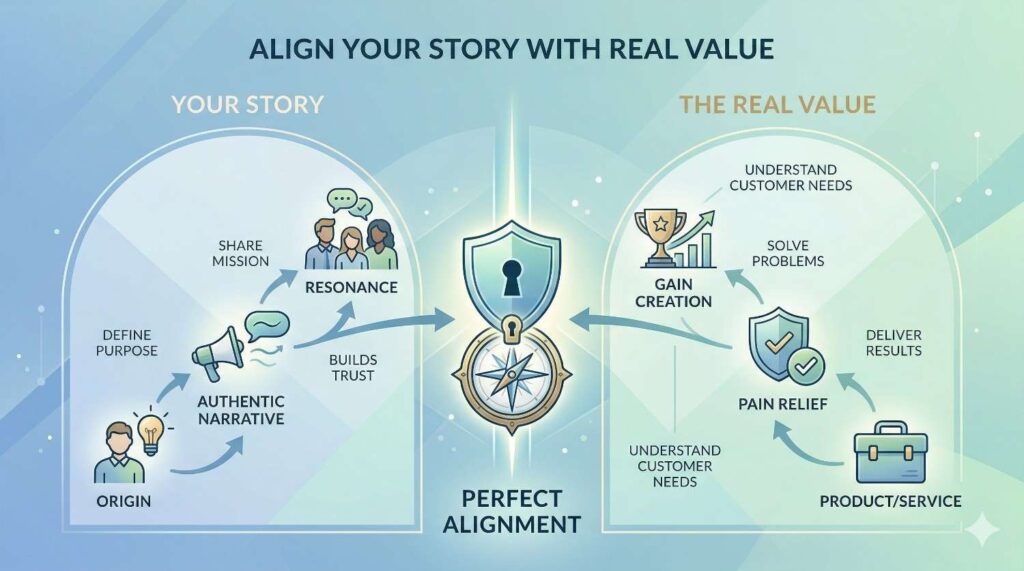
Investors do not fund complexity. They fund clarity. If your story is hard to understand, it feels risky. If it is clear and focused, it feels investable.
Explain what you are building in simple terms. Describe the problem in a way that anyone can grasp. Then show how your solution is different and better.
Avoid technical overload. You can go deeper when needed, but your core message should be easy to follow. Simplicity increases confidence.
Confidence leads to stronger valuation discussions.
Connect Technology to Impact
Deep tech founders often focus heavily on how their system works. While this is important, investors also want to understand what your technology enables.
Does it reduce cost? Does it improve speed? Does it unlock something that was not possible before?
When you connect your technology to real-world impact, your company becomes easier to value. Investors can see the market opportunity more clearly.
This connection strengthens your position during fundraising. It shows that you are not just building something impressive, but something valuable.
Show Why You Are Hard to Replace
Your story should answer one key question clearly. Why can this not be easily copied?
This is where intellectual property becomes central. Your patents, your technical approach, and your unique insights all contribute to your defensibility.
Explain this in a way that is easy to understand. You do not need legal language. You need clarity. Show what makes your system unique and why that uniqueness matters.
When investors believe your advantage is real and protected, they are more willing to invest at higher valuations.
Tie Everything Back to the Future
Your narrative should not stop at what you have built. It should extend to what you will build next.
Show how your current work leads to bigger opportunities. Explain how your patents support future products. Describe how your system can scale over time.
This forward-looking view increases perceived upside. Higher perceived upside often leads to better terms and lower dilution.
Choose the Right Partners, Not Just Capital
Look Beyond the Check Size
At pre-seed, it is easy to focus on how much money an investor can provide. But the size of the check is only one part of the equation.
What matters more is what that investor helps you become before your next round. Do they help you refine your strategy? Do they open doors to future investors? Do they support your technical and IP decisions?
An investor who helps you grow your value can save you more dilution than a slightly higher valuation today.
This is why smart founders think beyond immediate capital.
Work with Investors Who Understand Deep Tech
AI, robotics, and advanced systems require a different kind of support. Generalist investors may not fully understand your technical challenges or the importance of early IP strategy.
When you work with investors who understand deep tech, your conversations are more productive. They ask better questions. They see the long-term potential more clearly.
They also value intellectual property properly. This often leads to more aligned expectations and better deal terms.
Tran.vc is built by operators and engineers who have been in this space. They understand how to turn technical ideas into protected, fundable companies. If you are looking for partners who truly understand your journey, you can apply at https://www.tran.vc/apply-now-form/.
Think About the Next Round Today
Your pre-seed investors influence your seed round. Strong early investors can introduce you to top-tier funds. They can validate your company in ways that increase your credibility.
This validation often leads to stronger demand in your next round. Stronger demand leads to higher valuation. Higher valuation means less dilution over time.
So when you choose investors, think one step ahead. Ask yourself how this partnership will affect your next raise.
This forward thinking is key to protecting your ownership.
Build Long-Term Alignment
The best investor relationships are built on shared goals. You want partners who believe in your vision and support your approach.
Alignment reduces conflict. It makes decision-making smoother. It allows you to focus on building instead of managing investor expectations.
When alignment is strong, your company moves faster. Faster progress increases value. Increased value reduces dilution in future rounds.
This is how early decisions compound over time.
If you are building in AI, robotics, or deep tech, you can apply anytime here: