
Most founders ask the same question before raising their first round: “How much traction do I need?”
It sounds simple. It is not.
The truth is, traction at pre-seed does not always mean revenue. It does not always mean users. And it does not always mean growth charts going up and to the right.
At pre-seed, traction means proof. Proof that you are solving a real problem. Proof that someone cares. Proof that your idea can become a real company.
In this guide, we will break down what that proof looks like, how investors think about it, and what you should focus on right now. If you are building in AI, robotics, or deep tech, this will matter even more. And if you want support building a strong IP moat before raising, you can apply anytime at https://www.tran.vc/apply-now-form/.
Let’s start with a simple truth.
Pre-seed investors are not buying numbers. They are buying belief.
What Pre-Seed Really Means
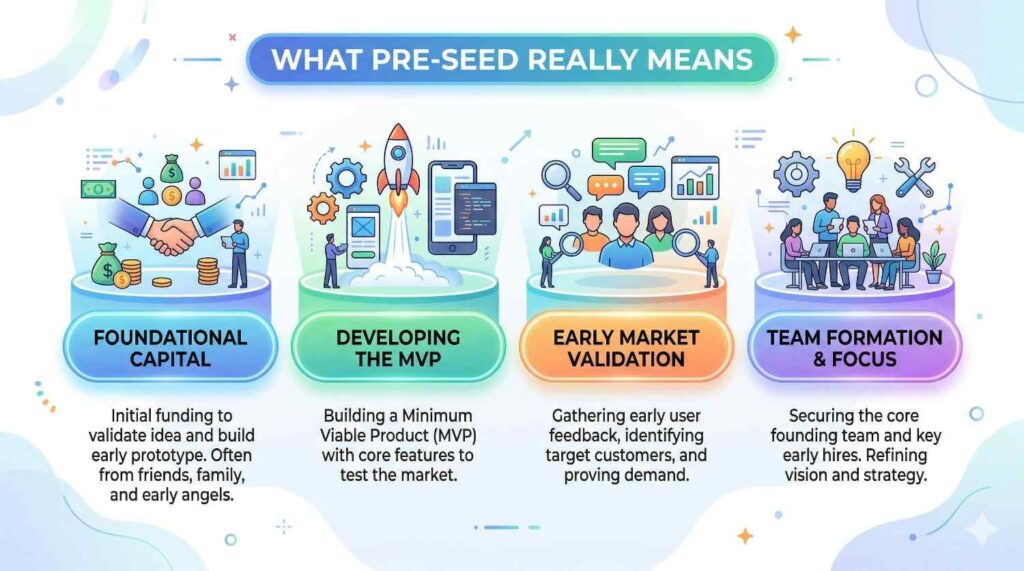
Pre-seed is the earliest stage of outside funding. You may have an idea. You may have a prototype. You may have a few early users. But you likely do not have steady revenue.
At this stage, your company is still fragile. It is not yet a business. It is a bet.
So when investors ask about traction, they are not asking, “How big are you?” They are asking, “How real is this?”
There is a big difference.
A founder with ten pilot customers who deeply need the product may be stronger than a founder with one hundred free users who do not care. A robotics team with a working lab prototype and one signed letter of intent from a factory may be stronger than a flashy AI app with thousands of downloads but no retention.
Traction is context. It depends on what you are building.
If you are building a simple consumer app, traction often means users and growth. If you are building deep tech, traction may mean patents filed, technical milestones reached, and early design partners who want to test your system.
You must understand your category.
This is where many founders get confused. They compare themselves to startups that look nothing like theirs. A robotics founder compares their progress to a SaaS founder. An AI infrastructure team compares themselves to a social media app. That comparison leads to stress and bad decisions.
Your traction must match your product.
At Tran.vc, we work with technical founders who are building real technology. Algorithms. Hardware systems. Robotics platforms. Core AI models. For these teams, traction often looks different. It is not always loud. It is often quiet but strong.
And strong beats loud.
If you are unsure what traction should look like for your company, that is something we help founders think through early. You can apply to work with us here: https://www.tran.vc/apply-now-form/.
Now let’s talk about what investors actually want to see.
Investors Want Risk Reduced
Every investor thinks about risk. They may not say it directly. But it is always there.
At pre-seed, there are many risks. Does the problem matter? Can you build the solution? Will customers pay? Can you protect the idea? Can this become big?
Traction reduces risk.
If customers are already testing your product, market risk goes down. If you have built a working prototype, technical risk goes down. If you have filed patents around your core system, copy risk goes down. If you have a strong founding team with domain experience, execution risk goes down.
Notice something important here.
Traction is not just about growth. It is about lowering risk across the board.
For a deep tech startup, one filed patent around a key invention can be more powerful than early revenue. Why? Because it shows you are building something unique. It shows long-term defensibility. It shows you are thinking ahead.
In AI and robotics, this matters. Without protection, strong technology can be copied fast. Investors know this. They look for signals that you understand the value of your own IP.
This is why we at Tran.vc invest up to $50,000 in in-kind patent and IP services instead of just wiring cash and stepping back. We help founders turn technical work into protected assets. That protection becomes traction. It becomes leverage when you raise.
If you are building serious technology, do not ignore this. Apply here if you want to build your moat before you raise: https://www.tran.vc/apply-now-form/.
Now let’s get more practical.
Types of Traction That Matter at Pre-Seed
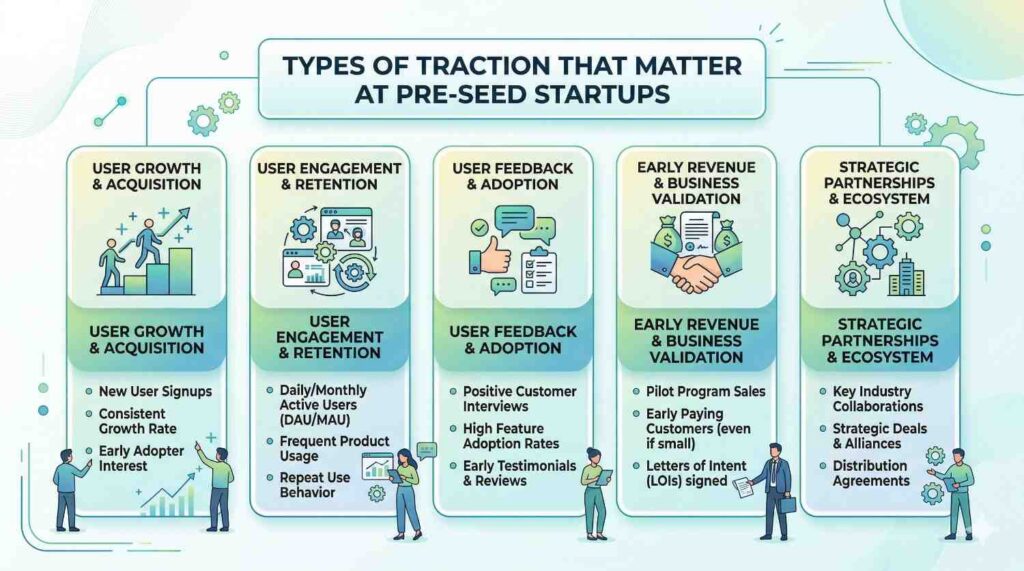
Traction at pre-seed can take many forms. What matters is that it shows forward motion and real interest.
One form of traction is problem validation. This means you have spoken to many potential users and the pain is clear. Not polite interest. Not “this is cool.” Real pain. Urgent pain. The kind where people say, “If you solve this, I will pay.”
You should be able to describe the problem in simple words. You should know who feels it most. You should know how they solve it today. If you cannot answer those questions clearly, you are not ready.
Another form of traction is a working prototype. It does not need to be perfect. It needs to prove the core idea works. For AI startups, this might mean a model that shows strong early results on a narrow task. For robotics teams, it might mean a functional demo in a lab environment.
The goal is not polish. The goal is proof.
Then there is early customer commitment. This can be pilot agreements, letters of intent, or paid trials. Even small payments matter. A company willing to pay something is very different from one that just says, “Keep me posted.”
If you are pre-revenue, that is fine. But you should show clear signs that revenue is possible.
For deep tech founders, technical milestones also count as traction. For example, hitting a performance target that was once only academic. Or integrating your system into a real-world workflow. Or completing safety tests for a hardware device.
These are not vanity metrics. They are progress toward a real product.
And then there is IP traction. Filed patents. A clear IP roadmap. Freedom-to-operate analysis. These are signals that you are building something defensible.
Most early founders ignore this until later. That is a mistake. When you raise your next round, investors will ask what protects your edge. If you cannot answer, you weaken your position.
Smart founders think about this early.
That is the mindset we support at Tran.vc. We help you build with intention from day one. We do not push you to raise fast. We help you raise strong.
If that sounds like what you need, you can apply anytime at https://www.tran.vc/apply-now-form/.
How Much Is “Enough”?
This is the hardest part.
There is no fixed number. No magic user count. No perfect revenue target.
Enough traction is when a reasonable investor can look at your progress and say, “This is working.”
Working does not mean complete. It means moving.
If you have zero users, zero product, and zero customer conversations, you are too early. If you have a strong prototype, deep customer insights, and a few design partners ready to test, you may be ready.
If you are building in AI or robotics, expectations shift. Investors know these products take longer to build. But they expect strong technical depth and clear milestones.
You must tell a clear story. Where were you six months ago? Where are you now? What did you learn? What changed? What proof do you have?
Momentum is traction.
And clarity is power.
When you speak with investors, they should feel that you are in control. That you understand your market. That you know your risks. That you are reducing them step by step.
That is what makes a pre-seed round possible.
What Traction Looks Like in Different Startup Types
SaaS Startups at Pre-Seed
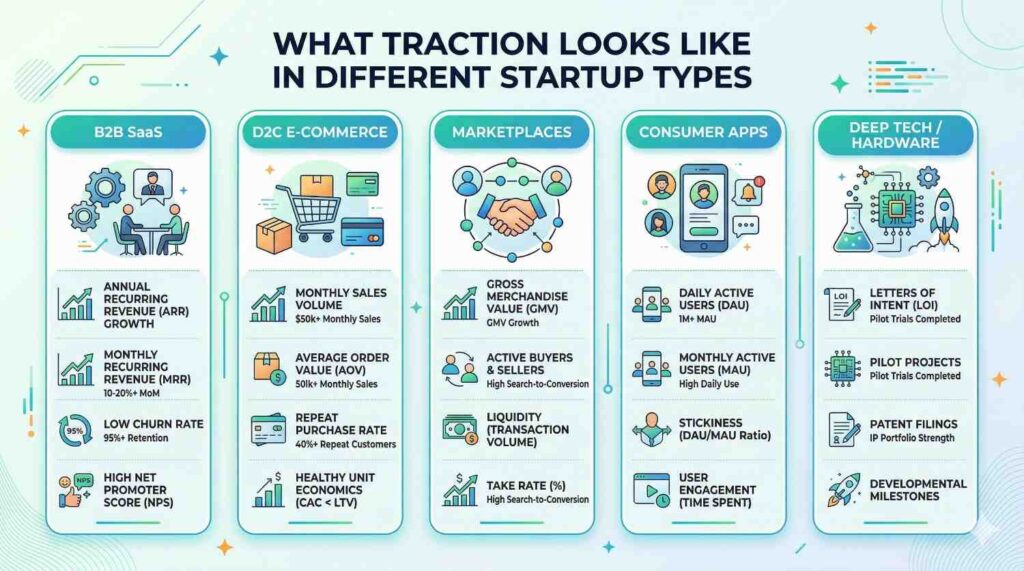
If you are building a SaaS company, investors will often look for early usage and signs of repeat value. They want to see that people are not just signing up, but coming back.
At pre-seed, you do not need millions in revenue. But you should show that a small group of users finds real value in your product. This could mean active weekly users, early paid subscriptions, or strong feedback that shapes your roadmap.
Retention matters more than raw growth at this stage. If ten companies use your product every week and depend on it, that is powerful. It shows you are solving a real problem.
For B2B SaaS, even two or three paying customers can be enough. What matters is that they fit your ideal customer profile and are willing to pay for the outcome you provide.
You should also understand your sales cycle. If it takes three months to close a deal, show that deals are moving forward. Show meetings, proposals, and clear buying signals.
Investors want to see movement, not perfection.
AI Startups at Pre-Seed
AI startups are different. Many are built around a core model, algorithm, or unique dataset. In this case, traction is often technical before it is commercial.
You must show that your model performs well on a clear task. Benchmarks help. Early test results help. Real-world validation helps even more.
If you claim better accuracy or speed, prove it. Show side-by-side comparisons. Explain your method in simple terms. Investors may not be experts in your niche, but they understand performance improvements.
Data access can also be traction. If you have secured exclusive datasets or partnerships that give you an edge, that reduces risk.
Early pilot customers matter here too. Even if they are not paying yet, design partners who are actively testing your AI in real workflows show strong validation.
And then there is defensibility. In AI, it is easy for others to build similar tools. If your core innovation is not protected, your edge may not last.
This is why IP strategy is critical for AI founders. Filing early patents around your architecture, training methods, or deployment systems can strengthen your story before you raise.
At Tran.vc, we help AI teams think through this from the start. We work with real patent attorneys to turn your algorithms into assets, not just code. If you want to protect your edge before raising, apply here: https://www.tran.vc/apply-now-form/.
Robotics and Hardware Startups at Pre-Seed
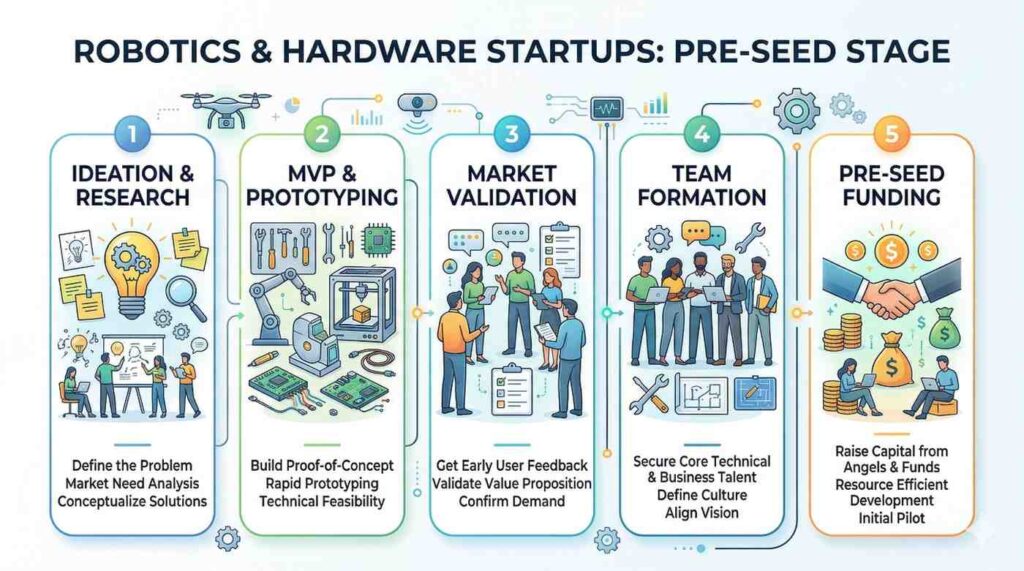
Robotics and hardware companies face longer build cycles. Investors know this. They do not expect polished mass production at pre-seed.
But they do expect proof that your system works.
A working prototype in a lab setting can be strong traction. Clear technical milestones achieved on time show discipline. Safety testing progress, component validation, and early integration trials all matter.
If you are building for factories, hospitals, or warehouses, early design partners are key. A signed letter of intent from a real operator who wants to pilot your system can carry serious weight.
You should also show a clear path to cost reduction. Hardware margins matter. Even at pre-seed, you should understand your bill of materials and how it changes with scale.
Robotics companies also need strong IP from day one. Hardware can be copied. Mechanical systems can be reverse engineered. If you do not protect your core invention early, you weaken your long-term position.
This is one reason Tran.vc focuses on deep tech and robotics. We invest up to $50,000 in in-kind patent and IP services so founders can build protection before they go out to raise larger rounds.
If you are building robotics or hardware, do not wait until Series A to think about patents. Apply now and start early: https://www.tran.vc/apply-now-form/.
Deep Tech and Scientific Startups at Pre-Seed
Deep tech startups often come out of research labs or advanced engineering work. They may involve new materials, biotech platforms, or complex systems.
In these cases, traction is often technical validation and expert credibility.
Peer-reviewed research can help. Grants can help. Industry advisors with strong reputations can help. These signals show that your science has weight.
However, research alone is not enough. You must connect your innovation to a real market need. Investors want to see a path from lab to customer.
Early conversations with potential buyers are critical. Even if your product is years away from full commercialization, show that there is demand waiting on the other side.
Patents are often central in deep tech. Strong claims around your core invention can define your company’s future value.
Without IP, a deep tech startup can struggle to defend its position. With it, you can negotiate from strength.
At Tran.vc, we work closely with technical founders to build these foundations early. We do not just talk about big vision. We help you structure your IP roadmap so that your company becomes investable.
If you are building deep tech and want to raise with leverage, apply here: https://www.tran.vc/apply-now-form/.
The Difference Between Activity and Traction
Busy Does Not Mean Progress
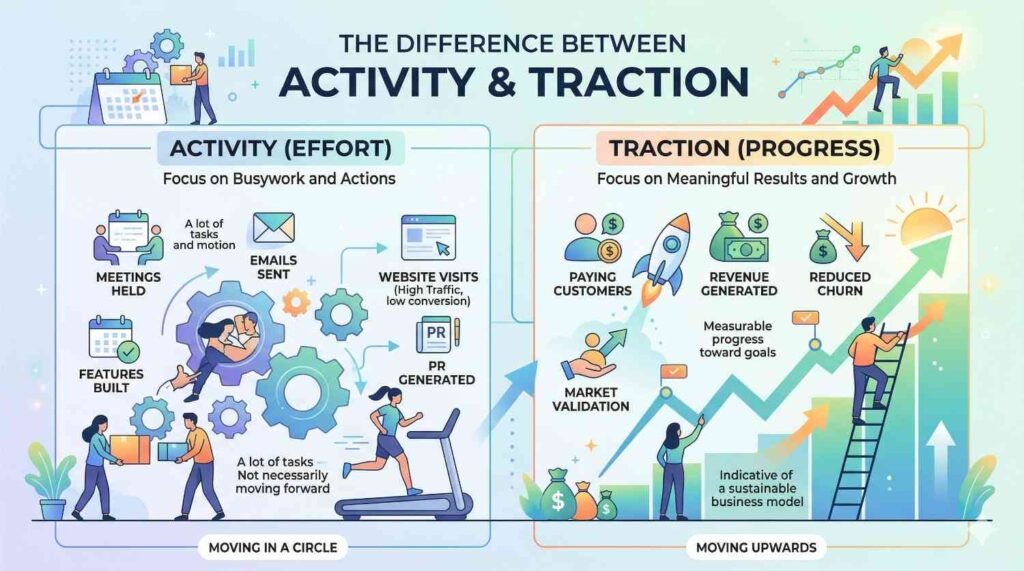
Many founders confuse activity with traction. They attend events, build features, and post updates online. They feel busy.
But investors look for outcomes, not effort.
Writing thousands of lines of code is activity. Deploying a feature that users rely on is traction. Sending dozens of cold emails is activity. Closing two strong design partners is traction.
You must focus on signals that reduce risk.
If you spend months improving small details that do not change user behavior, you are not building traction. You are polishing.
At pre-seed, speed of learning matters more than surface quality.
Real Signals vs Vanity Metrics
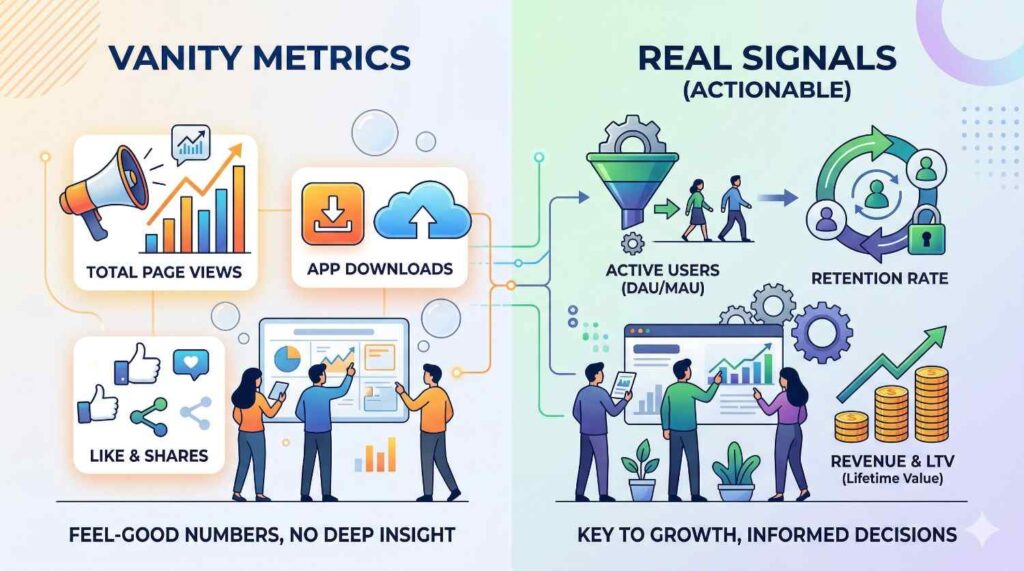
Vanity metrics look impressive but lack depth. For example, a large number of free signups without engagement does not prove product-market fit.
A small number of highly active users can be far more powerful.
In AI, running a flashy demo on stage may attract attention. But real traction comes from performance in live environments.
In robotics, a beautiful demo video is not enough. You need repeatable performance under real conditions.
Investors look past surface numbers. They ask, “If we remove the hype, what remains?”
Your job is to make sure something solid remains.
IP as a Form of Traction
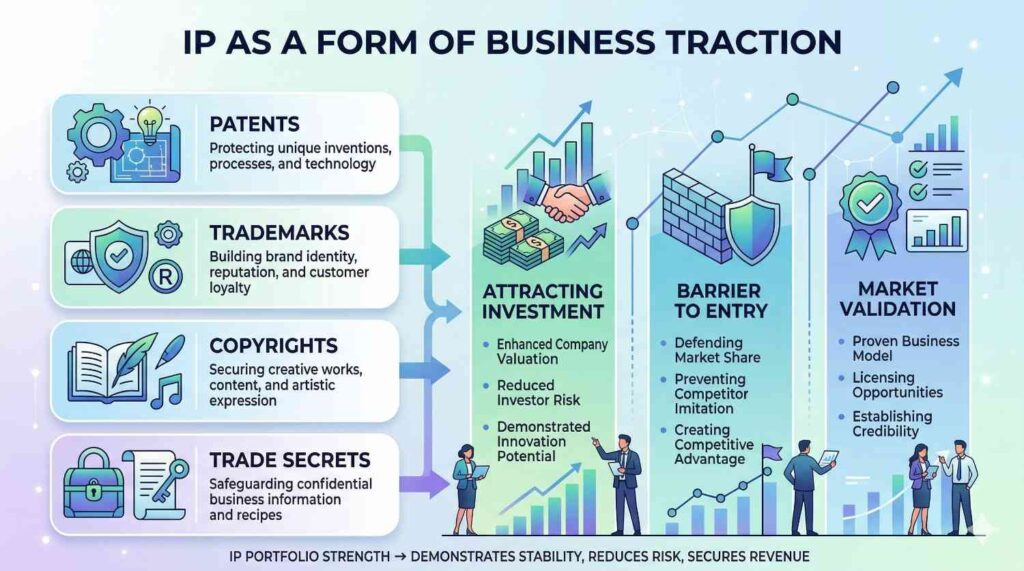
One area that founders often overlook is intellectual property as traction.
A filed patent application shows that you are serious about protection. It shows long-term thinking. It signals that your technology is not just a quick experiment.
For deep tech startups, this can shift how investors see you.
Instead of being just another early idea, you become a company building assets. Assets can be valued. Assets can be defended.
This is why at Tran.vc, we treat IP work as seed capital. Our $50,000 in in-kind patent services is not paperwork. It is strategic leverage.
When you walk into investor meetings with filed patents and a clear IP roadmap, the conversation changes. You are not just pitching a product. You are presenting protected innovation.
If you want to build that kind of foundation before raising, you can apply anytime at https://www.tran.vc/apply-now-form/.
How to Know If You Are Ready to Raise
Ask Yourself the Hard Questions
Before raising a pre-seed round, ask yourself a few honest questions.
Do you deeply understand the problem you are solving? Can you explain it clearly without slides?
Do you have proof that someone cares enough to use or test your solution?
Have you reduced the biggest technical risks?
If you cannot answer yes to these, you may need more time.
Raising too early can hurt you. If investors pass because traction is weak, it becomes harder to change that story later.
It is better to wait a few months, hit clear milestones, and raise from strength.
Show a Clear Path Forward

Investors invest in momentum. They want to see not just where you are, but where you are going.
At pre-seed, your plan does not need to be perfect. But it should be thoughtful.
What will you achieve with this round? What technical milestones will you hit? How will you move closer to revenue?
If you are in AI or robotics, explain how the capital and IP strategy will help you build a stronger moat.
Clarity builds confidence.
At Tran.vc, we work with founders before they raise so that their story is tight, their IP is protected, and their milestones are clear. We believe in building with intention, not rushing to chase capital.
If you want that kind of support, apply here: https://www.tran.vc/apply-now-form/.
A Practical Path From Pre-Seed to Seed
Start With Clarity, Not Just Speed
Many founders begin with energy and urgency. They want to build fast, launch fast, and raise fast. While speed is important, clarity is what keeps you on track.
At the pre-seed stage, take time to define the problem in simple terms. Make sure you can explain it to someone outside your field. If the problem is not clear, your solution will not be either.
Clarity also helps you make better product decisions. Instead of building many features, you focus on what truly matters. You build what proves your idea works.
This approach saves time. It also makes your progress easier to explain when you start speaking to investors.
Build Proof Step by Step
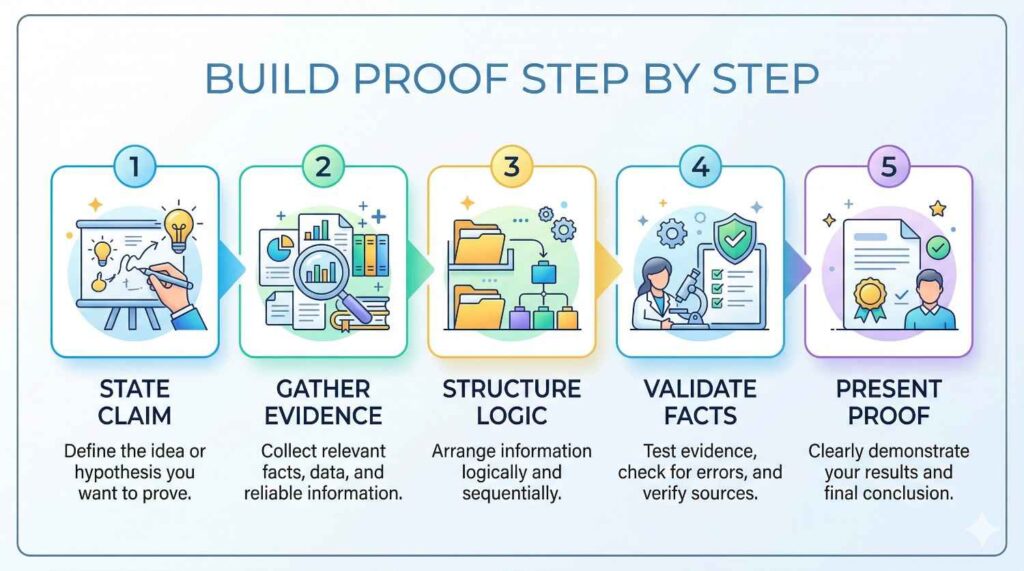
Your journey from pre-seed to seed is a path of proof. Each step should answer a key question.
First, can you build the core technology?
Then, does it work in real conditions?
Then, do users care about it?
You do not need to answer everything at once. But you must move forward with intention.
For AI and robotics startups, this often means moving from controlled environments to real-world use. A model that performs well in testing must show value in actual use cases.
Each step you complete reduces risk. Each step makes your story stronger.
Protect What You Are Building Early
As you build, you are creating valuable knowledge. Your system design, your models, your methods, and your processes all hold value.
If you wait too long to protect them, you may lose the chance to secure strong ownership.
Early protection does not slow you down when done correctly. It gives you confidence. It allows you to share your work without fear.
This is where having the right support matters. At Tran.vc, we help founders identify what is worth protecting and how to do it without distraction.
We work closely with technical teams to turn their ideas into real assets. This is part of how we invest.
If you are building something that should not be copied, you can apply here: https://www.tran.vc/apply-now-form/
Track the Right Signals From Day One
Do not wait until seed to think about metrics. Start early, even if your numbers are small.
Track how users interact with your product. Track performance improvements. Track feedback from pilots and partners.
These signals will become the foundation of your seed story.
When investors ask for proof, you will not need to guess. You will have clear data that shows your progress.
This also helps you make better decisions. You are not relying only on intuition. You are guided by real insights.
Build Relationships Before You Need Them
Fundraising should not begin when you are low on cash. It should begin as a process of building relationships.
Start talking to investors early. Share updates as you make progress. Let them see your journey over time.
This builds trust. When you are ready to raise seed, you are not starting from zero. You already have people who understand your work.
This approach also gives you feedback. You learn what investors care about. You refine your story based on real conversations.
Move to Seed When You Are Ready, Not Just When You Can
One of the most important decisions you will make is when to raise your seed round.
Raising too early can put pressure on a weak foundation. Raising too late can slow your growth.
The right time is when you have enough proof to support your story and enough clarity to scale with purpose.
You should feel that you understand your product, your users, and your direction. You should have signals that your solution works and that people value it.
When you reach this point, seed funding becomes a tool for growth, not survival.
Use Capital With Discipline
Once you raise your seed round, your focus shifts to execution. Every decision you make should move the company forward.
Hiring should be thoughtful. Spending should be aligned with clear goals. Growth should be measured and intentional.
It is easy to expand too quickly. It is easy to assume that more resources will solve problems.
In reality, discipline is what creates strong companies. Careful decisions lead to steady progress.
Keep Control of Your Vision
As your company grows, you will receive more input from investors, advisors, and partners. This can be helpful, but it can also create noise.
Stay grounded in your core vision. Remember why you started. Use feedback to improve, but do not lose direction.
Control is not just about equity. It is about clarity of purpose.
When you know what you are building and why, you make better decisions at every stage.
Bringing It All Together
The Real Difference Between Pre-Seed and Seed
Pre-seed is where you explore, build, and design your foundation. It is where you shape your idea into something real.
Seed is where you prove, refine, and scale. It is where your company begins to take form as a business.
The transition between these stages is not automatic. It is earned through clear thinking, strong execution, and thoughtful planning.
Founders who understand this shift move with confidence. They avoid common mistakes. They build companies that last.
Why This Matters More in Deep Tech
If you are building in AI, robotics, or any deep tech field, the gap between pre-seed and seed is even more important.
Your technology is complex. Your development cycles may be longer. Your risks may be higher.
But your potential is also greater.
When you combine strong technical work with clear strategy and early protection, you create something powerful.
You create a company that is not easy to copy. You create a company that investors respect.
A Final Thought for Founders
You do not need to rush. You need to build with intention.
Use your pre-seed stage wisely. Design your foundation. Protect your work. Build proof step by step.
When you reach seed, you will not feel pressure. You will feel ready.
And that changes everything.
If you are building something meaningful and want support in turning it into an IP-backed, fundable company, Tran.vc is here to help.
We invest time, expertise, and up to $50,000 in patent and IP support to help you build strong from day one.
You can apply anytime here: https://www.tran.vc/apply-now-form/