
Building a startup with a team spread across countries is now normal. It is also risky in a quiet way. Not because people are bad. Not because your co-founder is in another time zone. The real risk is simpler: who owns what your team creates. If you do not handle employee IP the right way from day one, you can lose patents, scare off investors, and waste months fixing paperwork when you should be shipping product.
And yes, you can prevent almost all of it.
At Tran.vc, we work with deep tech founders who are moving fast in AI, robotics, and hard software. We also see the same IP problems repeat, especially when teams are global. This guide is meant to be practical. It will help you avoid common traps and build clean ownership that stands up in diligence. If you want hands-on help with this and want to build an IP moat early, you can apply anytime at https://www.tran.vc/apply-now-form/.
The simple truth about employee IP across borders
When someone on your team writes code, designs a circuit, trains a model, or creates a new method, you may assume the company owns it. In one country, that may be mostly true. In another, it may be partly true. In some places, the default rule can even be “the inventor owns it,” unless very specific steps are taken.
The trouble is that multinational teams create “mixed law” ownership. Your company is one legal home. Your team members live under different rules. That means the same type of work can have different ownership outcomes depending on where the person sits, what contract they signed, what local law says, and what your internal process shows.
IP is not just patents. It includes inventions, trade secrets, know-how, data rights, code rights, design rights, and sometimes even the right to use work created by a contractor. Investors and acquirers do not like “maybe” ownership. They want clean chains of title. That is a fancy way of saying: they want proof, on paper, that the company owns what it claims.
If your startup is building a core tech product, IP ownership is not a “legal later” task. It is part of engineering hygiene.
Why multinational teams get hit harder
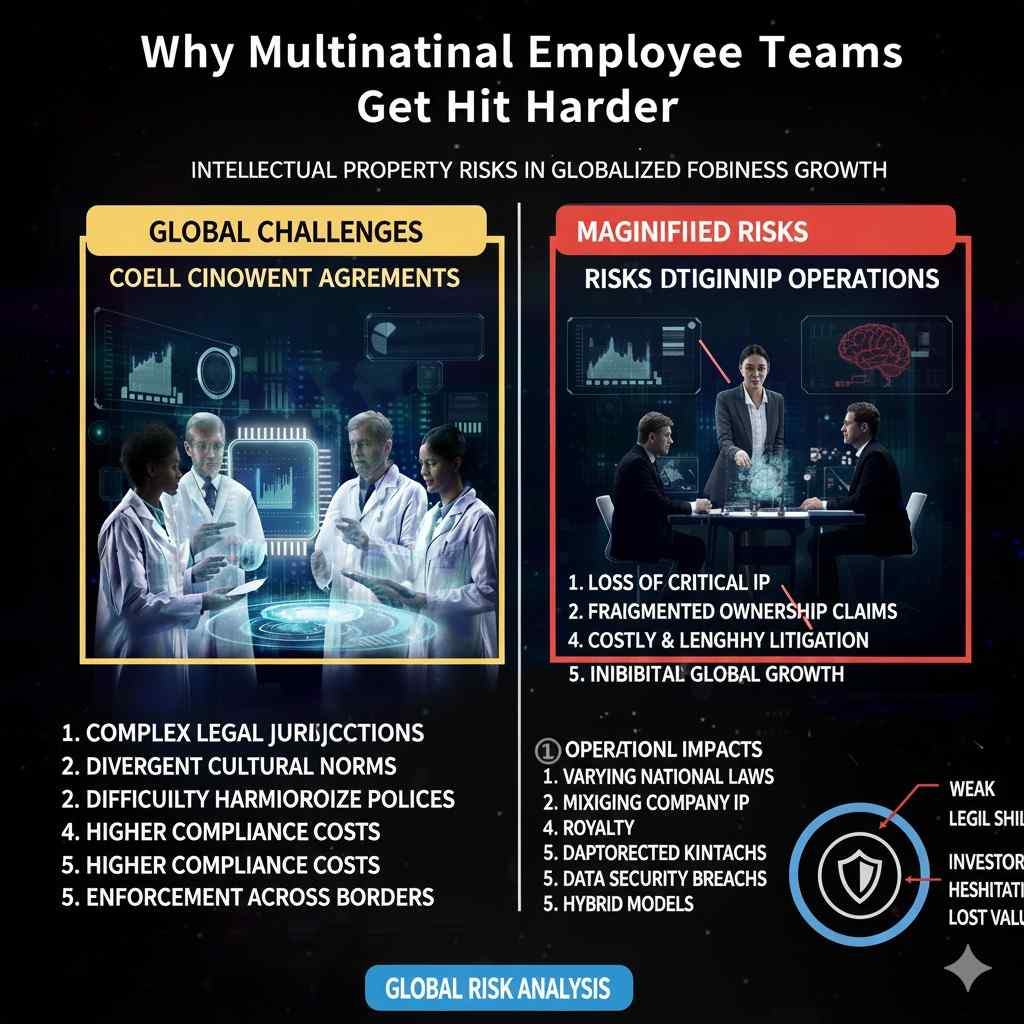
A single-country team can still mess up employee IP. But multinational teams have extra risk for four reasons.
First, contracts are not always enough. A contract written in California style may not fully work for a person working in another country. Some places require specific wording. Some require extra pay for invention rights. Some limit what you can assign. Some have rules that protect employees even when they sign.
Second, the “who is an employee” question becomes messy. Many startups hire “contractors” abroad because it feels easy. But in many countries, contractors can later be treated as employees by law. That can change IP rules, tax rules, and even who owns inventions.
Third, time zones hide process gaps. People ship changes at 2 a.m. your time. They build features in a branch you do not review. They test ideas on personal laptops. If your process is loose, you may not even know what was created, by whom, and under what terms.
Fourth, patents care about inventors. You cannot “company name” your way out of this. For patents, inventorship is a legal fact tied to who contributed to the core idea. If those inventors are in multiple countries, you must get assignments from each of them. If one is missing, that patent can be weakened.
Start with a basic map: who, where, and what they touch
Before you change contracts or write policies, do one simple exercise. Make a clear map of your team and their work.
Who is doing work for the company right now? Founders, employees, advisors, interns, contractors, research partners, part-time helpers. Put names, locations, start dates, and role. Then note what each person touches: core product, model training, robotics control stack, hardware design, data pipeline, UI, customer code, or research.
This map is not busy work. It becomes your “IP ownership checklist.” If someone touches the core tech and they do not have the right IP papers signed, you have a problem. If they are in a country where default rules are not on your side, you have a bigger problem.
If you want a fast way to do this with a real IP plan behind it, this is exactly what Tran.vc helps with. Apply anytime at https://www.tran.vc/apply-now-form/.
The core goal: make ownership boring
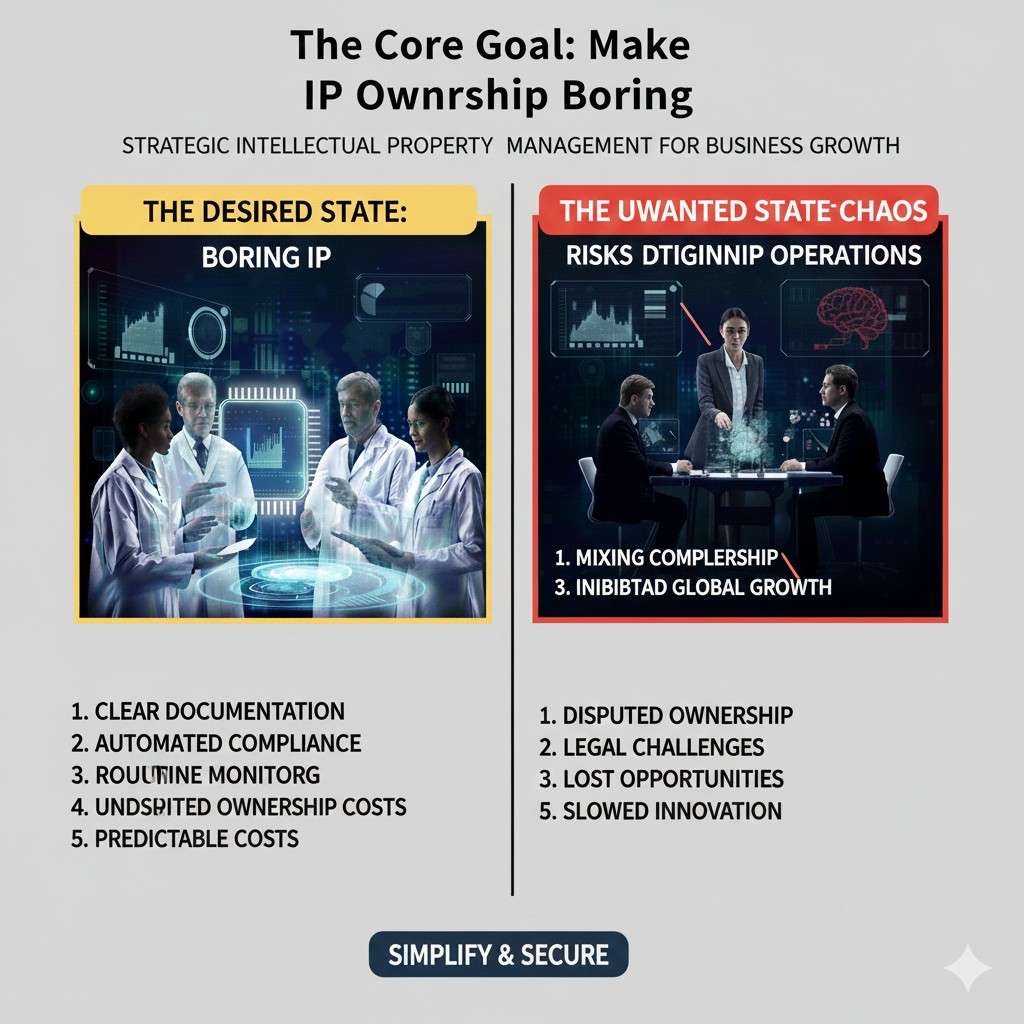
Your goal is not to create the most complex IP program. Your goal is to make ownership boring. Boring means predictable. Boring means documented. Boring means investors do not pause during diligence.
That requires three things working together:
One, the right agreements, signed at the right time.
Two, a clean process that shows work was created for the company, using company tools, under company direction.
Three, ongoing habits that keep you from drifting into risky territory as you hire fast.
If you do only agreements without process, you can still fail. If you do process without agreements, you are exposed. You need both.
Employee vs contractor IP: do not mix them up
A common mistake is using the same “NDA + IP assignment” for everyone. It feels efficient. It is not.
Employees and contractors are treated differently in many legal systems. An employee often has duties that create a stronger link between work and employer. A contractor often owns what they create unless the contract clearly assigns it, and even then local law may add requirements.
Also, the emotional side matters. Contractors often work for many clients. They may reuse templates, libraries, or code snippets. That can introduce third-party rights into your product. That is not always bad, but you must know it is happening and you must track it.
So you should treat employee IP and contractor IP as two different lanes, with different paperwork and different process checks.
The “assignment” problem: the words matter, but timing matters more

Most founders learn they need an “IP assignment agreement.” Then they download one. Then they ask the team to sign it later. This is where a lot of damage starts.
Signing later creates a gap. During that gap, the person created work. If they leave, or if there is conflict, you are stuck. Even if they are friendly, they may be hard to reach later. Or they may ask for more money. Or they may be in a country where late assignments are challenged.
So the rule is simple: no work starts until the correct agreement is signed.
This is not harsh. It is normal. Serious companies do it. It also signals maturity. People who join a real startup expect a clean onboarding process. If someone refuses to sign basic IP terms, that is a signal you should not ignore.
Multinational reality: local law can override your contract
This is the part founders do not like, but it is true. In some places, local employee protection rules can override parts of your contract. That does not mean contracts are useless. It means you cannot assume your standard template covers everything.
Here are the kinds of differences that show up:
Some countries require clear notice that inventions belong to the employer.
Some require that invention compensation is “reasonable,” even if the contract says otherwise.
Some treat software differently than patents.
Some have rules about “moral rights” that cannot be waived fully, especially for creative works.
Some have strict rules about what counts as “within scope of employment.”
This is why “multinational team IP” is not just a legal doc. It is a legal system problem.
The best way to handle it is not to become a law expert in ten countries. It is to build a simple strategy: pick a strong base agreement, then add local add-ons where needed, and keep clean records. That is what we help teams do at Tran.vc, early, before fundraising pressure hits. Apply anytime at https://www.tran.vc/apply-now-form/.
Founder IP can be messy before you even hire employees
The “before we incorporated” gap
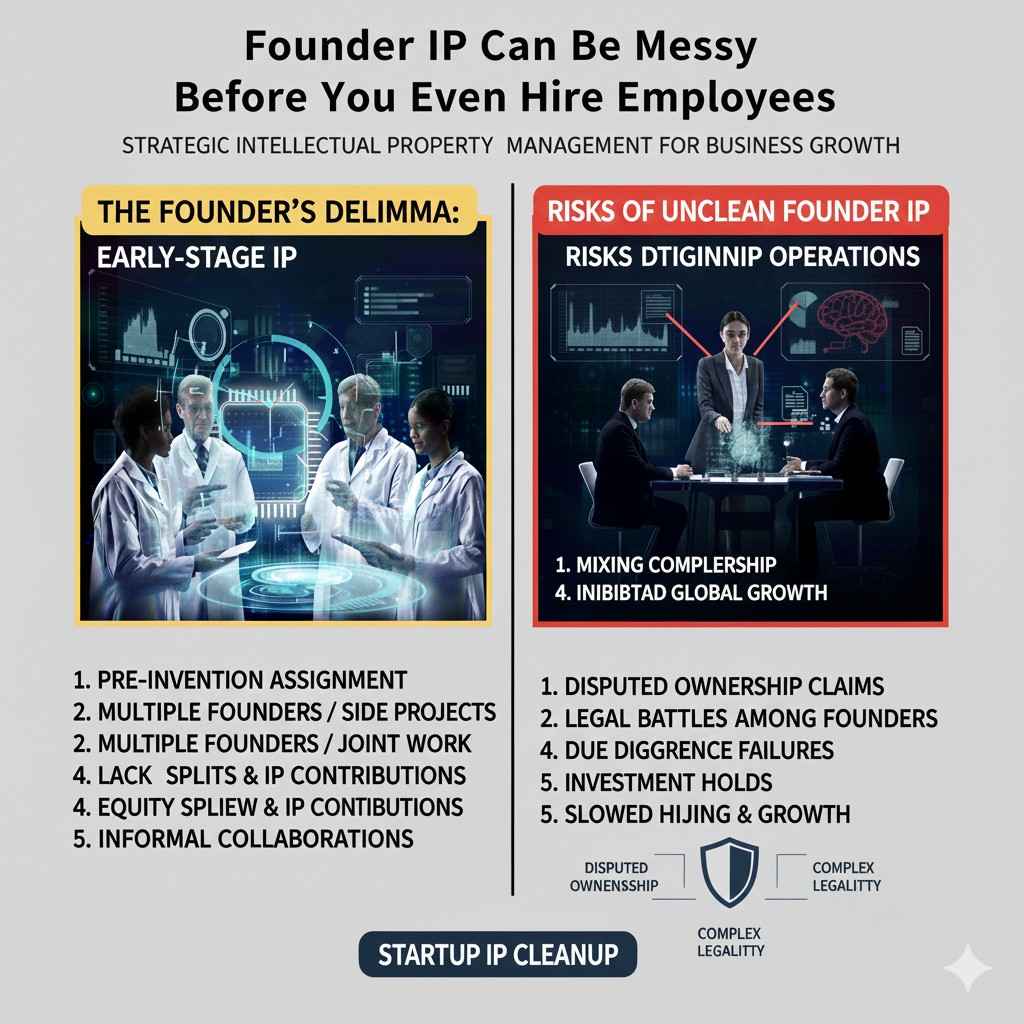
Many deep tech startups have real work done before the company is formed. A prototype, a model, a control loop, a sensor design, or a key dataset may exist months earlier. That early work does not automatically “belong” to the new company just because the founders now agree it should.
In diligence, investors often ask one plain question: was the core tech created by the company, and does the company own it? If the honest answer is “it was built before we formed the company,” the next question is even more plain: show the document where it was assigned into the company.
That document is usually a founder IP assignment. It needs to be signed, dated, and matched to what was created. If you do this early, it becomes boring paperwork. If you do it late, it becomes a negotiation during fundraising, which is the worst time to negotiate.
The “my old job” risk
A very common founder story is: “I built the first version while I was employed, but I did it at night.” The intention might be clean, but intention is not the standard that matters. Many employment contracts say that inventions related to the employer’s business, or created using employer resources, or created during employment, may be owned by the employer.
Even if you never used a work laptop, the topic alone can be enough to create conflict. If your startup is in robotics and your employer was also doing robotics, you have a serious risk. If your startup is in AI tooling and your employer was building adjacent AI systems, you also have risk.
The practical move here is not to panic. It is to map what was built, when it was built, and under what employment terms. Sometimes the answer is “we rebuild the risky modules from scratch under the company.” Sometimes the answer is “we narrow the product scope.” Sometimes the answer is “we get a written release.” What matters is that you handle it before you file patents or raise money on top of it.
If you want a team that helps you spot these issues early and shape an IP plan that investors trust, apply anytime at https://www.tran.vc/apply-now-form/.
University and lab work: the quiet ownership trap
If any founder or early team member used a university lab, was funded by a grant, or worked under a research agreement, the university may have ownership rights. This is especially common in robotics, medical devices, and applied AI research.
The confusing part is that universities often have different rules for students, staff, and visiting researchers. A PhD student may have one set of policies, while a paid research assistant may have another. Also, even if the university does not “own” the entire invention, it may have rights to license it or rights tied to sponsored funding.
The best approach is to treat university-linked work as its own track. You gather the policy documents, identify what was created within that environment, and decide whether you will license it, avoid it, or rebuild it. The worst approach is to ignore it and hope nobody asks. Somebody will ask.
Multinational employee IP is not one problem, it is several
Ownership rules differ by country, even for the same work
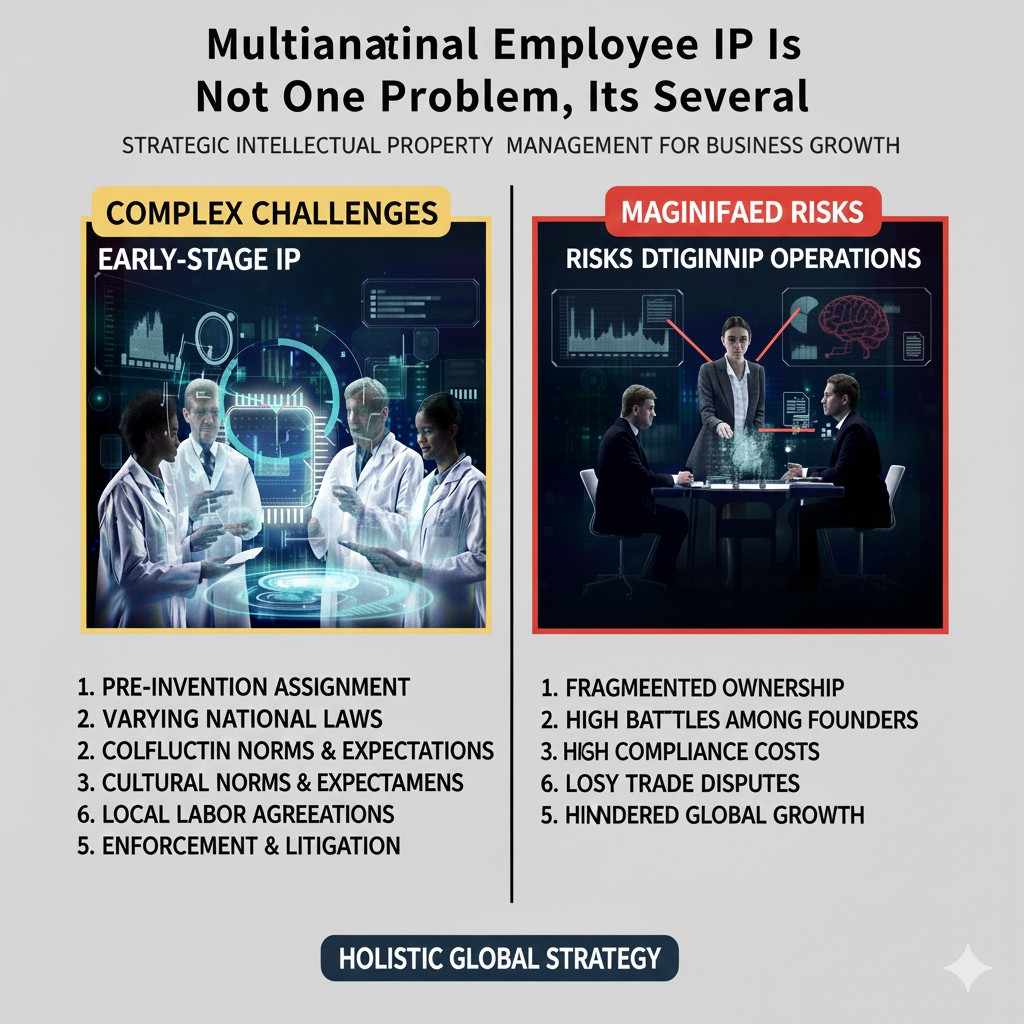
In a global team, one engineer may sit in California, one in Germany, one in India, and one in Brazil. They may all contribute to one invention, but each one’s default legal position can be different.
That difference shows up in small but important ways. In some places, employee inventions are expected to be assigned to the employer through clear agreements and clear scope. In other places, employees can have stronger “inventor rights,” including rights to extra pay for inventions. In some systems, there are formal steps for an employer to claim an invention, and missing those steps can weaken ownership.
You do not need to memorize every rule. You do need a method that respects the reality that “one contract fits all” is usually not enough.
The role of “scope” and why job descriptions matter
A founder might think job descriptions are just HR. In IP, job scope is evidence. If an engineer’s role is clearly to build the algorithm that becomes your patent, it is easier to show that the work was created for the company. If the role is vague, you create room for arguments later.
This matters more in multinational settings because you need clean proof across borders. A job scope that matches the work is one of the simplest ways to keep ownership steady. It also helps when a person moves from contractor to employee, or when you expand their responsibilities over time.
In practice, this means you should keep role descriptions updated and aligned with what people actually do. You do not need pages of text. You need clarity that matches reality.
Employees, contractors, and the “misclassification” domino effect
Startups often hire abroad as contractors because it is fast. The problem is that some contractors behave like employees in practice. They have set hours, direct supervision, and long-term exclusive work. In many places, that can trigger reclassification.
When reclassification happens, IP ownership can become unclear. The contractor agreement may not satisfy employee invention rules in that country, or it may have missing steps. At the same time, the company might now have tax and compliance issues, which makes everything harder to fix quickly.
A practical way to reduce this risk is to decide early: is this person truly a contractor delivering a defined output, or are they part of the team building core product daily? If they are core and ongoing, treat them as core and ongoing, even if you use an employer-of-record or local payroll partner.
Clean agreements are necessary, but they are not enough
The agreement needs three parts that founders often miss
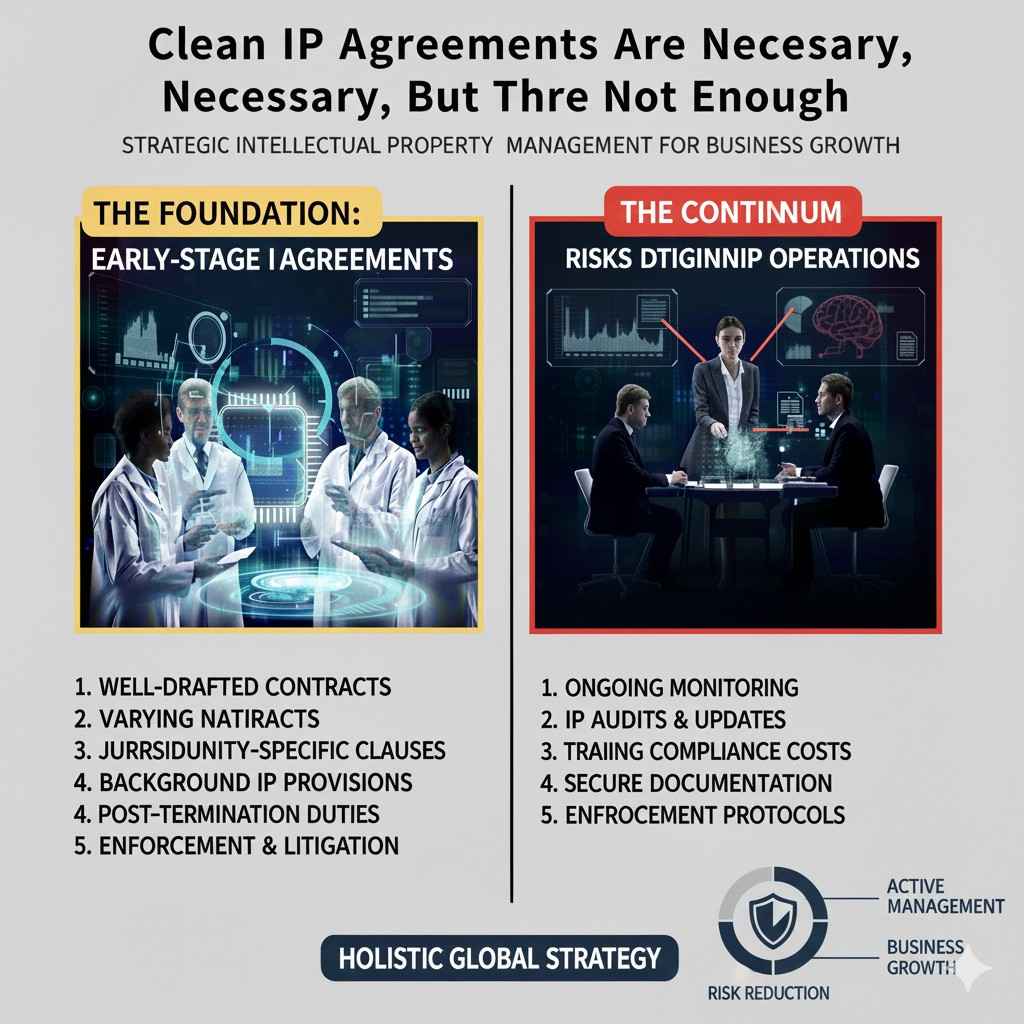
Many startups get the basic IP assignment language, then stop. In multinational teams, you usually need three elements working together.
First, the assignment itself must cover inventions, code, designs, know-how, and improvements. It should also cover future inventions created during the relationship, not just what exists today.
Second, you need a duty-to-disclose clause. This means the person agrees to promptly tell the company about inventions they create that relate to the company’s business. Without this, inventions can sit quietly in someone’s head or notebook until it is too late.
Third, you need practical “further assurances” language. This is the part that says: if we need your signature later to file a patent, confirm inventorship, or fix paperwork, you agree to help. This becomes vital when someone leaves the company and you need their cooperation months later.
Why timing beats perfect wording
Founders often chase perfect legal language. The better focus is timing. If the agreement is signed after work starts, you already created a gap. If the person leaves, that gap becomes leverage. Even if they are friendly, it becomes friction.
A clean onboarding rule is simple: no access, no repo, no design docs, no customer calls until the right agreement is signed. That may feel strict, but it prevents the “we’ll do it later” habit that causes most IP messes.
Local add-ons are normal and do not mean you are weak
Some founders worry that country-specific add-ons look messy. In reality, they show maturity. It is normal to have a base agreement plus local terms to meet local rules.
When investors see that you took local requirements seriously, it often builds trust. It signals that your team can operate across borders without building hidden legal debt. That trust matters, especially for deep tech where IP is a core asset.
If you want support building these agreements the right way, with a real IP strategy behind them, apply anytime at https://www.tran.vc/apply-now-form/.
Process is your proof when memory fails
Treat invention capture like product logging
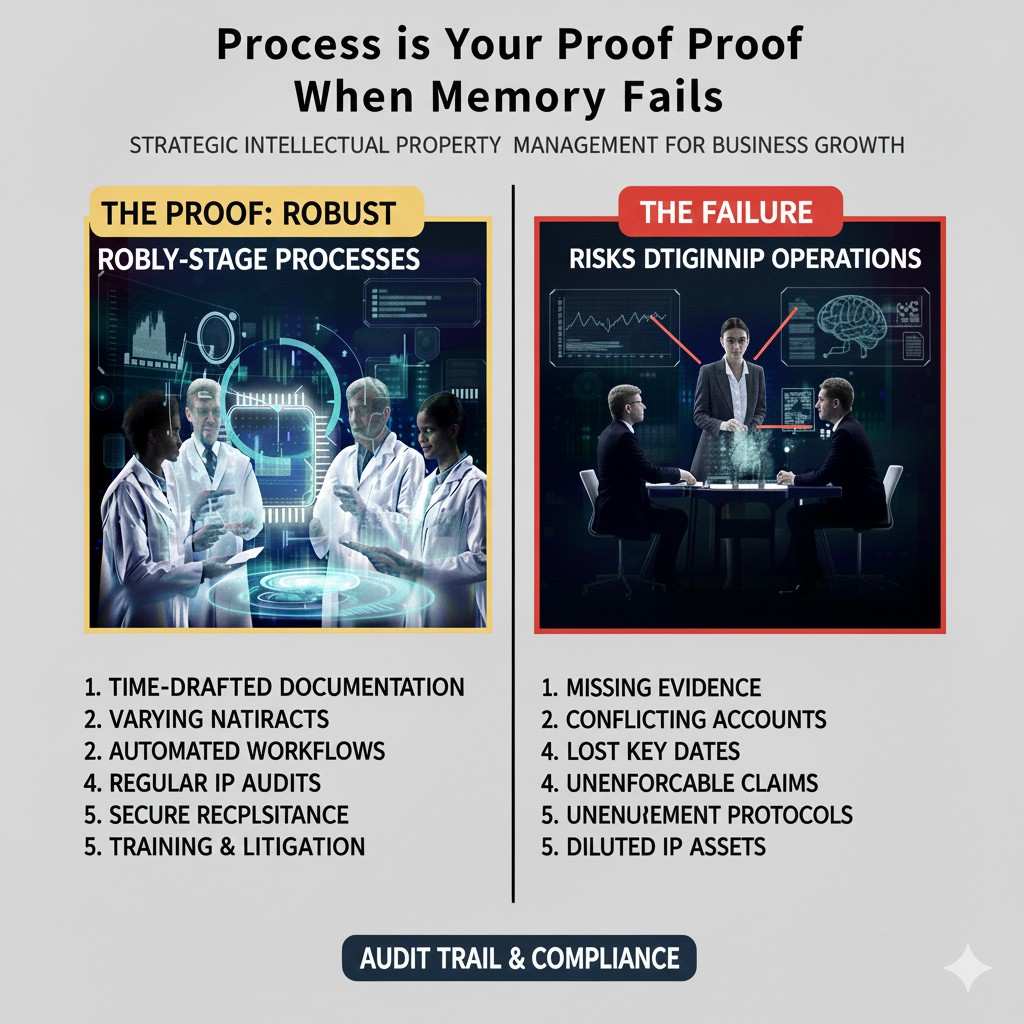
Months from now, nobody will remember who suggested the key step in your method, or when the idea first appeared. That is why invention capture needs a simple process. Not a heavy one, just a consistent one.
A good approach is to create a lightweight invention record every time something truly new appears. It can be a short internal write-up that states what the idea is, what problem it solves, who contributed, and when it was first reduced to practice. If you later file a patent, these notes help your patent team move faster and help you avoid inventorship errors.
Keep work inside company systems, especially for remote teams
When people use personal email, personal cloud drives, and private chat groups, you lose the paper trail that shows work was created as part of employment. This matters more with multinational teams because the “proof trail” is often what keeps ownership clean if a dispute shows up.
You do not need to be extreme. You do need a standard: company email for company work, company repo for company code, company ticketing or notes for key decisions. If you make it easy and normal, most people follow it.
Offboarding is an IP event, not just an HR event
When someone leaves, founders often focus on access removal and knowledge transfer. They forget the IP side. For multinational teams, offboarding is the moment where you lock down assignments, confirm what was created, and gather any missing signatures.
A practical offboarding step is to have the departing person confirm, in writing, that they have disclosed all inventions and returned all company materials. You also check whether they are an inventor on any pending patent filings, and if so, you get the needed signatures while they are still responsive.