
If you are building real tech—robotics, AI, chips, sensors, medical devices—you will run into this question sooner than you think:
Do we publish it so others can’t patent it, or do we patent it ourselves?
That is the core trade-off between defensive publishing and patenting. One is about blocking others. The other is about owning the rights yourself. Both can be smart. Both can also backfire if you use them at the wrong time, in the wrong country, or for the wrong part of your product.
This article will walk you through how each path works around the world, what changes from the U.S. to Europe to China to India, and how founders can decide with clear steps—without getting lost in legal talk.
And if you want a partner to help you do it right early, Tran.vc invests up to $50,000 in in-kind patent and IP services so you can build a moat before you raise your seed round. You can apply anytime here: https://www.tran.vc/apply-now-form/
Defensive Publishing vs Patenting: A Global View
The problem most teams discover too late
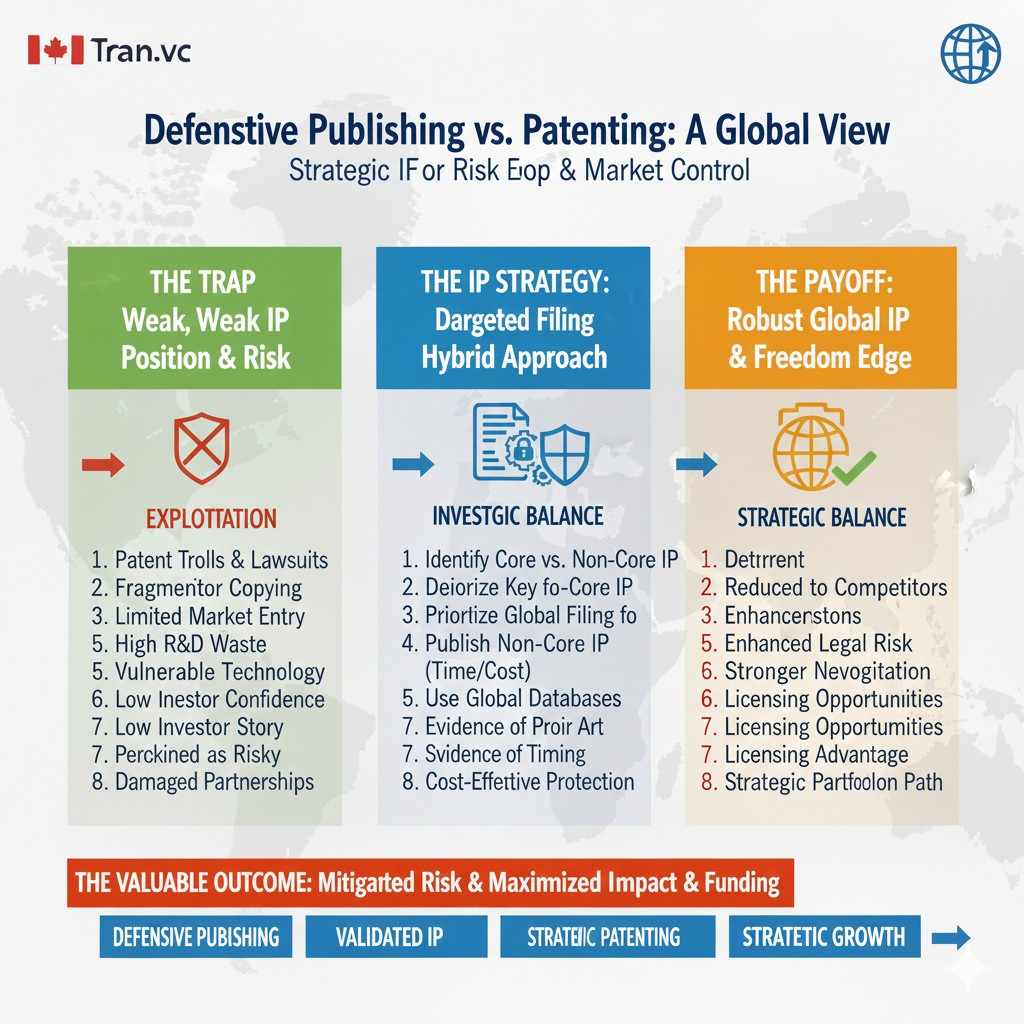
If you build something useful, someone will copy it. That is not a scary idea. It is just how markets work. The real risk is not copying alone. The real risk is someone else filing a patent first and then using that patent to slow you down, scare your customers, or block your next product release.
This can happen even if you wrote the code first. It can happen even if you showed the demo first. It can even happen if your idea has been in your heads for a year. In most places, what matters is what was filed and when.
The two tools founders mix up
Defensive publishing and patenting are not “good vs bad.” They are two different tools for two different goals. Defensive publishing is mainly a shield that tries to stop others from getting a patent. Patenting is a sword and a shield, because it can stop others and also give you rights you can enforce.
The confusion starts because both involve “disclosure.” You either disclose by publishing, or you disclose by filing a patent. But the results are not the same. One gives you ownership. The other mainly tries to make ownership harder for others.
Why global rules change the answer
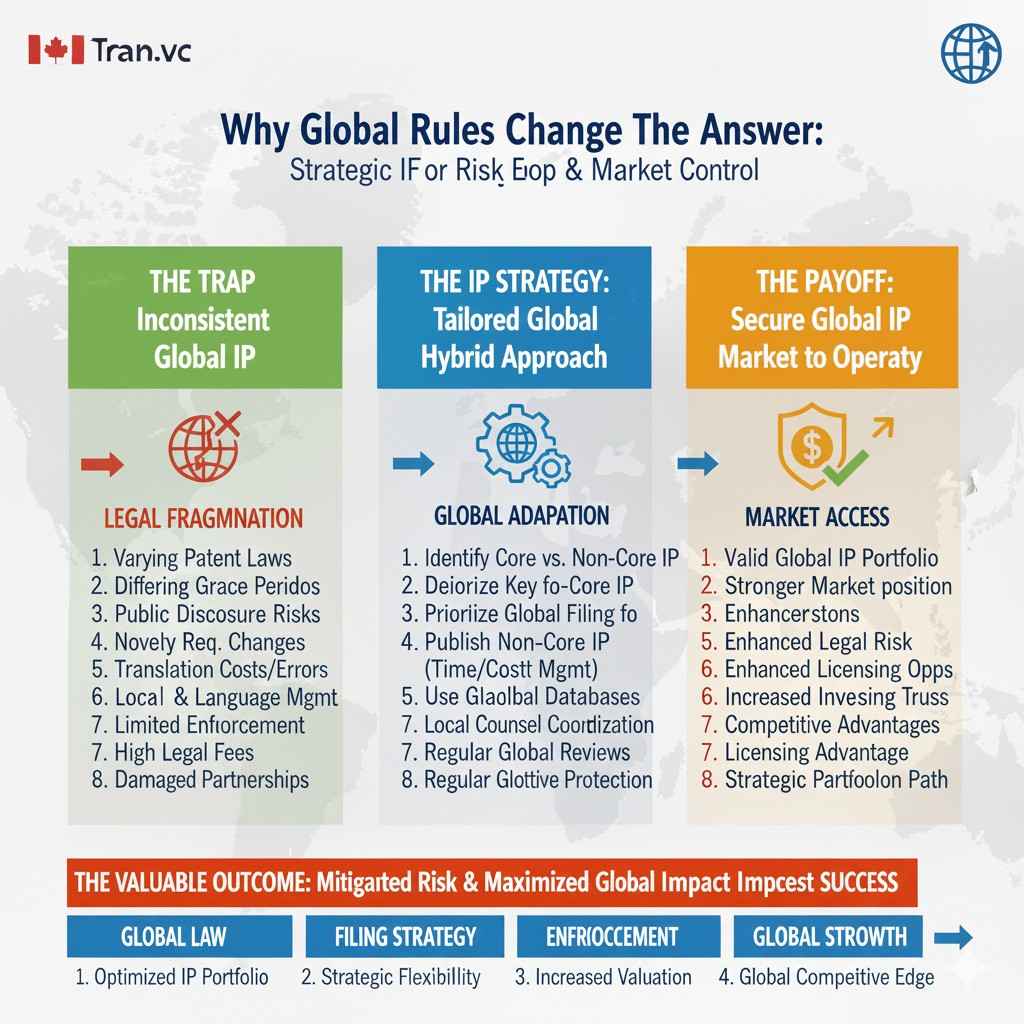
A plan that works in one country can fail in another. The rules about timing, what counts as public, and what counts as “new” are not the same everywhere. Many founders think IP is mostly a U.S. game. That is a costly belief.
If you sell globally, raise globally, hire globally, or manufacture globally, your IP choices become global too. Even early-stage teams feel this when a big partner asks, “Is this patented?” or when a buyer asks, “Can you defend this?”
Where Tran.vc fits in
Tran.vc works with robotics, AI, and deep tech founders who want strong foundations before they raise. Tran.vc invests up to $50,000 in in-kind patent and IP services so you can make smart moves early, not rushed moves later. You can apply anytime at https://www.tran.vc/apply-now-form/
What Defensive Publishing Really Is
The simple definition
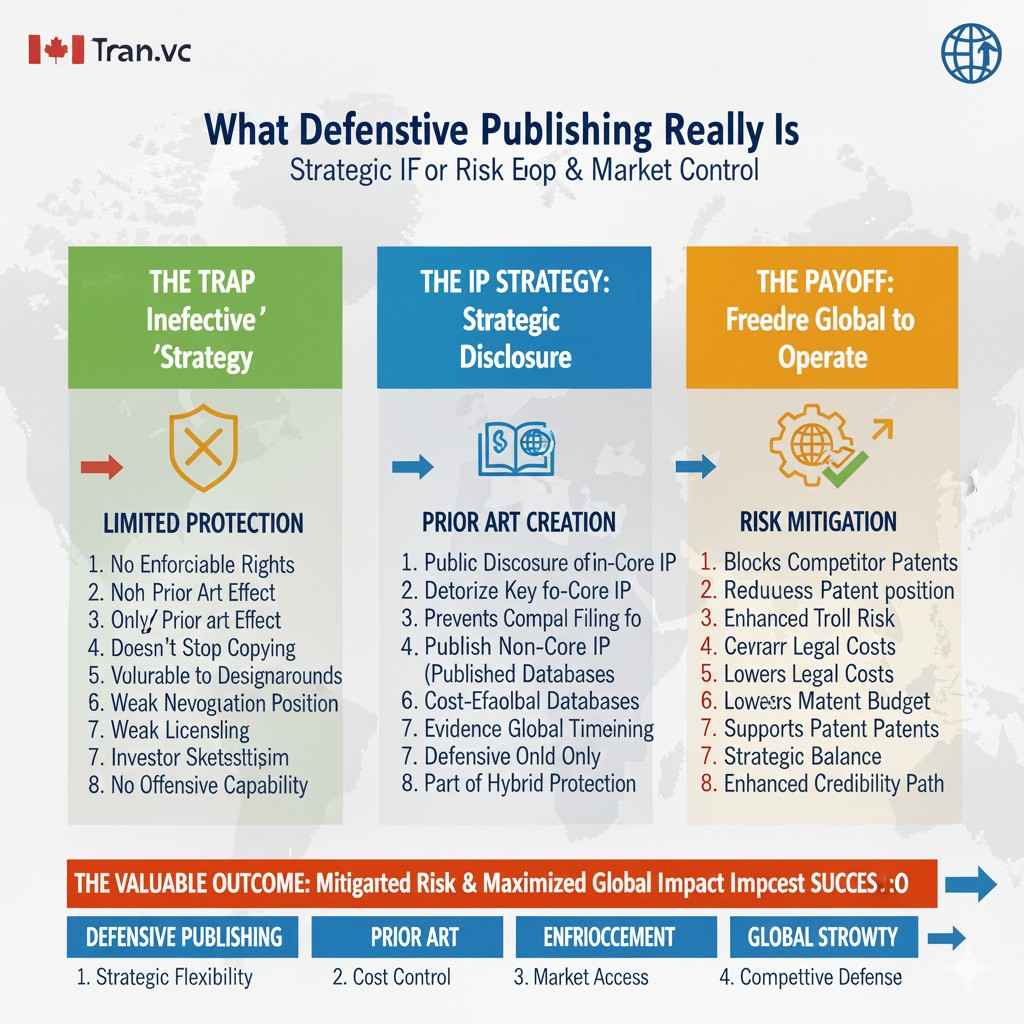
Defensive publishing means you publicly share enough details of an invention so that it becomes “known” to the world. Once it is known, it can count as prior art. That makes it harder for someone else to claim they invented it first and patent it.
Think of it like planting a flag in the public ground. You are saying, “This exists. This idea is out in the open.” You are not saying, “I own exclusive rights.” You are mainly making it harder for others to own it.
What “enough details” means in practice
A defensive publication is not a vague blog post that says, “We use AI to optimize robots.” That does not help much. For it to work, it must be specific enough that a patent examiner could point to it and say, “This is the same idea, already disclosed.”
That usually means you describe the core method, the system parts, the data flow, and the key steps. If it is software, you explain what the algorithm does, what inputs it takes, what outputs it produces, and why it works. If it is robotics, you explain the sensing, the control loop, the safety logic, and what makes it different from a standard setup.
The hidden cost: you may give away your edge
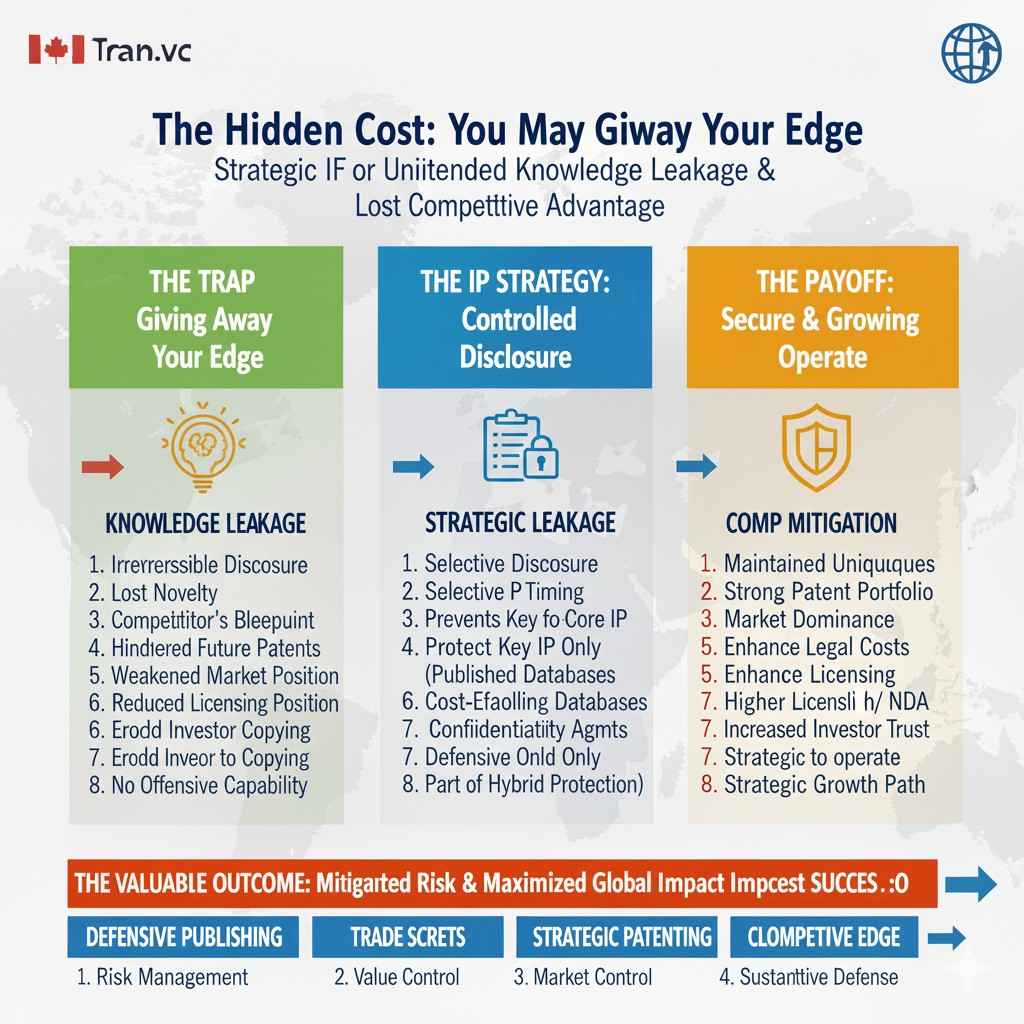
When you publish defensively, you may block a patent, but you also educate the market. That includes competitors, large companies, and teams that move fast. If your advantage is in the “how,” publishing can shorten the time it takes others to catch up.
This is why defensive publishing should be used with care. It can be smart for ideas that are easy to reverse engineer anyway. It can be risky for ideas that are hard to discover from the product alone.
The most common reason teams do it
Many teams use defensive publishing because they think patents are slow, expensive, or not worth it. Sometimes that is true. But often it is not the full story.
A patent plan does not always mean filing many patents. It can mean filing a few strong ones at the right time, in the right places, on the right core pieces. Defensive publishing can still be part of that plan. It just should not be the whole plan by default.
What Patenting Really Is
The simple definition
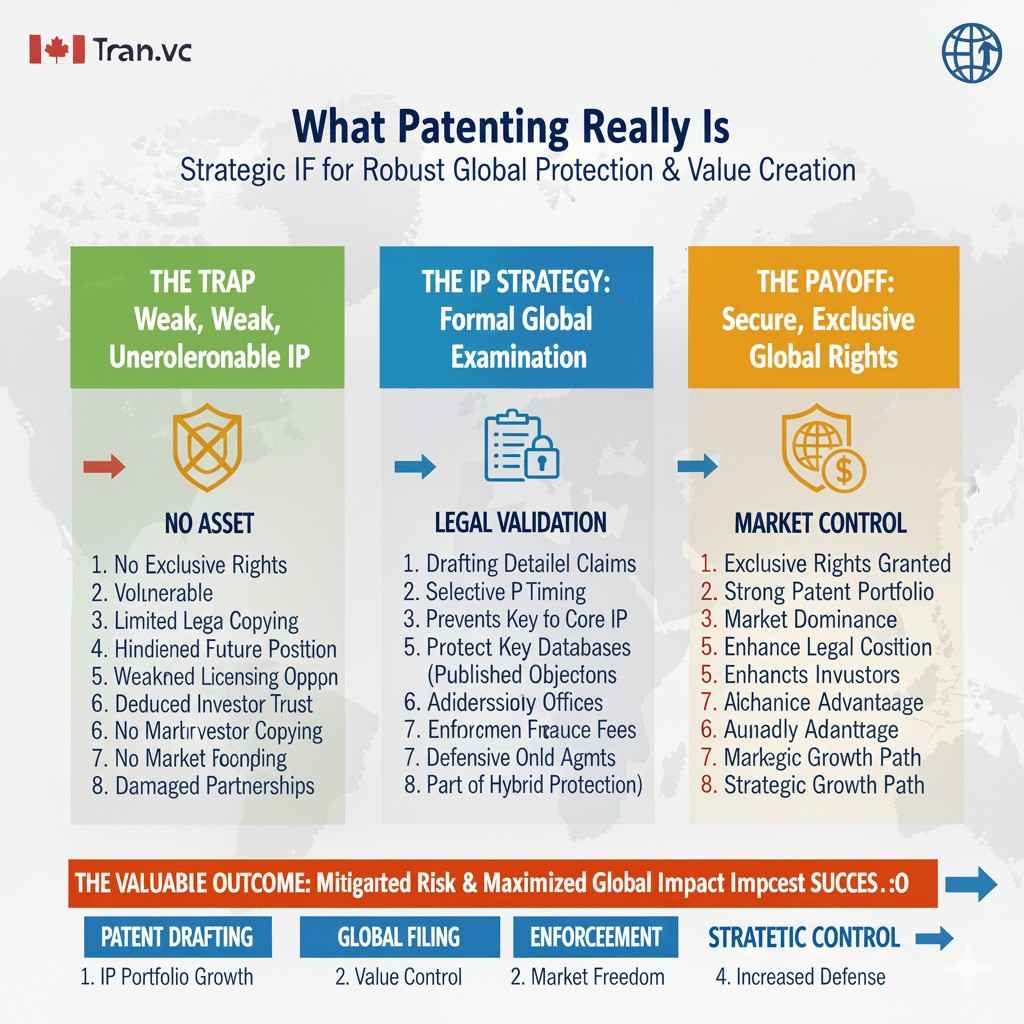
A patent is a legal right granted by a country that lets you stop others from making, using, or selling the claimed invention in that country. It is not global by default. It is a country-by-country right, even if you file through global routes.
Patents are not about “ideas.” They are about specific inventions described in claims. The claims are the borders. The clearer the borders, the more useful the patent can be.
The disclosure trade you must accept
To get a patent, you must explain your invention in a way that a skilled person could reproduce it. That is part of the bargain. The public learns from your disclosure, and you get a time-limited right to exclude others.
This is why patents can feel scary to founders. You are sharing details. But unlike defensive publishing, you are sharing details in exchange for ownership. That ownership can change negotiations, partnerships, pricing power, and fundraising.
Why patents are still valuable in software-heavy tech
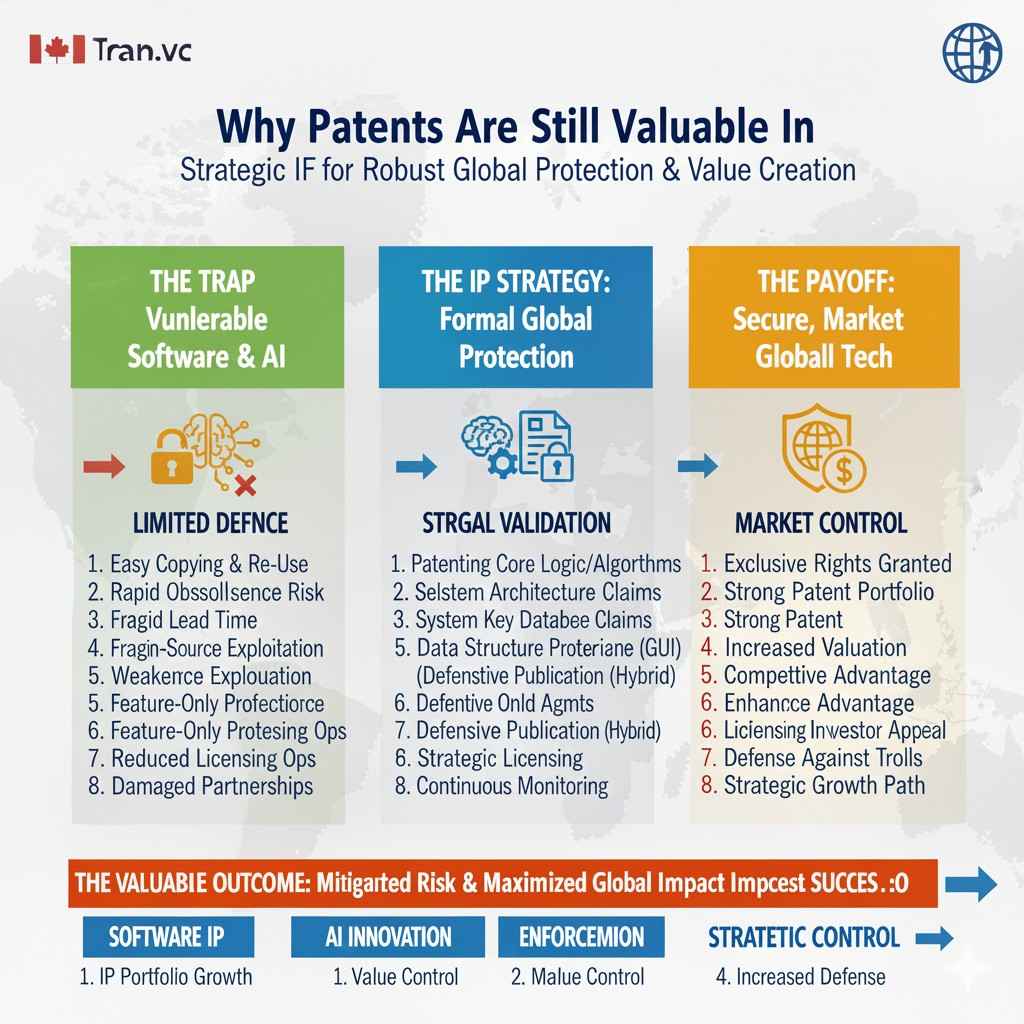
Some founders believe patents do not matter for AI or software. In practice, investors and large buyers still care, especially when the product touches real-world systems like robots, sensors, manufacturing, health, finance, or security.
For AI and robotics, patents often focus on “systems” and “methods” tied to real technical results. That can mean better control stability, lower compute load, safer motion planning, improved calibration, or better fault detection. When framed well, patents can cover the practical edge, not just the buzz.
The business power that comes with ownership
Patents can deter copycats because they create real legal risk. They also help in deals because they turn your invention into an asset that can be licensed, valued, and defended.
Even when you never sue anyone, the mere fact that you could matters. Many conflicts are resolved before court because the IP position is strong enough to make a fight a bad idea for the other side.
The Core Distinction: Blocking vs Owning
What defensive publishing can do well
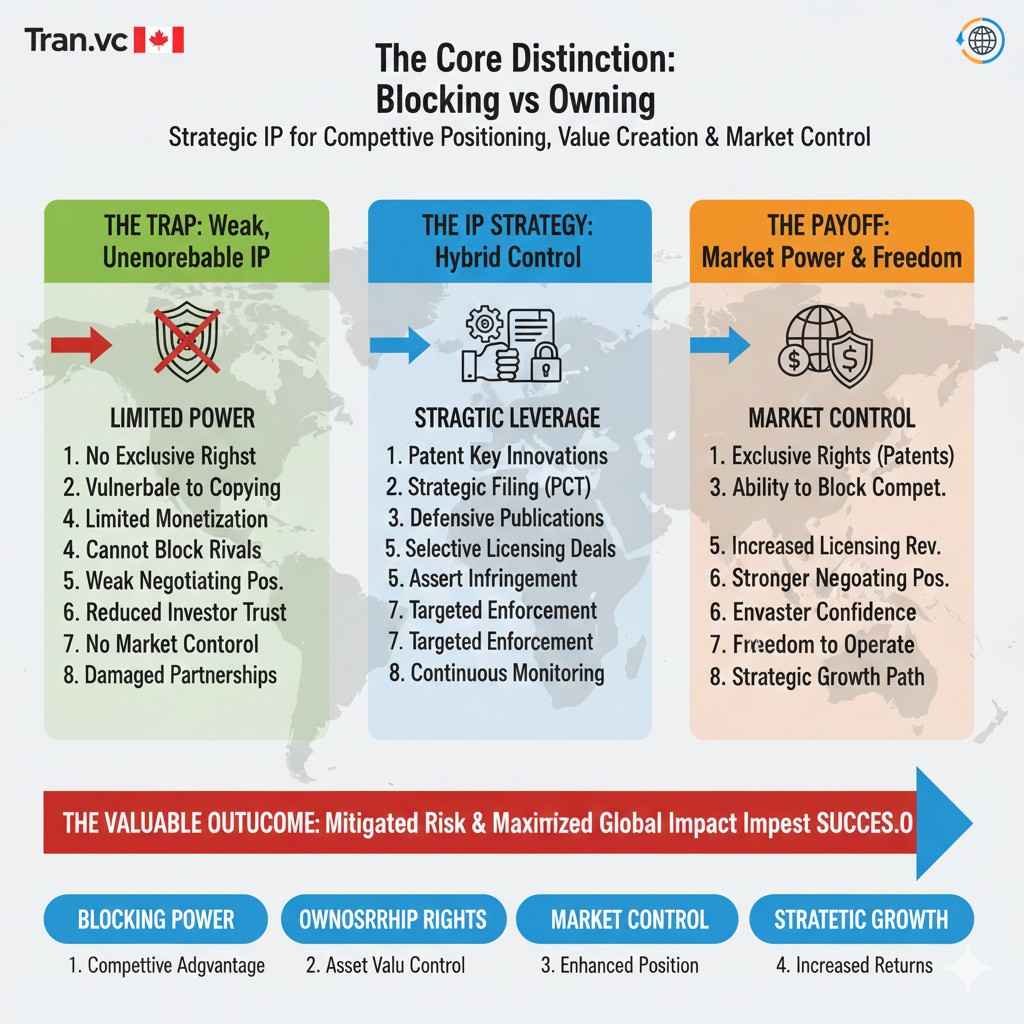
Defensive publishing is good at creating prior art. It can reduce the chance that someone else patents the same thing. It can protect freedom to operate in a broad sense, because it keeps parts of the landscape open.
It can also be fast. You can publish quickly. If speed matters because you are about to present publicly, defensive publishing can be a useful tool when filing is not ready.
What defensive publishing cannot do
Defensive publishing does not give you exclusive rights. A competitor can read your publication and implement it. They can sell it. They can even improve it and patent the improvement.
If your business needs exclusivity to justify pricing, partnerships, or long-term R&D, defensive publishing alone usually does not support that. It is more like leaving the door unlocked but putting up a sign that says, “This room is already taken.”
What patenting can do well
Patenting can create defensible exclusivity. It can cover not only what you built today, but also logical variations that competitors might try tomorrow, if the claims are crafted correctly.
It also creates a cleaner story for investors and strategic partners. When you can say, “We filed on the core method,” it signals you understand long-term risk and you are building with intent.
What patenting cannot do
Patents take time and money. They also require careful planning, because filing too early can lock you into a narrow view of the product, and filing too late can lose rights due to public disclosure.
Patents also vary in strength depending on how they are written and how novel the invention is. A weak patent can be worse than none if it gives a false sense of security.
A Global View: Why Location Changes the Best Move
“First to file” is the baseline almost everywhere
Most countries reward the first party to file a patent application, not the first party to invent. That means your internal docs are not enough. Your Git history is not enough. Your lab notebooks are not enough.
This is why timing matters so much. If your competitor files first and gets claims that cover your product, you may spend years and large sums to fight it, even if you were earlier in reality.
Public disclosure rules are not the same
Some places give you a grace period after you disclose publicly. Some places do not. This is one of the biggest traps in global IP strategy.
If you publish a blog post, present at a conference, show details in a pitch deck that leaks, or ship a product that reveals the method, you may destroy your ability to patent in certain regions. That is why founders need a plan before they market the “cool details.”
The global business map shapes the IP map
The right filing countries depend on where you sell, where you make the product, where your buyers are, and where your competitors operate. It also depends on where enforcement is practical.
A robotics startup that manufactures in Asia, sells in the U.S. and Europe, and partners with an auto supplier will have a different IP map than an AI startup selling SaaS to U.S. mid-market teams. The “global view” is not theory. It is a practical map of risk and leverage.
A simple founder test
If losing exclusivity would make your company worth much less, you should lean toward patenting on the core. If the invention is easy to copy and hard to enforce, defensive publishing may be enough, but you must be honest about what you are giving up.
Tran.vc helps founders make this call early, with real patent strategy and filings as an in-kind investment. If you want to explore fit, apply anytime at https://www.tran.vc/apply-now-form/