
You can build the best robot in the world.
You can train the smartest AI model on earth.
But if someone else owns the rights to a key piece of what you built, you may not be free to sell it.
That is where Freedom to Operate comes in.
Most founders hear about patents. Few truly understand Freedom to Operate, often called FTO. And in robotics and AI, where systems mix hardware, software, sensors, chips, control systems, and machine learning models, the risk is even higher.
This article will walk you through what Freedom to Operate really means, why it matters deeply in robotics and AI, and most important, when you should run it. If you are building something real, not just slides, this will matter to you sooner than you think.
If you are unsure where you stand today, you can always apply to Tran.vc here:
https://www.tran.vc/apply-now-form/
We help founders build strong IP foundations before problems show up.
What Freedom to Operate Actually Means
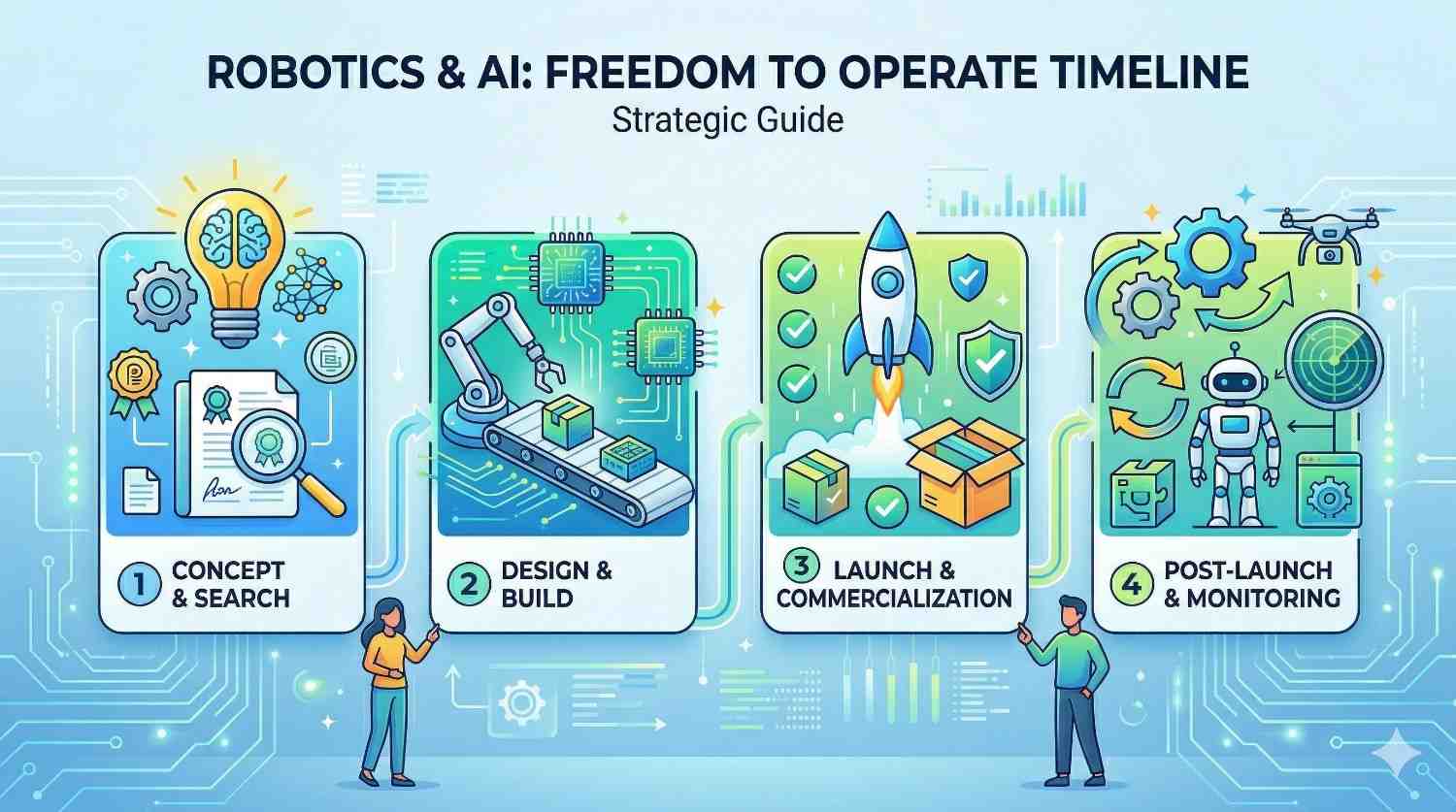
Freedom to Operate is simple in idea.
It answers one question:
Can you legally make, use, sell, or import your product without infringing someone else’s active patent?
It does not ask whether your idea is new. That is a different question. That is about patentability.
FTO asks something more practical. It asks whether you are stepping on someone else’s legal rights.
Many founders confuse these two.
You can have a patent and still infringe another patent.
You can have a novel AI model and still violate an existing system claim.
You can build a robotic arm with your own control algorithm and still fall inside someone else’s broader patent on coordinated motion systems.
Freedom to Operate is about risk. Real risk. The kind that shows up when you start selling, raising money, or entering partnerships.
In robotics and AI, products are rarely simple. A robot may include:
- Vision systems
- Motion planning software
- Gripping hardware
- Embedded chips
- Cloud connectivity
- Learning models
- Safety layers
Each layer may sit in a patent minefield.
That is not meant to scare you. It is meant to wake you up.
The good news is that FTO can be managed. It can be planned. It can be used as a strategic tool.
But only if you run it at the right time.
Why Robotics and AI Are High Risk for Patent Overlap
In consumer apps, patent disputes can happen. But in robotics and AI, they happen more often and more aggressively.
There are three big reasons.
First, hardware plus software creates dense patent landscapes.
Large corporations have been filing robotics patents for decades. Industrial automation companies. Medical device firms. Defense contractors. Semiconductor giants. Many of them hold deep portfolios covering motion control, sensor fusion, safety systems, and actuation.
Second, AI patents have exploded.
Over the past ten years, filings around machine learning systems, model training methods, inference optimization, edge AI deployment, and neural network architectures have grown fast. Even if your model feels unique, parts of the workflow may be covered.
Third, startups often build on existing platforms.
You might rely on open source libraries. You might fine tune an existing model. You might integrate third party hardware modules. Every dependency adds a layer of risk.
Freedom to Operate is not about fear. It is about clarity.
And clarity gives leverage.
At Tran.vc, we work with robotics and AI founders who are building serious technology. We help them understand where they are exposed and how to design around risk early. If you want to see how that applies to you, you can apply here:
https://www.tran.vc/apply-now-form/
The Biggest Myth About FTO
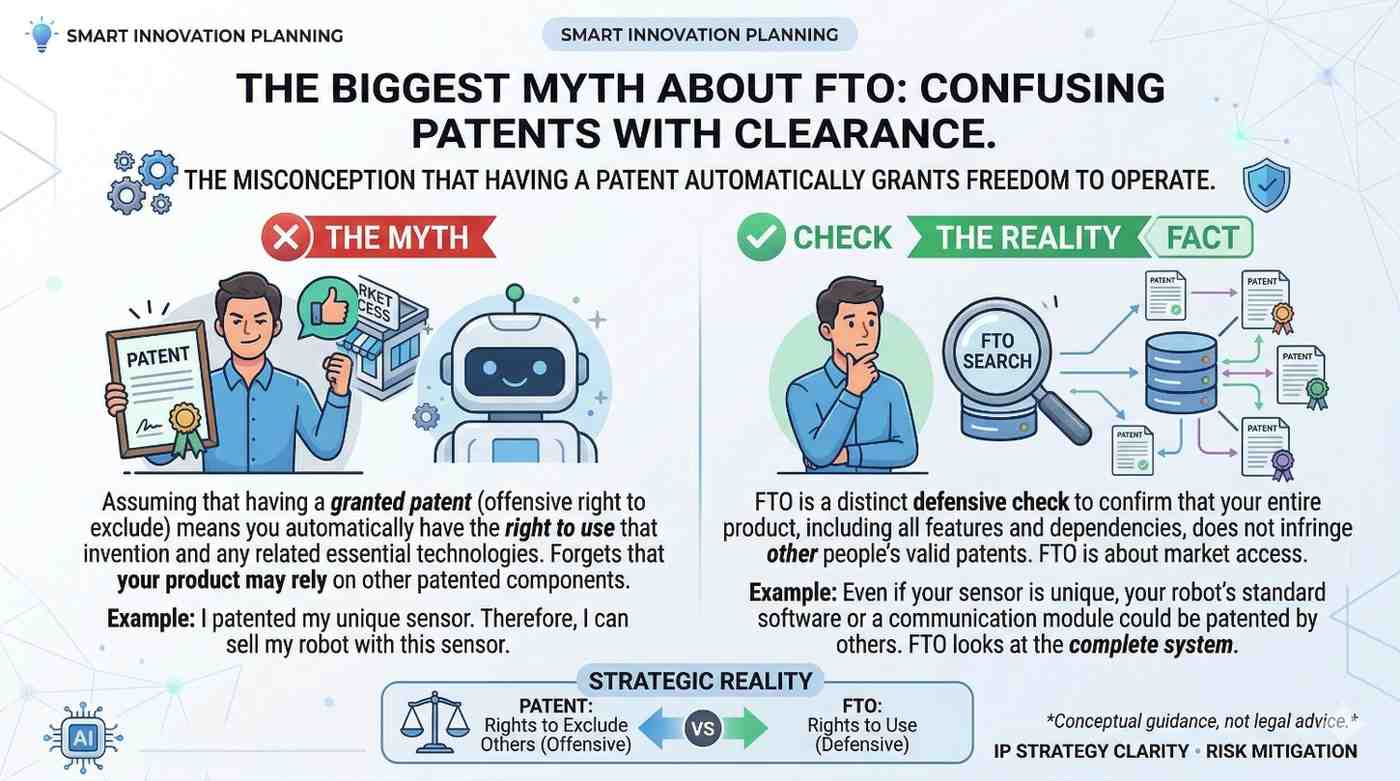
Most founders think they should run an FTO after they raise a big round.
That is often too late.
By then, your architecture is fixed. Your code base is large. Your hardware molds are expensive. Your team has built around certain assumptions.
If a blocking patent appears at that stage, you are not just adjusting a feature. You are redesigning the product.
And redesigns in robotics are not small tweaks. They involve mechanical changes, firmware updates, testing cycles, and compliance reviews.
An FTO is not just a legal checkbox. It is a design input.
When done early, it shapes product decisions.
When done late, it becomes damage control.
When Should a Robotics or AI Startup Run Freedom to Operate?
This is the core question.
There is no single moment that fits every company. But there are clear stages where FTO becomes critical.
Let us walk through them in real terms.
Stage One: After You Lock Your Core Technical Architecture
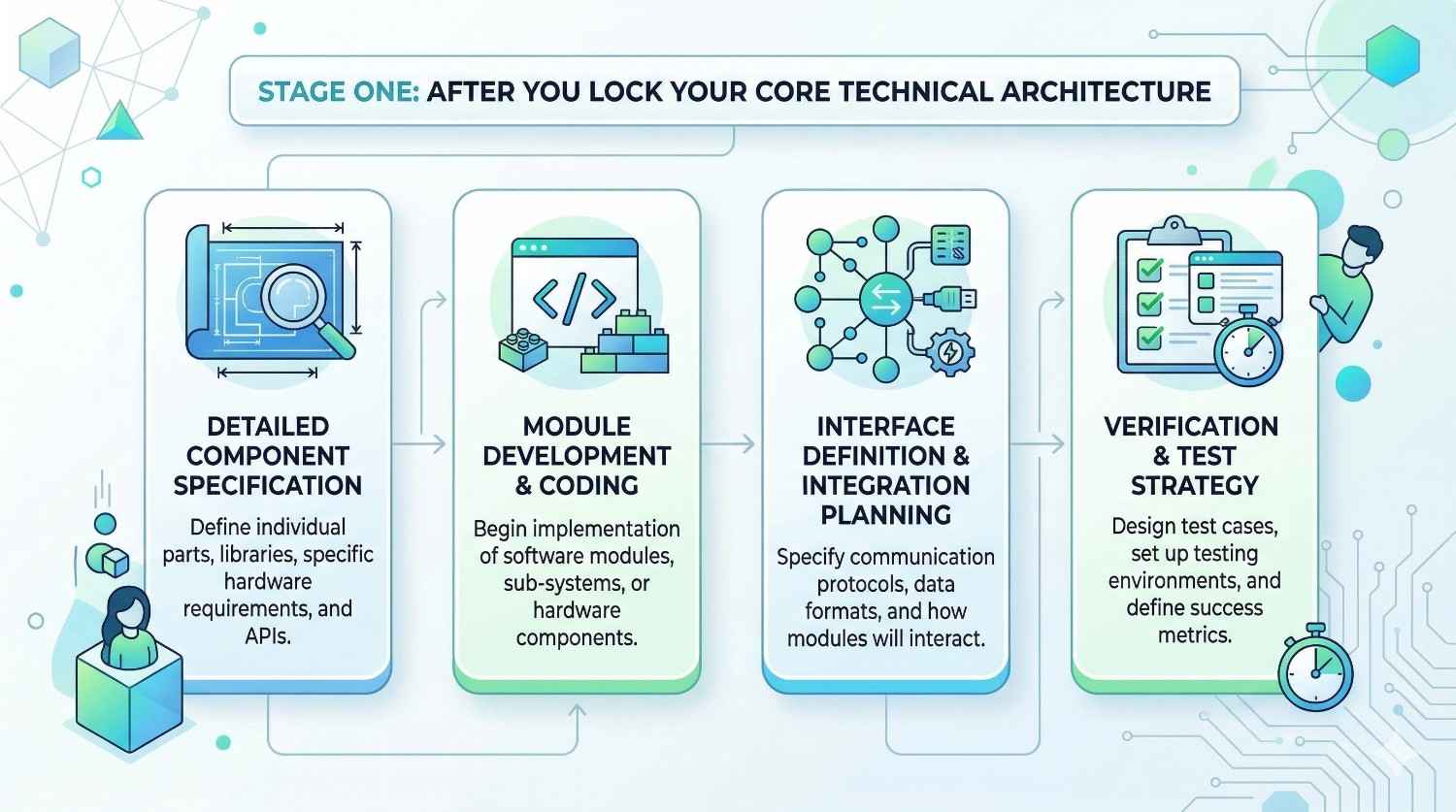
In early research mode, your system may change every week. Running a full FTO at that stage may not make sense. The design is too fluid.
But once you decide on your core approach, things change.
For example:
- You choose a specific type of robotic gripper design.
- You finalize a motion planning method.
- You decide to use a particular neural network structure in production.
- You select a certain way to combine sensor inputs.
At this point, your product is taking shape.
This is often the right time for a targeted FTO.
Why?
Because small design shifts are still possible. You can adjust claim boundaries before hardware tooling. You can rewrite system flows before customers depend on them.
This is strategic FTO. Not reactive FTO.
Too many founders wait until a partner asks, “Have you cleared IP risk?” That is backwards.
If you are building a real robotics or AI system today, and your architecture is starting to solidify, this may be your window.
At Tran.vc, we often step in right here. We help founders map patent landscapes around their chosen design path. We look for red zones and green zones. We shape filing strategy alongside FTO review.
If you are at this stage, do not wait. Apply here:
https://www.tran.vc/apply-now-form/
Stage Two: Before First Commercial Sales
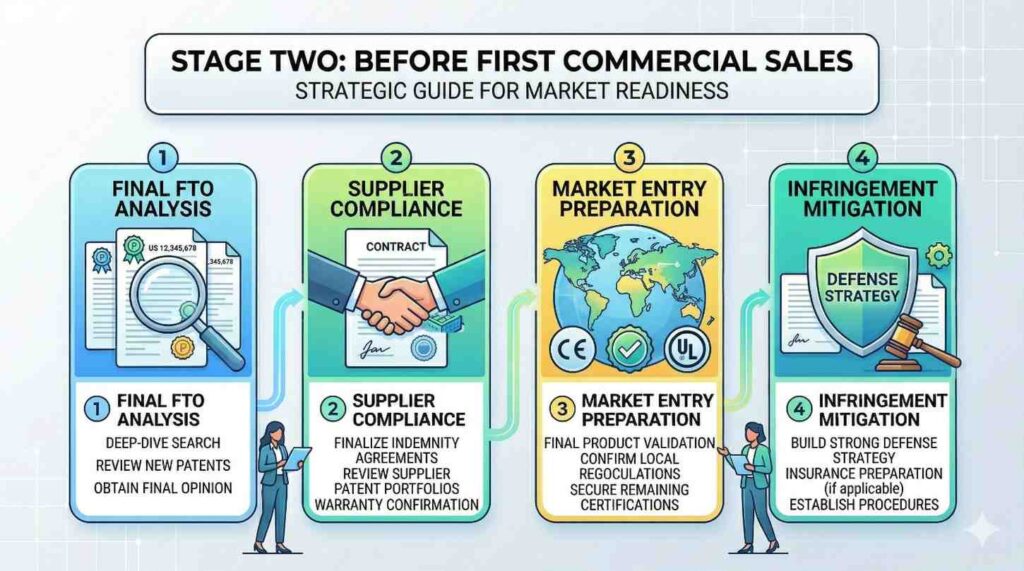
This is the most common trigger.
The moment you sell, you create exposure.
Patent rights are territorial and enforceable. If you make, use, sell, offer to sell, or import a product that falls within a valid claim, you can be sued.
Once revenue starts, you become visible.
Competitors monitor new entrants. Larger companies track product launches. Some firms exist only to enforce patents.
Before first commercial sales, especially in regulated robotics sectors like medical devices, industrial automation, or mobility systems, an FTO is strongly recommended.
Not because disaster is guaranteed. But because informed risk is better than blind risk.
You may discover:
- A patent that reads closely on your design.
- A competitor with broad system claims.
- An expired patent that clears a path.
- A licensing opportunity that reduces risk.
Without FTO, you are guessing.
With FTO, you are deciding.
Stage Three: Before Major Fundraising
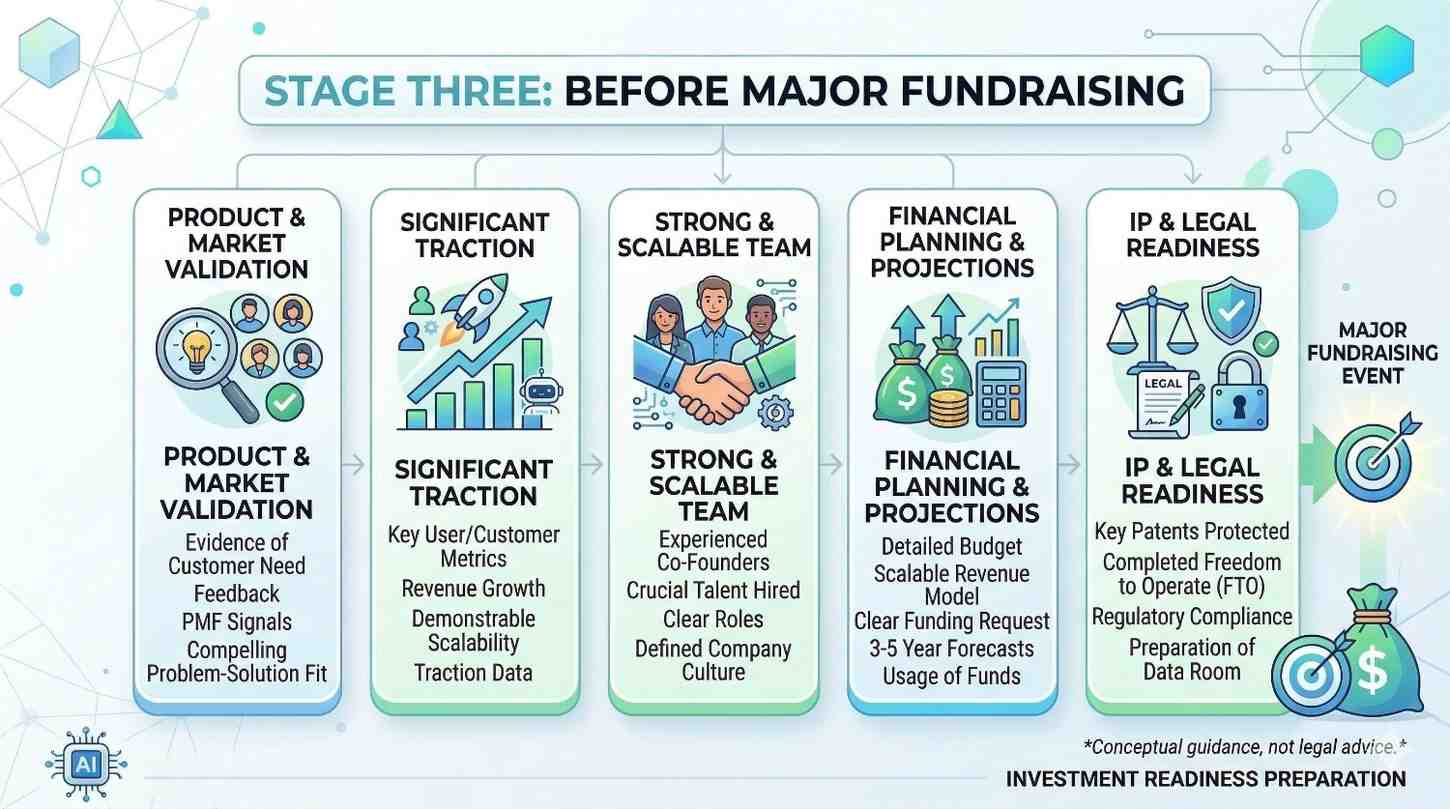
Investors in deep tech care about IP. The good ones ask hard questions.
They may ask:
- Have you run a Freedom to Operate analysis?
- Are there blocking patents in your space?
- How do you plan to defend your market position?
If your answer is vague, confidence drops.
A strong FTO review can turn into a fundraising asset.
It shows that you are not naive. It shows that you understand risk. It shows that you are building a defensible company, not just a demo.
At Tran.vc, we invest up to $50,000 in in kind patent and IP services for robotics and AI startups. That includes helping you think through FTO at the right time, not just filing patents blindly.
We do not just hand you paperwork. We work with you as partners. We help you build a moat before you chase capital.
If you want to raise with strength instead of hope, apply here:
https://www.tran.vc/apply-now-form/
Stage Four: When Entering a New Market or Country
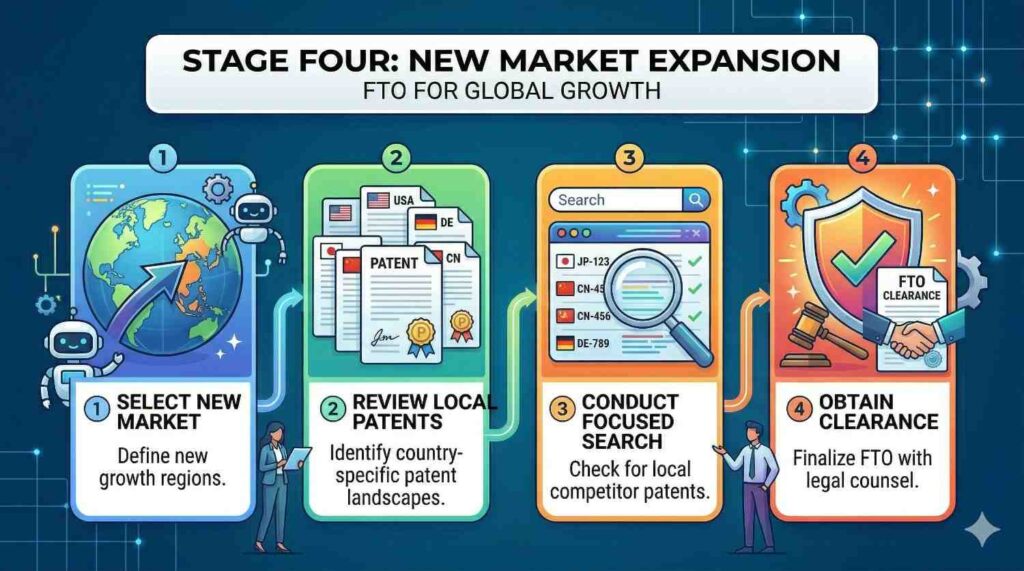
Patent rights are country specific.
You may have freedom in one region and risk in another.
If your robotics system moves from the US to Europe, or from Japan to the US, the patent landscape changes.
Similarly, entering a new industry can shift risk.
A warehouse robot entering healthcare logistics may face different patent clusters than in retail automation.
Each new territory can require a fresh look.
Skipping this step can create painful surprises later.
What Happens If You Skip FTO?
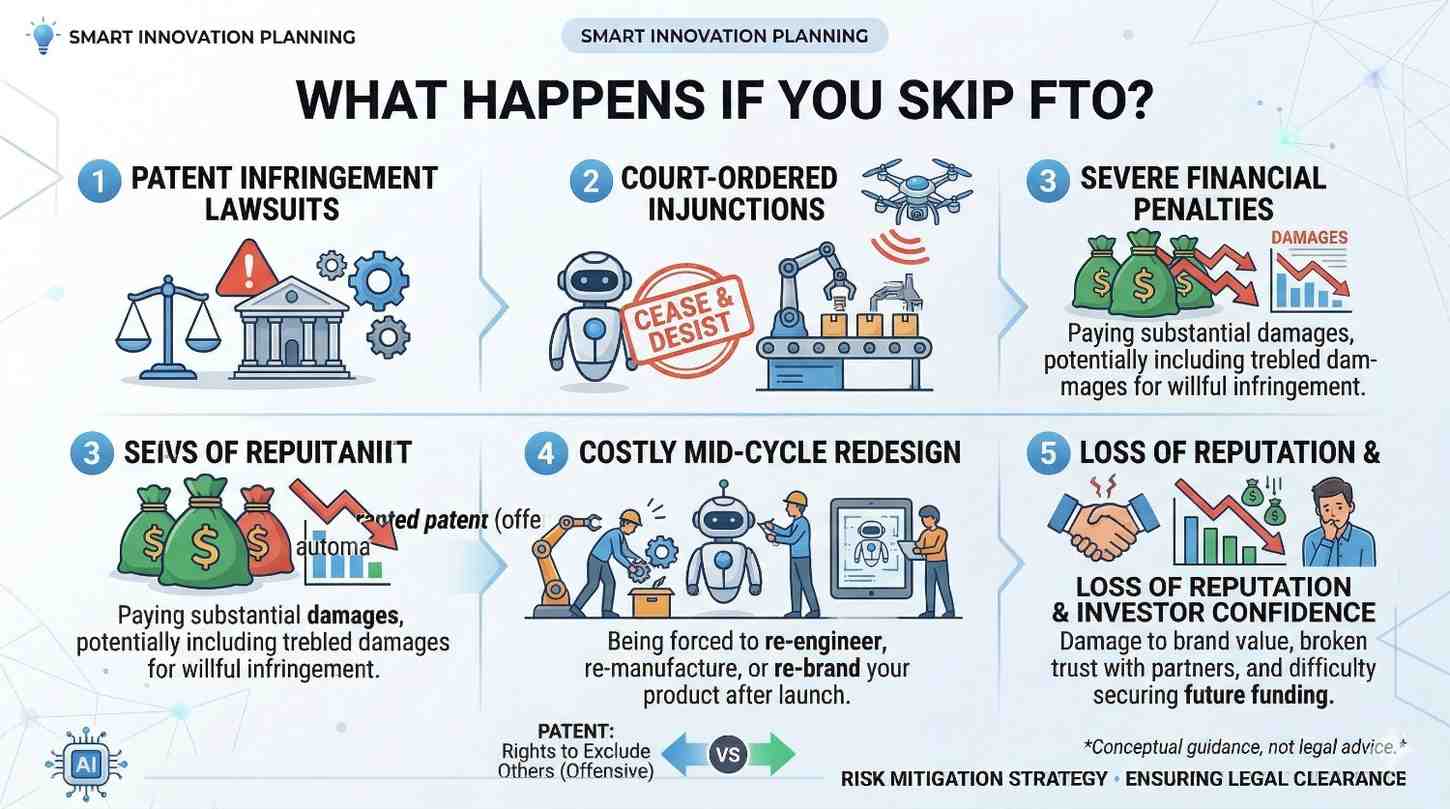
Let us be direct.
Sometimes nothing happens.
Sometimes you build and grow without issue.
But sometimes, you receive a letter.
It may be a cease and desist notice.
It may be a licensing demand.
It may be a lawsuit.
At that point, leverage shifts.
If you have already invested millions in tooling, supply chains, and customer contracts, your ability to redesign is limited.
You may be forced into a license under pressure. You may have to settle. You may lose margin.
Running FTO does not eliminate all risk. But it changes your posture from reactive to proactive.
And in robotics and AI, where development cycles are long and capital needs are high, posture matters.
How a Freedom to Operate Analysis Is Actually Done
Step One: Define the Exact Product You Plan to Sell
An FTO does not start with a random patent search. It starts with your product. Not the idea in your pitch deck. Not the long term roadmap. The exact system you plan to make, use, or sell in the near term.
In robotics and AI, this means breaking the product into clear technical pieces. The hardware layout. The control system. The data flow. The training process. The deployment method. The communication layer. Each of these parts may trigger different patent risks.
If your robot uses a specific type of force feedback gripper, that detail matters. If your AI system uses a certain training loop or edge deployment method, that matters too. Vague descriptions lead to weak analysis. Clear engineering detail leads to strong FTO.
This is why FTO should involve your technical team. Lawyers alone cannot guess architecture. Engineers must explain how the system truly works, not how marketing describes it.
At Tran.vc, we sit with founders and walk through the product in plain terms. We map the real system before we even look at patents. That first step alone often reveals blind spots.
If you are building something serious, and your product is now defined, this is the moment to take IP seriously. You can apply anytime at https://www.tran.vc/apply-now-form/.
Step Two: Search for Relevant Active Patents
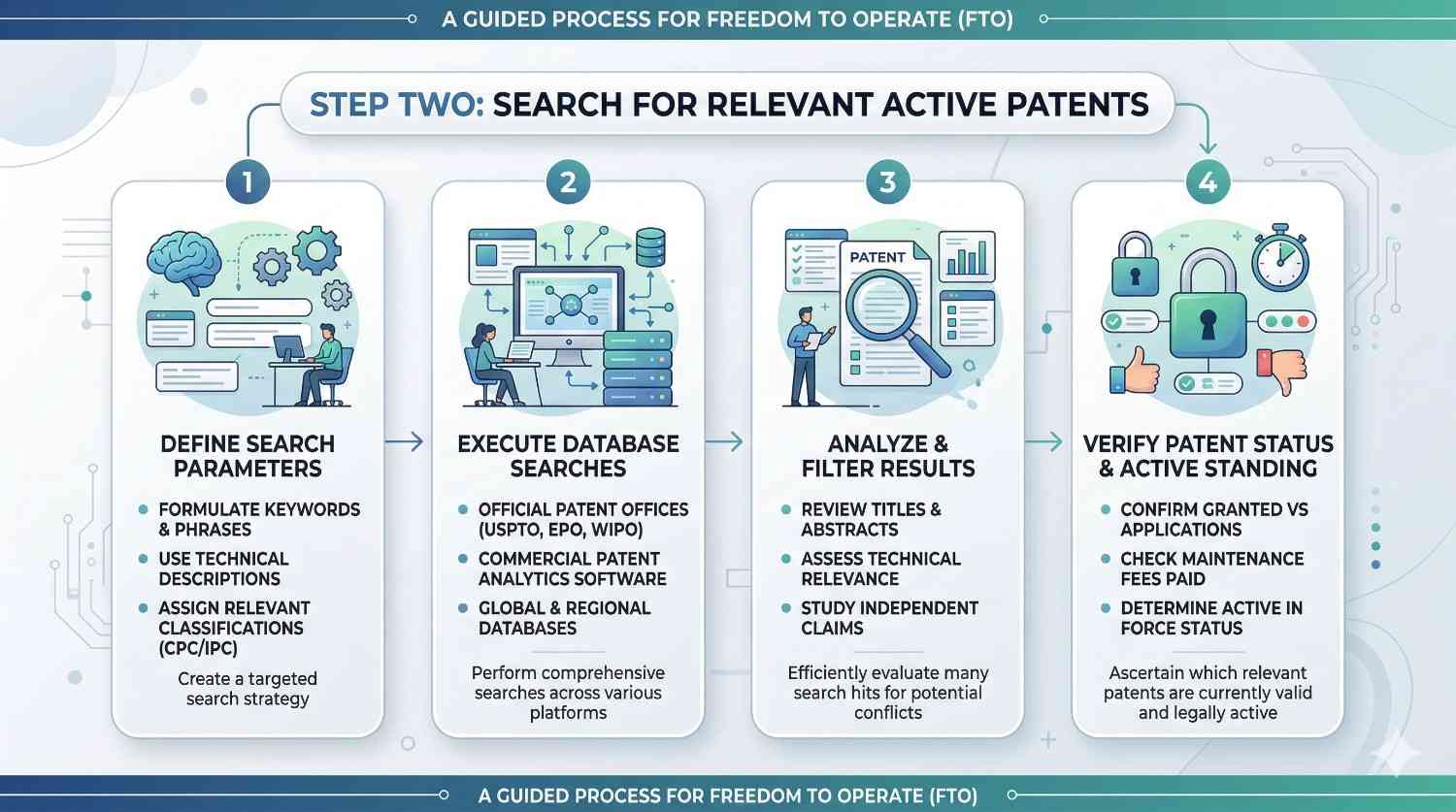
Once the product is clearly defined, the next step is searching for active patents that could cover it. This is not a casual keyword search. It is a structured review of issued patents and pending applications in relevant countries.
In robotics, that may include motion systems, gripping mechanisms, control logic, safety layers, and power management. In AI, it may include model structure, training methods, inference optimization, and data processing pipelines.
The goal is not to collect hundreds of patents. The goal is to find the ones that truly matter. The patents with claims broad enough to possibly read on your system.
Only issued and active patents can create immediate risk. Expired patents are useful for design knowledge, but they do not block you. Pending applications can signal future risk, but they are still uncertain.
A focused search saves time and money. A sloppy search creates false comfort. This is why experienced guidance matters.
Step Three: Compare Patent Claims to Your Product
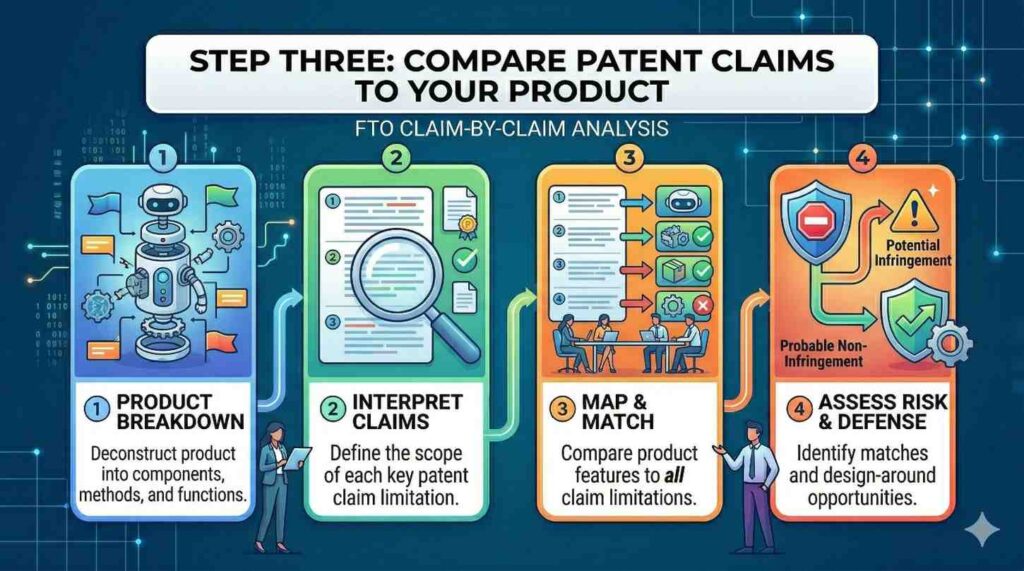
This is where real analysis begins. A patent is not just a document. The risk lives inside the claims. Claims define the legal boundary of protection.
Each claim must be compared element by element to your product. If every required element of a claim is present in your system, there may be infringement risk. If even one required element is missing, that specific claim may not apply.
This comparison is technical and legal at the same time. It requires careful reading. It requires understanding how courts interpret language. It also requires deep understanding of how your system actually operates.
In robotics and AI, claims are often written broadly. A patent may not mention your exact algorithm by name, yet still cover the functional steps your system performs.
This is why FTO is not guesswork. It is structured reasoning. It produces a written opinion that outlines where risk exists and where freedom likely exists.
Step Four: Assess Risk and Plan Strategy
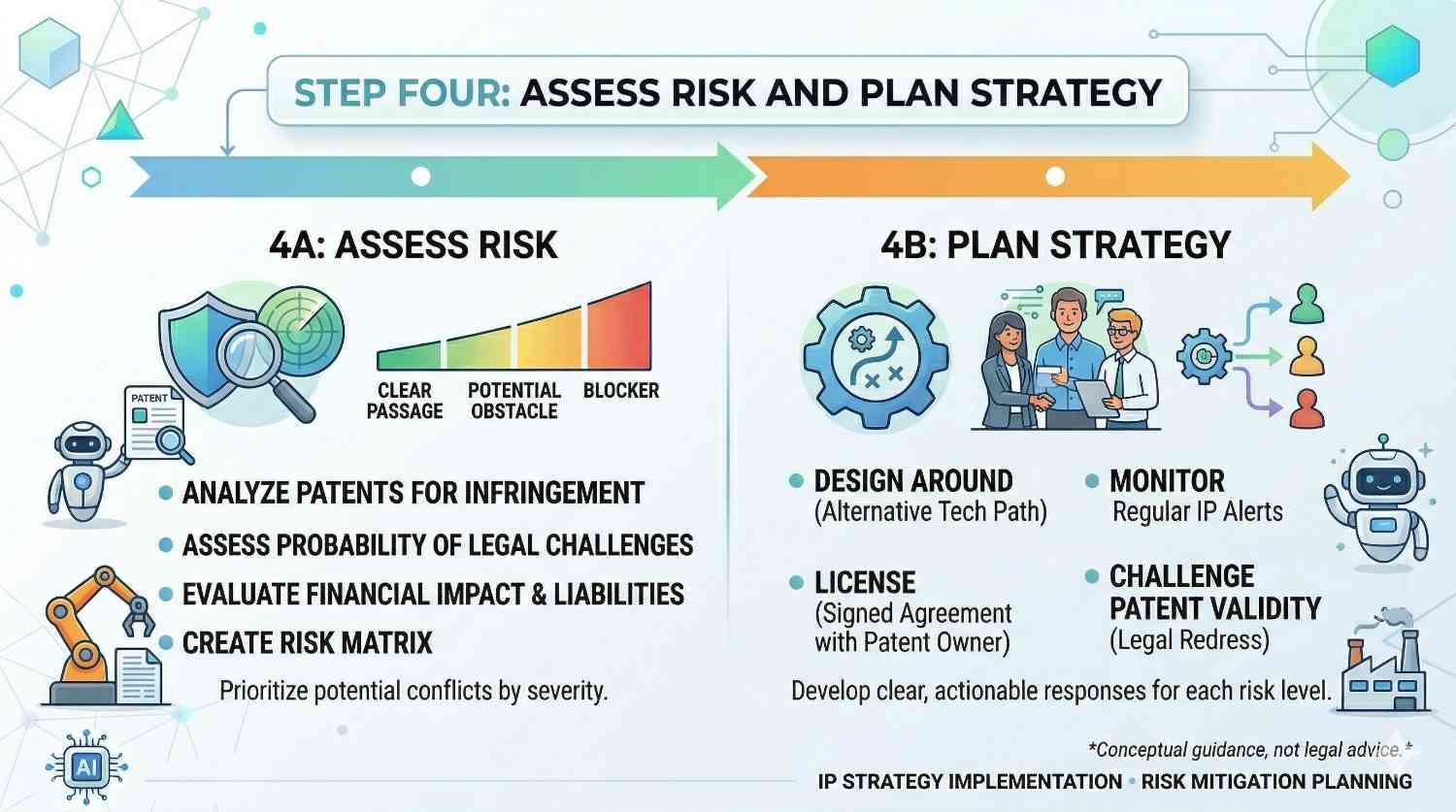
After reviewing relevant patents and comparing claims, the final step is risk assessment. Not every overlapping feature leads to disaster. Some risks are low. Some are manageable. Some require action.
You may decide to redesign a small feature. You may decide to license technology. You may decide that risk is minimal and proceed. The key is that the decision becomes informed, not emotional.
In some cases, FTO reveals open space. That clarity is powerful. It gives confidence in sales conversations and investor meetings. It also helps shape your own patent strategy moving forward.
At Tran.vc, we do not treat FTO as a standalone legal report. We connect it to your broader moat strategy. We ask how your own patents can strengthen your position while reducing exposure to others.
If you want that level of strategic thinking, apply here: https://www.tran.vc/apply-now-form/.
What a Strong FTO Opinion Looks Like
It Is Specific to a Defined Product Version
A strong FTO opinion clearly states what product version it covers. It does not vaguely refer to “your platform.” It describes the system configuration reviewed. This protects you from over relying on outdated analysis when the product changes.
Robotics and AI products evolve quickly. If you pivot architecture, the FTO may need updating. A strong opinion makes that clear. It defines scope so there is no confusion later.
It Identifies Relevant Patents Clearly
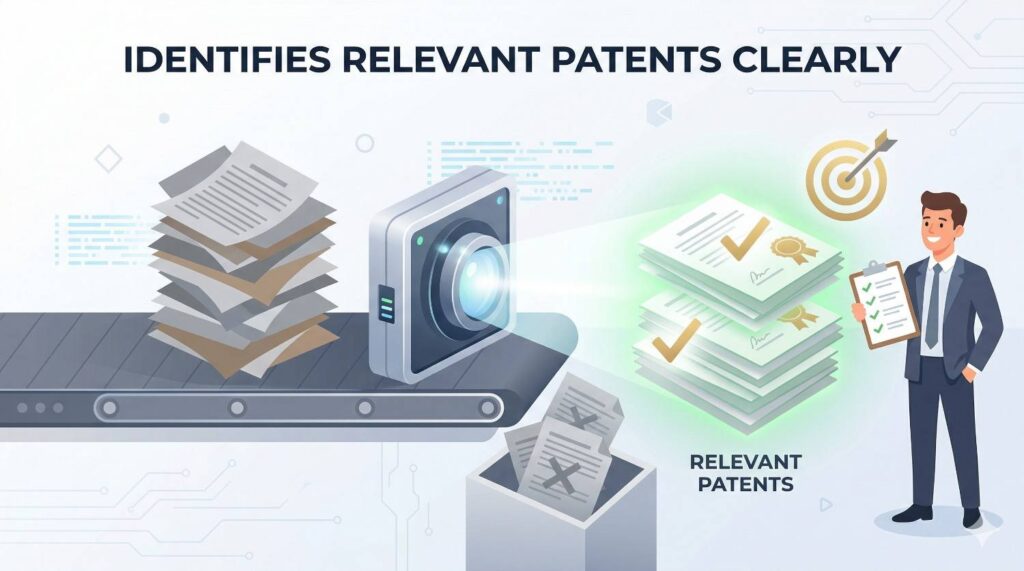
The opinion should list the patents reviewed and explain why they matter. It should not overwhelm you with irrelevant documents. Each cited patent should have a reason for inclusion.
For each important patent, the opinion should summarize the key claims in plain language. Founders should be able to understand the logic without needing a law degree.
When analysis is hidden behind dense language, it loses value. Clear reasoning builds trust.
It Explains the Claim Comparison in Detail
A real FTO opinion walks through claim elements and compares them to your product features. It explains where elements match and where they differ. It does not jump to conclusions without showing the path.
In robotics and AI, small technical distinctions can change outcomes. For example, a claim may require a specific type of sensor configuration. If your system uses a different architecture, that difference matters.
This detailed comparison is what gives the opinion strength. It shows thinking, not assumption.
It Concludes with Practical Guidance
The most useful FTO opinions do not end with abstract risk language. They offer guidance. They explain whether redesign is recommended. They highlight areas to monitor. They suggest how your own patent filings might strengthen your position.
This is where strategy meets law. FTO is not about fear. It is about making smart moves early.
At Tran.vc, we focus on helping founders act on insights, not just receive documents. If you are building in robotics or AI and want to take IP seriously from day one, you can apply at https://www.tran.vc/apply-now-form/.
Designing Around Patents in Robotics and AI
Understanding That Design Around Is Often Possible
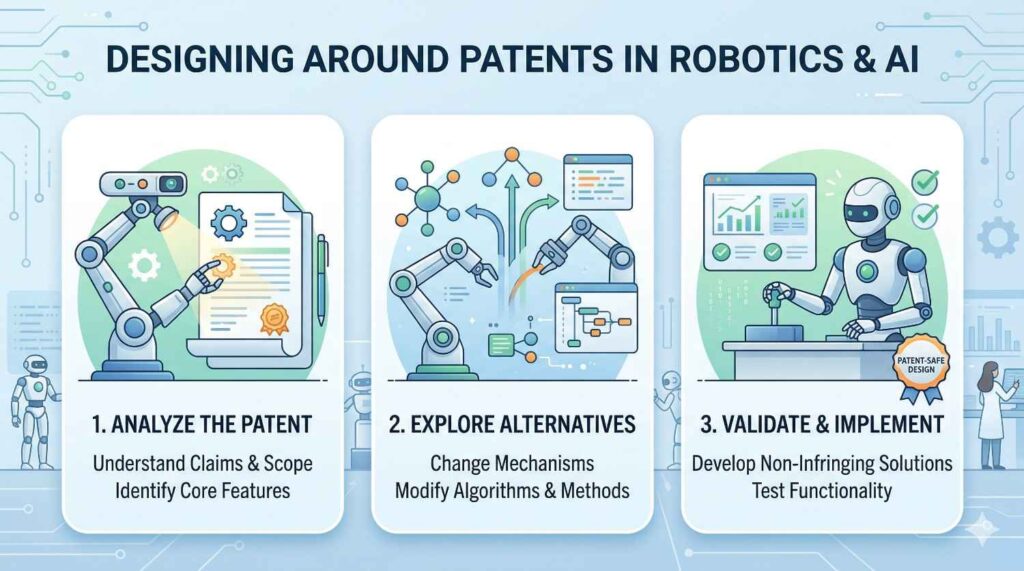
Many founders assume that if a patent exists, they are stuck. That is rarely true. Patent claims define boundaries, not entire fields.
If a claim requires elements A, B, C, and D, you may be able to build A, B, and C differently, or replace D entirely. That shift can move you outside the claim scope.
In robotics, changing mechanical linkage geometry, control signal timing, or sensor placement may reduce risk. In AI, altering the order of training steps or data processing methods may matter.
Design around is creative engineering guided by legal insight. It works best when done early, before manufacturing and scaling.
Using FTO to Guide Innovation, Not Limit It
FTO should not feel like a wall. It should feel like a map. It shows where others have built fences. It also shows where open land remains.
In fact, reviewing existing patents often sparks new ideas. You see what others tried. You see gaps. You see outdated approaches. That knowledge can improve your own system.
Founders who treat patents as strategic intelligence, not just legal risk, build stronger companies.
Filing Your Own Patents Alongside FTO
Freedom to Operate protects you from others. Your own patents protect you from future competitors.
The two should work together. When FTO reveals crowded zones, you may focus your filings on less crowded areas. When it reveals open technical space, you may move fast to secure it.
This layered approach builds leverage. It signals to investors that you are not building on borrowed ground.
Tran.vc was created to help technical founders do exactly this. We invest up to $50,000 in in kind IP services, including patent strategy and filings, so you can build real assets before chasing large checks.
If you want to build an IP backed moat in robotics or AI, apply here: https://www.tran.vc/apply-now-form/.
Cost of Running Freedom to Operate and How to Plan It
Why FTO Feels Expensive and Why That View Is Misleading
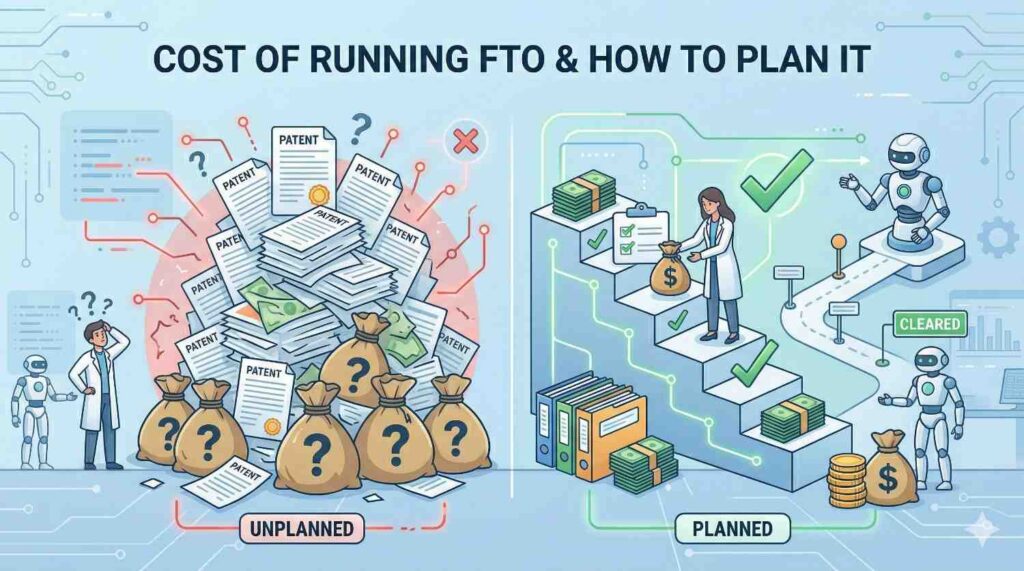
Many founders delay FTO because of cost. At first glance, it can seem like a heavy expense, especially when you are still building and not yet generating steady revenue.
But this view often misses the bigger picture. The real cost is not the analysis. The real cost is what happens if you skip it and discover a problem later.
In robotics, redesigning hardware after production has started can be extremely expensive. It may involve new molds, new suppliers, and long testing cycles. In AI, reworking a deployed system can affect customers, data pipelines, and performance.
When compared to those risks, FTO is not just a cost. It is a form of protection and planning.
A well timed FTO helps you avoid costly mistakes. It helps you build with confidence. It also strengthens your position when speaking with investors and partners.
How to Stage FTO Work Without Overspending
You do not need to run a full scale, deep FTO analysis on day one. Smart founders stage the work based on where they are in the journey.
Early on, a focused and lighter review around your core system may be enough. This helps you spot obvious risks and adjust direction while things are still flexible.
As your product becomes more defined and you approach commercialization, you can invest in a deeper and more detailed analysis. At that stage, the cost makes more sense because the stakes are higher.
This staged approach keeps spending aligned with progress. It avoids both extremes, doing nothing or over spending too early.
At Tran.vc, we help founders plan this intelligently. We invest in IP services so you can build a strong base without burning cash at the wrong time.
If you are trying to balance speed and risk, this is exactly where we help. You can apply anytime at https://www.tran.vc/apply-now-form/.
Why Cheap FTO Can Be Dangerous
Not all FTO work is equal. Some services offer quick reports at low cost. These may look attractive, but they often lack depth.
A weak FTO may miss key patents. It may oversimplify claims. It may fail to connect technical details to legal risk. This creates false confidence, which is worse than having no analysis at all.
In robotics and AI, where systems are complex, shallow work can be misleading. You need careful thinking, not just fast output.
This does not mean you must spend heavily. It means you should focus on quality and relevance. The right partner will help you scope the work properly.
Common Mistakes Founders Make with FTO
Waiting Until a Problem Appears
One of the most common mistakes is waiting too long. Founders often focus fully on building, which makes sense. But they ignore IP risk until someone raises a concern.
By the time a legal question appears, your system may already be locked in. Your design choices may be hard to change. This reduces your options.
Running FTO earlier gives you flexibility. It allows you to make small adjustments instead of large corrections.
If you are building a startup in AI, robotics, or deep technology, you can apply to work with Tran.vc here: