
Fundraising Without Dilution: Seed-Strapping Basics
Raising money is supposed to help you grow, not make you feel like you are losing your own company.
Yet for many technical founders, that is exactly what happens. You rush to raise, give up a big chunk of equity early, and end up working for your own cap table. The product is still young. The market is still unclear. But the cap table is already crowded.
It does not have to be this way.
You can build real value, move fast, and get investor-ready without giving up control too early. You can fund the “seed” stage of your company in a smarter way, by using your time, code, and IP as the core fuel. That is what we call seed-strapping.
Seed-strapping is not about starving the company or avoiding investors. It is about buying yourself time and leverage. You use a mix of smart IP, automation, and focused execution so that, when you do raise, you are not begging for a lifeline. You are choosing partners on your terms.
At Tran.vc, this is the stage we care about most.
We invest up to $50,000 worth of in-kind patent and IP services to help deep tech, AI, and robotics founders turn raw ideas into defendable assets. Instead of writing a small check and stepping away, we sit next to you and help you build a moat before you chase a priced round.
In this guide, we will walk through the basics of fundraising without dilution in the earliest days. You will see how to think about your runway, how to turn your technology into assets, and how to use “seed-strapping” to grow into a fundable, IP-rich company.
If you are a technical founder and this already feels like the path you want, you can apply anytime at: https://www.tran.vc/apply-now-form/.
What Seed-Strapping Actually Means
Building With Leverage, Not Panic
Seed-strapping is the art of moving your company forward without selling a big part of it before it even has a chance to stand. It is a mix of calm planning, smart protection of what you build, and steady progress toward real value. Many founders think the only path forward is to raise fast, but raising early often locks you into pressure, deadlines, and decisions that do not match the true pace of your tech. Seed-strapping lets you grow at a steady rate, stay in control, and shape your company the right way.
Why Control Matters More Than Early Capital
When you give up too much equity early, you lose room to make bold moves later. This is a quiet risk many founders notice only when it is too late. Early investors may push for growth before the product is ready, or push you into markets that do not fit your long-term vision. Seed-strapping gives you time to think, test, and learn without outside hands on the wheel. Control lets you make better technical calls, explore deeper IP ideas, and design a business that matches the nature of your tech.
When Less Cash Actually Helps You
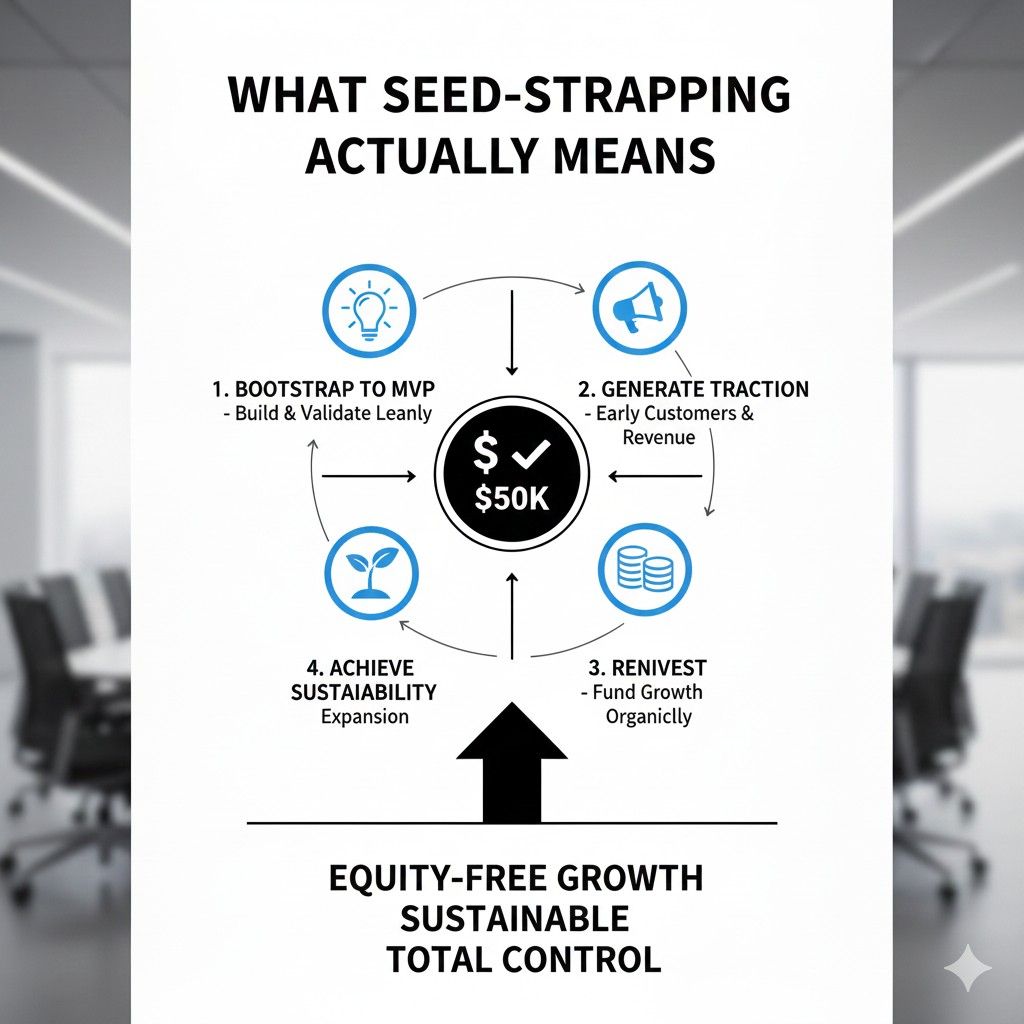
It sounds strange, but having less cash early often pushes founders to build cleaner, faster, and in a way that stays true to the core problem they want to solve. Too much money too soon usually leads to heavy teams, rushed features, and a product that grows sideways instead of forward. Seed-strapping focuses you on what matters right now: getting to a real proof of value, protecting the core invention, and building momentum that does not depend on constant fundraising. You move lean, but with purpose.
If you ever feel like this is the kind of support and clarity you want on your journey, you can apply anytime at: https://www.tran.vc/apply-now-form/.
The Foundation of Non-Dilutive Growth
Turning Your Tech Into Defensible Assets
Most deep tech companies do not fail because the tech is weak. They fail because they do not protect the core ideas at the right time. When you turn your code, models, or mechanical systems into clear IP assets, you create something investors can trust and competitors cannot easily copy. This is the heart of non-dilutive growth. What you build becomes a shield and a signal. A shield because it blocks fast followers. A signal because it shows investors you understand the value of what you are creating.
Why IP Is Your First Real Form of Capital
Many founders think money is their first piece of capital. But for deep tech teams, your first true capital is the idea itself. It is the unique way you solve a hard problem. Patents turn that invisible power into something formal. Something that gives you leverage in every future deal. When you own strong IP early, you walk into investor meetings with something that cannot be argued with: proof that your invention is real, original, and protected.
How IP Lets You Raise on Better Terms
Raising money when you hold nothing but code often leads to painful terms. Raising money when you hold patent-backed IP often leads to stronger offers and better partners. Investors are not just betting on your skills anymore; they are investing in a protected foundation that can grow into multiple products, markets, and revenue paths. Strong IP lets you say no when a deal is not fair, and yes only when a partner respects your long-term goals.
Tran.vc invests up to $50,000 in in-kind patent and IP services so you can build this foundation without giving up equity too soon. If protection is the piece you are missing, you can apply anytime at: https://www.tran.vc/apply-now-form/.
Seed-Strapping Your Early Runway
Making Time Your Ally Instead of Your Enemy
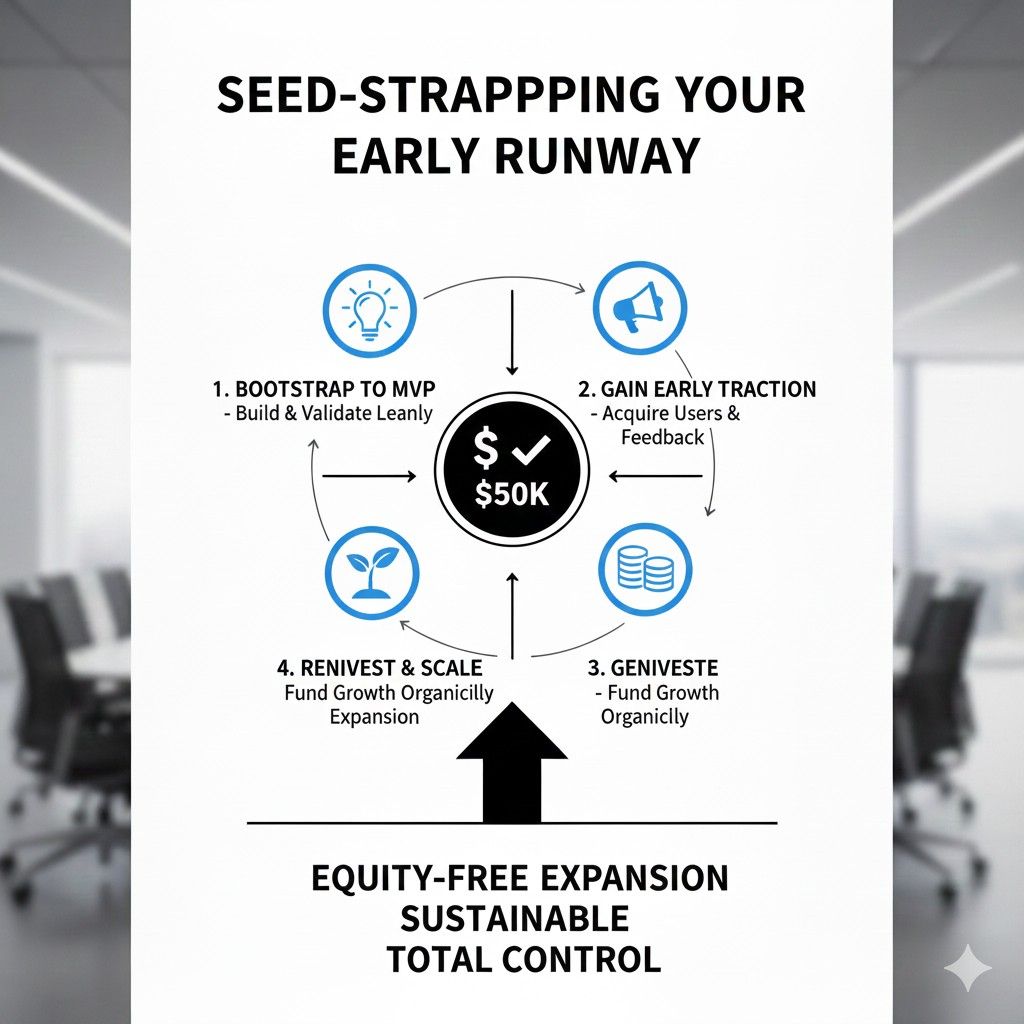
Runway is not just money in the bank. Runway is also the time you gain by removing waste, tightening your focus, and working in a simple, steady rhythm. Many founders burn their early runway on things that do not help them learn faster. Seed-strapping flips this. You commit to a smaller set of tasks that actually move the product forward. You find ways to automate repeat work. You remove low-value distractions. And in doing so, your runway stretches far beyond what a typical pre-seed raise would offer.
Protecting Your Energy as Much as Your Capital
A founder’s energy is one of the most fragile assets in the early days. When you try to raise too early, you burn both money and motivation chasing investor meetings instead of building. When you seed-strap, you protect your energy by keeping your focus on shipping, learning, and protecting your tech. You build calm progress. This calm lets you think clearly and make better decisions. Over time, this creates a stronger company than a rushed raise ever could.
Building Only What You Can Defend
Many founders build features because they feel like they must keep adding more. But if a feature is not tied to your IP or your core value, it will not help you when investors ask what makes your company special. Seed-strapping encourages you to build around your defendable core. You ship the parts that matter. You invest your time where your IP grows. And you stop building things that do not add to the moat. This is how you get more results from fewer resources.
If this way of building feels right for where you are now, you can apply anytime at: https://www.tran.vc/apply-now-form/.
Designing Your Seed-Strapping Game Plan
Starting From the Outcome You Want
Before you think about tools, tactics, or investor decks, it helps to ask a very simple question. What do you want to have in place before you raise a real seed round?
For a deep tech, AI, or robotics founder, the answer is usually not “a big team” or “a fancy office.” It is things like a working core system, proof that someone cares about the problem, and clear IP around the key idea. When you work backward from that outcome, your plan becomes much clearer. You are not guessing what to do next. You are building toward a very specific point where it will make sense to bring in outside capital.
Mapping the Next 6 to 12 Months With Intention
Once you know the outcome you want, you can shape the next stretch of time with more calm. Think in a six to twelve month window, not in endless years. Ask what must be true by the end of that window for a serious seed investor to say yes on good terms.
This often includes a working prototype that shows the unique power of your tech, a clear use case that is easy to explain, and at least one or two steps taken toward IP protection. When you see these as your targets, you can group your work into simple phases. Build the core. Test it with a narrow group. Capture the invention in a clear way. Each phase feeds the next. You are no longer chasing random tasks; you are following a path.
Linking Every Task to Learning or IP
In a seed-strapping mindset, not all work is equal. Some tasks teach you a lot about your users or your tech. Some tasks add weight to your IP. These are your high-value tasks. Other tasks are just noise. They feel busy but do not move the needle.
A simple way to stay on track is to ask, before you start on any big task, whether it gives you real learning or real protection. If it does neither, it may not belong in this stage. This one filter can save you months. Over time, your week fills with only the work that makes your company smarter or safer. That is how a small, focused team ends up moving faster than a large, distracted one.
If you want help shaping this kind of clear, IP-led plan for your startup, Tran.vc can work side by side with you. You can submit your startup details at https://www.tran.vc/apply-now-form/ and explore if it is a fit.
Using IP as a Funding Engine
Seeing Patents as Tools, Not Trophies
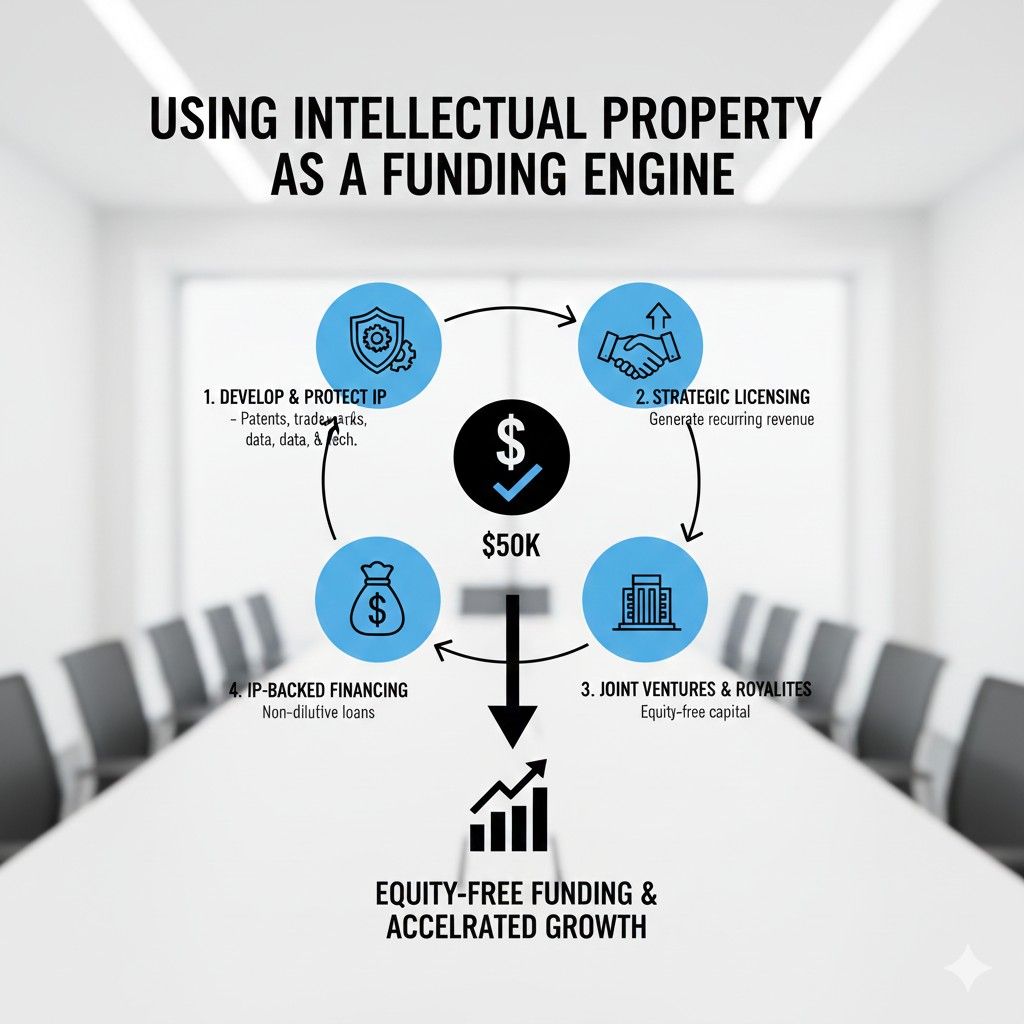
Many founders think of patents as something you file once you “make it,” like a trophy at the end of the race. For deep tech companies, that mindset can be dangerous. By the time you “feel ready,” someone else may have filed something close to your idea, or an investor might have passed because there was nothing defendable in place.
Instead, see patents as working tools. A good patent strategy shapes how you design your system, how you name your parts, and how you explain your value in the market. It does not sit in a drawer. It lives inside your company story. When you treat IP this way, it becomes part of your daily building, not just a legal event you rush through under pressure.
Turning Your Invention Into Negotiating Power
When you walk into a room with only a demo, you are asking investors to trust what they see on the screen. When you walk in with a demo plus a clear patent path, you are showing them trust backed by law. That is a very different kind of ask.
Strong IP does not just protect you from copycats. It changes the tone of every serious conversation. When someone wants to invest, partner, or even acquire later, they know they are dealing with protected ground. This gives you a calmer seat at the table. You can push back on harsh terms. You can keep more of your company when the money finally comes in. You funded the early stage with your own effort and your own ideas, so you get to keep the reward.
How In-Kind IP Support Reduces Early Cash Needs
The hard part is that proper IP work is not cheap. Good patent attorneys, smart strategy, and careful drafting all cost real money. This is one reason many early founders skip it or delay it until after a round.
Tran.vc steps into this gap by investing up to $50,000 in in-kind patent and IP services instead of taking a quick equity slice for cash. You get access to real legal minds and operators who understand both the tech and the startup journey. This means you can turn your invention into a set of assets without draining your small bank account. It is a way to fund the most important early work without selling your future.
If this kind of IP-first support is what you are missing right now, you can share your details with Tran.vc at https://www.tran.vc/apply-now-form/ and start a conversation.
Stretching Runway With Smart Systems, Not Just Sacrifice
Automating the Work That Drains You
When people talk about “bootstrapping,” they often focus on sacrifice. Long nights. No salary. Endless grind. Seed-strapping is different. It is not about how much you can suffer. It is about how much you can systemize.
Rather than doing the same manual tasks over and over, you look for simple ways to automate or streamline them. This might mean building small scripts to handle data pulls, setting up simple alert systems instead of checking dashboards all day, or using low-code tools to run internal admin work. Each small system gives you back time and focus. Over months, these gains pile up. Your runway grows not just because you spend less, but because you waste less attention.
Keeping the Core Team Small and Sharp
Every new hire adds cost, but they also add overhead. More one-on-ones. More meetings. More alignment. In the early seed-strapping stage, bigger is rarely better. What you need is a small group of people who care deeply about the problem and can handle wide roles.
Instead of hiring fast, you lean on contractors for narrow, short-term tasks and keep the core team focused on product and IP. This lets you move with speed while staying light. You do not need a big staff to impress investors. You need a clear story, working tech, and protected ideas. A small, sharp team can deliver all of that with far less burn.
Spending Only on Things That Lower Risk
Every dollar you spend should buy you less risk. That is a simple rule, but a powerful one. If an expense does not lower technical risk, market risk, or legal risk, it might not belong in this stage.
Investing in IP lowers legal and business risk. Investing in good infrastructure lowers technical risk. Investing a bit of time with real customers lowers market risk. On the other hand, spending big money on branding, events, or paid ads when your product is not ready often does little to move you forward. In a seed-strapping mindset, you keep asking what risk this spend removes. If the answer is unclear, you wait.
Tran.vc’s model fits this way of thinking. Their in-kind IP support is targeted at a key risk: the risk that your core tech is not owned and protected by you. If you want to reduce that risk without raising yet, you can reach out at https://www.tran.vc/apply-now-form/.
Knowing When You Are Truly Ready to Raise
Redefining What “Traction” Really Means
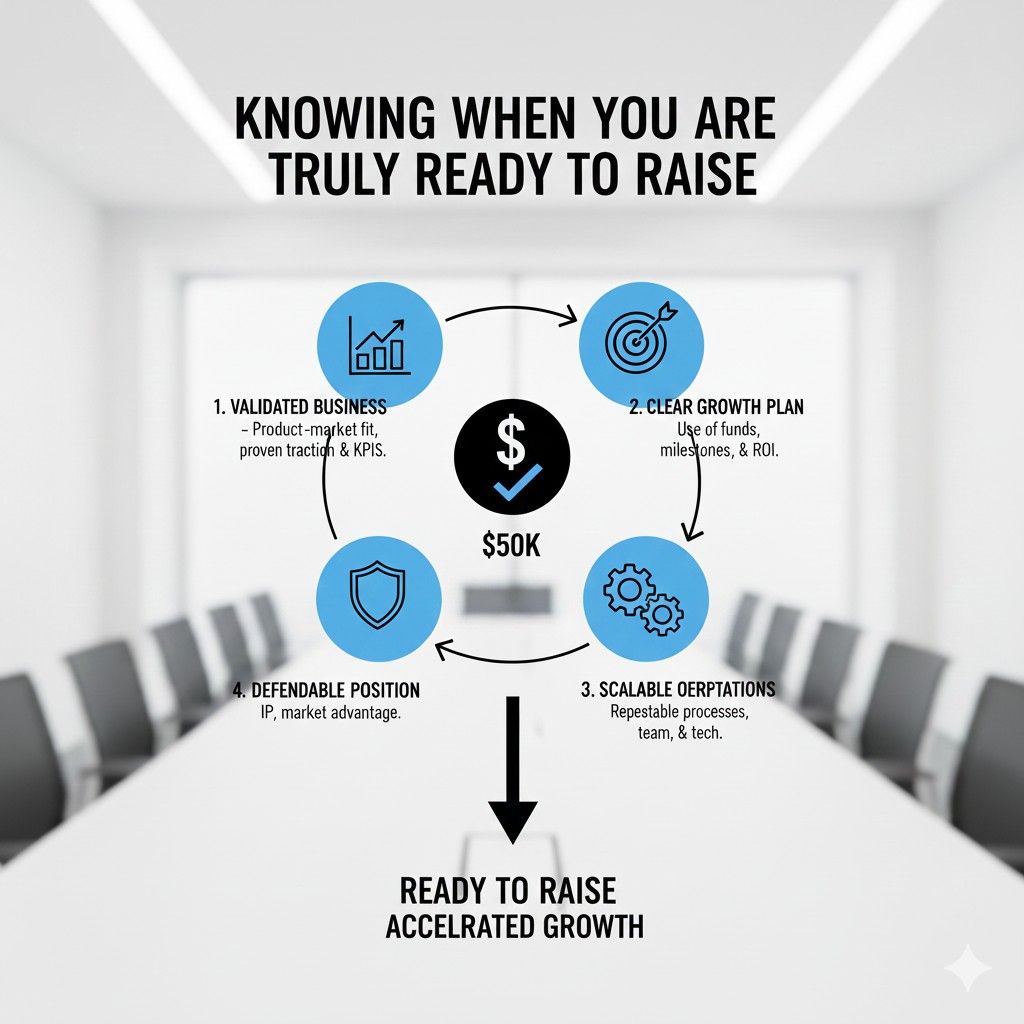
Many founders think traction is only about revenue or user counts. In deep tech, AI, or robotics, that view can be misleading, because real traction often starts long before your first dollar of revenue.
For your kind of startup, traction can mean a working prototype that proves a hard technical claim, a pilot with even a single serious design partner, or a first patent filing that covers the heart of your system. These signs show that what you are building is both possible and protectable. They matter more than vanity metrics that look good in a slide, but do not prove anything deep about your tech.
When you seed-strap, you decide what traction means for your company based on reality, not hype. You focus on a short list of clear proof points, and you organize your time around reaching them. That way, when you finally sit down with serious investors, you are not just telling a story. You are putting real signals on the table.
From Hopeful Stories to Hard Signals
Every founder can tell a good story about the future. Investors listen to many of these stories every week, so a nice story is no longer enough. What cuts through the noise are hard signals that show your vision is turning into something concrete.
These signals can come in different forms. A letter of intent from a key customer, a pilot that reduces costs or improves speed in a clear way, test data that shows your model or system beats a baseline, or even feedback from experts in your field who are willing to attach their name to your work. When those signals line up with clear IP steps, they become very powerful. They show that your idea is not only exciting, but also being built and defended with care.
Seed-strapping gives you the space to create these signals before you raise. You are not rushing to pitch with half-finished evidence. You are taking the time to turn “we think this can work” into “here is what we have already proven.” That shift changes the entire mood of fundraising.
Aligning Round Size With Real Needs
When founders raise too early, they often also raise the wrong amount. Some ask for more than they can actually use well, just to “look big.” Others ask for too little and end up back in the market again within months. Both paths are stressful.
If you seed-strap with intention, you gain a clearer view of what you actually need outside capital for. You may find that you only need a seed round to scale a system that already works, to expand into more markets, or to grow a team around a proven core. This makes it much easier to size the round based on concrete plans instead of guesses.
Investors respect a founder who can say, with calm detail, what each part of the round will unlock. That kind of clarity is easier when you have already built a lot using your own effort, smart systems, and strong IP. If you want help reaching that point, you can share your startup with Tran.vc at https://www.tran.vc/apply-now-form/ and explore how their in-kind IP investment can support you.
Talking to Investors While You Seed-Strap
Building Relationships Before You Need the Check
Seed-strapping does not mean hiding from investors. In fact, it works best when you start talking to the right investors early, but without asking for money right away. You treat early conversations as a chance to learn, not a pitch marathon.
When you meet investors at this stage, you can be open about your plan. You can say that you are still in the seed-strapping phase, working on core IP, running pilots, and building a real moat. This honesty often lands well, especially with investors who understand deep tech. They see that you are not rushing into a round you are not ready for. You are taking care of the foundation first.
Over time, these early chats can turn into real relationships. Investors get to watch your progress from a distance. They see you hit the milestones you talked about months earlier. By the time you are ready to raise, they already know how you think and how you build. That makes the formal fundraising process faster and more grounded.
How to Explain the Seed-Strapping Strategy
Some investors may not have heard the term “seed-strapping,” but they will understand the idea if you explain it in clear, simple terms. You can describe it as a way to fund your early progress using your own effort, automation, and in-kind support instead of heavy early dilution.
You can share that you are using this phase to do three key things. First, to reach technical proof. Second, to protect your core invention through patents and clear IP structures. Third, to secure early signals from the market, such as design partners or pilots. By framing it this way, you show that your approach is not about avoiding capital. It is about making sure that when you do raise, it happens from a strong, defensible position.
This kind of message is even stronger when paired with real IP steps already in motion. Partnering with a group like Tran.vc, which invests up to $50,000 in structured in-kind IP services, gives weight to your story. You are not just talking about protection. You are doing the work with real experts. If that is a path you want to explore, you can apply at https://www.tran.vc/apply-now-form/ and see if there is a match.
Handling Pushback on Not Raising Yet
You may meet investors who question why you are not raising right now. Some might worry they will “miss the deal” later. Others may simply be used to founders who pitch as soon as they meet them. This is where calm, clear communication matters.
You can explain that you are not avoiding investors, but you do care about entering a round at the right moment. You want to make sure the product, IP, and early proof points are in place so that the round is used to scale, not to search for direction. You can also make it clear that you are happy to keep them updated and would like to circle back when you hit specific milestones.
Founders who hold this line with confidence tend to earn respect. You are showing that you think in stages, not in panic. You are also showing that you value the long-term health of your company more than the short-term ease of “getting funded.” That mindset usually stands out in a crowded field.
If you want help building this kind of clear, IP-led story before you talk to more investors, Tran.vc was built for that stage. You can send in your details at https://www.tran.vc/apply-now-form/ and start a focused discussion.
Turning Early Progress Into a Defensible Moat
Moving Beyond Product Toward Protection
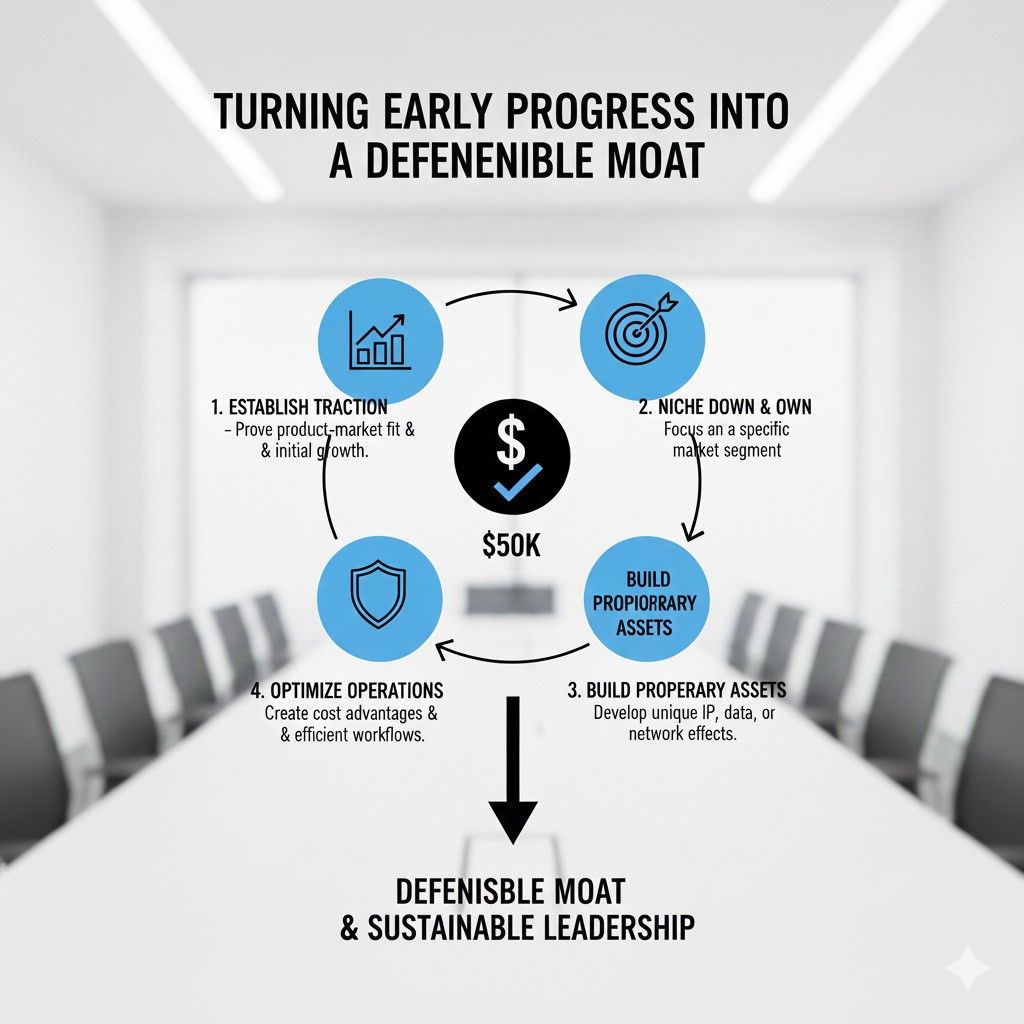
A strong early product is good, but a strong early moat is far better. Many founders pour all their energy into building features that work, but forget to build the structure that protects those features from fast followers. In deep tech and AI, where ideas spread fast and competitors move quickly, protection is part of the product.
Seed-strapping gives you space to build this moat early. You are not racing to grow a team or scale a system too soon. You are shaping the deeper layers first. You take your core algorithm, hardware path, or system design and turn it into something that can stand in a patent office, not just in a demo video. When you do this early, you make your company expensive to copy and far more attractive to serious investors.
Showing Investors You Control Your Future
Investors want to see that the founder is truly in control of the company’s most valuable assets. That means control of the code, the data path, the core design, and the IP. When these parts are scattered or unprotected, the company looks fragile. When they are tight and protected, the company looks ready for growth.
Seed-strapping lets you walk into a room with proof that you have taken care of what matters most. You are not pitching from hope or hype. You are showing that your story already has structure. You know where the value lives in your product, you know how it will be defended, and you know how it will grow. That kind of clarity changes how investors see you. It moves you from “interesting founder” to “serious founder.”
If this is the kind of leverage you want to build before raising, Tran.vc can support you with up to $50,000 of in-kind IP and patent work. You can explore a fit at https://www.tran.vc/apply-now-form/ anytime.
Scaling After Seed-Strapping
Raising From Strength, Not Stress
When you raise after seed-strapping, you do so from a place of strength. You have something real to show. You have IP protecting your core idea. You have signals that your market cares. You have a story based on proof and choices, not on fear or rushed need.
This changes everything about the round. It changes how investors speak to you. It changes the terms they offer. It changes how you feel when you step into the negotiation. You are scaling something that already works, not begging for resources to make something work. When you raise from strength, the entire path becomes calmer. You maintain a larger share of your company. You protect your long-term direction. You choose partners who see the same future you do.
Growing the Right Way, With the Right People
Once your seed round is complete, you can grow with intention. You can hire into real needs instead of guessing where to place people. You can expand your product only after your IP path is secure. You can enter partnerships from a position where your technology is respected and protected.
This stage feels different from the frantic first months. You have structure under you. You have a proven core. You have a moat that grows with every new step. And you have room to make smart, slow choices that lead to fast results. Seed-strapping shapes a company that grows cleanly, without wasted motion.
Keeping Your Moat Alive as You Scale
A moat is not something you build once. It is something you keep alive as you expand. As your product evolves, new ideas appear, new features emerge, and new risks surface. The habits you build during seed-strapping—intentional building, thoughtful protection, focused execution—carry into this next stage.
If you stay close to your IP, listen to your users, and protect every new piece of core value, your moat grows stronger as the company grows bigger. Investors love this. Partners trust this. Competitors fear this. And it all begins by staying patient and choosing not to dilute too early.
The Power of Seed-Strapping for Technical Founders
A Path Built for Builders, Not Pitchers
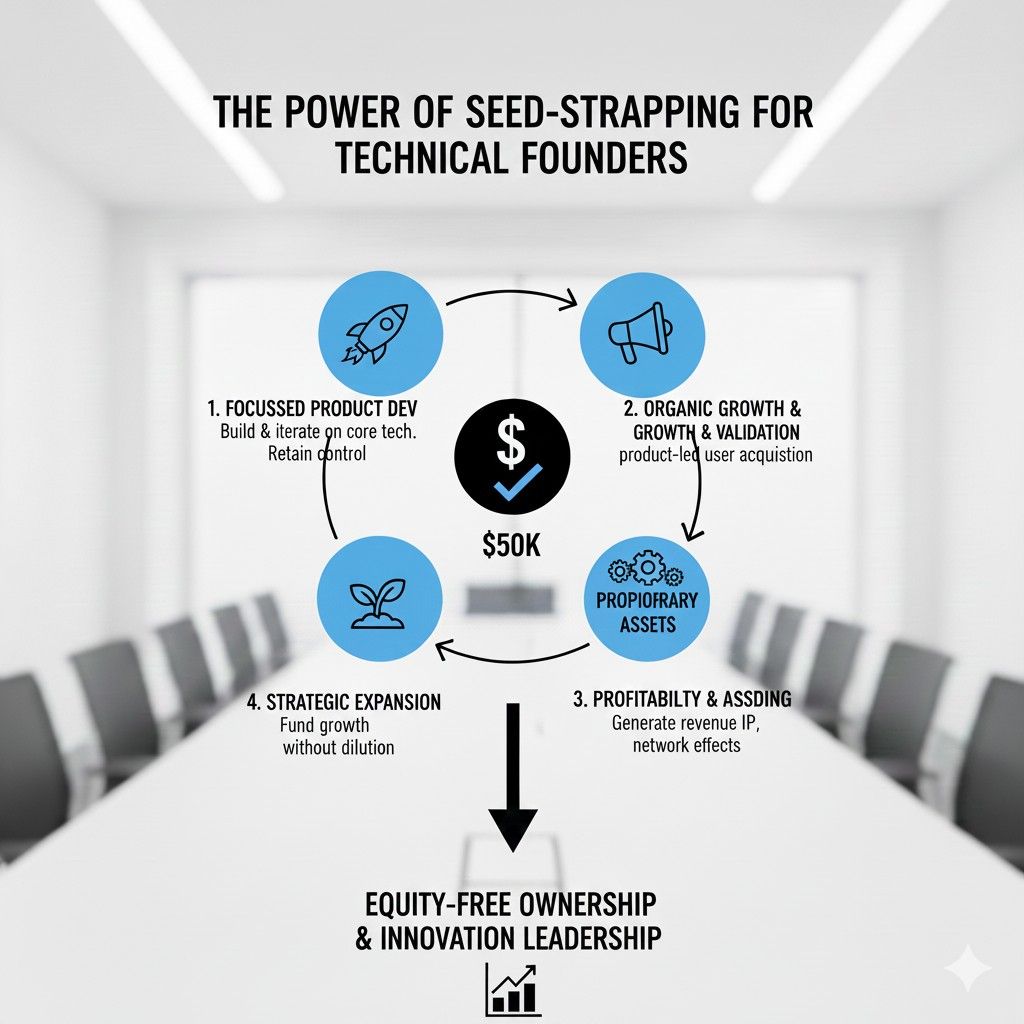
Seed-strapping is not a shortcut. It is not a trick. It is a mindset built for founders who want to build first, raise later, and stay in control of their own company. It gives you time to shape your invention, lock down your IP, learn from real users, and grow into someone who raises money from strength.
It is a path where founders grow on their own terms. You do not chase investors to survive. You build so well that investors chase you to participate. You do not lose half your company before you even prove your idea. You keep your equity, your clarity, and your future.
Why Tran.vc Was Built for This Stage
Most investors are not designed for the earliest, most fragile stage of a deep tech startup. They want a team, a deck, and a market already shaped. Tran.vc chose the opposite path. They step in when the founder needs the kind of help that money alone cannot solve: real patent strategy, deep IP support, and early guidance from people who have built and protected hard tech before.
Their investment is not a small check. It is up to $50,000 of in-kind IP work done with you, not for you. It is a form of non-dilutive fuel designed for the seed-strapping stage—when protecting what you are building matters more than anything else. If you want a partner who can help you build a moat before you raise a round, you can apply anytime at https://www.tran.vc/apply-now-form/.
Conclusion
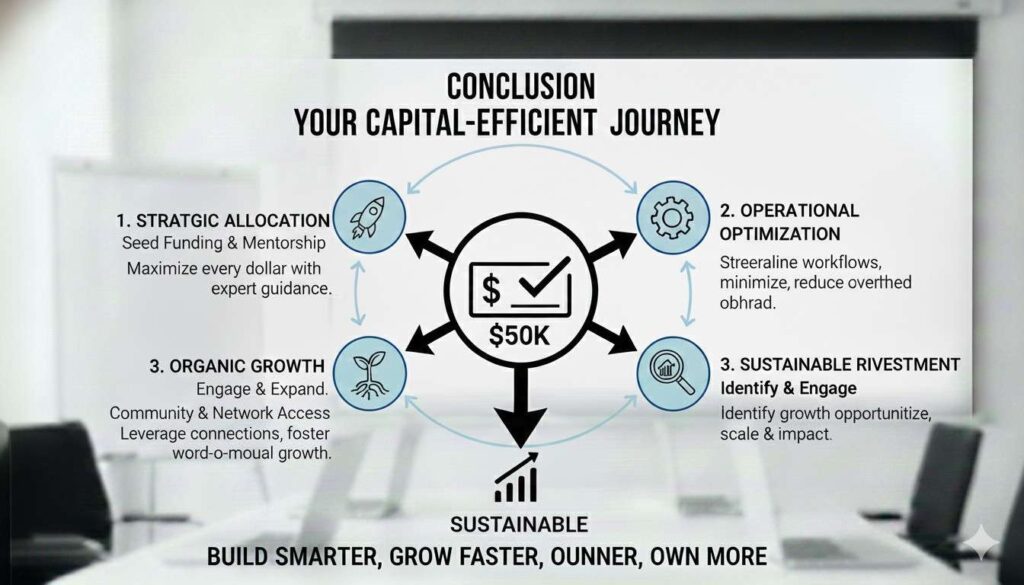
Seed-strapping is one of the most powerful ways a technical founder can keep control, build trust, and grow a real company without rushing into early dilution. It gives you space to shape the core invention, capture it as IP, run tests that matter, and enter fundraising with leverage instead of fear.
This quiet but strong path leads to cleaner thinking, stronger moats, better terms, and far more control over your future. It respects both the craft and the courage of building deep tech. And it gives founders the chance to start not with pressure, but with power.
If you want to build your company this way—and protect your tech from day one—Tran.vc is ready to work with you. You can apply anytime at https://www.tran.vc/apply-now-form/.