
Most SAFE rounds start with a good reason.
You meet one angel who says, “I’ll wire fast—just send a SAFE.” Then another. Then a small syndicate. Then a “strategic” friend of a friend. Each one feels like progress. Each one buys you runway. And because a SAFE is “simple,” it’s easy to think you can stack a bunch of them without much cost.
But SAFEs don’t stay simple forever.
They pile up quietly. Then, right when you want a clean seed round, you realize you’ve built a cap table puzzle that spooks investors, slows legal, and can force you into terms you never meant to accept.
This is where founders ask the question too late: How many SAFEs is too many?
The honest answer: it’s not a number. It’s a set of warning signs. And you can learn to spot them early—before a SAFE round turns into a messy pre-seed that drags you down.
If you’re building robotics, AI, or deep tech, this matters even more. Your product cycles are longer. Your burn can jump fast. And your biggest asset is often not revenue yet—it’s your tech. That’s why Tran.vc exists: we invest up to $50,000 in in-kind patent and IP services so you can protect what you’re building early, without giving up control too soon. If you want help planning both your SAFE strategy and your IP strategy together, you can apply anytime here: https://www.tran.vc/apply-now-form/
Now let’s talk about what “too many” really means in practice.
A SAFE is like a promise. You are telling an investor: “When I raise a priced round later, you’ll convert into shares based on a rule we agree on today.” That rule usually includes a valuation cap, sometimes a discount, sometimes both. Some SAFEs also include special terms like MFN (most favored nation). None of this feels heavy at the moment you sign it.
The weight shows up later, when many promises convert at once.
Here’s the first problem: each SAFE sets a trap for your future pricing. Not because it’s “bad,” but because it narrows your options. If you hand out a low cap early, you might be forced to accept a low priced round later just to avoid massive dilution. If you hand out a mix of caps, you can end up with investors converting at very different prices, which changes the ownership math in ways that surprise you.
And surprises in fundraising are expensive.
They cost time. They create mistrust. They make a lead investor ask, “Why did you do it this way?” And the wrong tone at the wrong moment can kill momentum.
So when does it start to become “too many”?
It starts when you can’t answer simple questions cleanly.
A serious seed investor will ask things like:
What is the total amount of SAFEs outstanding?
What are the caps?
Do any have discounts?
Do any have MFN?
How much will convert at the seed round if we price at X?
What will the founders own after conversion and option pool?
If your answers take a long pause, or require three spreadsheets, or change depending on the day, you’re already in the danger zone.
Because the seed investor is not just buying your story. They are buying the structure around your story. They want to believe you can run a company with clarity. A messy SAFE stack can make you look less ready than you really are.
Let’s make this more real.
Imagine you raised $750k across eight SAFEs. Four have a $6M cap, two have a $10M cap, one has a $15M cap, and one has no cap but a discount. You did this over nine months. Each time you told yourself, “This is the last one.”
Now you go to raise a $3M seed. A lead investor offers $12M pre-money. You feel proud. You think you’ve won.
Then your lawyer runs the conversion math.
The $6M cap SAFEs convert at a much lower price than the seed investors. That means those early SAFE holders get more shares per dollar. That’s the deal you made. But because you have a lot of money sitting at that low cap, the dilution hits hard. Your lead investor may also ask for an option pool increase. When you stack it all together, you might discover you’re giving up far more than you expected.
Then the lead investor says something like: “This feels top-heavy. We need to rework the round.”
That can mean lower valuation, more investor-friendly terms, or a reduced check size. Or it can mean they walk away.
This is the moment founders realize the real cost of too many SAFEs: you lose control of the next round’s narrative.
Instead of talking about product, traction, and why you will win, you are stuck explaining why your conversion stack looks like a patchwork quilt.
So what should you do before you reach that point?
You need two things: a clear SAFE policy and a clear “stop point.”
A SAFE policy is simply how you decide terms and when you change them. It’s the difference between being intentional and being reactive. Most founders are reactive. They set a cap once, then they keep accepting money at that cap because it’s easy. Or they raise the cap randomly when they feel more confident. Or they offer MFN because an investor asked. This is how the stack becomes messy.
An intentional approach looks more like this: you decide what your cap means, what milestone will justify moving it, and what you will not offer. You also decide how much you want to raise on SAFEs total before you force yourself into a priced round.
Even if you hate paperwork, you need this. It can fit on one page.
Here’s a helpful way to think about the “stop point,” without using complicated models.
A SAFE round is meant to be a bridge. It is not meant to be your long-term home.
If your SAFE total grows so large that it begins to shape your seed round more than your seed investor does, you are past the safe zone.
That sounds abstract, so let’s translate it into founder language.
If your seed round is going to be the moment you bring in a lead investor who will set the valuation, set the option pool expectation, and help you build the next 18 months, then you want that lead investor to feel like they are leading. If your SAFE holders already control too much of the ownership math, the lead investor feels like they are cleaning up a deal they didn’t create.
People don’t like paying to clean up a mess.
One clean signal is this: when a lead asks for a target ownership (many do), your SAFE stack should not make that target impossible without crushing you. If it does, the lead’s easiest move is to push down the valuation or push up the pool. You get diluted either way.
Another signal is emotional but real: if you feel nervous every time someone asks for your cap table, you probably have too many SAFEs or too many different SAFE terms.
Let’s talk about the term differences, because this is a major hidden issue.
It’s not just “how many SAFEs.” It’s how many versions of SAFEs you have.
A stack of ten SAFEs that all share the same cap and no special terms is far easier than four SAFEs with four different caps plus MFN plus a side letter plus a pro rata promise plus a discount-only SAFE. Complexity is what kills you. Not the count.
Complexity leads to mistakes. Mistakes lead to broken trust. And broken trust leads to slower rounds.
Also, complexity makes it harder to understand what you’re giving away. Founders often think in dollars raised. Investors think in percent owned. SAFEs delay the moment you feel dilution. That delay can trick you.
So here is a tactical habit that protects you: every time you sign a SAFE, you should estimate conversion at three possible seed valuations: a low case, a mid case, and a high case. You don’t need perfect math. You need a rough view. If you can’t do that quickly, you’re flying blind.
If you want, Tran.vc can help you build this kind of clarity early. We work with technical founders who would rather build than negotiate. And because we invest in IP services, we tend to be very practical about what actually makes you fundable: clean structure, clear ownership, and protected tech. You can apply anytime here: https://www.tran.vc/apply-now-form/
Now let’s get into the “why” behind SAFE stacking, because it helps you prevent it.
Founders stack SAFEs for three common reasons.
First, they want to avoid pricing too early. That’s valid. Early pricing can be painful when you have little traction and the market is uncertain.
Second, they want speed. A SAFE can close fast. Also valid. Speed can save a company.
Third, they want to avoid giving up board control. Also valid, especially in deep tech where it takes time to prove the product.
The issue is not these reasons. The issue is when you use SAFEs to avoid making decisions you eventually must make.
A priced round forces you to face reality: valuation, ownership, governance, investor rights, and long-term plans. If you delay that too long by stacking SAFEs, you can end up facing reality at the worst time—when cash is low and you have less leverage.
So the goal is not “never use SAFEs.” The goal is “use SAFEs with a plan.”
Here is one simple plan that works well for many founders.
Treat SAFEs as a short, focused raise tied to a specific milestone. Not “raise as much as you can.” Instead: “raise enough to hit a clear proof point that supports a priced seed round.”
For robotics, that proof point might be a working prototype, a pilot LOI, a key hire, or repeatable manufacturing steps. For AI, it might be a working model in production, a clear data moat, or signed paid trials. For deep tech, it might be a validated lab result, a key partnership, or strong patent filings that show novelty.
Notice what’s in that list: patents and IP.
In deep tech and robotics, a strong IP position can change your fundraising outcome. It can raise investor confidence, reduce perceived risk, and give you leverage in valuation talks. But many founders treat IP as “later.” Then they stack SAFEs to survive, while competitors quietly file around them.
Tran.vc is built to solve this exact trap. Instead of pushing you to raise bigger SAFE rounds, we help you build defensible IP early through in-kind patent and IP work—up to $50,000—so you have real assets to point to when you raise the priced round. If that sounds like your situation, apply here: https://www.tran.vc/apply-now-form/
How Many SAFEs Is Too Many?
When “too many” stops being a feeling and becomes a fact
A SAFE stack becomes dangerous when it stops being easy to explain. If you cannot summarize your entire SAFE situation in one calm minute—total raised, main cap terms, and what happens at a few likely seed prices—you are no longer in “simple bridge” territory.
This is not about being a finance expert. It is about being able to speak with confidence when an investor asks basic questions. If your answers depend on a spreadsheet only your lawyer understands, the round will slow down, and you will lose leverage at the exact time you need it.
“Too many” also shows up when your future seed round is no longer in your control. When the conversion math forces you into a narrow range of prices, or the dilution becomes extreme unless you accept terms you dislike, you have crossed the line. The problem is not the SAFE itself. The problem is the pile.
The SAFE pile-up problem investors actually worry about
Seed investors do not panic because you used SAFEs. Many of them like SAFEs. What worries them is when your SAFE stack creates a round inside the round, where early money is effectively setting the price and taking ownership in a way the lead cannot predict cleanly.
Investors also worry about governance and alignment. A large, messy SAFE stack often comes with side promises that are not obvious until diligence, like informal pro rata rights, advisory titles, or handshake agreements about future terms. Even if you meant well, these soft commitments can turn into hard friction.
This is why “many SAFEs with many terms” is worse than “many SAFEs with one term.” Complexity is what scares people, because complexity creates risk, delays, and disputes. A lead investor wants to focus on your product and traction, not on untangling your past.
A simple way to know if you are drifting into trouble
There is a practical test that works well. Take three possible seed prices in your mind: one lower than you want, one realistic, and one optimistic. Then ask: if we price there, what happens to founder ownership, investor ownership, and the option pool?
If the honest answer is “I’m not sure,” or “it depends,” you are drifting. That uncertainty turns into negotiation weakness, because the lead will assume the worst-case and price the risk into the deal.
If you want to avoid that, you need to model it before you keep collecting SAFEs. It does not have to be perfect. It just needs to be consistent, so your choices today do not trap you tomorrow.
If you are building deep tech, robotics, or serious AI, remember that your strongest leverage often comes from what you can defend. Tran.vc helps founders protect their work early with up to $50,000 in in-kind patent and IP services, so the story is backed by real assets, not just hope. You can apply anytime here: https://www.tran.vc/apply-now-form/
Why founders keep stacking SAFEs
Speed is real, but speed can hide the bill
A SAFE closes fast. That is one of its best features. When payroll is coming up, or you need to buy time to finish a prototype, a SAFE can feel like the cleanest solution.
The danger is that speed makes it easy to stop thinking. You sign one, then another, and each time you tell yourself it is just a small bridge. But bridges that keep getting extended start to look like a road, and roads come with rules and tolls.
If you are using SAFEs, speed should be in service of a clear milestone. If it is not tied to a milestone, you are not buying time. You are renting survival, and the rent increases later through dilution.
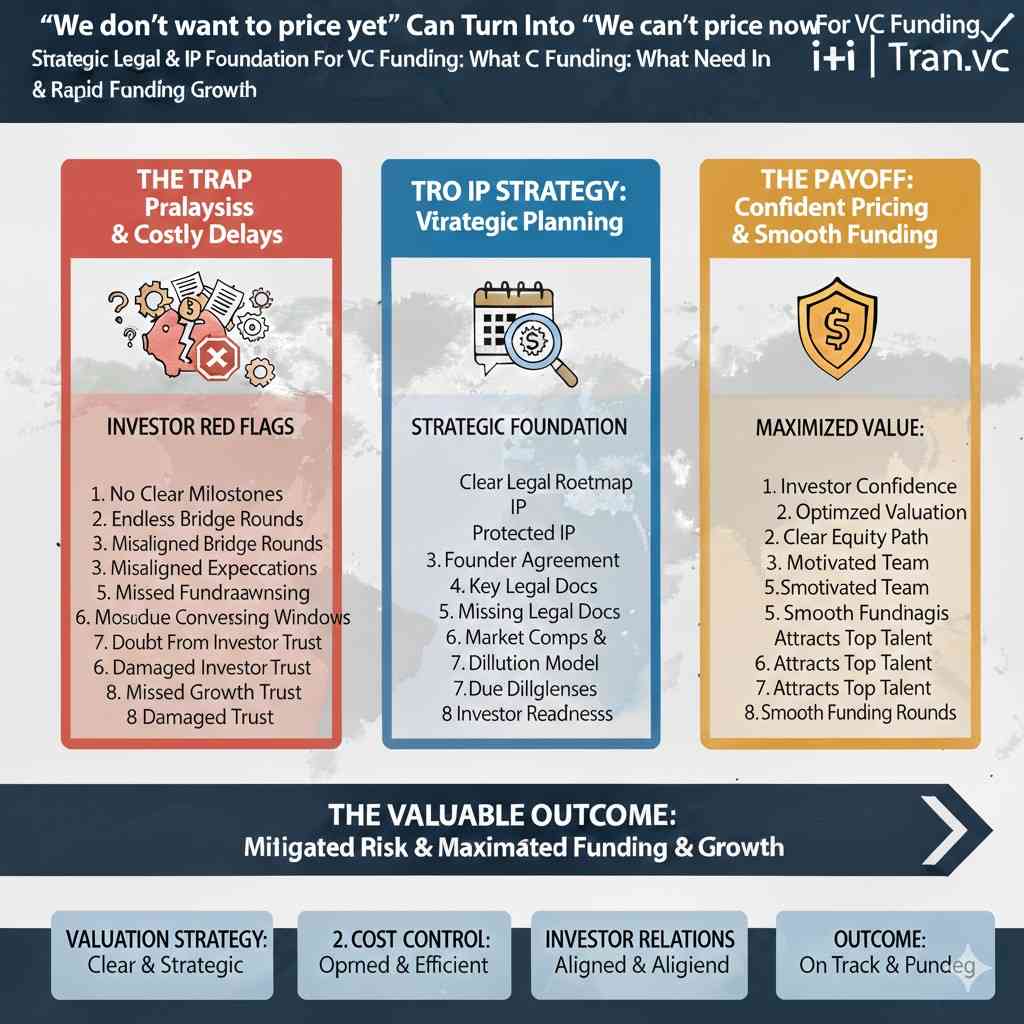
“We don’t want to price yet” can turn into “we can’t price now”
Many founders avoid pricing early because it feels premature. That is understandable. Early pricing can feel like guessing, and guessing can feel unfair.
But stacking SAFEs for too long can lead to the opposite problem. You may end up unable to price because your SAFE caps force the seed round into a narrow range that works for past investors, not for you.
This is where founders get squeezed. They need a priced round to move forward, but they have already promised too much at low caps. The lead investor then has to reconcile those promises with a deal that makes sense, and that negotiation almost always costs the founders.
“We’re protecting control” can quietly reduce control later
Some founders like SAFEs because they seem to protect control. No board seats, fewer rights, and less formal negotiation feels like freedom.
But when SAFEs convert, the control question returns. If conversion results in a heavy ownership shift, you may give up more control in the priced round than you would have if you had priced earlier with cleaner terms.
Control is not only about board seats. Control is also about negotiation power. A messy SAFE stack reduces your power at the seed round, and that can lead to terms you did not expect.
Deep tech and robotics have a special risk here
Long build cycles and higher burn can push founders into repeated SAFE raises. That pattern is common in robotics, biotech-adjacent tech, and some AI hardware plays.
The fix is not always “raise more.” Often the fix is to raise more intentionally and to build fundable proof points that support a priced round. Strong IP can be one of those proof points, because it shows novelty, defensibility, and seriousness.
Tran.vc is designed for this stage. We invest up to $50,000 in in-kind patent and IP services so you can build a moat early and raise with better leverage later. If you want to explore that path, apply here: https://www.tran.vc/apply-now-form/
The parts of a SAFE that create the most trouble
The valuation cap becomes your shadow price
A valuation cap is not your company’s real valuation, but it behaves like a shadow price later. When the priced round happens, the cap can override the round’s price for conversion purposes.
If you give out a cap that is low compared to where you hope to price the seed, those SAFE holders will convert at a cheaper price per share. That means they get more shares, which means you and your co-founders get fewer.
One low cap is not always fatal. The issue comes when the low cap represents a large portion of your total SAFE money. Then it can dominate your cap table math, even if you later improve your traction.
Discounts can be harmless or confusing, depending on how you use them
A discount means SAFE holders convert at a percentage off the priced round’s share price. On its own, that can be straightforward.
Confusion shows up when you mix discounts with multiple caps, or when you issue a discount-only SAFE without a cap. Then you have investors converting under different rules, and it becomes harder to forecast outcomes and explain them cleanly to a lead investor.
As a rule, if you use discounts, use them consistently and be cautious about mixing structures. Consistency is what preserves trust, not cleverness.
MFN sounds friendly but can quietly spread expensive terms
MFN clauses are often presented as harmless. The idea is that if you later give better terms to someone else, earlier investors get upgraded.
In practice, MFN can create a chain reaction. You may think you are offering a special cap to one investor to close quickly, but you may be offering it to all MFN holders without realizing the full impact.
MFN is not always wrong. It is just easy to underestimate. If you include MFN, you need to track it with care and treat future SAFE terms as if they will apply broadly.
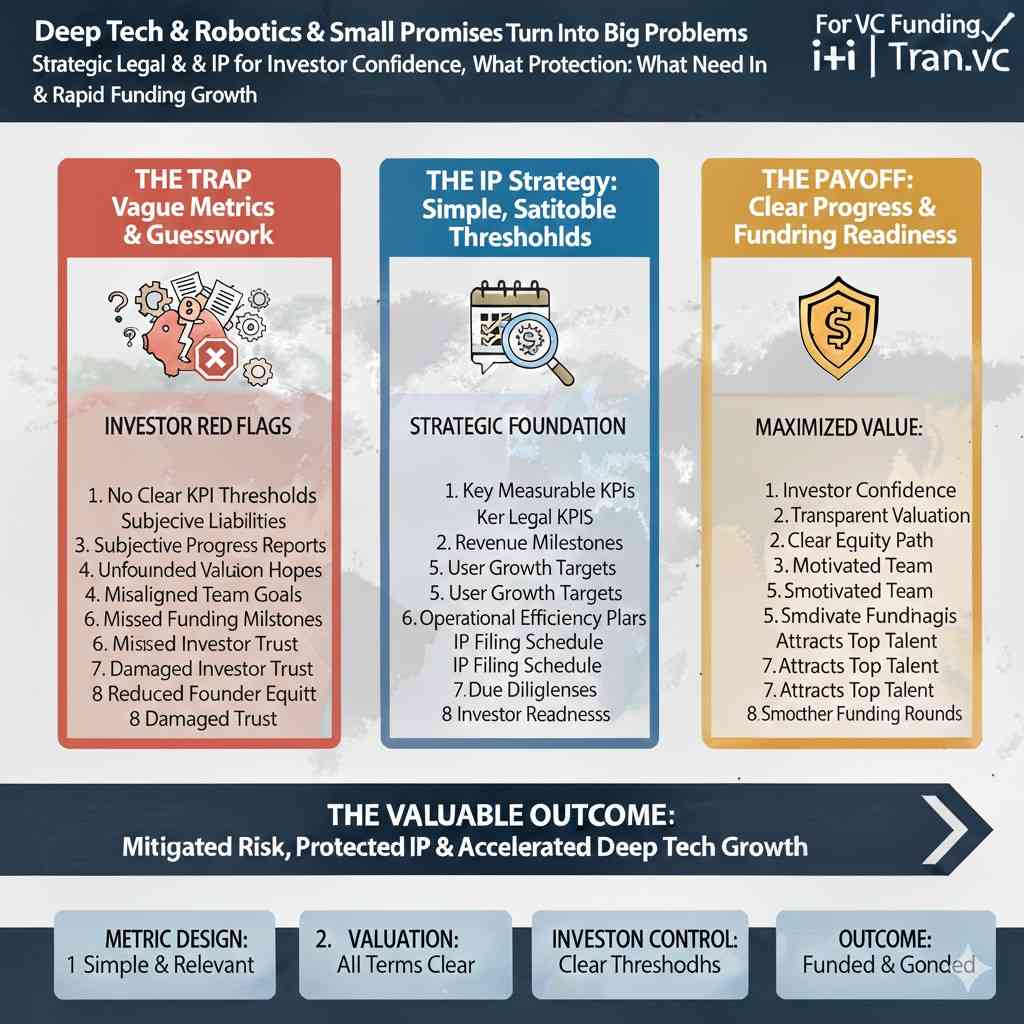
Side letters and “small promises” turn into big problems
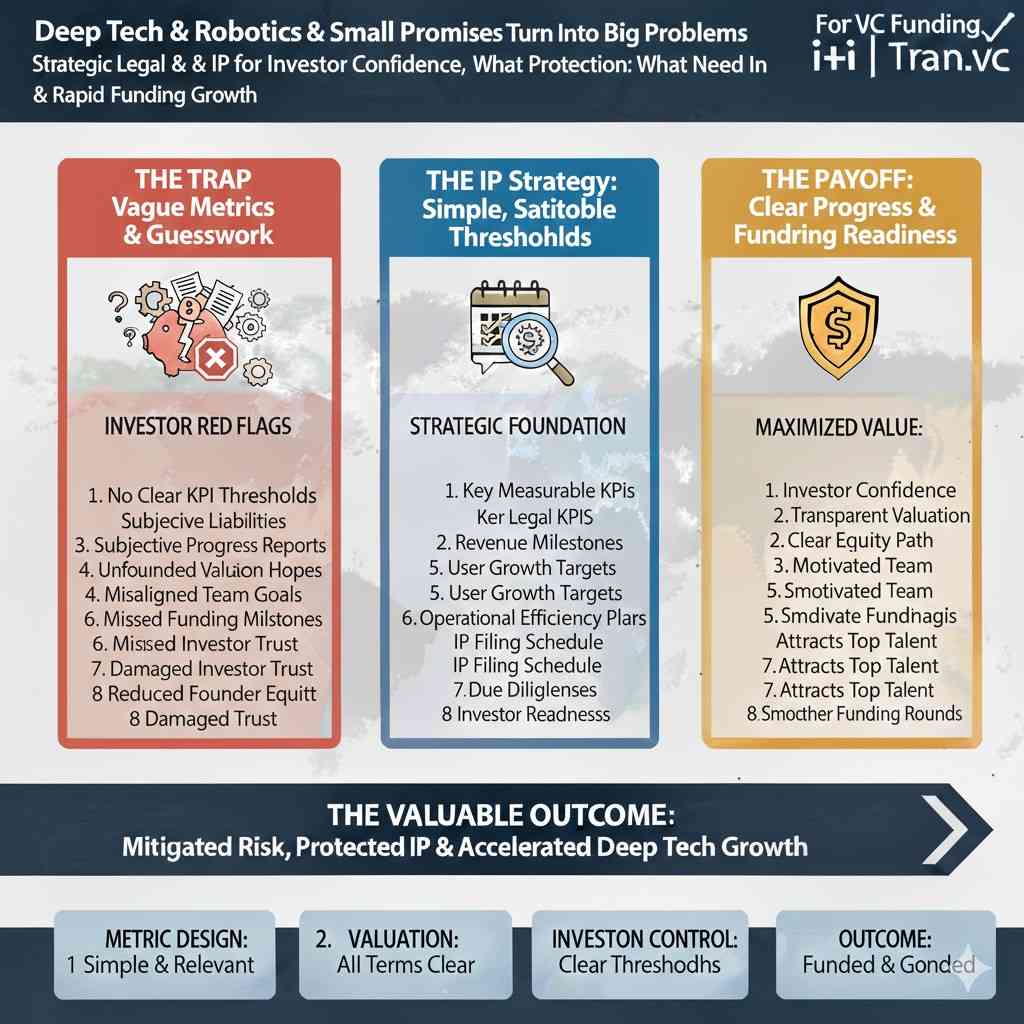
A side letter can include things like information rights, pro rata expectations, advisory arrangements, or future participation promises. Individually, these may seem reasonable.
The problem is accumulation. A seed lead does not want to inherit a set of hidden obligations. Even if none of them are catastrophic, the existence of many private promises creates uncertainty, and uncertainty reduces valuation and slows deals.
If you must use side letters, keep them rare, clear, and consistent. Better yet, avoid them unless they are truly necessary.
If you are not protecting your IP, your SAFE terms get worse
This is the part many founders miss. If your company has weak defensibility, investors push harder on price and ownership because they see higher risk.
Strong patents and IP strategy can change that dynamic. When your invention is protected, you can negotiate from a stronger place, because you are not just selling a dream. You are showing a barrier others cannot easily copy.
Tran.vc supports founders here through in-kind patent and IP services worth up to $50,000. If you want to build a cleaner, stronger foundation before your seed round, apply anytime: https://www.tran.vc/apply-now-form/
Practical thresholds you can use without fancy math
The “one-page explanation” threshold
If you cannot describe your SAFE situation on one page, you are likely past the healthy zone. This does not mean you need to hide details. It means the structure itself has become too complex.
A one-page explanation usually includes total SAFE amount, the main cap or caps, whether any discounts exist, whether any MFN exists, and a simple conversion estimate at a realistic seed valuation. If you need to add footnotes to explain special cases, that is a warning sign.
The one-page test matters because it mirrors how a seed investor thinks. They want clarity quickly. If you cannot deliver clarity, they assume there are surprises.
The “terms drift” threshold
Even if your total SAFE dollars are not huge, you can create trouble by drifting terms over time. A small raise on a $6M cap, then another on $8M, then $10M, then a discount-only SAFE, and then a SAFE with MFN is a pattern that suggests you are negotiating without a plan.
A lead investor will read this as a lack of discipline. They may not say that directly, but they will protect themselves with tougher terms or slower diligence. Either way, you pay a cost.
If you want to raise SAFEs over time, keep the structure stable. Change only when you hit a clear milestone that justifies it, and be prepared to explain that milestone in plain words.
The “seed round hostage” threshold
This threshold is simple. If your existing SAFE stack forces you to accept a seed valuation you do not want, just to avoid extreme dilution or investor conflict, then you have too many SAFEs or too many low caps.
This is where founders feel stuck. They may have strong progress, but their financing history is now shaping their future more than their current performance.
If you sense you are nearing this point, it is better to address it early—either by tightening SAFE terms, stopping the SAFE round, or moving toward a priced round sooner than planned.
The “fear of the cap table” threshold
This one is emotional, but accurate. If you feel nervous every time someone asks to see your cap table, you probably already know something is off.
That fear usually comes from uncertainty. You do not know how it converts, who gets what, or how it will look to a sophisticated lead investor.
When you reach this point, the best move is to clean it up now. Avoiding it only increases the pressure.