
Most seed rounds are not “won” in the pitch deck. They are won in the quiet parts: the diligence calls, the partner meeting, the risk talk, and the final redlines.
At seed, investors are doing one main job. They are trying to answer a hard question:
“Why won’t a bigger team copy this and crush you?”
If you can lower that fear, you do not need to beg for terms. You can negotiate.
A smart patent plan does exactly that. Not in a flashy way. In a calm, proof-based way. It turns your invention into a business asset that can be checked, understood, and valued.
This article will show you how to use patents to get better seed terms without acting like a lawyer, without hype, and without wasting money. You will learn what to file, when to file, how to talk about it, and how to use it in a term sheet conversation.
If you want help building an IP plan before you raise, you can apply any time here: https://www.tran.vc/apply-now-form/
How to Use Patents to Negotiate Better Seed Terms
Why seed terms are not only about your story
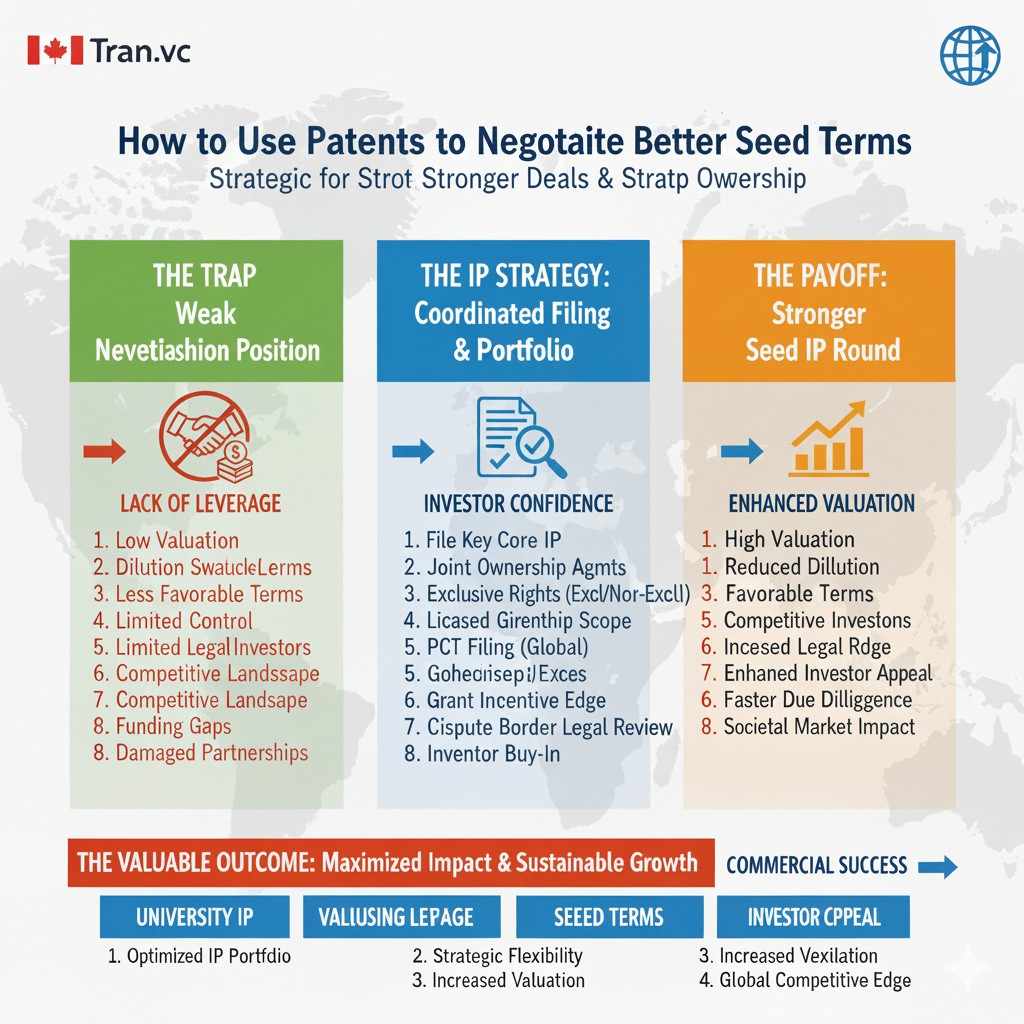
Seed investors are not only buying your vision. They are buying a view of risk. They ask themselves if this can become a real company, and if it can stay a real company once the world notices.
If the risk feels high, they protect themselves with tougher terms. That can show up as a lower price, a bigger ownership ask, stronger control rights, or extra limits that slow you down later.
If the risk feels lower, you get room to negotiate. Patents are one of the few tools that can reduce risk in a way investors can understand and verify.
What “better seed terms” really means
Many founders think better terms only means a higher valuation. Valuation matters, but it is not the only lever that changes your future.
Better seed terms can also mean a cleaner cap table, fewer special rights, simpler investor controls, and less pressure to raise again too soon. It can mean more freedom to run the company the way you need to run it.
When patents are used well, they support all of those goals. They can help you price risk lower, and they can also help you say “no” to terms that would trap you later.
The simple role patents play in negotiation
A patent is not a magic shield. It is a business tool that creates leverage when you use it with intent.
Leverage means you have credible options. It means you are not desperate for a deal because your company has something hard to copy, and you can prove you are building a moat.
When you walk into a seed round with an IP plan that makes sense, investors see a team that thinks ahead. That changes the tone of the whole conversation.
When this matters most
This matters most when you are building deep tech, AI, robotics, hardware, infrastructure, or anything that takes time to build and is easy to copy once it works.
In those spaces, the first working version is only the start. The real fight begins when bigger players see the product and decide they want the same customers.
Patents help you show that the fight is not fair for the copycat. That is what gets you better seed terms.
Where Tran.vc fits
Tran.vc helps technical founders turn inventions into strong IP assets early, before a seed round forces rushed decisions.
Tran.vc invests up to $50,000 in in-kind patent and IP services, so founders can build a defensible base without burning scarce cash.
If you want to explore this path, you can apply any time here: https://www.tran.vc/apply-now-form/
Part 1: How investors actually think about patents at seed
The investor’s real question: “Can this be copied fast?”
A seed investor is not only checking if your product works. They are checking if your advantage can last.
They know many startups can build a demo. The harder part is keeping an edge once the market proves the idea is real.
So in diligence, they look for signs that you will stay ahead. Patents are one of those signs when they protect the right thing.
The difference between “IP as a slide” and “IP as a strategy”
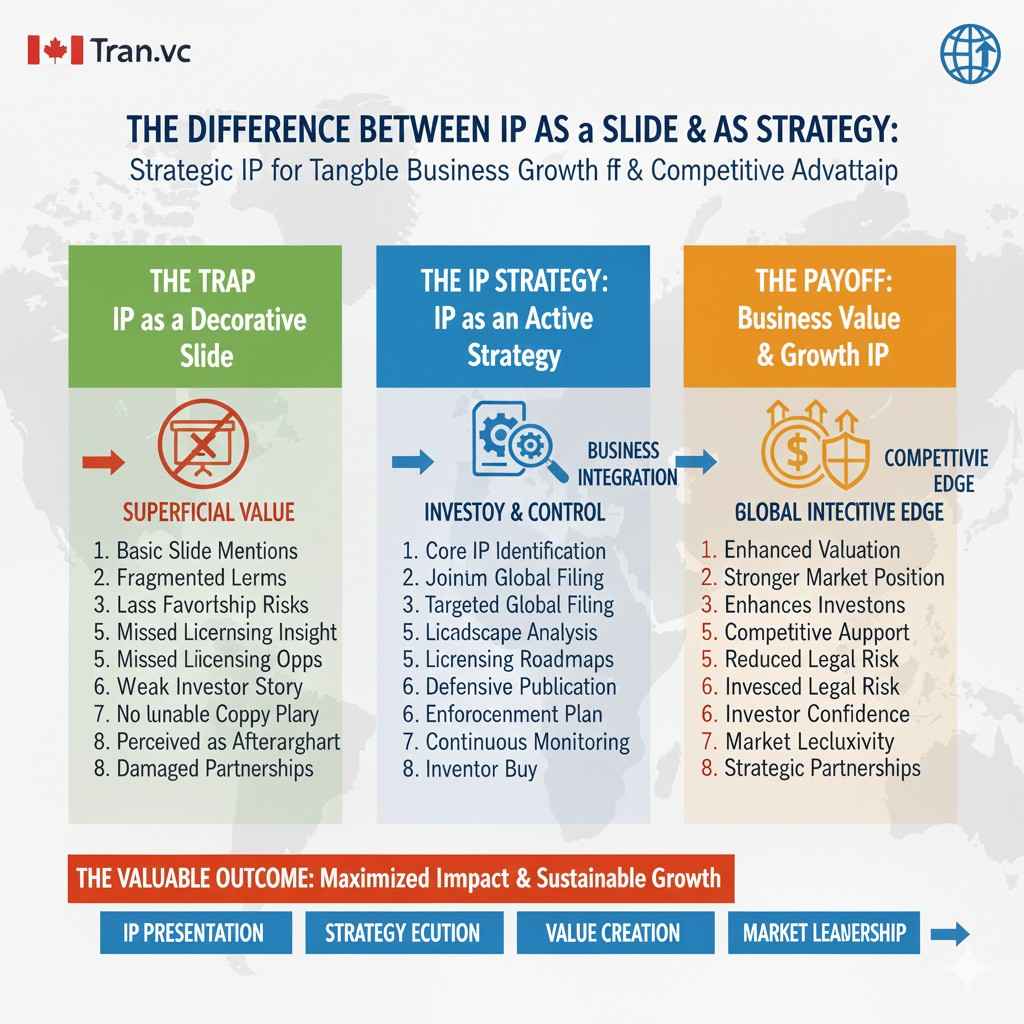
Many decks have a slide that says “We have patents pending.” That line often does not move terms at all.
The reason is simple. Investors have seen too many weak filings that do not match the product. They have seen patents written too broadly, too loosely, or filed too late.
A real strategy is different. A real strategy explains what you are protecting, why it matters, and how it blocks copycats in the exact market you plan to win.
Why patents can change the risk math
When investors price a round, they price risk. Risk is not only market risk. It is also execution risk and competitive risk.
If a strong competitor can copy you and sell faster, your future value is less certain. That pushes investors to demand terms that protect them.
If you can show that copying will be harder, slower, or legally risky, your future value looks more stable. That is where negotiation gets easier.
What seed investors want to see in plain language
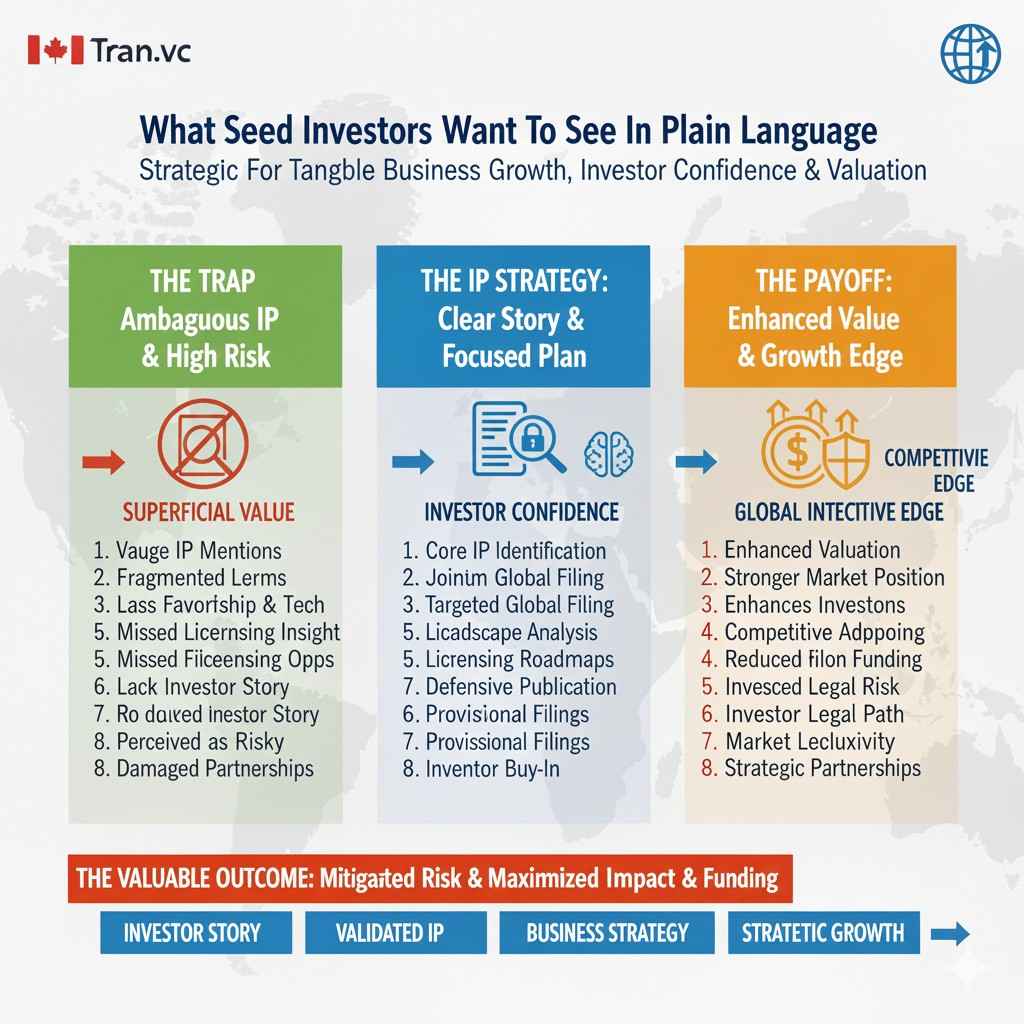
Most seed investors do not want a legal lecture. They want a simple map.
They want to know what is unique, what is protected, and what is hard to work around. They also want to know that you did not waste money on filings that do not matter.
If you can explain your IP in simple words, you are already ahead. That clarity helps them defend the deal inside their firm.
Patents are not only about lawsuits
Founders often avoid patents because they think patents only matter if you sue someone. That is not the main value at seed.
At seed, patents help with positioning, pricing, partnerships, and fundraising. They can also help you recruit, because strong engineers like working on important inventions.
The main point is not to fight in court. The main point is to build leverage now so you can avoid being pushed later.
Part 2: What kinds of patents create leverage in a seed round
Not all patents are equal
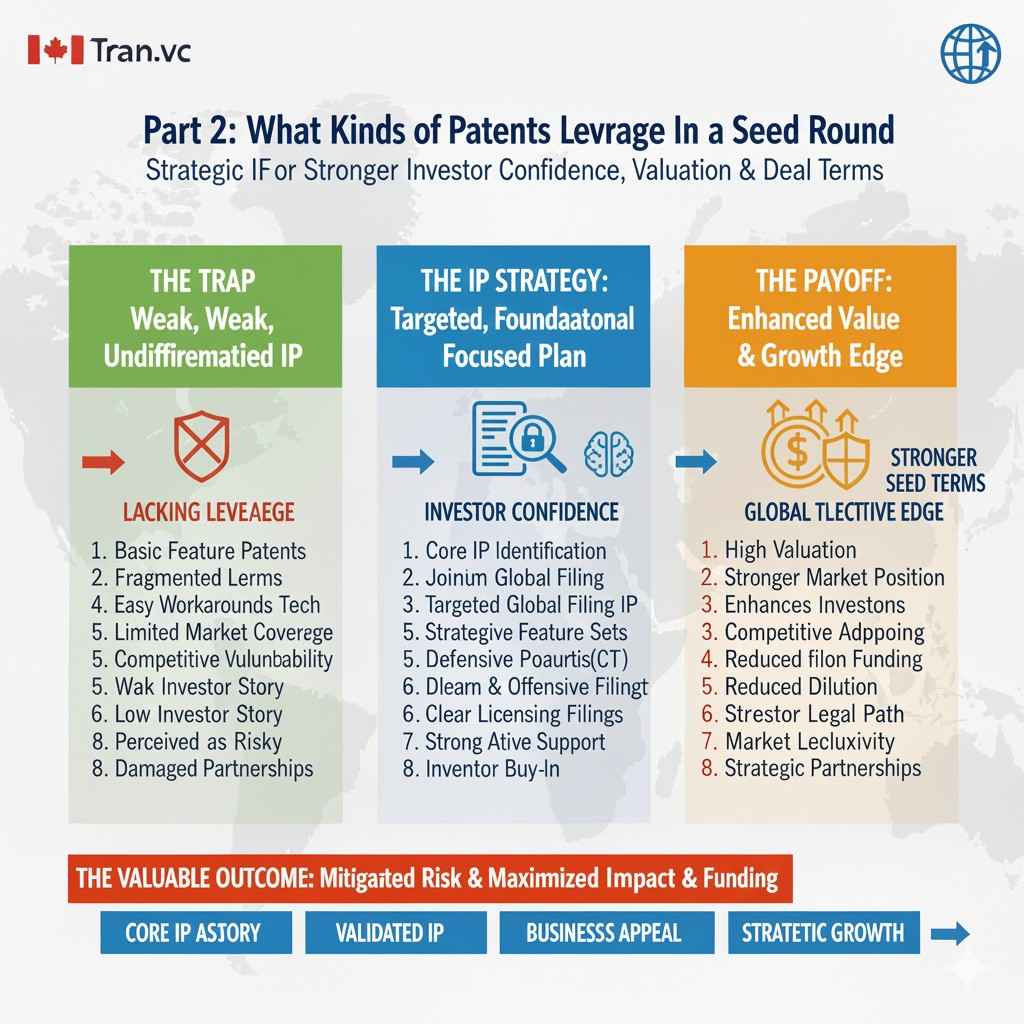
A patent can be valuable, or it can be noise. Investors know this.
A patent that covers a core method or system that your product must use is much stronger than a patent on a small feature. A patent that is easy to design around is weak, even if it sounds impressive.
Your goal is not to collect patents. Your goal is to protect the few technical ideas that create your advantage.
The “core mechanism” patent
A core mechanism patent protects the key way your system works. This is usually the part that would be hardest for others to rebuild from scratch.
In robotics, this could be a control method that stabilizes movement under real-world noise. In AI, it could be a training pipeline, a model update method, or a way you combine signals that improves results in a repeatable way.
If that core mechanism is protected, a copycat cannot simply mirror your workflow and ship a clone. They must take a different path, and that takes time.
The “system-level” patent that ties pieces together
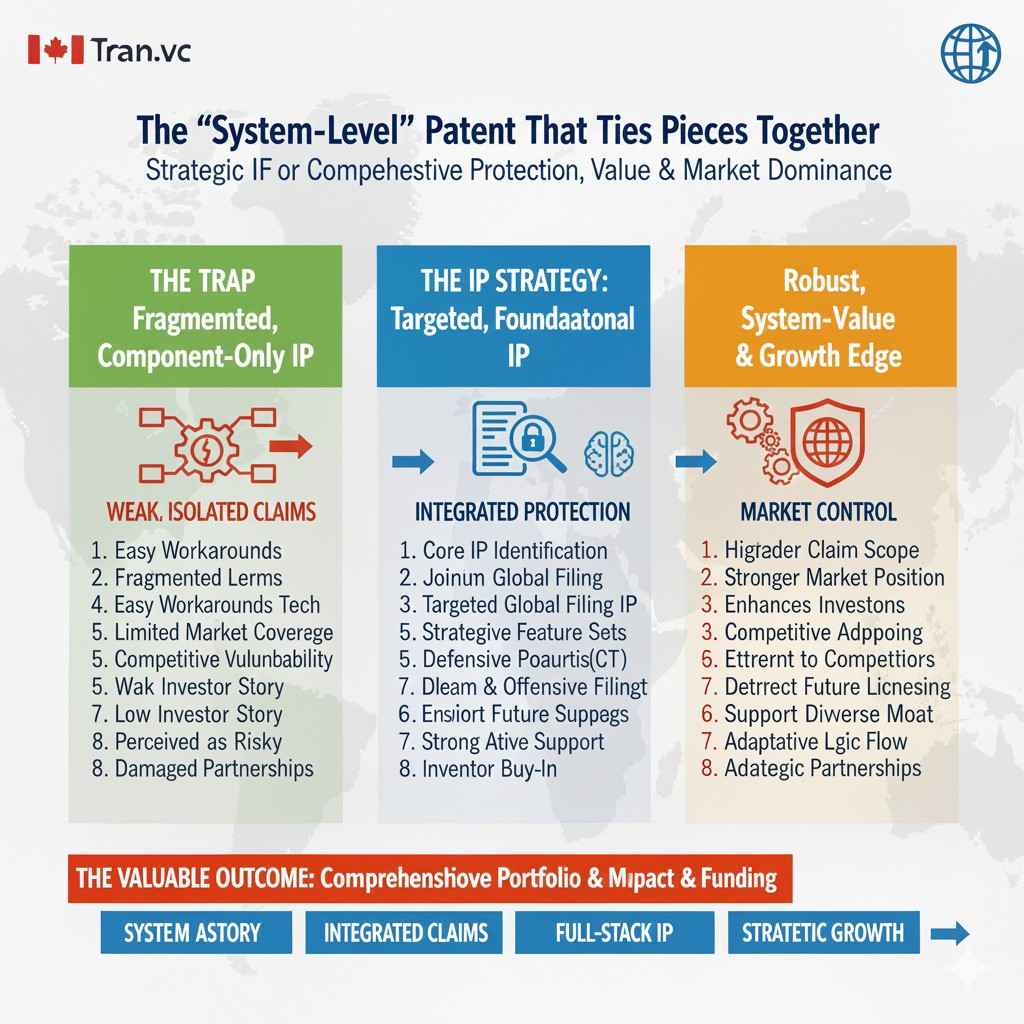
Some inventions are not one trick. They are the way parts connect.
A system-level patent protects the interaction between steps, sensors, data flows, and outputs. This is very common in robotics and applied AI, where the advantage comes from how you integrate.
Investors like these because they match how real products are built. They also tend to be harder to work around, because changing one part breaks the performance.
The “deployment and edge” patent
Many AI products now live at the edge, or in real-time systems, or in strict environments like factories, hospitals, or vehicles.
If you have an invention that makes models run faster, safer, cheaper, or more reliable in the real world, that can be a strong patent.
It also ties closely to revenue, because these are the constraints customers pay for. When your IP is close to revenue, investors see it as a business asset, not a science project.
The “data moat support” patent
Data alone is not always protectable as a patent, and you should never promise investors that patents will “own” data. That can backfire.
But the methods you use to collect, label, clean, compress, or learn from data can often be patented if they are truly novel.
If your results come from a special method that turns messy real-world signals into reliable training inputs, that is worth exploring. It can support the story of why your model keeps improving while others stall.
The “manufacturing and cost” patent
In robotics and hardware, cost and reliability win markets.
If you have a new way to assemble, calibrate, test, or maintain your system, that can be a powerful patent. It may not sound exciting, but it can be the difference between scaling and failing.
Investors respect IP that reduces cost and increases repeatability. It signals you understand how to build a real business, not only a lab demo.
The “defensive ring” patent
Sometimes you file patents not because you expect to sue, but because you want to block others from patenting around you.
This is common in fast-moving fields. If you see obvious future directions, you can file early to claim space.
When done right, this prevents a competitor from boxing you in later. In negotiation, that helps investors feel safer that you will not face IP traps.
Part 3: Timing—how to use patents without slowing your product
Why timing is part of the leverage
A patent filed too late is often a missed chance. A patent filed too early can be too vague.
Investors also notice timing. If you file only after you start fundraising, it can look reactive. If you file with no product link, it can look like vanity.
The best timing usually comes from a clear invention moment. That is when you can describe the novelty with confidence, and also tie it to your roadmap.
The role of provisional filings in seed negotiations
For many startups, a provisional filing is the bridge between speed and protection.
A well-written provisional can create a priority date, while giving you room to refine the claims later. It can also be used to support a “patent pending” position during fundraising.
But quality matters. A thin provisional that reads like a blog post may not hold up later. Investors who know IP can often tell the difference.
How to align filing with fundraising milestones
If you plan to raise in the next three to six months, your IP work should start now, not the week you begin outreach.
You want enough time to identify the right inventions, capture strong details, and build a clean narrative around what is protected.
When you walk into meetings with filed work and a clear plan for the next filings, you feel more prepared. That confidence changes how investors treat you.
Avoiding the trap of “we will patent it later”
Founders often say they will file later when they have more money. That sounds logical, but it can create risk.
Public demos, customer pilots, and even some partnerships can create disclosure problems. Team churn can also make inventorship messy.
A good early plan reduces these hazards. It keeps your future filings cleaner, and it protects you from losing key rights by accident.
How to keep IP work lightweight
The fear is that patents will distract the team. They can, if handled poorly.
Handled well, IP work is a short, structured process that captures what you already built. It does not need endless meetings.
A strong IP partner will do the heavy lifting and use your time wisely. That is part of what Tran.vc is designed to solve for early-stage teams.
If you want that kind of support, you can apply any time here: https://www.tran.vc/apply-now-form/
How to Use Patents to Negotiate Better Seed Terms
Part 4: Turn your patent work into a negotiation asset
Start by treating IP like a deal tool, not a science project
Most founders talk about patents like a badge. They say “we filed” and move on. That approach rarely changes seed terms, because it does not connect to the investor’s real job, which is to price risk.
To use patents as leverage, you must tie them to business outcomes. You are not asking the investor to admire your invention. You are showing them why your company is safer to fund and harder to copy.
When you do that well, your patent work stops being a side note. It becomes part of the reason your round deserves cleaner, founder-friendly terms.
Build a simple “what is protected” story that fits in one minute
Investors do not have patience for long explanations in early meetings. If your IP story takes ten minutes, it will not land.
A strong one-minute story has three parts: what the invention is, why it matters in the product, and why a competitor cannot easily avoid it. The key is not fancy words. The key is a clear chain from the invention to the advantage.
If you can say it simply, you can repeat it across calls. That repetition helps investors remember it when they argue for your deal internally.
Use patents to replace hand-wavy defensibility claims
Many decks say “moat” and then list data, brand, and speed. Investors hear that all day.
A patent plan lets you replace vague claims with concrete ones. It lets you say, “This step in our system is new. We captured it. Here is why the product needs it.”
That shift matters because the investor can diligence it. They can ask counsel. They can read the filing. They can form a view. That makes your defensibility more real.
Make your patents match the market you are selling into
A patent that protects a feature nobody pays for will not help your seed terms. Investors will treat it as wasted effort.
A patent that protects the thing your customer values most is different. If the customer buys you for accuracy, protect the method that creates accuracy. If they buy you for safety, protect the method that avoids failure modes. If they buy you for cost, protect the method that lowers unit cost or reduces labor.
When your IP lines up with what buyers want, investors see your filings as revenue support, not decoration.
Show you can keep innovating beyond one filing
One patent can be meaningful, but investors also look for continuity. They want to know you will not run out of ideas after the first version ships.
This is where an IP roadmap helps. You do not need a long list of future patents. You need a realistic plan that says, “As we build X and Y in the next six months, we expect new protectable inventions in these areas.”
That tells investors your advantage will grow. Growing advantage supports better terms because it supports future value.
Part 5: What investors will ask and how to answer without sounding like a lawyer
“Do you have patents?” is not the real question
When an investor asks if you have patents, they are often asking a deeper question: “Is there real novelty here, and did you capture it before others did?”
If you answer with only “yes, pending,” you miss the chance to reduce fear. You also invite a follow-up that you may not be ready for.
A better answer gives a short explanation that links your filing to the product. It shows you know what you protected and why.
How to explain a patent in simple words
A strong explanation does not start with claim language. It starts with the problem.
You can say, “In the real world, the robot sees noisy signals. Our method keeps it stable by doing A and B together. That combination is new, and we filed on it.”
This kind of explanation is easy to follow. It also makes the investor curious in a good way. Curiosity often turns into respect, and respect supports negotiation.
“Can a big company design around this?”
This question is common, and it is fair. Investors know patents can be worked around.
Your job is not to promise that nobody can ever copy you. Your job is to explain why copying will be slower, costlier, or riskier.
You can talk about how the patent covers the core workflow, not a small UI feature. You can talk about how changing the workflow would reduce performance, raise cost, or break safety constraints.
That answer is honest, and it still gives leverage because it frames the competitor’s problem clearly.
“How strong is the patent?” without overclaiming
Founders sometimes overpromise here, and that can hurt trust.
A better approach is to show process. You can say you did a prior art search, you worked with counsel that understands the field, and you wrote the filing with enough detail to support real claims later.
You can also show you know the difference between a weak filing and a strong one. That maturity reassures investors. Reassurance is one of the main drivers of better terms.
“Why patents instead of trade secrets?”
Some inventions should stay secret. Some should be patented. Many companies use both.
If you can explain your choice, you look more strategic. You can say you patented the parts that would be easy to reverse engineer once deployed, and you kept other parts as internal know-how.
That split shows you are thinking like a builder of long-term advantage, not just a fundraiser.
Part 6: Use patents to improve specific seed terms
How patents support a higher price without sounding greedy
Valuation debates get emotional fast. If you argue “we deserve more because we’re great,” it becomes opinion versus opinion.
Patents can move the conversation from opinion to structure. You can frame it as risk pricing.
You can say, “Our core method is protected, and the filing covers the workflow we ship. That reduces copy risk and should reduce the discount applied at seed.”
That is a calm way to discuss price. Calm founders often get better outcomes because investors feel steadier betting on them.
How patents help reduce investor control asks
Control terms often show up when investors fear surprises. If they fear the company can be pushed off course, they demand stronger rights.
A clear IP foundation reduces one major surprise category, which is competitive threats. It does not eliminate risk, but it reduces one area of uncertainty.
When you lower uncertainty, you can push back on heavy controls. You can argue for simpler governance because you are not building on sand.
How patents can help you avoid heavy liquidation preferences
Liquidation preference is often framed as standard, but it can still vary. Tougher preferences show up when investors think outcomes are more likely to be mediocre.
If patents make your upside more credible, they can help you argue for cleaner economics. You can frame it as, “This is a defensible platform with a clear edge, so the downside protection should not be aggressive.”
You will not win this every time, but you increase your odds when your defensibility is documented.
How patents can reduce “extra” terms like milestone triggers
Some term sheets include performance triggers, step-ups, or extra rights if certain milestones are not hit.
These terms often appear when investors doubt execution or worry the team may pivot too much. A coherent IP story can help here because it implies focus. It shows you know what you are building and what makes it unique.
When investors feel you have a clear technical spine, they are less likely to ask for terms that try to force discipline through paperwork.
How patents can support a smaller ownership ask
At seed, some investors push for a minimum ownership target. That target is often tied to perceived risk and expected return.
If you lower risk and increase perceived durability, you can sometimes defend a smaller dilution outcome. You are giving them a company that is harder to compete with, so they do not need as much ownership to justify the bet.
This is not a guarantee, but it is a real lever, especially with investors who understand deep tech.
Part 7: The “IP diligence pack” that makes investors move faster
Why speed is a hidden part of better terms
Founders often focus on the final numbers. They forget that speed changes leverage.
When a round drags, founders get tired. Cash gets low. Options shrink. That is when terms get worse.
A clean IP diligence pack can speed up conviction. When conviction rises quickly, you often get better terms because you are not negotiating from pressure.
What to include without overwhelming anyone
You do not need to send investors a legal book. You need to give them clear, organized proof.
This usually means a short summary of each filing, what it covers, how it ties to the product, and what stage it is in. It also means clean inventorship records and assignment documents so there is no confusion about who owns what.
When this is tidy, investors feel safer. Safety is what drives them to say yes with fewer strings.
How to present “patent pending” the right way
“Patent pending” is not a strength by itself. It becomes meaningful when the filing is strong and aligned.
You should be ready to explain what is inside the filing in plain language. You should also be ready to explain what comes next, such as conversion timing or follow-on filings.
That level of readiness signals seriousness. Seriousness earns respect, and respect helps you negotiate.
Using IP to prevent last-minute surprises
Many rounds hit friction when an investor’s counsel finds something messy. That could be a missing assignment from a past contractor, unclear inventorship, or a prior public disclosure.
These issues do not just slow the round. They also weaken your leverage right when terms are being finalized.
Getting your IP house in order early is one of the most practical ways to protect your negotiating position.
How Tran.vc supports this step
This is the kind of work Tran.vc is built for. The goal is not just to file. The goal is to file the right way and package it so it helps fundraising.
Tran.vc invests up to $50,000 in in-kind patent and IP services so founders can walk into seed meetings with a clean story and clean docs.
If you want to build this before you raise, apply any time here: https://www.tran.vc/apply-now-form/