
Inventorship and assignments can feel simple when your whole team sits in one office, under one set of laws. But the moment you hire across borders—one engineer in India, a co-founder in Germany, a contractor in Brazil, a patent attorney in the U.S.—“Who owns what?” becomes a real risk, not a paperwork detail.
And when you are a robotics or AI startup, that risk is not small. Your value is often in the core method, the model training flow, the control loop, the sensor fusion trick, the data pipeline, or the hardware-software bridge that makes the system work. If inventorship is wrong, or assignments are missing, you can lose rights, delay filings, spook investors, or end up in a dispute at the worst time—right when traction hits.
At Tran.vc, we see this pattern early. Founders move fast, ship code, hire globally, and push for a patent filing once the product starts to click. That is the exact moment when inventorship and assignments across borders can either be clean and easy—or a painful mess that slows everything down.
If you want help building an IP foundation that holds up across countries, you can apply anytime here: https://www.tran.vc/apply-now-form/
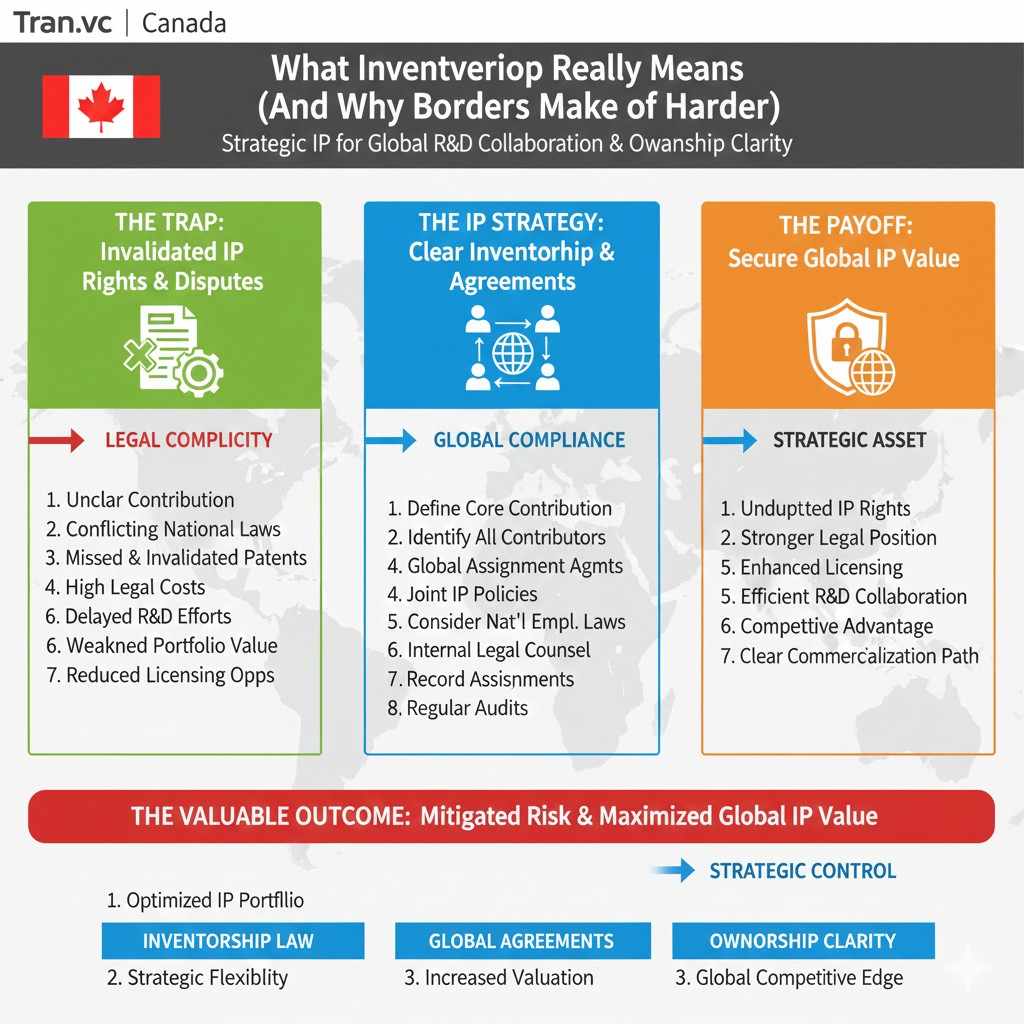
What inventorship really means (and why borders make it harder)
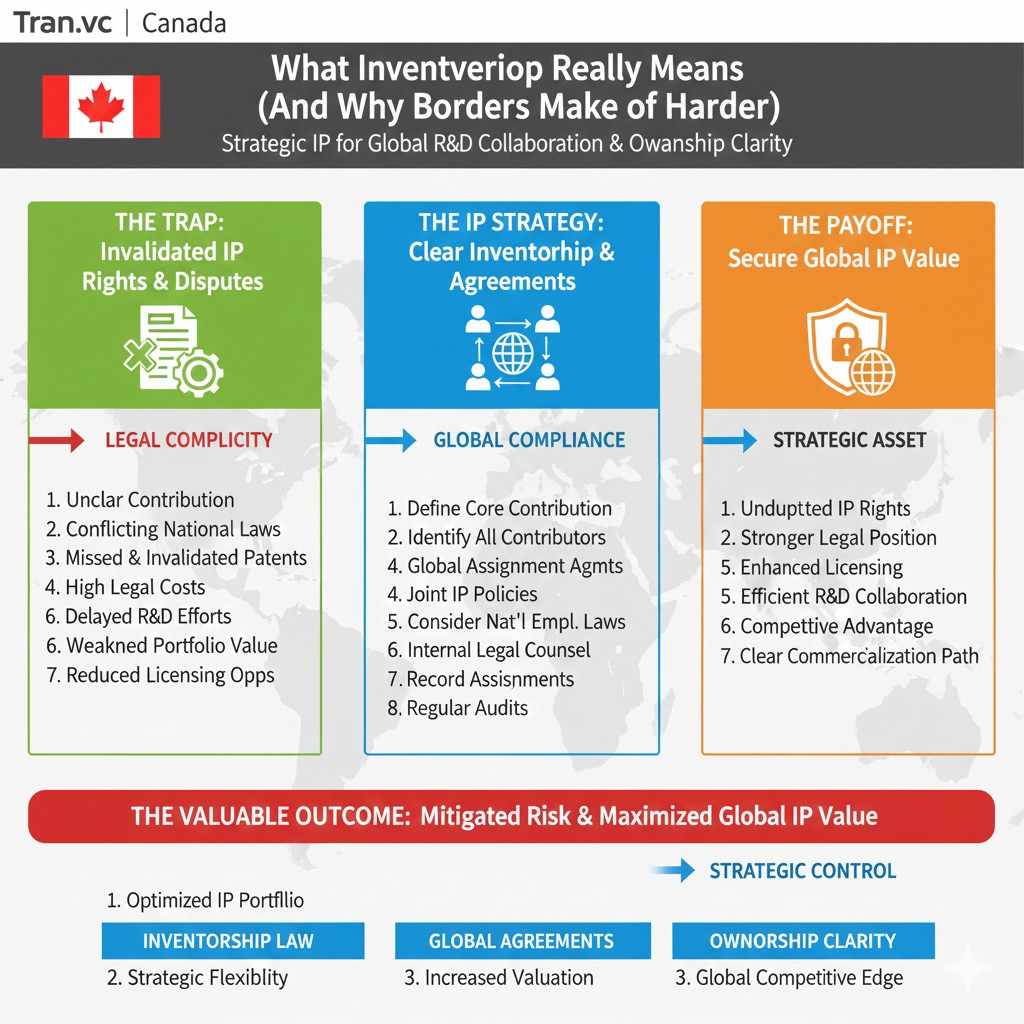
“Inventorship” is not the same as “authorship.” It is not the same as “who wrote the most code.” It is not the same as “who had the idea first.” In patent law, an inventor is a person who helped create the new part of the invention that is claimed in the patent.
That last part matters. Patents are made of “claims.” Claims are the legal lines that say what the invention is. If a person helped shape what ends up in the claims, they may be an inventor. If they did not, they are not an inventor, even if they worked hard on the project.
Here is where cross-border teams get into trouble. Different countries use similar core ideas, but they can have different rules, different documents, and different ways they treat employee inventions. Also, your team members may assume the rules from their country apply everywhere. They do not.
A common example: a U.S. founder hires an engineer overseas. The founder assumes that anything the engineer builds “belongs to the company.” In many places, that is not true without the right contract language. Sometimes it is not even true with a contract, unless extra steps are done (like local law add-ons, notices, or specific assignment timing).
So you end up with a gap: the company thinks it owns the invention, but the inventor still has legal rights. That gap can show up later when you file patents, license tech, raise money, or sell the company.
And inventorship mistakes are not just “fix it later” issues. In some cases, wrong inventorship can put the patent at risk. In other cases, it can trigger duties to correct the record. Either way, it creates cost, delay, and doubt—three things early-stage companies cannot afford.
If your team is global or you plan to hire globally, it is worth getting this clean now. If you want Tran.vc’s help setting up a strong IP base (patent strategy + filings as in-kind services), apply here: https://www.tran.vc/apply-now-form/
The two questions you must separate: “Who is an inventor?” and “Who owns the invention?”
Founders often mix these up, and that is where problems start.
First question: Who is an inventor?
This is a legal label tied to contribution to the claimed invention. You cannot “choose” inventors based on title or seniority. You also cannot “remove” someone to avoid conflict. If they contributed to the claimed new idea, they are an inventor.
Second question: Who owns the invention?
Ownership is about contracts and law. Many countries have default rules for employee inventions, but those rules vary. Contractors are even more risky: in many places, contractors own what they create unless they assign it.
So a person can be a true inventor, and still not own anything, if they properly assigned rights to the company. That is normal. In fact, that is the standard startup goal: correct inventorship, clear company ownership.
Cross-border work makes the second question much harder, because your “standard U.S. contractor agreement” may not do what you think it does in another country.
A very practical way to think about this:
- Inventorship is like a name on the birth certificate of the idea in the patent.
- Assignment is like signing a deed that transfers the property rights.
The name cannot be faked. The deed must be valid in the place where it needs to be valid.
A realistic cross-border story (and how it goes wrong)
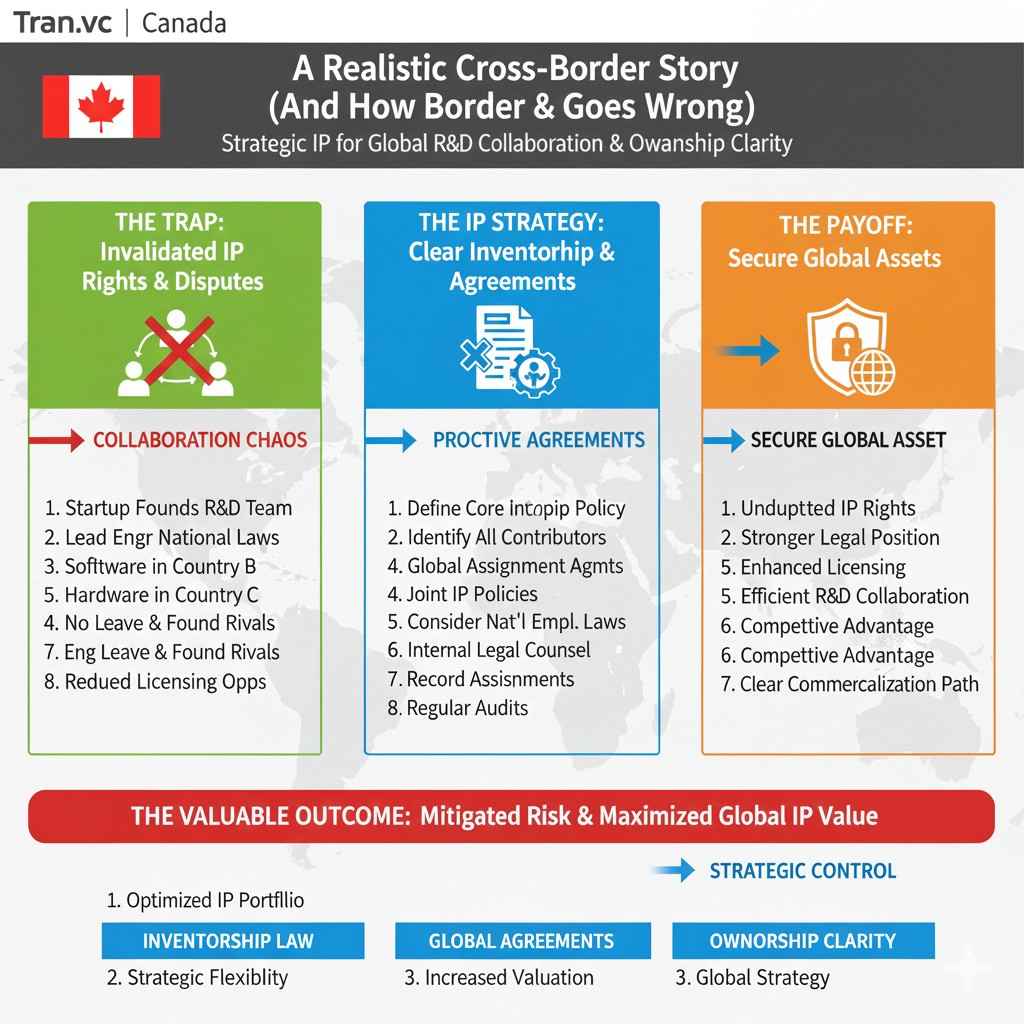
Let’s say you are building a warehouse robot.
Your U.S. team designs the system. You hire a control engineer in Poland to improve path planning. You hire a contractor in India to optimize sensor fusion. Your co-founder in Canada writes the safety layer. You also have a part-time advisor in Japan who reviews the design and suggests a clever way to reduce failure cases.
You file a U.S. patent. You list the two U.S. founders as inventors because they are the core team. You assume everyone else is “support.”
A year later, you raise a seed round. The investor asks for the patent file history and signed assignments from all inventors. Your lawyer takes a closer look at the invention disclosure and the draft claims. It turns out the Poland engineer contributed directly to two key claim elements. The India contractor created the exact method you claimed for multi-sensor weighting. The Japan advisor suggested the critical constraint that made the method pass safety review.
Now you have a set of problems at once:
- Inventorship may be wrong, and you need to correct it.
- You may not have assignments from the real inventors.
- Even if you have “some contract,” it might not be enough, or might not be signed correctly, or might not cover future inventions, or might not handle moral rights or local rules.
- The investor now sees “messy IP,” which can slow or kill the deal.
None of this means your company is doomed. But it means the next 30–60 days turn into cleanup mode instead of growth mode. And the cleanup always costs more than doing it right early.
The quiet trap: “We will fix assignments later”
This is one of the most expensive sentences in early-stage IP.
Assignments are easiest when the relationship is fresh, goodwill is high, and people are still actively working with you. They are hardest when someone has left, moved, started a new job, stopped replying, or feels they were not treated fairly.
Also, when the person is in another country, you may face extra steps: notarization, legal wording that matches local law, witness rules, language issues, or even a need for separate local agreements.
If you ever think, “We will get them to sign when we file,” that can still be too late, because by then:
- Your filing deadline is near and you are stressed.
- The inventor might be traveling.
- The inventor might ask for money or equity to sign.
- The inventor might not agree with the story of who invented what.
The best time to handle assignment is at onboarding. The second best time is today.
If you want a team that can help you set this up the right way from day one, you can apply here: https://www.tran.vc/apply-now-form/
What changes across borders (in simple terms)
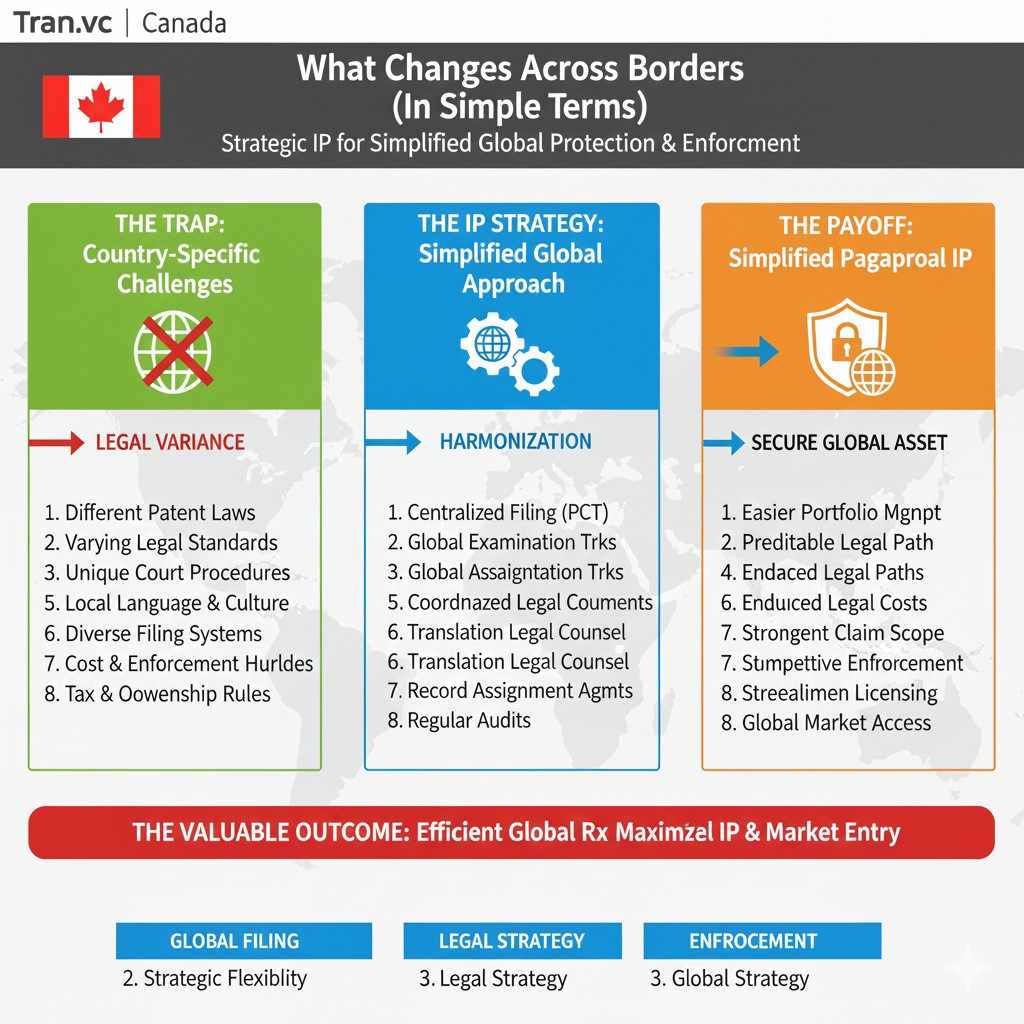
When people talk about “cross-border IP,” they often jump into complex law talk. You do not need that. You need to know what moves when you cross borders.
Here are the big shifts:
In some countries, employee invention rights start with the employee unless certain steps are taken.
In other countries, rights can shift to the employer by default, but only if the invention is within the job role and made using company resources.
In many cases, contractors own what they build unless there is a clear assignment.
Some places require extra payment or special notice if the employer claims the invention.
Some places treat “future assignment” language differently.
Some places care a lot about exact timing: when the invention was made, when the contract was signed, when the assignment was signed.
So the same “one page assignment” that works fine for a U.S. contractor may fail for a contractor elsewhere. Not always—but often enough that you should not gamble.
And founders gamble by accident all the time because templates feel safe.
Templates are fine as a starting point. But across borders, you need to know whether your template is doing what you think it is doing.
The practical “inventor mapping” habit that saves you later
If you want one simple habit that prevents most inventorship fights, it is this:
When a technical milestone happens, write down who contributed to the new idea, and what they contributed.
Not in a legal way. In a human way. Two minutes. A short note. Date it. Put it in a folder.
Example:
“Oct 12: New grasp planning method. Sara proposed adding constraint X to reduce slip. Nikhil coded the weighting method for camera + depth alignment. Jin reviewed and suggested fail-safe trigger based on torque spike.”
That’s it.
This does two things:
- It makes inventorship analysis much easier when it is time to draft claims, because you have a clean record of contributions.
- It reduces emotion later. People fight less when the record is clear.
Cross-border teams especially need this because you cannot rely on hallway memory. Work is async. People come and go. Time zones blur details.
This habit is easy, and it is one of the highest leverage things you can do.
Assignment language: what founders think it does vs. what it really does
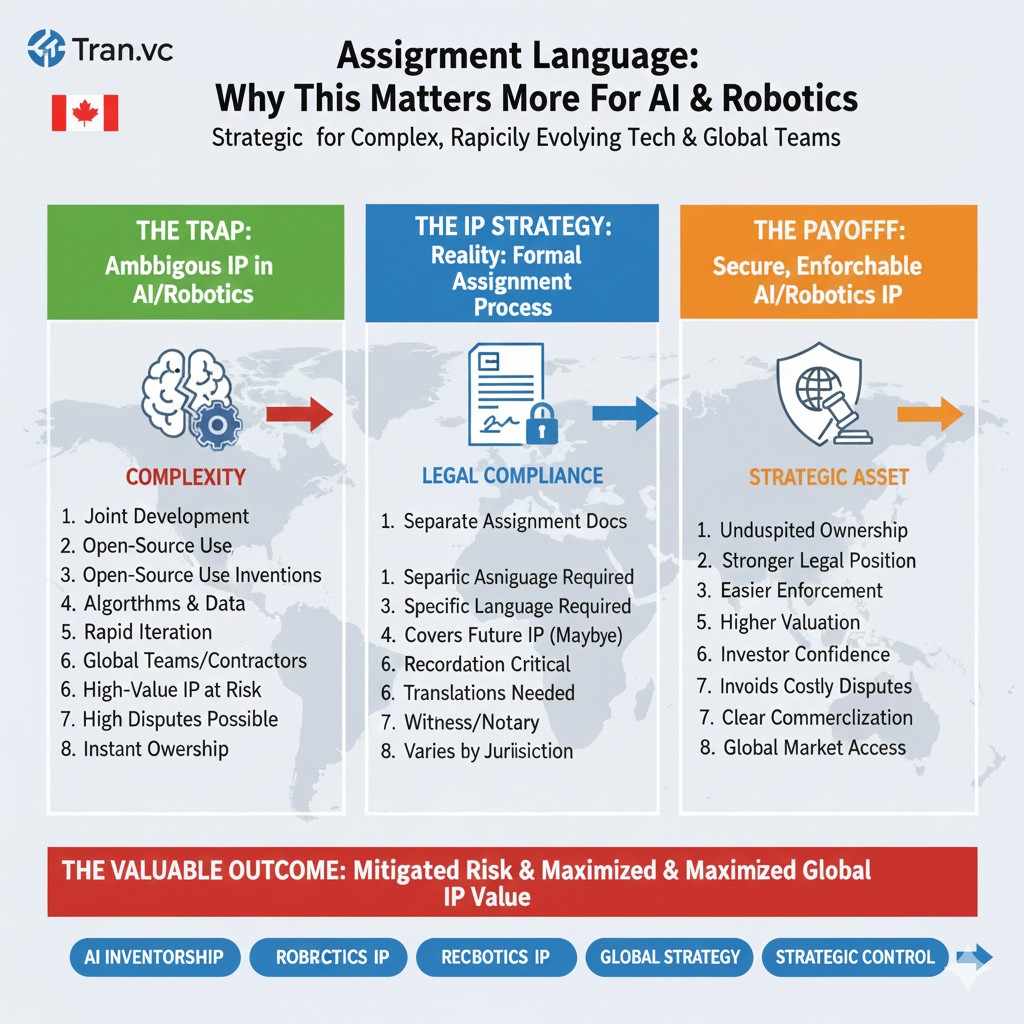
Most founders believe that a contract clause saying “All inventions belong to the company” solves ownership.
Sometimes it does. Sometimes it does not. The detail is in the exact wording and the local rules.
Here is a clean way to think about it:
- Some clauses are a promise to assign in the future.
- Some clauses are a present assignment that transfers rights now.
- Some countries treat these differently.
- Investors and acquirers strongly prefer present assignment language.
Why? Because “promise to assign” can create a gap. It means the person still owns rights until they sign a separate assignment. If they refuse, you have a problem.
This is why serious IP counsel often uses “hereby assign” type language. It is meant to transfer rights as soon as the invention exists.
But again, across borders, you must be careful. The right move is often a mix:
- A strong invention assignment clause in the main agreement
- A separate confirmatory assignment for each patent filing (so there is a clean paper trail tied to the application)
- Local-law compliant add-ons if needed
This sounds like extra work. It is. But it is cheaper than a blown deal.
The hidden edge case: advisors, professors, and “helpful” experts
Cross-border inventorship issues often come from people you do not think of as part of the team.
Advisors: If an advisor suggests a key technical solution and you use it in the claimed invention, they may be an inventor. If you did not have a signed agreement, you may not own their rights.
University ties: If a founder or contributor is enrolled, employed, or using university resources, the university may have rights. This varies widely by country and by school policy. This is a common surprise in deep tech.
Research partners: Joint development projects can create joint ownership unless the agreement says otherwise.
These people can add real value. The goal is not to avoid them. The goal is to handle the paperwork before the invention becomes core.
A simple rule that prevents pain: if someone is going to give technical input that could shape the “new part,” get a signed IP agreement first.
Why this matters more for AI and robotics than for many other startups
Software-only startups still face inventorship and assignment issues. But robotics and AI teams face extra pressure for three reasons:
First, inventions are often made in small, fast iterations. A tiny tweak to a control loop can be the difference between “works in the lab” and “works in the world.” That tweak can end up in a claim.
Second, teams are often global early. Robotics talent is everywhere, and founders hire where the skills are.
Third, patents can be a bigger part of the story. In robotics and AI, investors often want to see a real moat that is not just “we will move fast.” A clean IP chain helps.
That is why Tran.vc invests up to $50,000 in in-kind patent and IP services for technical founders. It is not paperwork for paperwork’s sake. It is about building leverage.
If you are building in AI, robotics, or deep tech and want to get your IP foundation right while you build, apply here: https://www.tran.vc/apply-now-form/
How inventorship differs from ownership
Inventorship is about the claims, not the job title
Inventorship follows the legal “claims” in a patent. A claim is the part that says what the invention is, in precise terms. If a person helped shape what ends up inside those claims, they may be an inventor, even if they are junior, part-time, or outside your country.
This is why inventorship can feel unfair at first. One person may write a lot of code but not add anything new to the claimed idea. Another person may say one key thing in a call that becomes the heart of a claim. Your feelings about effort do not change the legal label.
Ownership is about valid transfer of rights
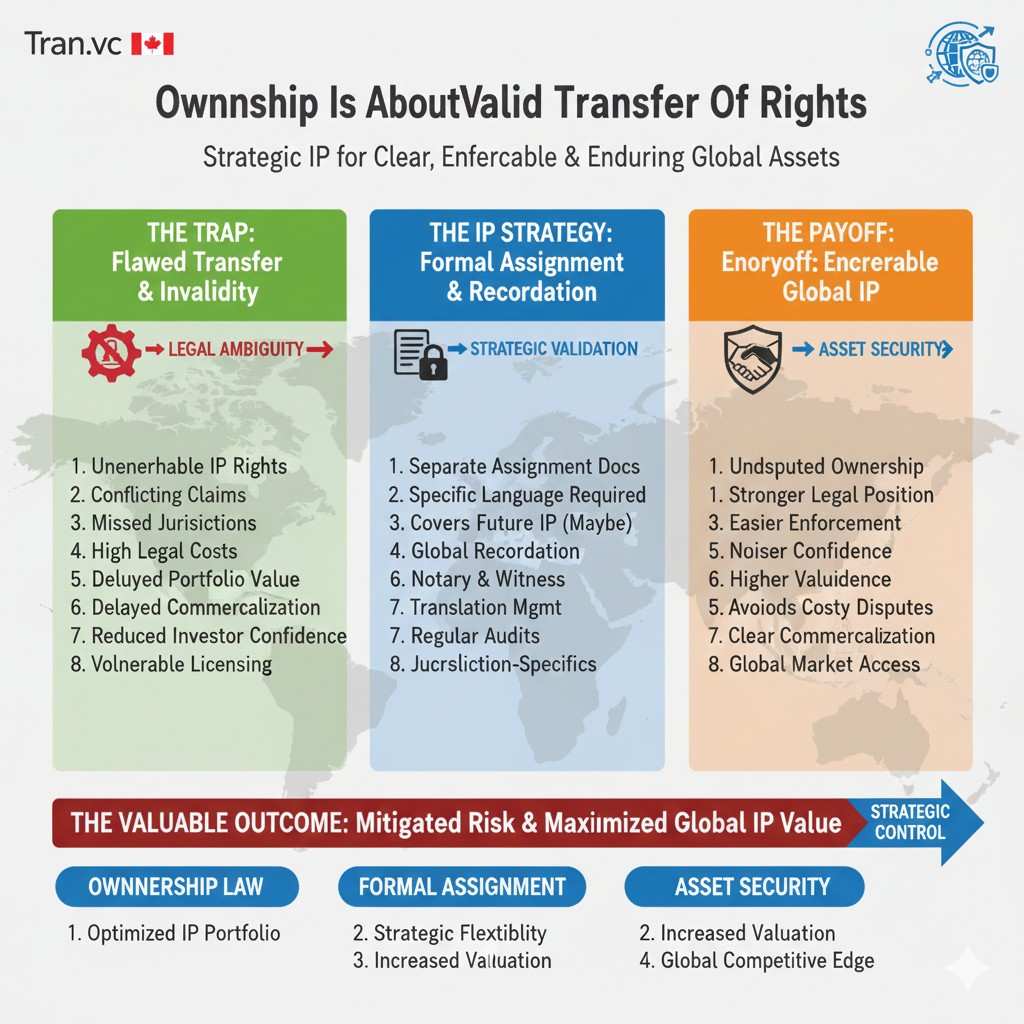
Ownership is about who holds the legal rights to use, sell, license, or file patents on the invention. In startups, you usually want the company to own the invention, even though the inventors are still listed as inventors.
That only happens if rights transfer properly. Sometimes local law transfers some rights by default for employees, but you should not rely on that. A written assignment, signed at the right time, in the right way, is what removes doubt.
The common mistake: “They are not an inventor because they were hired”
Hiring someone does not erase inventorship. Paying someone does not erase inventorship. Equity does not erase inventorship.
If a person contributed to the new part that you are claiming, they remain an inventor. What your contract can do is make sure the company owns the rights that come from that inventorship.
Why borders change the risk
Local law can override your template
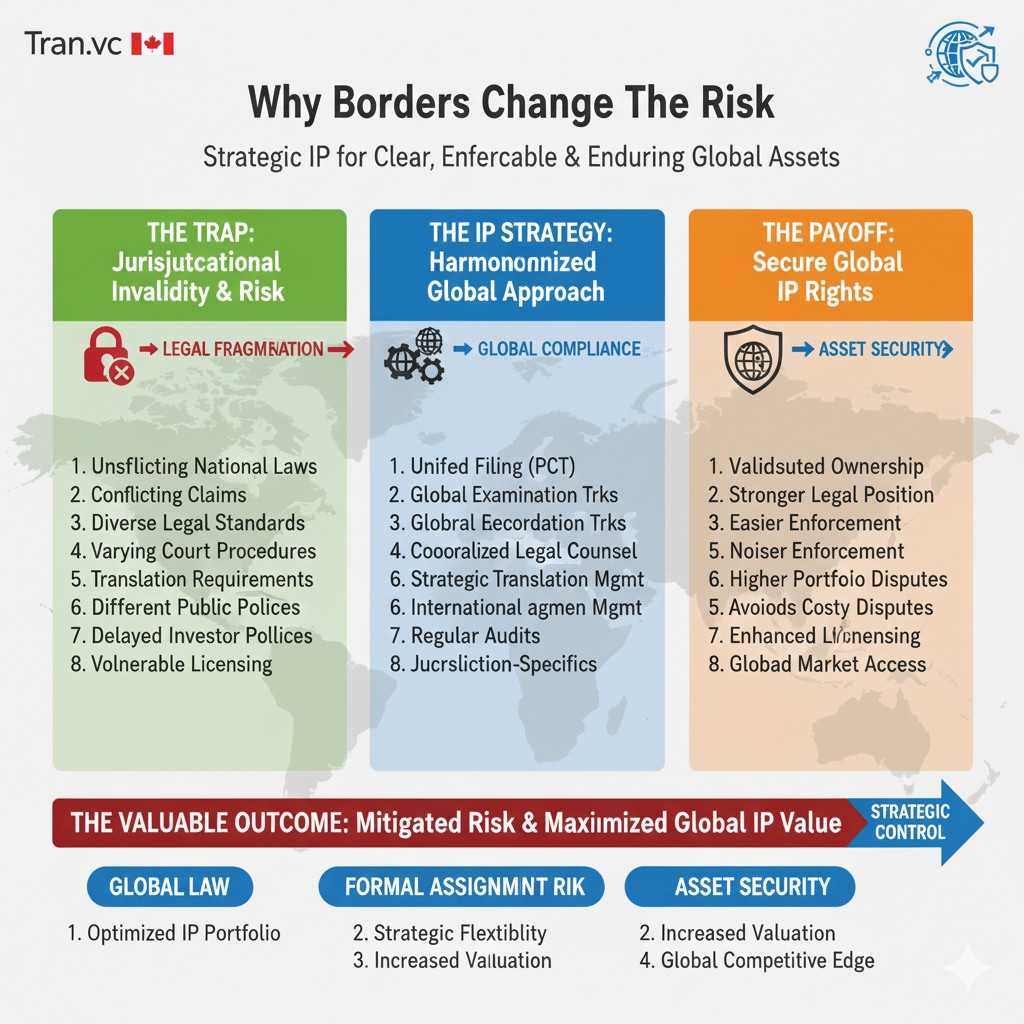
Many founders use a standard agreement from their home country and assume it works everywhere. Across borders, that is a risky guess. Countries can treat employee inventions, contractor work, and future assignment clauses in very different ways.
Even when the wording looks “strong,” local rules may require extra steps, specific wording, or special timing. If you miss those details, you may have a contract that looks fine but does not deliver clean ownership.
Contractor rules are often stricter than employee rules
In many places, contractors keep ownership unless they clearly assign it. Founders get surprised by this because the contractor feels like “part of the team.” But the law may treat them as an outside party that owns their work by default.
This becomes a real issue if the contractor helped create a core method that you later want to patent. You can still fix it, but fixing it later can be slow, costly, and stressful.
Proof and paperwork can be harder across countries
When an inventor is overseas, even simple steps can take longer. Signatures may need witnesses, notarization, or local formatting. A person might sign in a way that does not match what the patent office expects. Time zones and travel can turn “one quick signature” into a week of delay.
If your filing window is tight, these delays can force bad choices, like filing without clean assignments or rushing inventorship decisions.
Getting inventorship right on a global team
Start with “what is new” before you start with “who helped”
The cleanest inventorship work starts by stating the new idea in plain language. What changed compared to older systems? What is the technical step that makes the result better, faster, safer, or cheaper?
Once you can describe the new step clearly, you can trace who contributed to that step. This avoids the common trap of mixing general effort with invention.
Track contributions as they happen, not months later
Global teams work in async modes. People push code, leave notes, and jump to the next task. If you try to reconstruct who invented what months later, you will miss details and emotions will rise.
A simple practice helps: after a technical leap, write a short dated note about what the leap was and who shaped it. Two or three lines are enough, but do it consistently. It becomes your calm record when memories differ.
Treat inventorship as claim-by-claim, not project-by-project
A single patent can have several claims that cover different parts of the system. One person might be an inventor on one set of claims but not others. That is normal and common, especially in robotics and AI where systems have many modules.
This is also why “core team only” inventorship is dangerous. A specialist may have created one critical claim element, and leaving them off can create a real legal issue.
Assignments across borders: what actually works
Use present-tense assignment language where appropriate
Many agreements use language that sounds strong but acts like a promise. A promise to assign can still leave ownership with the person until a later document is signed. That gap is exactly what investors and acquirers worry about.
A stronger approach often includes present-tense transfer language, so rights move to the company as the invention is created. This reduces the chance that a missing later signature blocks you.
Separate “work agreement” from “patent filing assignment”
One document at onboarding is helpful, but it is not always enough on its own. Many teams also use a separate assignment tied to each patent filing, signed by each inventor, so there is a clear paper trail connected to the application.
This may sound repetitive, but it is one of the cleanest ways to show a buyer or investor that your chain of title is solid. It is also easier to correct early than after people leave.
Make sure the signer is the real rights holder
Across borders, you can run into cases where the person is not free to assign everything. For example, they may be employed elsewhere, have university obligations, or be working under a local rule that grants them special rights unless certain steps are followed.
That does not mean you cannot own the invention. It means you need to identify these constraints early and handle them directly, instead of assuming a signature fixes all issues.
The tricky cases founders miss
Advisors can become inventors without trying
Advisors often believe they are “just helping.” Founders often believe advice is not invention. But if an advisor suggests a technical step that becomes part of what you claim, inventorship can attach.
This is why an advisor agreement should be signed before deep technical work begins, not after. It sets expectations and protects the company without turning the relationship cold.
University ties can create surprise ownership claims
If a contributor is a student, researcher, or employee of a university, that university may have policies that claim rights, especially if university resources were used. This varies by school and by country, so you cannot assume it is harmless.
This is a common deep-tech problem because early ideas often start near a lab or research group. You want clarity before you file, not after an investor asks.
Joint development can quietly create joint ownership
If you build with a partner company, research group, or overseas dev shop, and there is no strong contract, you may end up with shared ownership by default in some situations. Shared ownership can be hard because it can limit your ability to license, enforce, or sell rights cleanly.
The fix is not “avoid partnerships.” The fix is to document who owns what, who can file, and who can use the results in writing, before the invention becomes core.
A practical, step-by-step process to keep your chain of title clean
Step one: map every contributor, even temporary ones
Start with a simple list of every person who touched the technical work: founders, employees, contractors, interns, advisors, and research helpers. Include where they live and what type of relationship they have with the company.
This is not busy work. This list helps you spot risk quickly, because cross-border contractor work is often the highest risk category.
Step two: connect each key feature to the people who shaped it
Pick the two or three most important technical features you may want to patent. Then connect each feature to the people who contributed to the “new step” inside it.
This keeps the work focused. You are not trying to document everything. You are identifying the pieces that will matter most in a patent claim.
Step three: verify the contract path for each person
For each contributor, confirm whether you have a signed agreement with invention assignment language, and whether it was signed before or after the invention work began. Timing matters more than most founders expect.
If someone started work before signing, treat that as a gap and fix it. Do not assume you are safe because you paid invoices or issued equity.
Step four: sign confirmatory assignments tied to filings
When you decide to file a patent, prepare a clean assignment document for each inventor to sign that is directly linked to that filing. This reduces confusion and creates clear evidence for future diligence.
This is also the moment to confirm inventorship carefully. If you wait until after filing, corrections can still happen, but they can create extra steps and raise questions during diligence.
How Tran.vc helps founders avoid cross-border IP messes
We build the system while you build the product
Most founders do not need more theory. They need a repeatable process that fits a fast-moving team. Tran.vc helps you set up the tracking habits, the right agreements, and the filing plan so inventorship and ownership stay clean as your team grows.
We focus on the practical parts: who should sign what, when they should sign, what must be recorded, and how to avoid common traps with overseas hires and contractors.
We invest up to $50,000 in in-kind IP and patent services
Instead of giving you cash and walking away, we invest directly in the work that protects your core advantage. For robotics and AI startups, that often means turning your technical edge into patent-backed assets that hold up in investor diligence.
If you want to build an IP foundation that is strong across borders from the start, you can apply anytime at: https://www.tran.vc/apply-now-form/