
If you are building robots or AI, you are building something that can be copied fast. Code leaks. Features get cloned. Demos get watched. And once someone else ships “your” idea, it gets harder to raise, harder to sell, and harder to win.
A good patent plan helps you keep your edge. Not later, not after you “make it,” but while you are still early—when your product is changing every week and your team is moving fast.
This guide is written for founders who want clear, practical steps. No legal fog. No fluffy talk. Just what matters, what to avoid, and how to make patents actually help your business—especially in robotics and AI, where the rules can feel confusing.
And if you want help building an IP plan without giving up control early, you can apply anytime here: https://www.tran.vc/apply-now-form/
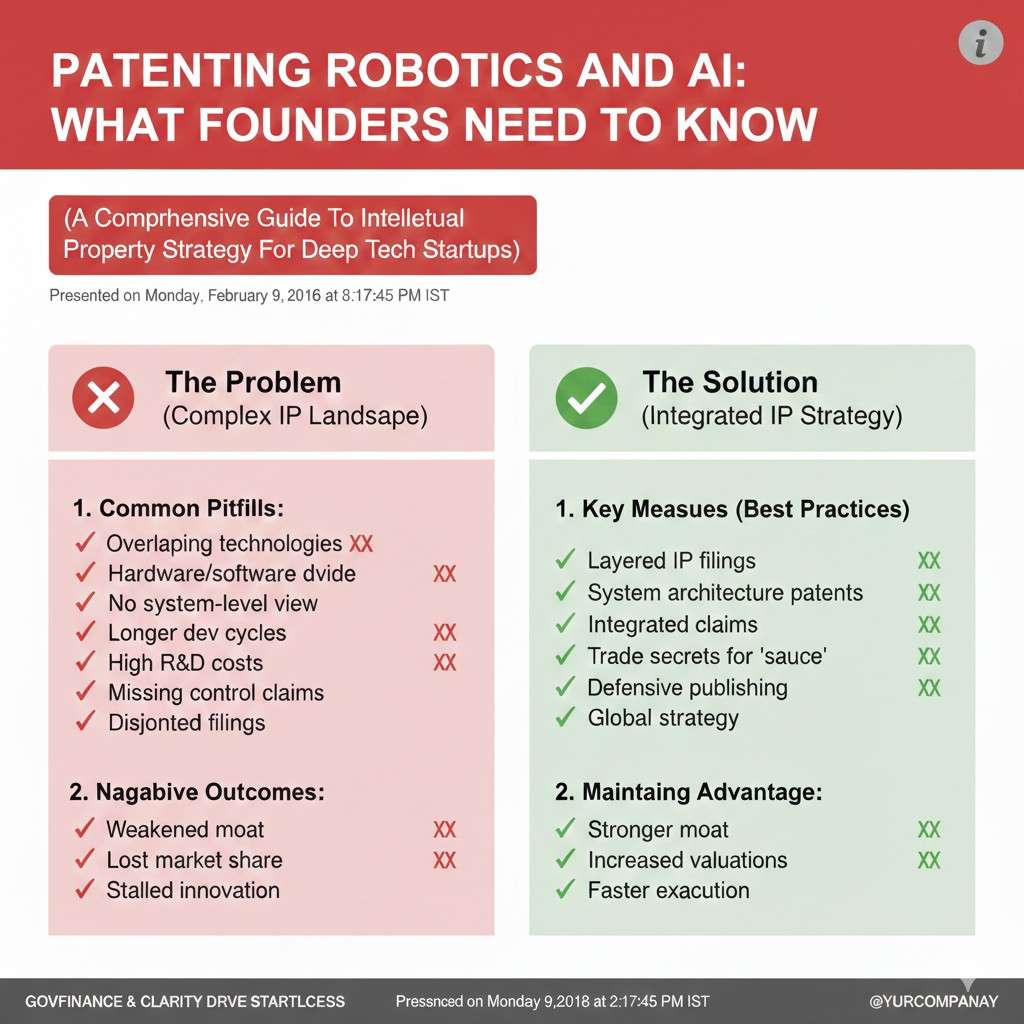
Patenting Robotics and AI: What Founders Need to Know
Why patents matter more in robotics and AI than most founders think
Robotics and AI move in public. You show a demo, you post a clip, you talk to pilots, and suddenly your “secret” becomes easy to guess. Even if your exact code is not shared, the behavior of the system tells a story. People can watch how your robot grasps, how it navigates, how your model reacts, and they can rebuild something close enough to compete.
A patent is not only a legal tool. It is also a business tool. It tells investors you have a plan to protect what you are making. It tells partners you have something you can license. It tells bigger companies that copying you may be costly.
Most founders wait too long because they think patents are only for big companies. That is a costly mistake in deep tech. Early is when your most valuable ideas are still clean, still clear, and still tied to the people in the room.
If you want help turning your core tech into a real asset, you can apply anytime at https://www.tran.vc/apply-now-form/
What a patent actually protects, in plain words
A patent does not protect an “idea” like “robots that pick items” or “AI that spots defects.” It protects a specific way of doing something. Think of it as a guarded path, not the whole forest. You claim the steps, the structure, and the key pieces that make your solution work.
This is why the details matter. The data flow matters. The sensor setup matters. The control loop matters. The training method matters. The way the robot corrects itself matters. The way the model handles edge cases matters.
If you can explain what your system does in a way that another engineer could build it, you are closer to patent-ready than you think. The goal is to capture what is unique about your approach, not just what the product looks like from the outside.
If you are unsure what part is “special,” that is normal. A good IP partner helps you find the parts that are both new and worth defending, before you spend time and money in the wrong places.
The biggest myth: “We’ll patent once we have product-market fit”
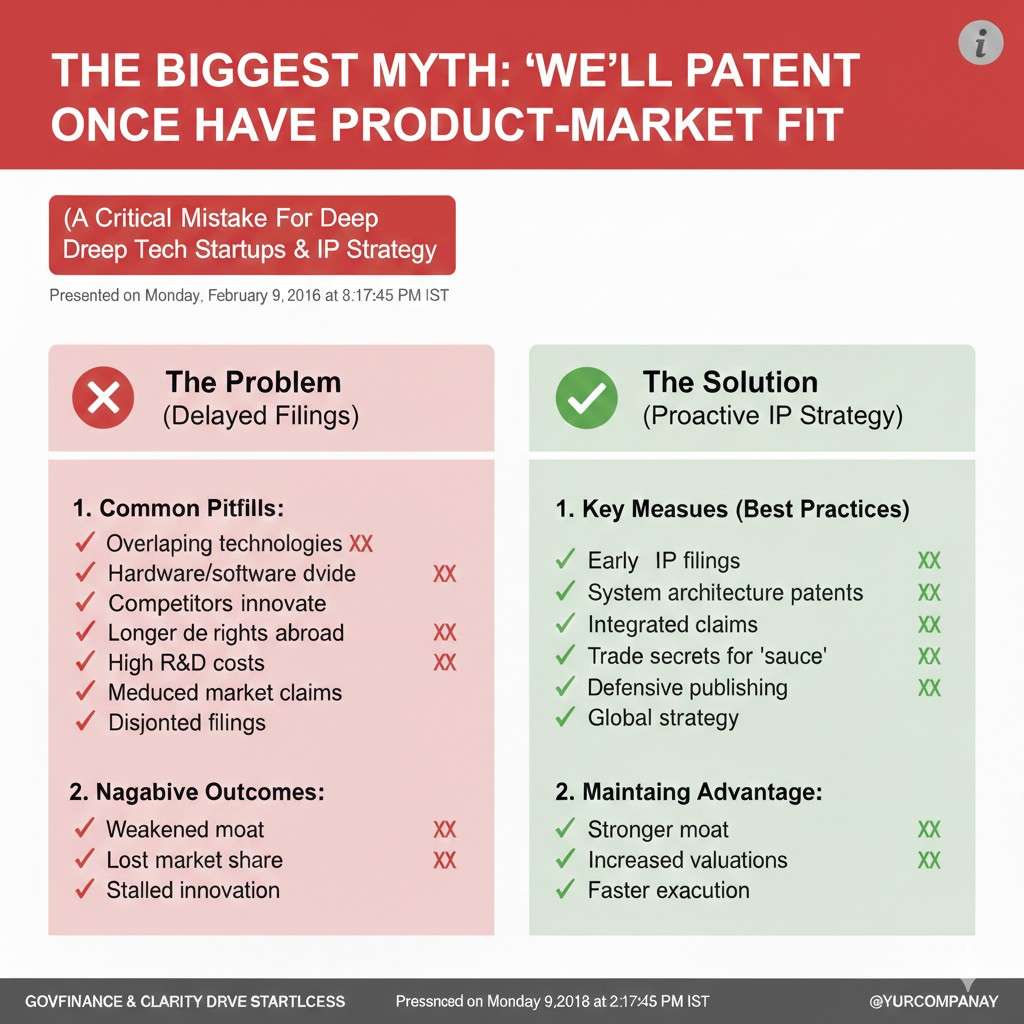
This myth shows up in almost every early pitch. It sounds logical, but it ignores how patents work. Patent rights often go to the first person to file, not the first person to build. That means delay can cost you the chance to protect the core.
Also, once you have product-market fit, you are visible. That is when others pay attention. If you wait until then, you may have already shared too much in demos, sales decks, partner talks, hiring, and online content. Even private sharing can become messy if you do not handle it well.
The better approach is to patent the core building blocks early, then keep adding filings as you learn. You do not need one perfect patent that covers everything. You need a smart set of filings that match how your product will grow.
This is exactly where Tran.vc helps. The goal is not “paperwork.” The goal is leverage. If you want that kind of support, apply anytime at https://www.tran.vc/apply-now-form/
Robotics patents: what counts as “new” when hardware and software blend together
Where robotics patents usually have the most value
Robotics is rarely one single trick. It is a stack. There is sensing, mapping, planning, control, safety, mechanical design, and the system that ties it all together. In many robotics startups, the real edge is the way these pieces work as one.
That is good news for patents. Because if your system has a unique loop—sense, decide, act, verify—and the loop does something in a new way, there is often something to protect. The trick is to not describe the robot like a brochure. You must describe how it works like an engineer.
Many founders think the mechanical part is the only patent-worthy part. Sometimes that is true, but often the stronger claims come from the method. For example, the way your robot detects slip and adjusts grip in real time may be more defensible than the shape of the gripper itself.
A strong robotics patent plan often mixes method claims and system claims. That means you claim the steps and you also claim the machine that performs those steps. This helps because competitors can change one part and still get caught by the other.
The difference between “a feature” and “an invention” in robotics
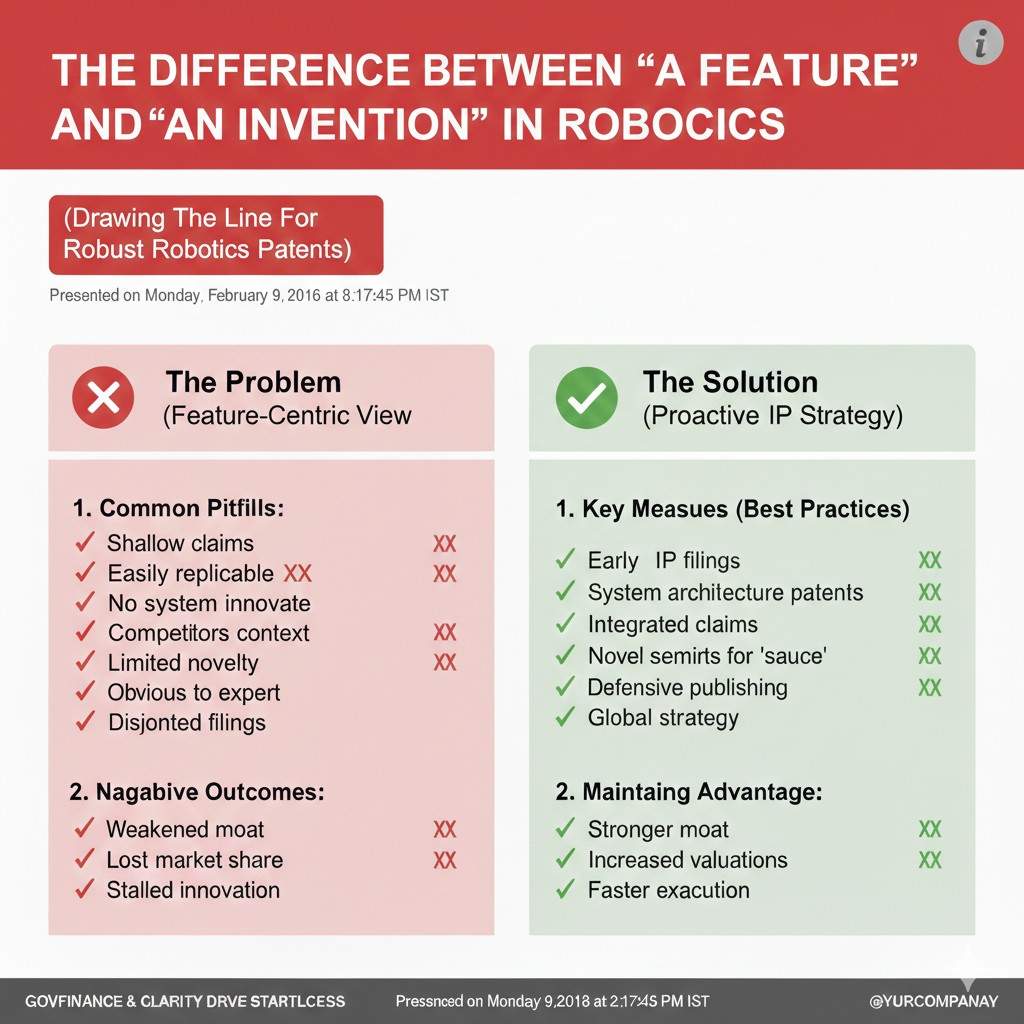
A feature is what the user sees. The robot picks faster. The robot drives smoother. The robot has fewer errors. That is nice, but it is not the invention by itself.
The invention is the mechanism that makes the feature true. It may be a new way to fuse camera and depth data. It may be a new way to handle sensor dropouts. It may be a new safety rule that prevents unsafe motion while keeping speed high.
If you can explain, in detail, the “why” behind the improvement, you are likely looking at patent material. This is why founder teams should keep a simple invention log. Not a huge system, just a habit. Every time you solve a hard problem, capture what you tried, what failed, and what finally worked.
That record helps your patent team write stronger filings. It also helps you later, when investors ask what makes you different and you want a clear, confident answer that is not vague.
Robotics often needs patents that cover the full system, not one part
A common mistake is filing a patent on one small component while the real advantage is the system design. In robotics, the “moat” is often the chain of choices. Sensor choice plus placement plus calibration plus a planning trick plus control tuning plus a safety layer.
If you only patent one link, a competitor can swap that link and still ship a similar robot. But if you patent the system method—how the pieces work in order—you make it harder to copy the behavior that customers care about.
This does not mean your patent must be broad in a weak way. Broad does not mean vague. Broad means it covers the core pattern, while still being specific enough to be real. That balance is what good patent writing does.
If you are not sure what the system “pattern” is in your robot, you are not behind. It often takes one or two focused sessions with a patent partner who understands robotics. If you want that kind of support without burning cash, apply anytime at https://www.tran.vc/apply-now-form/
AI patents: what is protectable when models and data change all the time
The key truth about AI patents: you usually patent the method, not the model name
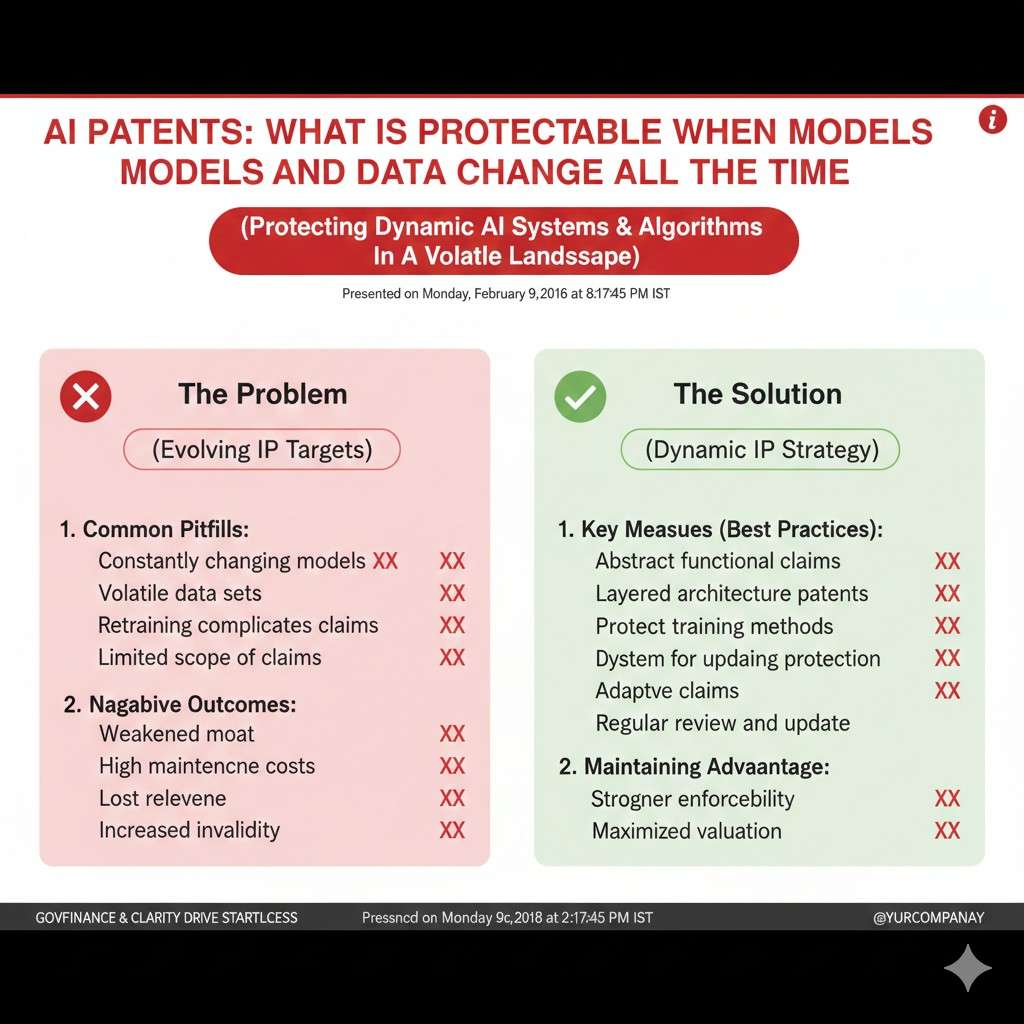
Many founders try to patent a model like it is a product. But AI changes fast. Architectures change. Hyperparameters change. New training tricks show up every month. If your patent is tied to one exact model, it may age poorly.
The stronger approach is to patent the method that makes your results possible. For example, a unique way to generate labels, a unique way to train with limited data, a unique way to reduce drift in the field, or a unique way to combine rules with learning.
In applied AI, the “invention” is often in the pipeline. How data enters, how it is cleaned, how it is transformed, how training is guided, how the system checks itself, and how it reacts when confidence is low. Those steps can be more stable than any single model type.
When your patent captures the method, you can swap models later and still keep protection. That is what you want as a startup: freedom to improve without losing your legal edge.
Why “it’s just software” is not the end of the story
Founders sometimes hear that software patents are hard, and they stop there. It is true that there are rules and limits, and many “pure abstract” ideas are not patentable. But applied AI is often not abstract.
If your AI is tied to a real-world problem, using real data, with a clear technical improvement, you may have a strong case. Examples include improved speed, lower memory use, better accuracy under constraints, safer decisions, or better performance on specific edge cases.
What matters is how you describe it. If you describe it like a business goal—“improve decision making”—it sounds abstract. If you describe the technical steps that lead to measurable improvement, it becomes concrete.
This is why a good patent partner matters. They help you frame your work in a way that matches what patent examiners look for, without twisting the truth or overselling.
AI inventions often hide in boring parts founders skip talking about
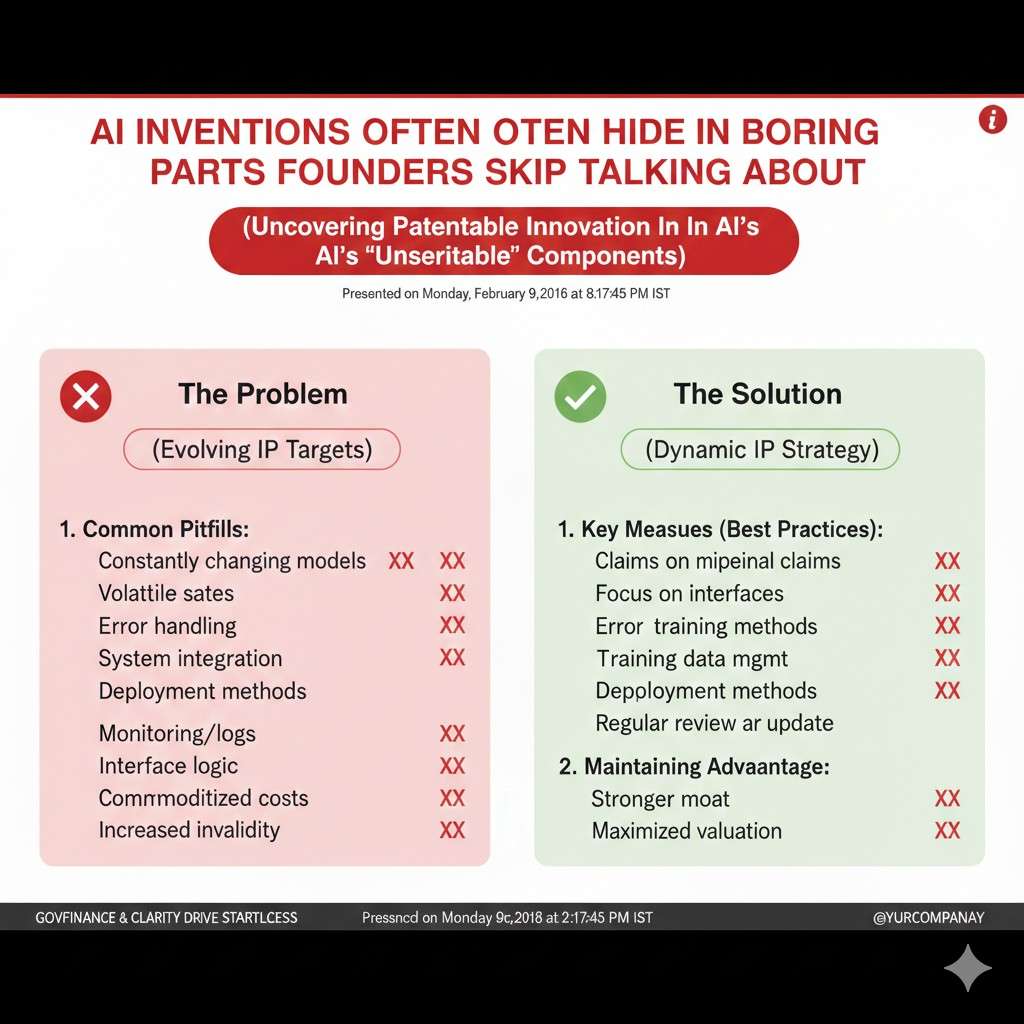
The flashiest part is the demo. The boring part is the glue. But the glue is often where the real invention is. How do you keep a model stable in the field? How do you handle bad sensor readings? How do you detect drift? How do you know when to fall back to a safe mode?
Many teams have real inventions here and do not realize it. They treat it like “engineering work,” not IP. But for investors and acquirers, these are exactly the things that show depth. They prove you solved the hard parts that others will struggle with.
If you are building robotics plus AI, these glue layers become even more valuable. They connect uncertain perception to safe action. That bridge is where many competitors fail, and where your patents can become a real wall.
If you want help finding these hidden inventions and turning them into filings, you can apply anytime at https://www.tran.vc/apply-now-form/
The filing timeline founders should understand before they share anything
The moment you should start thinking about patents
You should start thinking about patents when two things are true. First, you have a specific approach that works, even in a rough form. Second, you are about to start showing it outside the team, even in small ways.
This does not mean you must file a full patent the day you write your first line of code. But it does mean you should not wait until after you publish, pitch widely, or do big demos.
A simple way to think about it is this: when your work moves from “concept” to “working method,” you are in the zone where filing makes sense. Especially if the method is hard to guess from the outside and gives you a real advantage.
Also, if you are hiring, you will talk to many people. If you are raising, you will share with many investors. If you are selling, you will share with many partners. The more you share, the more you need a plan, even if you trust people.
Provisional filings: what they are and how founders misuse them
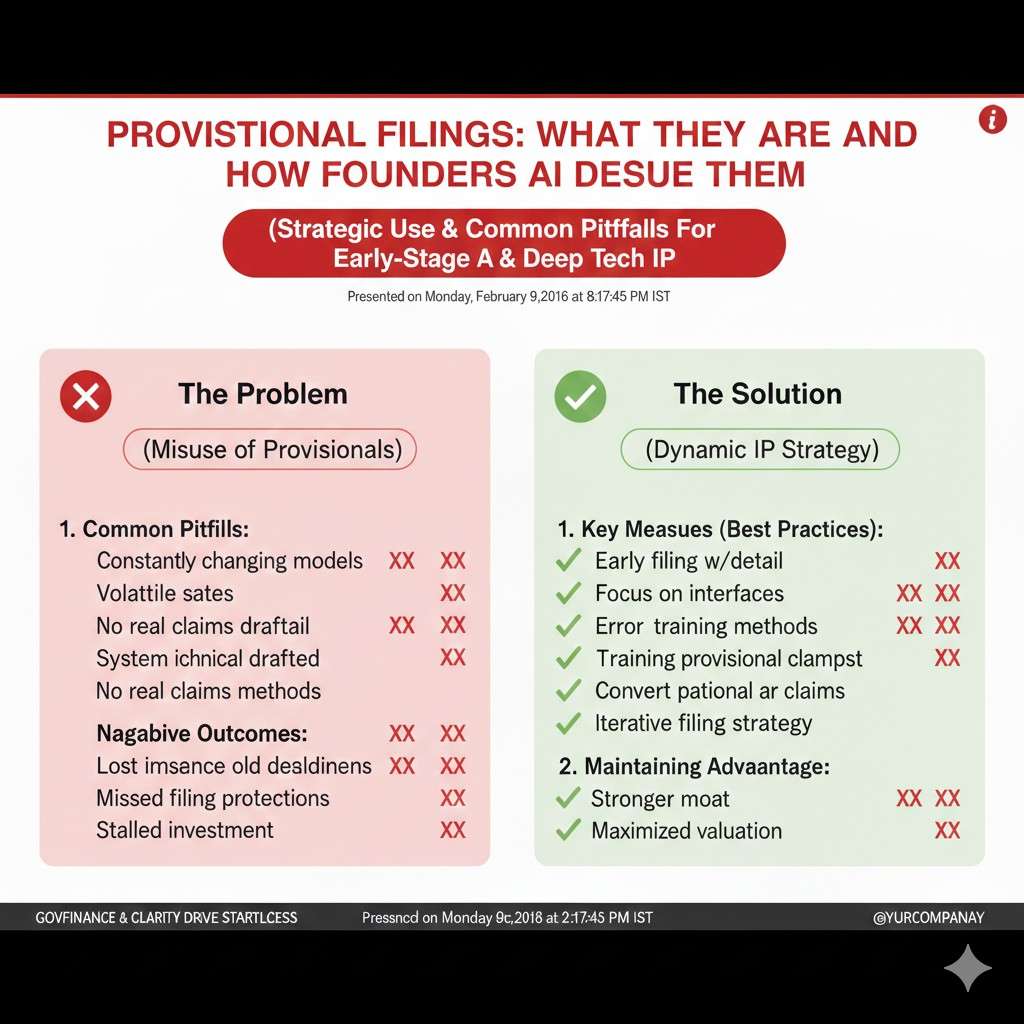
A provisional filing can be a useful first step. It can give you an early filing date while you keep building. But it only helps if it is written well. A sloppy provisional that lacks detail is like a weak lock on a strong door.
Founders sometimes treat a provisional like a short memo. That is risky. If you later file the full version but the provisional did not describe the invention clearly, you may not get the benefit of that early date.
A good provisional is detailed. It explains the system, the steps, the variations, and the key parts that make it work. It should read like a strong technical document, not like a slide deck.
This is one reason Tran.vc focuses on real patent attorney support and strong strategy. If you want to file early, you want to file in a way that actually holds up. Apply anytime at https://www.tran.vc/apply-now-form/
How public talks, demos, and GitHub can ruin your options
Founders love building in public, and that can be great for hiring and momentum. But it can also create a patent problem if you share too much before filing. Blog posts, conference talks, open demos, and code repos can become prior art against your own filings.
Even private sharing can create risk if it spreads. A deck forwarded to the wrong person can become a leak. A contractor can reuse a method. A pilot customer can share your approach with a friend at another company.
You do not need to become secretive and paranoid. You just need a simple rule: file the core first, then share. Once you have the filing date, you can market more freely and still keep your options.
Turning your work into patent-ready material without slowing the team down
Start with the “hard problem” you solved, not the product story
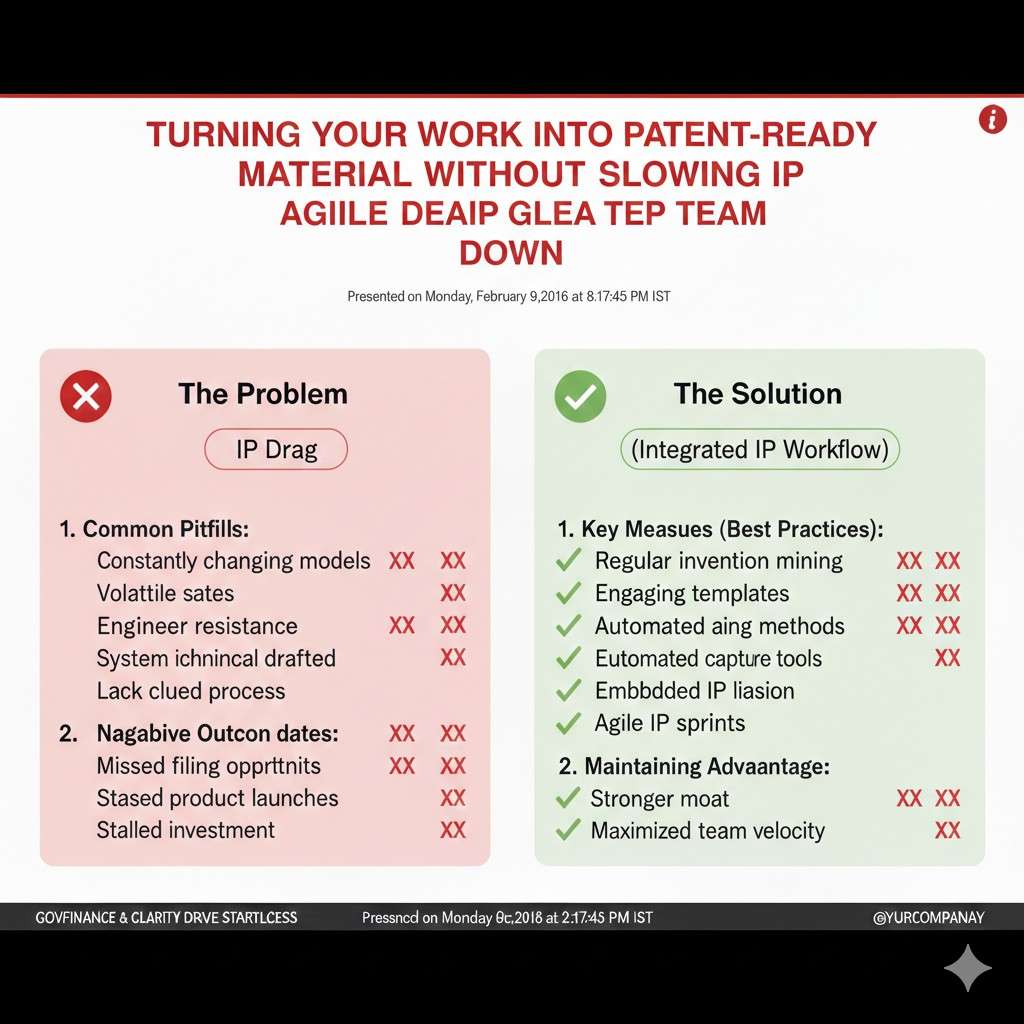
When founders talk about their company, they often start with the market and the use case. That is fine for sales and fundraising. But it is not how you find patent value.
For patents, start with the hardest technical problem you faced and how you solved it. Think about the moment your system stopped failing. The moment the robot stopped drifting. The moment the model stopped breaking in edge cases. The moment you found a way to make performance stable with less data or less compute.
Those moments are usually not “one change.” They are a chain of small choices that create a new method. That method is what you want to capture.
A good habit is to ask, “What did we try that did not work?” and “What finally made it work?” The gap between those two answers is often where the invention lives.
If you want help turning those answers into filings without pulling founders into weeks of back and forth, you can apply anytime at https://www.tran.vc/apply-now-form/
Describe the system like you are teaching a new engineer on day one
A patent has to explain your invention clearly. Not like a pitch, and not like a research paper that skips steps. More like a calm, careful walkthrough.
For robotics, that usually means you describe the robot body, the sensors, the compute, and the action parts. Then you describe the loop: what gets sensed, what gets computed, what action is chosen, and how the result is checked. You also explain what happens when things go wrong, because real robots always face messy situations.
For AI, it often means you describe the data input, the processing steps, the training or update method, and the output decision. Then you explain how the system improves performance in a measurable way. “Measurable” can be speed, accuracy, lower errors, better stability, safer operation, or lower cost to run.
You do not need perfect writing. You need clear detail. If your patent partner is skilled, they can take your rough notes and turn them into strong language. Your job is to provide the truth of how it works.
Keep an invention log that fits into real startup life
Most teams do not log inventions because they think it is extra work. They imagine a heavy process with forms and reviews. It does not need to be that.
You can keep one shared doc or tracker with short entries. Each entry should capture what the problem was, what approach was tried, what failed, and what finally worked. Include simple sketches or links to internal docs. If you can add a quick diagram of the data flow or control loop, that is even better.
The key is to do it while the knowledge is fresh. Six months later, your team will forget the details. And details are what make patents strong.
This also helps with team growth. New hires can learn why certain decisions were made. It keeps your technical story consistent, which matters when you file more patents later.
Use diagrams early because they force clarity
A patent is built on clear structure. Diagrams help you see that structure fast. They also help you spot what is actually unique.
For robotics, a block diagram of sensors, compute, controllers, and actuators often reveals the invention. You might notice a special feedback path, or a safety check that is not standard, or a clever way you handle uncertainty.
For AI, a diagram of the pipeline often shows where your secret sauce sits. You may see a special feature extraction step, a unique training loop, a novel way to combine two signals, or a fallback rule that keeps behavior safe.
You do not need to draw like an artist. Simple boxes and arrows are enough. The goal is to capture the system in a way that can be explained and claimed.
What makes a robotics or AI patent “strong” in the real world
Strength is about coverage of the core, not fancy language
Founders sometimes think a strong patent is one with complex words. That is not what makes it strong.
Strength comes from claiming the core method in a way that is hard to design around. It also comes from having enough detail to support those claims, so the patent holds up if challenged.
A strong filing usually includes variations. Not random variations, but the real options you might use as your product evolves. If you only claim one narrow setup, competitors can change one part and escape. If you claim the pattern and include realistic options, your protection becomes harder to avoid.
This is why patent strategy is not a one-time task. It is a plan that grows with the product and keeps the claims aligned with what you will ship.