
Smart spending is not about being cheap. It is about buying time, speed, and proof—without wasting months on the wrong things.
In the first year of a startup, every dollar has a job. It must help you learn faster, build something real, or protect what makes you different. If it does not do one of those things, it is noise.
The hard part is that early-stage founders are surrounded by “good ideas” to spend on. A nicer brand. A bigger team. A new tool. A perfect website. More ads. A fancy office. A dozen contractors. It all sounds reasonable. And some of it might even feel urgent.
But most early-stage startups do not die because they lacked effort. They die because they ran out of runway before they earned the right to scale.
So when we talk about smart spending, we are talking about choices that keep you alive long enough to win. Choices that turn uncertainty into clarity. Choices that make your next raise easier—or make raising less urgent.
At Tran.vc, we work with technical founders in AI, robotics, and deep tech who are building hard things. The truth is: your best “spend” early on is rarely the flashy stuff. It is the work that creates leverage. That means protecting the invention you are building, making your value clear, and turning your technical edge into an asset that investors and customers can trust.
That is exactly why Tran.vc invests up to $50,000 in-kind as patent and IP services. Not as paperwork. As a way to help you build a real moat early—while you are still small, fast, and able to make sharp decisions.
If you want to explore that path, you can apply anytime here: https://www.tran.vc/apply-now-form/
Smart Spending in Early-Stage Startups
The real goal of smart spending
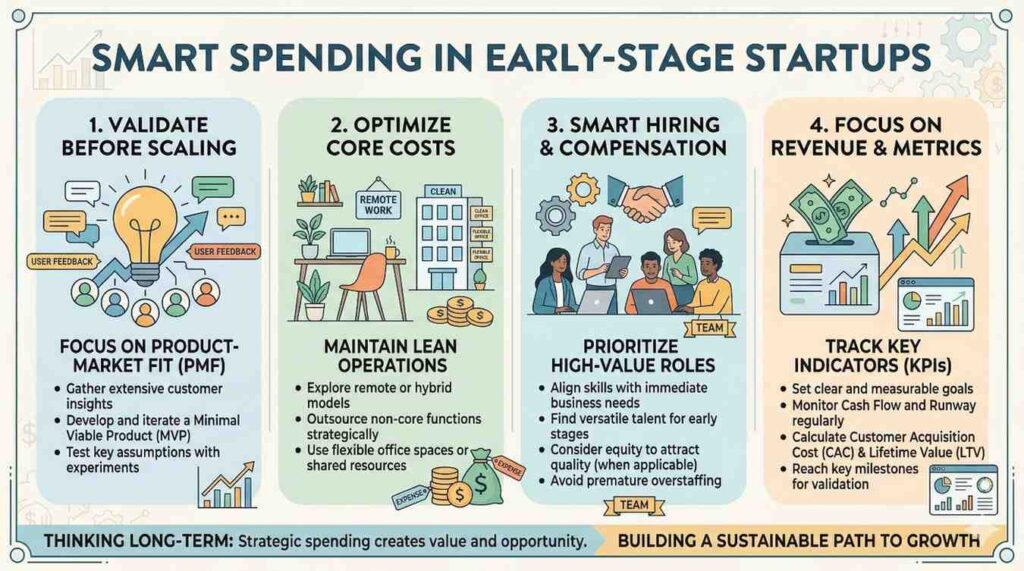
Smart spending is not about saving money for the sake of saving money. It is about using money to reduce risk. Every time you spend, you should be able to say what risk you are removing, what you are learning, or what future cost you are avoiding.
In the early days, your biggest enemy is not competition. It is wasted time. Time disappears when you chase the wrong feature, hire too early, or build a “perfect” version before anyone cares. Smart spending protects your time by forcing focus.
This is why founders who spend well often look calm from the outside. They are not calm because things are easy. They are calm because they can explain every cost with a reason that ties back to survival and progress.
Why founders overspend, even when they know better
Most overspending starts with pressure. A founder feels they must look “real,” so they pay for things that signal success. A new logo, a polished pitch deck, a brand video, or a big booth at a conference can feel like progress.
The problem is that these things can hide the real truth. If the product does not solve a painful problem, polish will not fix it. If the team cannot explain what is different, a nicer website will not create demand.
Overspending also happens when founders confuse activity with traction. A calendar full of meetings can feel like momentum. A long list of tools can feel like seriousness. But early-stage success is usually boring. It is learning the same customer pain again and again until the message becomes simple.
The simple test before any spend
Before you spend, ask one question: “What will be true after this spend that is not true today?” If you cannot answer that clearly, you are likely spending for comfort, not progress.
A smart spend creates a change you can measure. Maybe it gives you a prototype that a customer can touch. Maybe it buys you a week of engineering time back. Maybe it gives you a clearer claim you can protect.
A weak spend creates feelings. It feels like moving forward, but it does not change what you can prove. In early-stage startups, proof is the only thing that buys you time and trust.
The three things money must do early
Buy learning, not likes
In the first year, your job is to learn fast. That learning should come from real people with real problems. It should be tied to your product and your pricing, not your ego.
Spending to “get attention” is often a trap because attention is not the same as intent. A thousand visitors who do not buy are not traction. Ten people who pay or commit time are traction.
Smart spending aims at learning that changes your decisions. If a spend does not help you decide what to build next, who to sell to, or how to price, it is probably not a priority.
Buy speed, not headcount
Hiring can be smart, but early hiring is one of the fastest ways to lose control of your runway. A full-time salary is not just pay. It is management time, onboarding time, and the slow weight of coordination.
The early stage is when founders should do the hard work themselves because the work defines the company. If you outsource the core too early, you end up with a product that feels stitched together and a team that cannot explain why it exists.
A better way is to spend on tools, small fixed projects, or short-term support that removes pain without creating a long-term burden. Speed is about fewer handoffs, not more people.
Buy protection for what makes you different
For AI, robotics, and deep tech, your advantage is often in your method, your system, your data approach, your design choices, and the unique way your product works in the real world.
If you do not protect that advantage, you are building on sand. Competitors can copy. Partners can walk. Investors can worry that you have no moat.
This is why IP is not a “later” topic. Early is when your decisions are still clean, your story is still clear, and your inventions are fresh. It is also when you can shape your roadmap to create defensible claims.
Tran.vc was built around this idea. We invest up to $50,000 in-kind in patent and IP services so founders can lock in leverage early and raise from a stronger position. If that sounds like what you need, you can apply anytime at: https://www.tran.vc/apply-now-form/
The spending traps that quietly kill runway
The “perfect product” trap
Founders often think the way to reduce risk is to build more. They add features, edge cases, integrations, and dashboards. They chase completeness, not clarity.
But early-stage customers do not need perfect. They need relief. They need one painful problem solved in a way that fits their life. The “perfect product” often becomes a heavy product that is harder to sell and harder to change.
Smart spending supports a smaller build that can be tested in weeks, not quarters. If you cannot test the value quickly, you are paying for guesses.
The “brand before proof” trap
Brand matters, but timing matters more. A strong brand is not mainly colors and fonts. It is a clear promise, a clear audience, and a clear reason to believe.
When founders spend too early on branding, they often end up redoing it. The message changes as they learn. The market shifts. The product tightens. The company name that sounded clever becomes confusing.
A better approach is to keep the brand simple until the product story becomes simple. Spend on clarity first. Let design follow reality, not the other way around.
The “tools will save us” trap
Tools can help, but tools also create distractions. Many startups end up paying for software they do not use, or they spend weeks setting up systems that do not matter yet.
A tool should earn its place. It should either save time every week, reduce a real risk, or create a cleaner workflow that helps you ship faster.
If a tool is mostly there to make you feel organized, it is too early. Early-stage startups do not need a perfect system. They need a working habit.
The “events and conferences” trap
Conferences can be useful, but they are also expensive in money and time. Many founders go hoping for customers, partners, or investors, and come back with business cards and vague promises.
If you go, go with a clear goal that you can measure. Who will you meet? What will you ask? What outcome would make the spend worth it?
If you cannot name a specific result you are targeting, you are likely buying hope. Hope is not a strategy. It is a cost.
The smart spending map for months 0 to 6
Start with a narrow problem and a narrow buyer
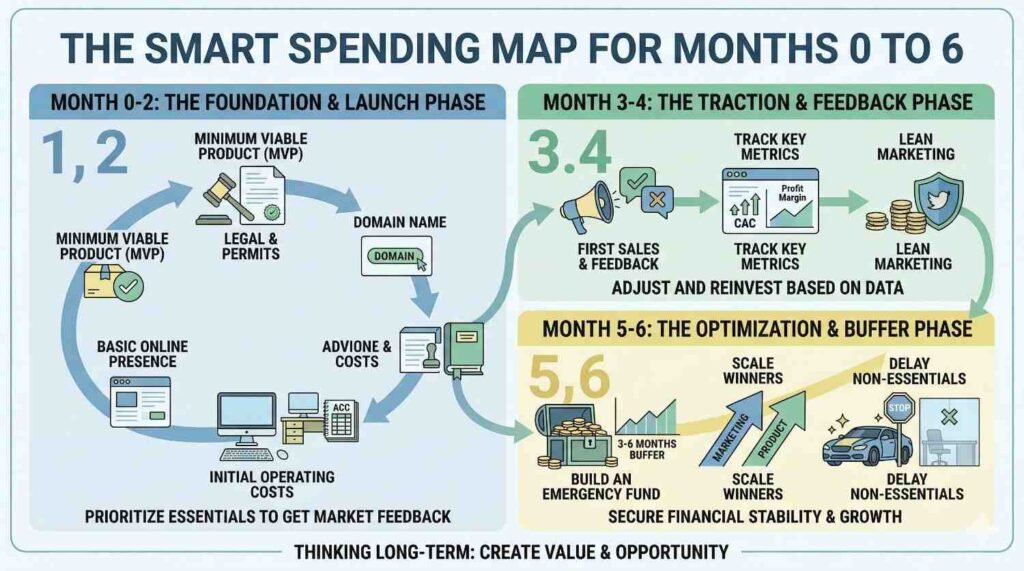
The cheapest way to build is to build less. And the best way to build less is to be precise about who you are helping and what pain you are solving.
When your buyer is vague, your product becomes vague. Then your spending becomes scattered because everything feels important.
A narrow buyer forces discipline. It helps you write a simple message. It helps you design a simple demo. It helps you ask better questions. That discipline is the foundation of smart spending.
Spend on customer access like it is oxygen
Many technical founders will spend on compute, tools, and contractors before they spend on customer access. That is backward.
Customer access can mean travel to visit users, small paid pilots, a trusted advisor who opens doors, or a structured outreach effort that is consistent for weeks.
This is not “marketing.” This is validation. Without it, you risk building a beautiful system that solves a problem nobody will pay for.
Spend on a testable prototype, not a full build
A testable prototype is something that a real user can react to. It can be rough. It can be manual behind the scenes. It can be a limited demo with clear boundaries.
What matters is that it produces honest feedback. Not compliments. Not “this is cool.” You want reactions like, “If you can do this for me, I will pay,” or “If this works, it changes my workflow.”
Smart spending puts money into getting to that point faster. It avoids spending on scale before you have a reason to scale.
Spend on IP planning while your tech is still forming
Early-stage founders often think patents are for later, after they “make it.” But for deep tech, your moat is part of your story from day one.
A strong IP plan can guide what you build next, what you publish, what you keep confidential, and how you talk about your invention in meetings. It can also help you avoid mistakes that are painful to fix later.
Tran.vc supports founders here with up to $50,000 in-kind in patent and IP services. The goal is simple: help you build defensible value early so your company becomes harder to copy and easier to fund. If you want to see if you fit, apply here: https://www.tran.vc/apply-now-form/
Smart Spending from Months Six to Twelve
How spending changes after early proof
Once you have early proof, spending decisions start to feel heavier. The stakes are higher because your burn rate is higher and your runway is clearer. This is the stage where many startups fail, not because they did nothing, but because they did too much too fast.
At this point, smart spending shifts from pure learning to controlled expansion. You are no longer asking if the problem exists. You are asking if your solution can repeat. That change requires discipline, because repetition is less exciting than discovery.
The danger here is believing that early interest means scale is ready. Interest is fragile. It disappears quickly if the product breaks, the team is stretched thin, or the promise is not consistent. Spending must protect the quality of what already works.
Spending to deepen value, not widen scope
In months six to twelve, many founders feel pressure to serve more customers, more use cases, or more industries. The logic seems sound. More markets mean more chances to win.
But widening too early creates noise. The product starts to bend in many directions. Sales conversations lose focus. The team debates priorities instead of shipping.
Smart spending goes deeper, not wider. It improves the one use case that already shows pull. It makes the product more reliable, easier to explain, and easier to adopt for that specific buyer. Depth creates confidence. Confidence creates referrals, renewals, and stronger proof for investors.
When hiring starts to make sense
Hiring feels like progress. It feels like you are building a real company. But hiring before the work is clear often leads to confusion and waste.
The right time to hire is when a task repeats and clearly slows the founders down. If the work is still changing every week, it is too early. You cannot delegate something you cannot explain.
Smart spending on hiring means starting small and specific. One role that removes a daily bottleneck is better than three roles that add coordination. Early hires should reduce complexity, not add layers.
Contractors versus full-time team members
In this stage, contractors can be useful if used carefully. They are best for defined work with clear outcomes and timelines. They are not a substitute for ownership.
If a contractor is shaping your core product logic, customer experience, or technical direction, you are likely outsourcing your future. That is a risk, not a savings.
Smart spending uses contractors to support the core team, not replace it. The founders should still own the heart of the product and the story behind it.
Product spending versus sales spending
Why sales spending too early often fails
Many founders think the next step after a working product is to “add sales.” They hire salespeople, buy CRM tools, and start outreach at scale.
But if the message is not tight and the product is not repeatable, sales will not fix it. It will only amplify confusion. You will spend money to learn lessons you could have learned for less.
Sales works when the path is clear. The buyer understands the value quickly. The objections are known. The onboarding is smooth. Until then, founders should stay close to every conversation.
Where product spending still matters most
In months six to twelve, product spending should focus on reliability, usability, and clarity. Small improvements that remove friction often matter more than new features.
This is also the stage where technical debt starts to show. Ignoring it can slow you down later, but over-fixing it too early can waste time.
Smart spending finds the balance. You fix what blocks growth and leave what does not. The goal is not elegance. The goal is momentum without cracks.
Sales as learning, not scaling
If you do spend on sales in this phase, treat it as learning. Test messages. Test pricing. Test who responds and who does not.
A small, founder-led sales effort supported by one strong operator is often enough. This keeps feedback tight and costs controlled.
Spending here should make your story simpler, not louder. If sales conversations are getting harder, that is a signal to adjust the product or the focus, not to spend more.
Legal, security, and compliance without waste
Why ignoring these areas is risky

Many early-stage founders avoid legal, security, and compliance because they seem expensive and slow. Others overspend out of fear.
Both extremes are dangerous. Ignoring these areas can kill deals, especially in enterprise, robotics, and regulated spaces. Overspending can drain runway with little return.
Smart spending is about timing and scope. You address what is required now, not what might be required in three years.
Spending only on what unblocks growth
The right question is not “Are we fully compliant?” It is “What is blocking the next deal or partnership?”
If a customer requires a basic security review, spend on that. If an investor needs clean cap tables, spend on that. If a pilot requires a simple contract, spend on that.
Avoid gold-plating. Early-stage startups do not need enterprise-level systems unless an enterprise is paying for them.
IP as part of legal spend, not an afterthought
In deep tech, IP should sit at the center of your legal thinking. It shapes how you talk about your product, how you partner, and how you raise money.
This is where many startups miss leverage. They spend on generic legal work but leave their core invention exposed.
Tran.vc was designed to fix this gap. By investing up to $50,000 in-kind in patent and IP services, we help founders make legal spend strategic, not reactive. If you want support here, apply anytime at: https://www.tran.vc/apply-now-form/
Preparing for the next raise without burning cash
Spending to tell a clean story
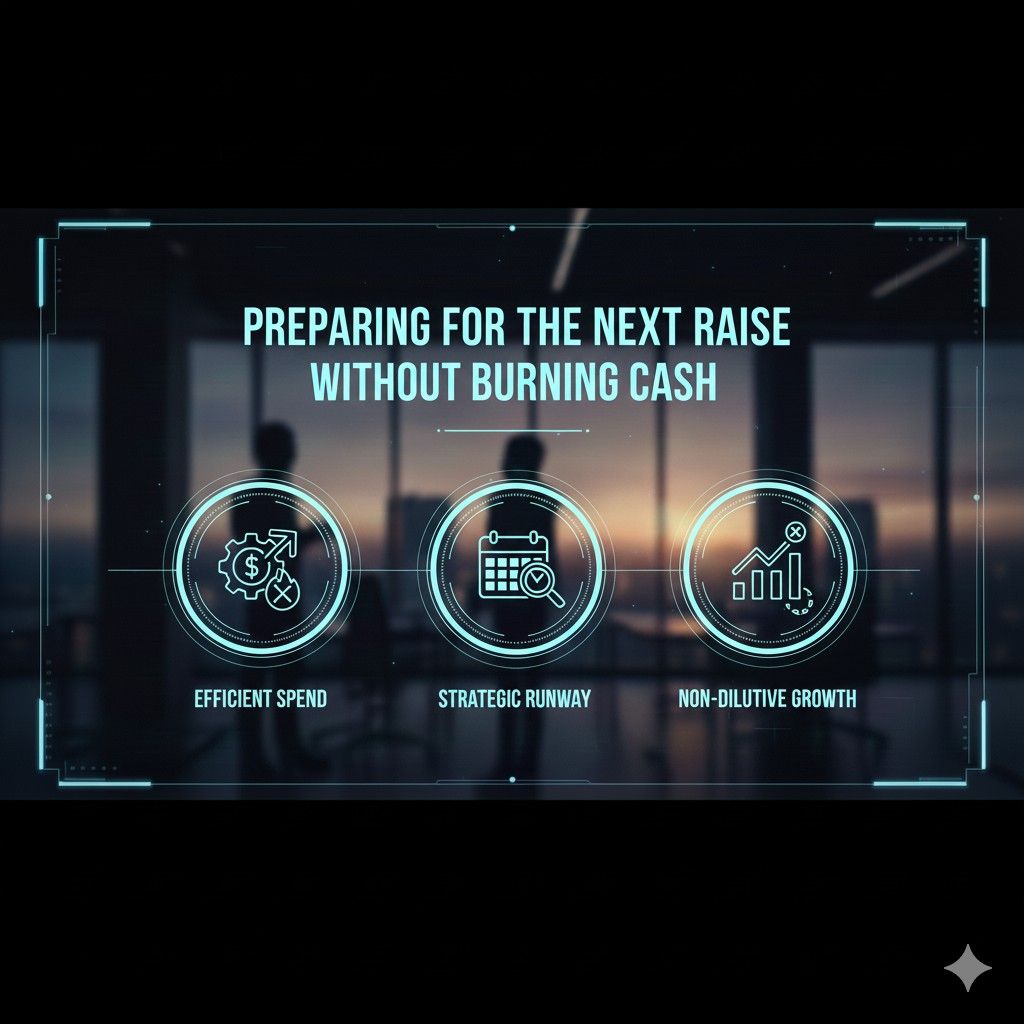
Investors do not fund chaos. They fund clarity. Your spending should support a story that is easy to follow and hard to dismiss.
This means clean metrics, a focused roadmap, and a clear explanation of why you win. Anything that muddies this story is a cost, even if it looks impressive.
Smart spending removes distractions. It makes the company easier to understand from the outside.
Proof beats polish every time
A tight demo, real usage, and protected technology matter more than a glossy deck. Many founders reverse this and pay the price later.
If you must choose, choose proof. Investors can forgive rough edges. They do not forgive weak fundamentals.
Spending that strengthens proof is almost always justified. Spending that only improves appearance should wait.
Raising from strength, not stress
The best fundraising conversations happen when you do not need the money tomorrow. That position comes from controlled spending.
When your burn is low and your progress is clear, you can say no. That changes the dynamic. You are no longer selling survival. You are offering upside.
Smart spending buys you that freedom.
The founder mindset that drives smart spending
Why money decisions are really identity decisions
Every spending decision sends a signal. Not just to investors or employees, but to you as a founder. It shows what you believe matters and what you are willing to delay.
Founders who spend well tend to see money as stored energy. They release it carefully, only when it moves the company forward in a clear way. Founders who spend poorly often use money to reduce discomfort, not risk.
This difference shows up early. One founder spends to avoid hard customer conversations. Another spends to get closer to them. One spends to look bigger. Another spends to learn faster. Over time, these choices compound.
Comfort is expensive, clarity is cheap
Many early expenses are driven by the desire to feel settled. A nice office, a large team, or a polished presence can reduce anxiety for a short time.
But comfort hides weak signals. It delays tough feedback. It makes it harder to see what is broken because everything looks fine on the surface.
Clarity often comes from uncomfortable places. From hearing “no” repeatedly. From fixing the same issue again and again. Spending that pushes you toward clarity, even if it feels hard, is usually the right spend.
Discipline is not about saying no to everything
Smart spending does not mean refusing to spend. It means saying yes with intention.
There will be moments when a bold spend is the right move. A critical hire. A key patent filing. A pilot that stretches your budget but unlocks a market.
The difference is that disciplined founders can explain their “yes” in plain words. They know what they are betting on and what failure would teach them.
Simple frameworks for better money decisions
The “what breaks if we don’t” test
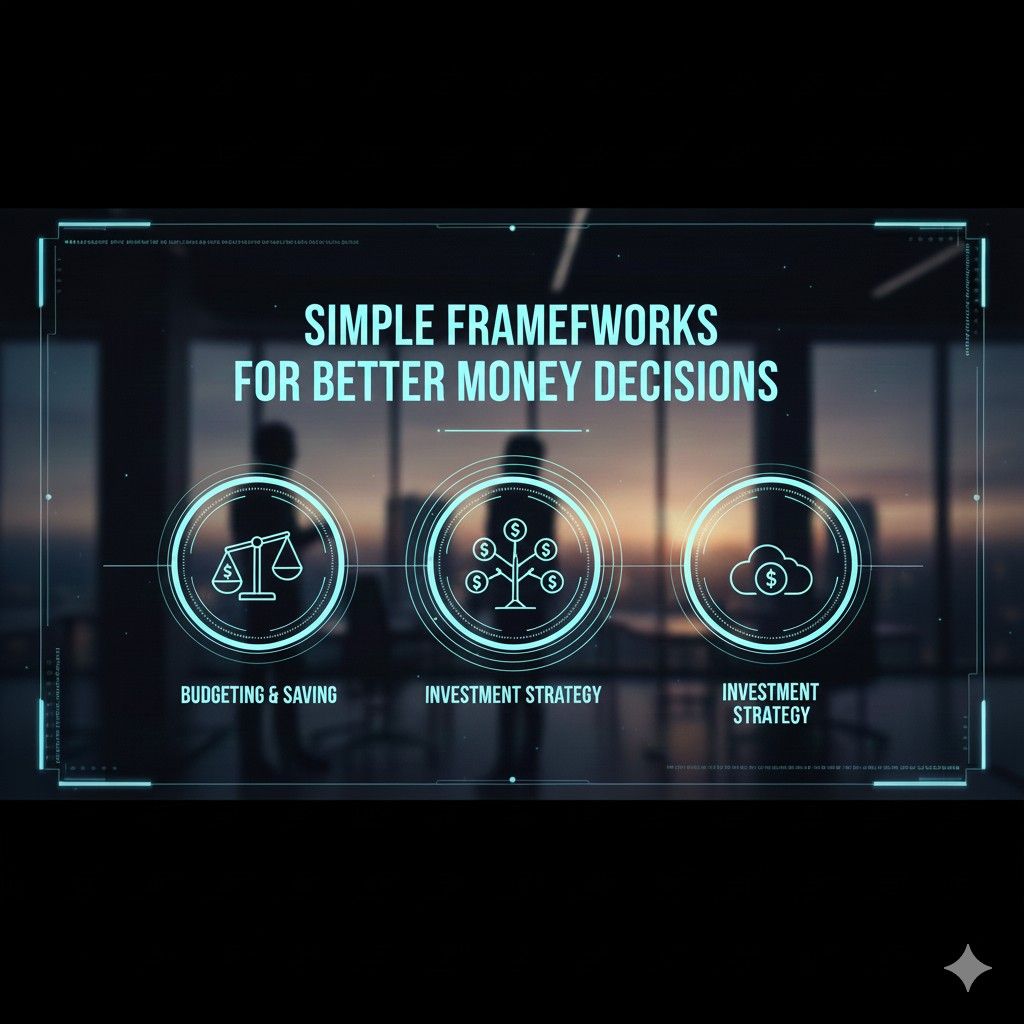
Before spending, ask what breaks if you do not spend. If the answer is vague or emotional, slow down.
If the answer is concrete, such as a delayed launch, a blocked deal, or a missed filing window, then the spend may be justified.
This test keeps spending tied to real consequences, not imagined ones.
The “reversible versus irreversible” lens
Some spending decisions are easy to undo. A tool subscription can be canceled. A short contract can end. These are safer bets.
Other decisions are hard to reverse. A full-time hire, a long lease, or a public disclosure of your technology can shape the company for years.
Smart founders are extra careful with irreversible spends. They gather more data and move more slowly where mistakes are costly.
The “will this matter in a year” question
Many early expenses feel urgent but fade quickly. Ask whether this spend will still matter in twelve months.
If the answer is no, consider delaying. If the answer is yes, especially if it compounds over time, it may be worth prioritizing.
IP is a good example. A strong patent filed early can shape your company’s value years later. That is compounding spend.
IP as a spending multiplier, not a cost
Why IP changes how every dollar works
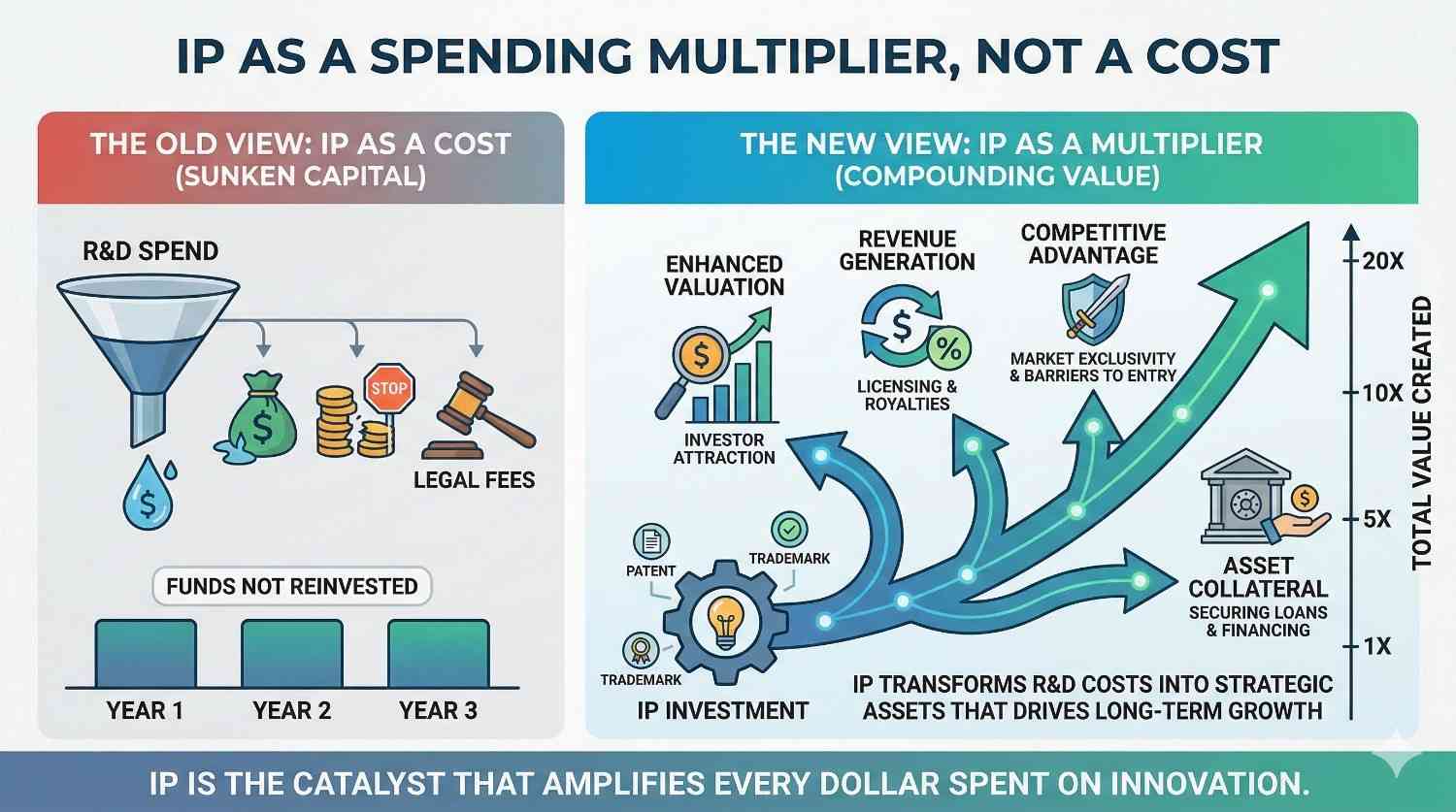
When your core technology is protected, other spending becomes more effective. Sales conversations become easier because your differentiation is clearer. Partnerships become safer because ownership is defined.
Without IP, you may hesitate to share details. You may overbuild to stay ahead. You may rely on speed alone, which is exhausting.
IP gives structure to your progress. It turns your invention into an asset that supports every other decision.
The cost of waiting too long
Many founders wait to think about IP until they raise money or face competition. By then, the cleanest opportunities may be gone.
Public demos, blog posts, talks, and even sales decks can limit what you can protect later. Rebuilding around those limits is expensive.
Smart spending addresses IP while the tech is still forming. This is when choices are flexible and filings can guide development, not chase it.
How Tran.vc approaches IP spending
Tran.vc does not treat IP as paperwork. We treat it as strategy. Our in-kind investment of up to $50,000 in patent and IP services is designed to help founders think clearly about what to protect and why.
We work with you to align your roadmap with defensible claims. The goal is not to file for everything. It is to file for what matters.
If you are building in AI, robotics, or deep tech and want to use IP as leverage, you can apply anytime at: https://www.tran.vc/apply-now-form/
Spending as a long-term advantage
How small decisions shape future power
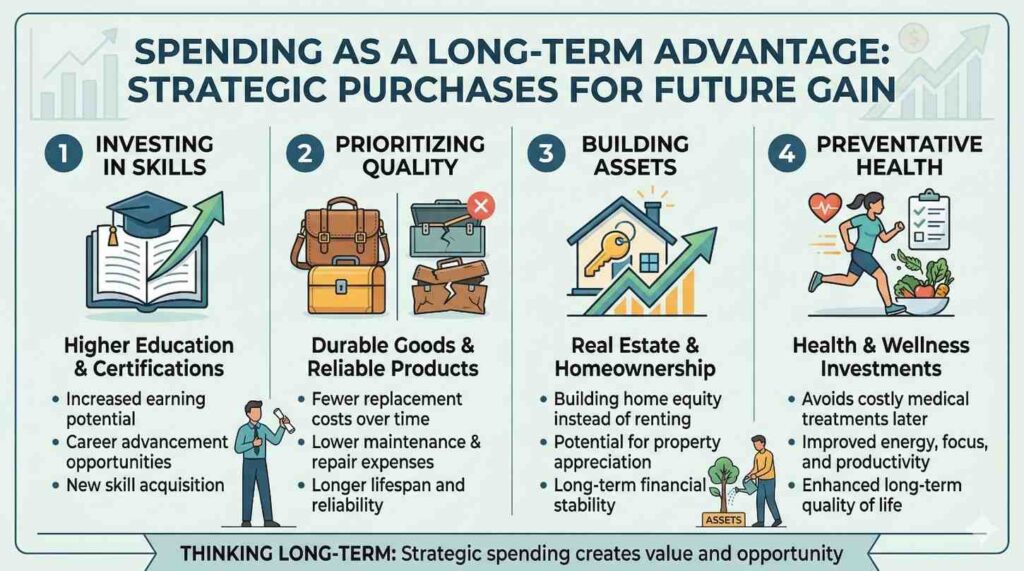
Early spending decisions shape your future options. A lean structure gives you time. Clear IP gives you confidence. Focused product work gives you momentum.
These advantages are quiet. They do not show up in headlines. But they change how negotiations feel, how setbacks land, and how opportunities appear.
Founders who spend smart early often look lucky later. In reality, they built that luck through restraint and intention.
The freedom that comes from control
When you control your burn, you control your story. You can walk away from bad terms. You can wait for the right partner. You can choose growth that fits your vision.
This freedom is rare and powerful. It comes from seeing spending not as a reward, but as a tool.
The goal is not to spend less forever. It is to spend well until the company earns the right to spend more.
Final thoughts for early-stage founders
Smart spending is not a checklist. It is a habit. A way of thinking that ties money to learning, protection, and progress.
If you build that habit early, it will guide you through every stage that follows. It will help you raise with confidence, scale with control, and build something that lasts.
Tran.vc exists to support founders who think this way. If you want to build an IP-backed company without rushing into premature fundraising, we would love to hear from you.
You can apply anytime at: https://www.tran.vc/apply-now-form/