
Deep tech and hardware startups burn money in a very different way than software startups.
In software, you can often “ship” your way out of a mistake. In hardware, mistakes come in boxes. They arrive late. They cost more than you thought. And once they show up, you can’t undo them with a quick patch.
That is why spending wisely is not just a finance topic in deep tech. It is a survival skill.
Most technical founders do not fail because their idea is weak. They fail because they spend in the wrong order. They pay for the “nice to have” things too early, and then they cannot afford the “must have” things right when they matter most. Or they try to save money in the places where saving is risky, and that single risk turns into a chain reaction: delays, rework, missed demos, lost partners, and a team that feels stuck.
This article is about spending in the right order. Not cheap spending. Smart spending.
It is also about keeping control. Tran.vc works with founders who want to build real moats, not hype. A strong moat is not only product. It is also defensible IP. If you are building robotics, AI, sensors, chips, advanced materials, or any system that took real brainpower to invent, you should protect the parts that make you different. You can apply anytime here: https://www.tran.vc/apply-now-form/
Spending Wisely in Deep Tech and Hardware Startups
The spending problem is not money, it is order
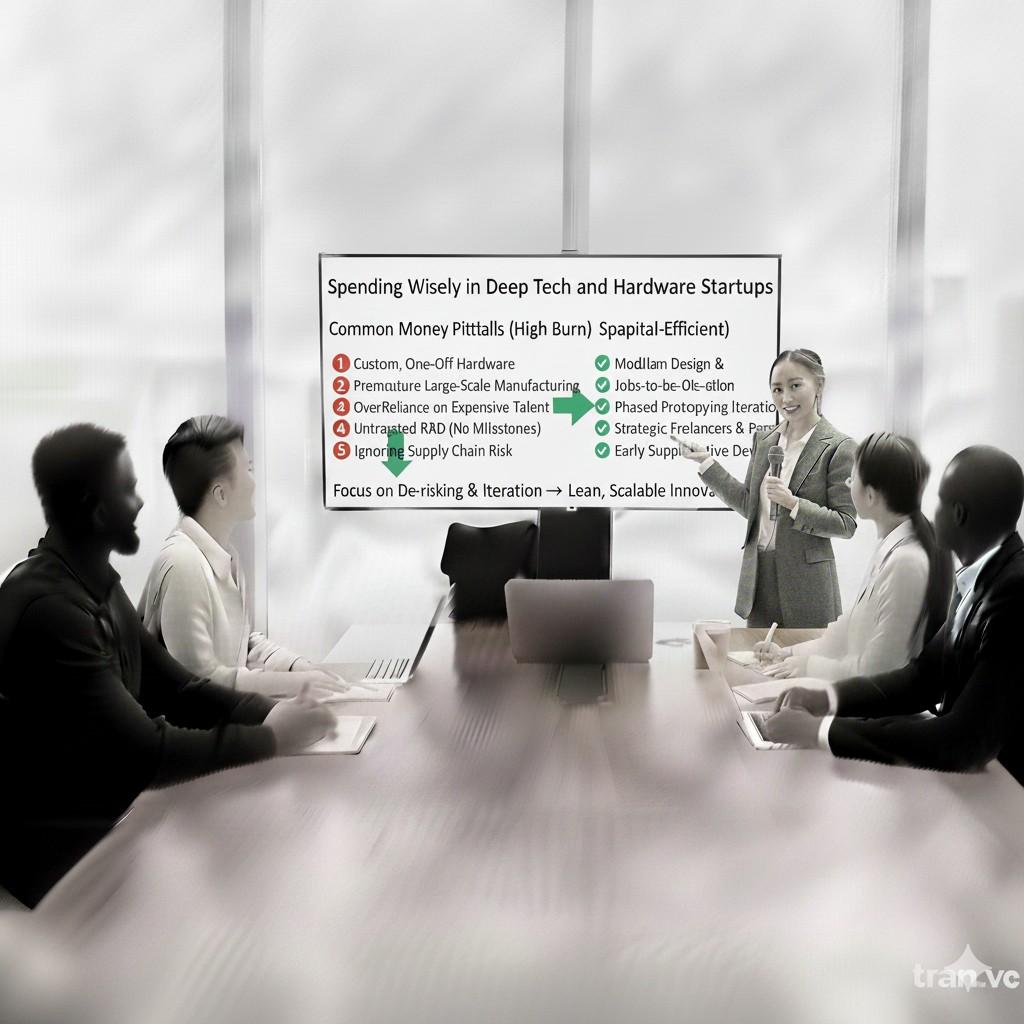
Deep tech and hardware startups do not fail only because they run out of cash. Many teams fail because they spend cash in the wrong order. They buy things that feel “real” early on, and delay the things that remove the real risk.
In software, you can change direction with a release. In hardware, a mistake becomes a physical object. It shows up late, costs more than planned, and forces hard trade-offs. That is why your spending plan must be tied to learning, not to vibes.
If a spend does not remove a clear risk this month, it is usually a distraction. It may still be useful later, but now it steals time and runway from what truly matters.
A simple rule that keeps founders alive
Before you spend, name the risk you are trying to remove. Say it in one short sentence, like you would explain it to a teammate. If you cannot say the risk clearly, you are not ready to pay for that work yet.
This rule sounds basic, but it stops many common traps. It prevents “busy work spending,” where you are moving, hiring, buying, and building, but the core unknowns stay untouched.
When you spend in the right order, you gain confidence that is earned. When you spend in the wrong order, you gain confidence that is rented, and it vanishes the moment a real test shows up.
Where Tran.vc fits into wise spending
In deep tech, your inventions are often your best asset. The issue is that founders protect them too late, or they protect the wrong parts, or they rush and file in a messy way. That kind of IP work becomes costly and stressful.
Tran.vc helps technical teams build an IP-backed foundation early, without draining their cash. Tran.vc invests up to $50,000 in in-kind patenting and IP services, so you can turn real technical work into defensible assets.
If you are building robotics, AI, or other hard tech where copying is a real threat, apply anytime here: https://www.tran.vc/apply-now-form/
Build a spending ladder, not a shopping list
Why a ladder beats a budget
A normal budget tells you how much you can spend. A spending ladder tells you what to spend on first, second, and third. In deep tech, order matters more than totals, because each step should make the next one cheaper and safer.
Think of each rung as a proof point. If you climb with solid proof, you reduce surprises. If you climb without proof, you carry uncertainty upward, and uncertainty becomes expensive later.
A strong ladder also keeps your team aligned. When everyone knows what the next rung is, your choices become calmer. You stop fighting over “what feels important” and start acting on “what removes the next big risk.”
The first rung is focus, not parts
Many teams waste money because they try to serve too many use cases early. The result is constant switching. The sensor changes, the compute changes, the power needs change, the size changes, and every new idea restarts the work.
This is not exploration in the healthy sense. It is paying to stay unsure. The smart move is to pick one use case and one buyer type, even if it feels limiting.
Once you do that, your spending becomes sharp. You can design a demo toward one goal. You can test in one real setting. You can talk to one kind of buyer and learn faster.
The second rung is an honest signal
A deep tech startup does not need a perfect product early. It needs an honest signal that the key technical claim is true. The signal should be narrow, measurable, and hard to fake.
If you are building a robot, the signal might be repeatable performance in a real task. If you are building a new sensor, the signal might be accuracy under messy conditions. If you are building edge AI, the signal might be latency and power on real hardware.
An honest signal is what lets you spend with confidence next month. Without it, you will keep paying for guesses, and guesses are where runway goes to die.
Spend to de-risk, not to decorate
The “pretty demo” trap
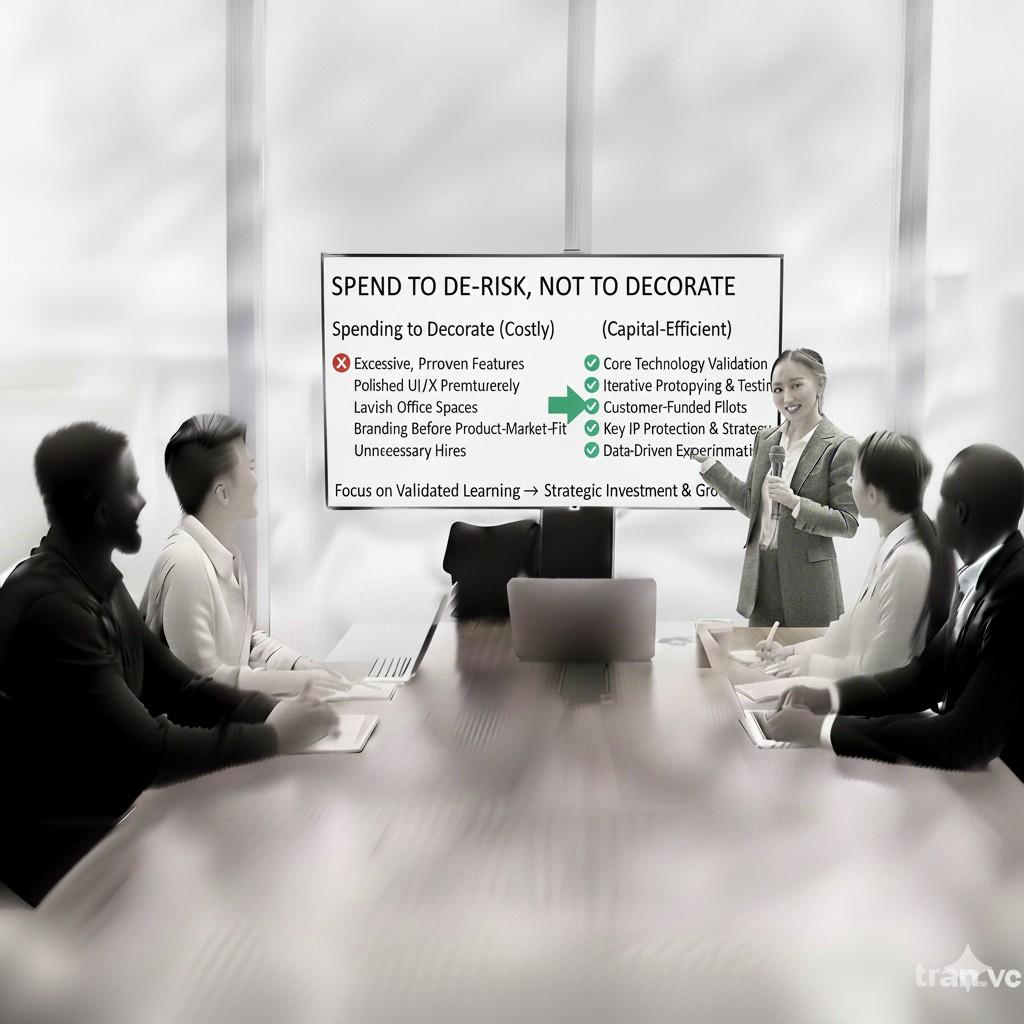
A common mistake is spending money to make the demo look polished before the core claim is stable. Founders buy a clean enclosure, a slick app, a fancy dashboard, and a video. Then the system fails in the real test, and the team has to redo the inside work anyway.
Early demos should be “ugly but undeniable.” That means simple parts, clear measurements, and repeatable results. People who matter will forgive the rough look if the proof is real.
When the proof is not real, a pretty demo can even backfire. It makes partners feel misled, and it makes investors doubt your judgment.
Custom work too early is hidden debt
Custom boards, custom housings, custom tooling, and custom firmware stacks feel like progress. Sometimes they are, but only when your design is stable enough to justify the lock-in.
Custom work creates debt because it limits your freedom to change. If you still do not know what the product must be, custom work freezes your choices before you have evidence.
A wiser move is to stay off-the-shelf for longer than your ego wants. Use dev kits, reference designs, and modular builds until the data forces your hand.
Activity is not the same as learning
Hardware teams can spend months producing CAD renders, beautiful roadmaps, branding, websites, and conference booths. You look active, but the risky questions remain unanswered.
The real test is simple: are you reducing uncertainty? If you are not, you are paying for motion, not progress.
When you feel stuck, it often helps to ask, “What would we do tomorrow if we already knew the answer?” That question reveals the exact test you should pay for now.
Hiring and vendors: spend to buy speed, not headcount
The hiring order that protects runway
In early deep tech, the wrong hire is not just a cost. It is a delay. A new person needs context, and if the problem is still unclear, they will build on shifting ground.
Hiring works best when you can hand someone a clear job with clear constraints. Until then, founders should keep core learning tight and internal, and use short-term help only when it directly reduces risk.
This is not about being cheap. It is about being precise. A smaller team that learns fast beats a larger team that stays confused.
Contractors can be a smart bridge
For hardware and compliance work, targeted contractors can be a wise spend. A good contractor can help you avoid expensive mistakes, like choosing the wrong material, missing a safety requirement, or routing a board in a way that creates noise problems.
The key is to hire them for a narrow outcome. You want a clear deliverable, a clear timeline, and a clear reason why this work must happen now.
If the work is open-ended, you will burn cash while the contractor waits for decisions you have not made yet.
Vendor choices can quietly control your future
Vendors are not just suppliers. They become part of your operating system. If you choose a vendor because they were fast today, you might pay for it later with lock-in, bad documentation, or surprise costs.
Wise founders pick vendors that match the stage. Early on, you want speed and flexibility. Later, you want reliability and repeatability.
A simple habit helps: before you commit, ask how hard it will be to switch. If switching would be painful, you must be extra sure you are ready to commit.
IP is a spending decision, not a legal afterthought
Why IP belongs in the early plan
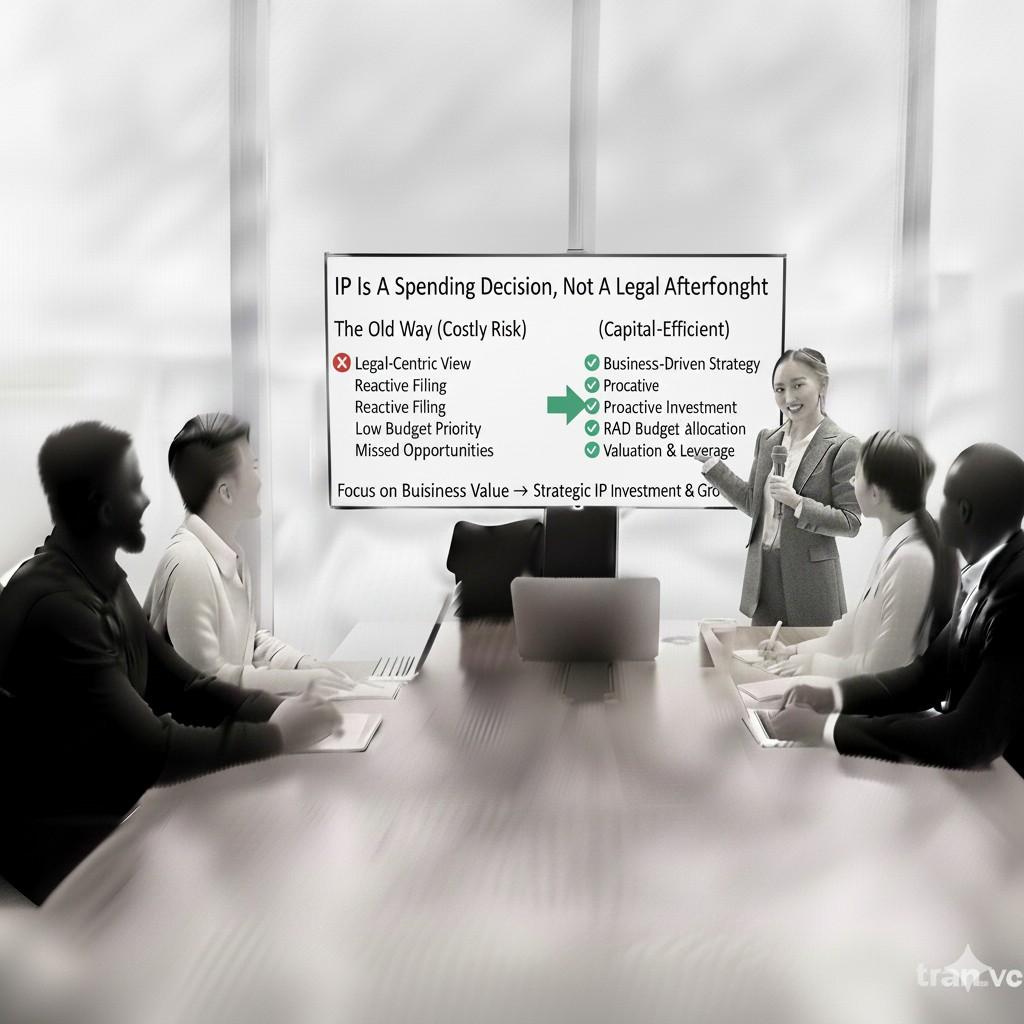
In deep tech, your work is visible the moment you demo it, ship it, or share designs with outside parties. That visibility is part of growth, but it also creates risk. If your unique method is easy to copy, you may lose leverage just when you need it most.
Many founders wait on patents because they assume it is slow and expensive. The bigger issue is that waiting can remove options. Early filing can protect your path while you keep building.
This does not mean you patent everything. It means you identify the few ideas that give you a real edge and protect those first.
What “good IP” looks like for hardware and deep tech
Good IP is not a pile of documents. It is a small set of filings that match how your product wins. If your advantage is in control methods, you protect the control methods. If your advantage is in sensing and signal processing, you protect that chain. If your advantage is in a new mechanical approach, you protect the mechanism and how it is used.
The strongest IP also matches your roadmap. It does not only describe what you built last month. It covers the next versions your competitors would try to copy.
This is where expert guidance matters, because a founder can describe a system, but a strong patent strategy turns that system into claims that defend your business.
How Tran.vc helps you spend smarter on IP
Tran.vc invests up to $50,000 in in-kind patenting and IP services so deep tech teams do not have to choose between runway and protection. The goal is to build a moat early, while you still have time to shape the strategy calmly.
If you are building in robotics, AI, or other hard tech and you want to protect what matters, apply anytime here: https://www.tran.vc/apply-now-form/
Prototyping spend: the fastest way to learn without waste
Prototype for truth, not for pride
The best early prototype is the one that answers a single hard question. It is not the one that looks good on a table. It is not the one that makes your team feel “done.”
If you are not careful, prototypes become trophies. You keep building nicer versions of the same uncertainty. You spend money to reduce discomfort, not to reduce risk.
A better approach is to treat each prototype like an experiment. You define what must be true, how you will measure it, and what decision you will make once you see the result.
Avoid the “one prototype” mindset
Many first-time hardware founders build one big prototype that tries to prove everything at once. That often fails because too many parts can break, and you cannot tell what caused the failure.
Spending wisely means breaking proof into smaller steps. You run smaller experiments that isolate the key unknowns. Each experiment is cheaper and gives cleaner feedback.
This approach also helps with morale. When you run small tests, you get frequent wins and clear learning, instead of one long build that ends in a confusing result.
Use pre-checks before expensive tests
There are tests you must pass later, like formal compliance testing, reliability testing, and safety validation. Those can be costly, so you should not pay for the full version too early.
What you can do early is pay for pre-checks. A pre-check is a quick review or small test that tells you if you are headed toward a dead end. It is like a warning light before you drive too far.
Pre-checks are often one of the highest return spends in hardware, because they stop you from baking a problem into the design.
Spending Wisely in Deep Tech and Hardware Startups
Manufacturing spend is where good teams get surprised
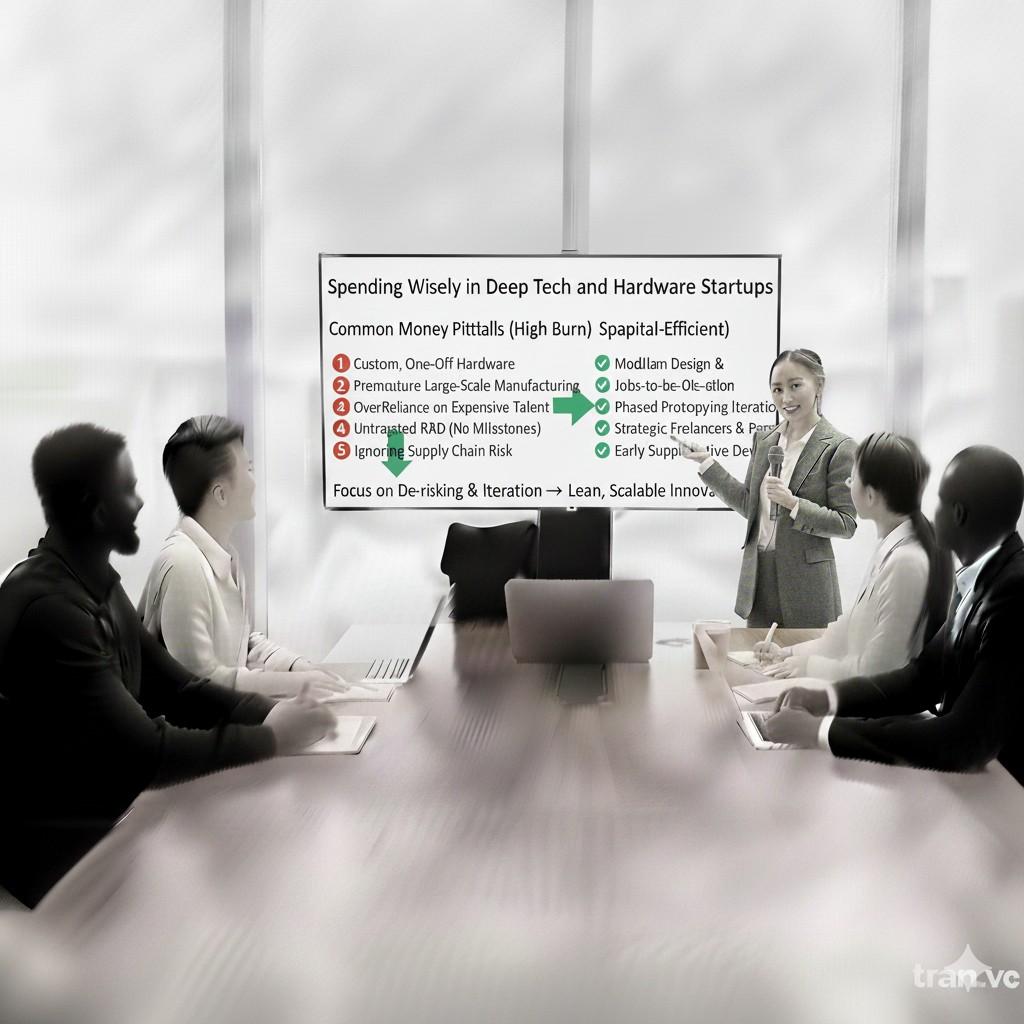
Manufacturing is not one big event that happens “later.” It starts the first time you choose a part, a material, a connector, or a tolerance. Every early choice either keeps the path open or quietly closes doors.
Founders often treat manufacturing like a switch they can flip after the prototype works. Then they discover that what worked once on a bench is hard to build ten times, and even harder to build one hundred times. That gap is where budgets explode.
Spending wisely here means you pay for manufacturing thinking earlier than you think you need it, but you do not overpay for full factory-grade work before your design is stable.
Design for repeatability before you design for beauty
A product that works one time is not a product. A product that works many times, in the hands of others, is a product. Repeatability is the hidden goal behind most “smart spending” decisions in hardware.
This is why tolerances matter early. It is why choosing parts with stable supply matters early. It is why defining assembly steps matters early. When you ignore these, the money you “saved” becomes money you pay later in scrap, rework, and missed deadlines.
A practical way to handle this is to build your early prototypes with the same mindset as a small production run. You do not need production-grade tooling yet, but you do need to think about what a technician would do, what they could mess up, and what you can design so it is hard to assemble wrong.
Pay for DFM advice earlier than you feel ready
DFM means “design for manufacturing.” Many founders delay this because they assume the design is still changing. That is true, but early DFM is not about locking the design. It is about avoiding choices that will make later changes painful.
A short DFM review from an experienced person can save you months. They can spot issues like parts that are hard to source, geometries that are expensive to machine, fasteners placed in ways that make assembly slow, or cable routing that will fail in real use.
This is one of those spends that looks optional until you live through a painful iteration. Once you have felt that pain, you never skip DFM again.
Tooling and fixtures should earn their place
Tooling is seductive because it makes things feel real. A custom fixture, a test jig, or a molded part looks like progress. Sometimes it is the best spend you can make, but only when it reduces cost or time in a measurable way.
A good rule is that tooling must pay you back. If a fixture reduces build time, reduces failure rates, or makes testing consistent, it is often worth it. If it only improves appearance or convenience, it can wait.
A surprising number of early teams never budget for test fixtures, and then they burn money on labor. People become the test rig. People become the alignment tool. People become the quality check. That is slow, inconsistent, and expensive.
Compliance and safety spending: avoid the late-stage cliff
Do not treat compliance as paperwork

Compliance is not a folder you create at the end. It is a set of constraints that shape design choices. If you learn those constraints late, you may have to redesign core parts of the system.
The right way to spend here is to pay for early guidance that tells you what you must care about. You are not paying for the final certification in month two. You are paying to avoid building the wrong thing.
This is especially true in robotics, medical-adjacent devices, industrial equipment, and anything that touches humans or hazardous environments. The safety story is part of the buying decision, not just a legal requirement.
Pre-compliance checks are high-return spending
A pre-compliance check is a small test or review that flags risks before you enter formal testing. It is not as expensive as full certification, and it gives you clear direction.
For electronics, this might include early EMI checks, grounding reviews, or power integrity guidance. For mechanical systems, it might include failure mode thinking, guarding, or risk assessment advice. For systems with batteries, it may involve thermal safety planning and charge control review.
This kind of spending often feels boring, which is exactly why teams skip it. Then they hit the cliff. When you hit the cliff, you pay triple: you pay for the failed test, you pay for the redesign, and you pay for the delay.
Document lightly, but document truthfully
Early teams sometimes swing between two extremes. One extreme is zero documentation, which makes repeatability hard and slows onboarding. The other extreme is heavy documentation, which steals time from building.
Spending wisely means you document what will prevent expensive mistakes. Simple build notes, test results, version tracking, and change logs are enough early on. The goal is not to look polished. The goal is to avoid confusion that costs money.
This also matters for IP. When you keep clean records of what you built and when, it becomes easier to capture inventions, support filings, and explain novelty with confidence.
Data and cloud spending for AI and robotics: keep it grounded
Pay for the data you truly need, not the data you wish you had
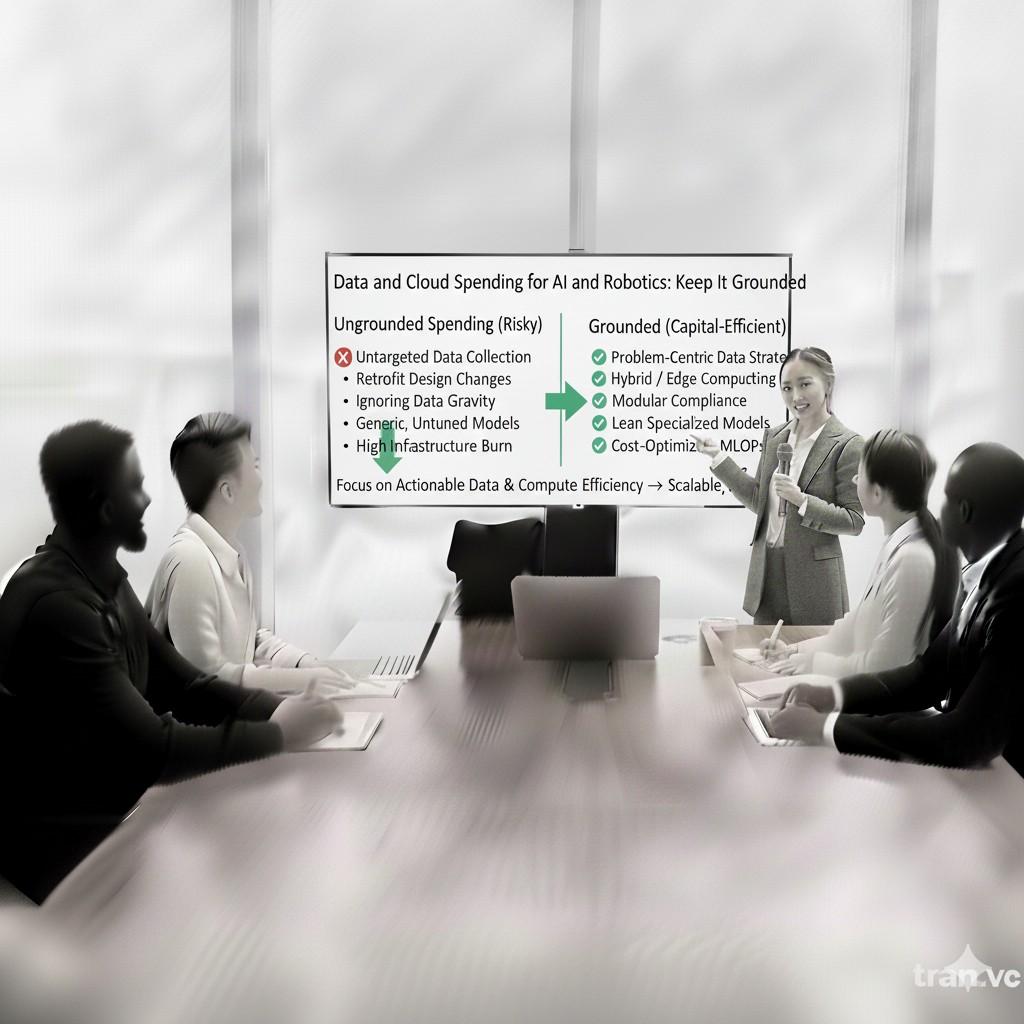
AI-heavy startups often burn money chasing “perfect data.” They buy datasets, label huge volumes, and set up complex pipelines before they know what the model must do in the real product.
A better approach is to tie data spend to a real decision. If the decision is “can we reach accuracy X in condition Y,” then you only collect and label what is required to answer that.
Data should be earned in layers. First you prove a small model can work at all. Then you expand coverage. Then you harden it against edge cases. When you jump straight to “industrial scale data,” you pay a large bill while still being uncertain.
Cloud costs should follow a clear training plan
Cloud costs can quietly become a second rent payment. Teams leave instances running, train large models by habit, or build pipelines that assume unlimited compute.
Wise spending starts with a training plan that matches your product’s constraints. If your model must run at the edge, spend early on testing on the real device, not on endless cloud experiments.
If you must use cloud, treat it like a lab meter. You should know what each run costs, what it is testing, and what decision it supports. When cost is visible and tied to decisions, waste drops fast.
Robotics teams must budget for field learning
Robotics is unforgiving because the world is messy. Floors are uneven. Lighting changes. Objects vary. People behave in unexpected ways. Lab success is not field success.
Spending wisely means you pay early for controlled field tests. You do not need a full pilot in month one, but you do need exposure to real conditions as soon as the core system can safely operate.
This spend is often travel, setup time, safety planning, and small changes to make testing practical. It is not glamorous, but it prevents the worst surprise: thinking you are close, then learning you are not.
The weekly spend map: a practical way to stay in control
A spend map is not a spreadsheet, it is a habit
Many founders track spending by category, but they do not track it by purpose. A spend map fixes that. It links each spend to the risk it removes and the next decision it unlocks.
Once a week, you look at the next four weeks and ask, “What must become true by the end of this month?” Then you choose the smallest set of spends that make that truth possible.
This keeps you from spending based on fear, ego, or outside pressure. It keeps you spending based on learning and gates.
Match spending to the next gate you must pass
Your startup always has a next gate. It might be a demo that proves reliability. It might be a pilot that proves business value. It might be a design freeze needed for manufacturing. It might be a fundraising milestone.
When spending is not tied to the next gate, you drift. Drift is expensive because it makes timelines fuzzy and decisions emotional.
A clean gate makes spending simpler. You can say “no” to distractions without guilt, because you have a clear reason. You are not saying “no forever.” You are saying “not before we pass the gate.”
The “two clocks” that control runway
Hardware founders live under two clocks. One clock is cash runway. The other clock is calendar time for physical work. You cannot compress shipping schedules like software. Lead times exist. Tooling takes time. Testing takes time.
Spending wisely means you buy down calendar risk early. Sometimes paying a bit more now saves months later. Other times paying more now locks you into the wrong design and costs you months later.
The way to decide is to ask: “Is this spend making later work faster without reducing flexibility too soon?” If yes, it often makes sense. If not, it can wait.
Fundraising and spending: stop trying to look big
Small and sharp beats big and blurry
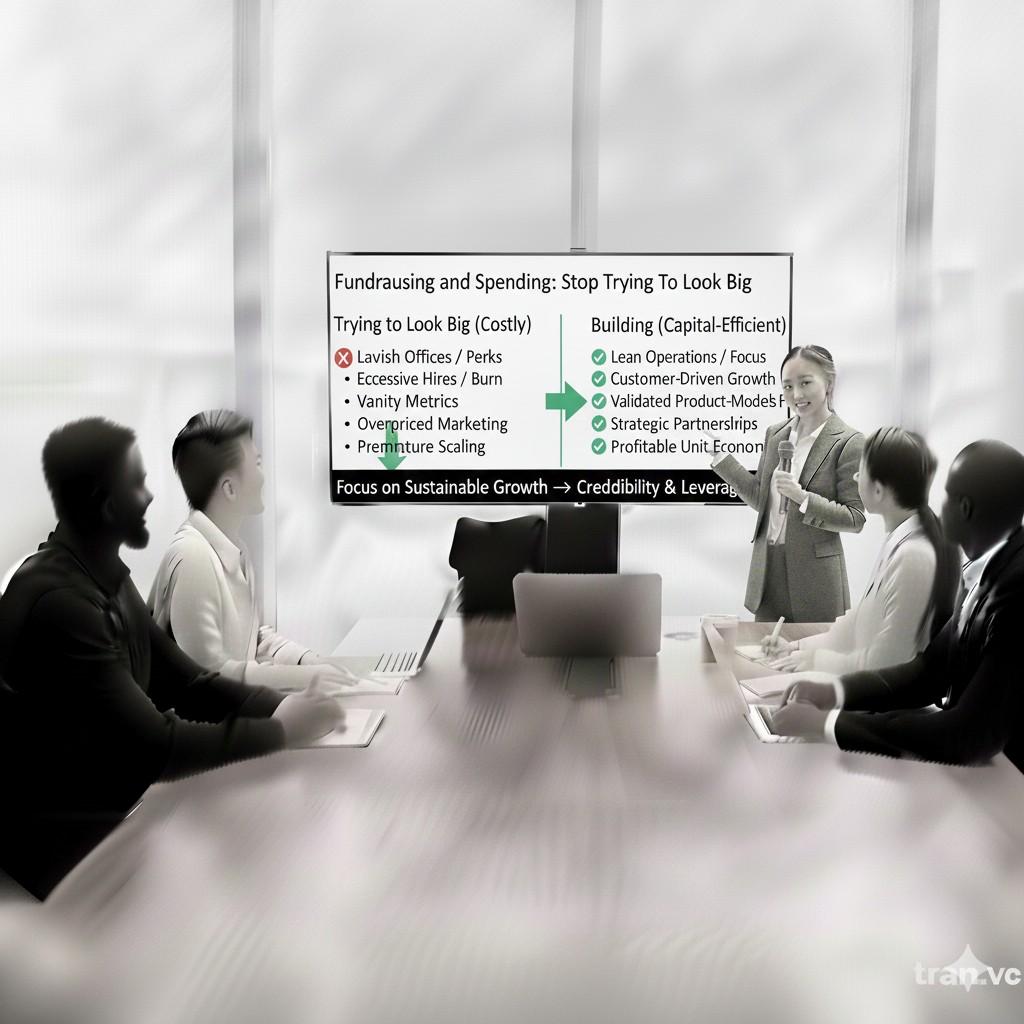
Some founders spend money to look like a bigger company. They hire too early, rent fancy space, overbuild the product, and create large plans. They do this because they think it makes fundraising easier.
In deep tech, serious investors are not looking for size. They are looking for clarity, proof, and defensibility. A smaller team with strong results and a thoughtful moat can raise with more leverage than a larger team with a scattered story.
Spending to look big is often spending to hide uncertainty. Investors can feel that. Partners can feel that too.
IP can improve leverage at the exact right time
When you go to raise, you want to show that your advantage is real and hard to copy. A strong IP strategy supports that story. It signals that you understand what your company is truly building, and you are protecting it.
This is also why in-kind IP support can be a smart early choice. You preserve cash, you avoid rushed filings, and you build an asset that can help you raise on better terms.
Tran.vc is built for this stage. If you want to turn your inventions into an IP-backed foundation without draining your runway, apply anytime here: https://www.tran.vc/apply-now-form/