
Artificial intelligence is moving fast. Every week, a new tool, a new model, a new idea shows up. But money does not move as fast as the hype.
At the pre-seed stage, investors are not looking for noise. They are looking for signal. They want to see if you are building something real, something hard to copy, and something that can grow into a strong company.
If you are an AI founder, you may think the key to raising pre-seed money is a great demo or a big vision. That helps. But it is not enough.
In this guide, we will walk through what investors truly want from AI startups at the pre-seed stage. We will talk about how they think, what makes them lean in, and what makes them walk away. We will also show you how to build leverage before you ever pitch.
Let’s begin with a simple truth.
Pre-seed investors do not invest in slides. They invest in foundations.
And for AI startups, your foundation is more than code. It is your edge.
The Real Meaning of Pre-Seed for AI Startups
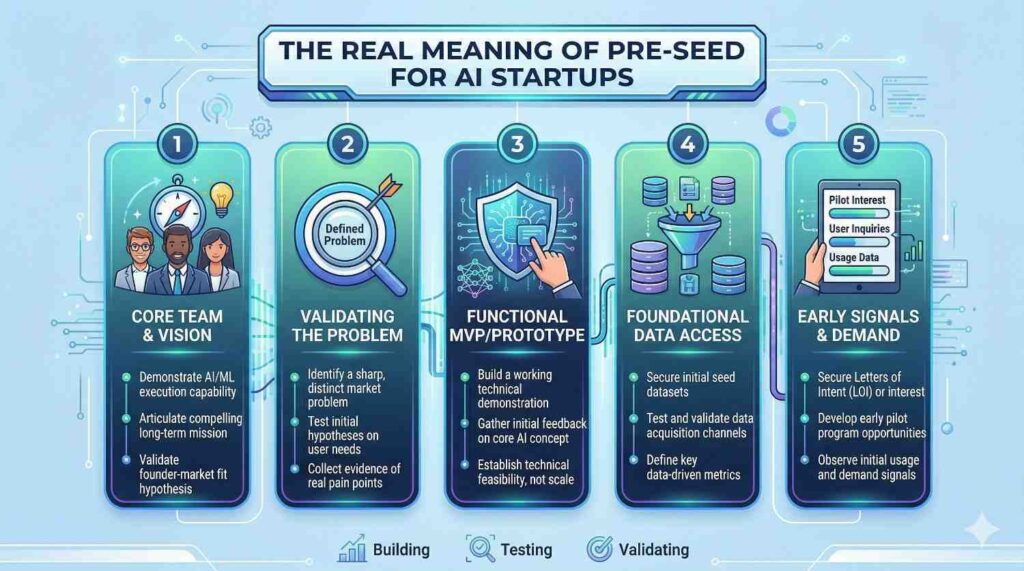
Pre-seed funding is not just “early money.” It is belief money.
At this stage, you may not have revenue. You may not have many users. Your product may still be rough. Investors know that.
What they are asking is simple: Is this team building something that can become valuable and defensible?
In AI, this question is even more serious.
AI tools are easier to build today than ever before. With open-source models, APIs, and cloud services, almost anyone can create a working demo. That means investors are careful. They know that many AI products are thin layers on top of someone else’s model.
They want to know what is truly yours.
Is your data unique?
Is your model tuned in a way that others cannot copy?
Are you solving a painful problem in a clear market?
Or are you just wrapping a chatbot in a new design?
These questions matter more than your pitch deck design. They matter more than how many beta users signed up last week.
When investors look at AI startups at the pre-seed stage, they are trying to see five things, even if they do not say it out loud.
First, they want to see technical depth. Not just the ability to call an API, but the skill to build, train, adapt, and improve systems over time.
Second, they want to see insight. Why you? Why this problem? Why now?
Third, they want to see the start of a moat. Something that grows stronger with time.
Fourth, they want to see focus. AI can do many things. But your startup should do one thing very well.
Fifth, they want to see founder strength. Grit. Clarity. Speed.
At Tran.vc, we work with deep tech and AI founders at this exact stage. We see how hard it is to stand out when everyone claims they are “AI-powered.”
That is why we focus on building real intellectual property from day one. Not as a legal checkbox. But as a business weapon.
If you are building something novel in AI, your patents and IP strategy can shape how investors see you. It can turn your company from “another AI tool” into “a defensible platform.”
This matters more than most founders think.
Why AI Investors Care So Much About Defensibility
Let’s slow down and think like an investor.
An investor writes a check today. They will likely not see their return for seven to ten years. That means they are betting on your long-term position, not just your current traction.
In AI, speed is high. Competitors can pop up overnight. Big companies can enter your space. Models can improve quickly.
So investors ask a hard question.
If this works, what stops others from copying it?
If your answer is “we will move faster,” that is good. But it is not enough.
If your answer is “we have strong brand,” that may help later. But at pre-seed, you do not have brand yet.
If your answer is “we have unique data pipelines, novel model architecture, and filed patents that protect our core approach,” now you have their attention.
Many founders think patents are only for big companies. That is a mistake.
At the pre-seed stage, patents signal depth. They show that you understand your own invention well enough to define and protect it. They show that you are thinking ahead.
At Tran.vc, we invest up to $50,000 in in-kind IP services for AI and robotics startups. That means real patent strategy, real filings, and real support from experienced attorneys.
We do this because we know what investors want to see.
When you walk into a pre-seed pitch and say, “We have filed provisional patents around our core model training method,” the room changes.
It shows maturity.
It shows intent.
It shows that you are not just building fast, but building smart.
If you are serious about raising pre-seed funding for your AI startup, you need to think about your moat before you think about your valuation.
You can apply anytime at https://www.tran.vc/apply-now-form/ if you want help building that moat from day one.
The Team: The First and Strongest Signal
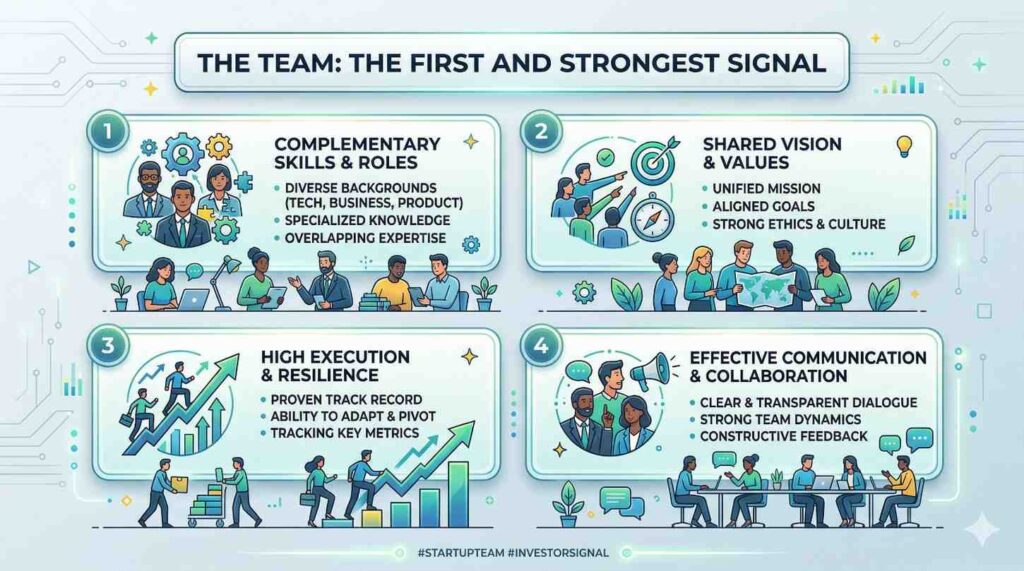
Before investors dive into your model or your roadmap, they look at you.
At the pre-seed stage, the team often matters more than the product.
In AI, this is even more true.
Investors want to know if you truly understand the technology. Not just at a surface level, but deeply.
If you are technical, can you explain your model in simple terms? Can you defend your choices? Can you talk about trade-offs?
If you are not technical, do you have a strong technical co-founder who owns the core system?
They will also look at your history.
Have you built before?
Have you shipped real systems?
Have you worked in the problem space you are now trying to solve?
This does not mean you need a perfect resume. It means you need a believable story.
Why are you the right person to build this company?
Strong AI founders often have one thing in common. They are obsessed with the problem, not the trend.
They did not choose AI because it is hot. They chose it because it is the right tool to solve a real pain.
Investors can feel the difference.
They will test you.
They may ask simple questions in a calm voice. But those questions are deep.
“What happens if OpenAI changes its pricing?”
“How do you reduce hallucinations in your system?”
“Why can’t a big company do this in six months?”
Your answers show whether you are thinking at the right level.
At Tran.vc, we spend time with founders before they raise. We help them refine their story, clarify their edge, and tighten their strategy. Not just for the pitch, but for the company itself.
Pre-seed investors want to back founders who think long term.
They want builders, not trend chasers.
If you are building an AI startup, ask yourself a simple question.
If the AI hype disappeared tomorrow, would you still build this?
If the answer is yes, you are on the right path.
The Problem: Clear, Painful, and Worth Solving
Many AI startups start with technology and then look for a problem.
Investors prefer the opposite.
They want to see that you understand a painful, costly, urgent problem. Then they want to see how AI makes the solution better, faster, or cheaper.
When you describe your startup, avoid starting with “We built a new AI model that…”
Instead, start with “Companies in X space lose Y amount of time or money because…”
Make it real.
Make it sharp.
Make it measurable.
Pre-seed investors are not looking for perfect numbers. But they want logic.
They want to see that if your solution works, it can plug into a real budget.
For example, if you are building an AI tool for hospitals, do you know how hospitals buy software? Do you know their sales cycle? Do you know who signs the check?
If you are building for developers, do you know how they adopt tools? Do you know how pricing works in that market?
AI is powerful. But power without context does not sell.
Investors want to see that you are not just smart, but grounded.
They want to know that your market is big enough to build a venture-scale company.
At the pre-seed stage, you do not need full market research reports. But you need clarity.
You should be able to explain, in simple words, who your customer is, what hurts, and how your product removes that pain.
If you cannot explain it simply, investors will worry that customers will not understand it either.
And when your story is clear, your IP strategy becomes even more powerful. Because now it protects a clear solution to a clear problem.
That is what makes companies fundable.
Traction: What “Proof” Really Means at Pre-Seed
Early Signals Matter More Than Big Numbers
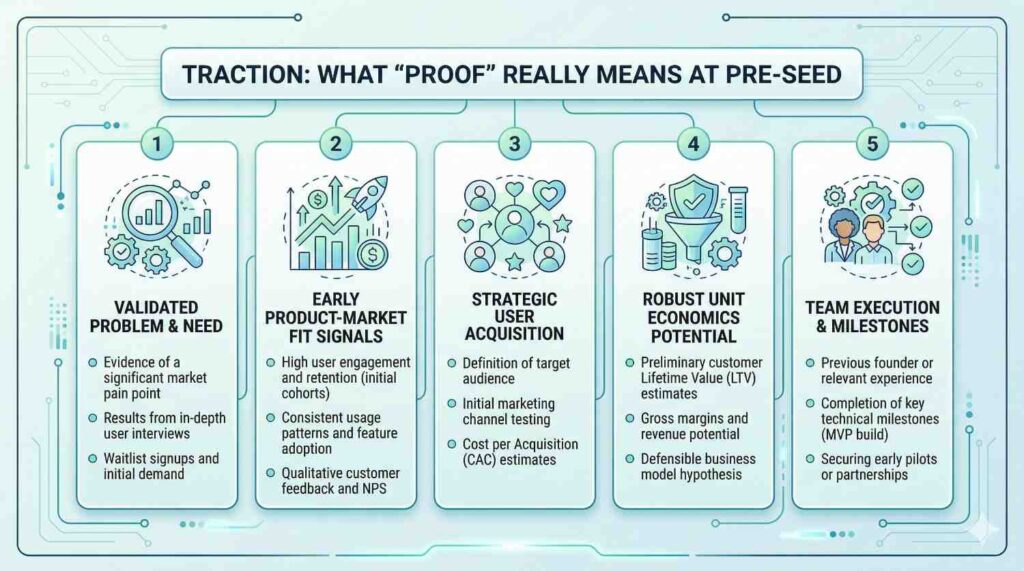
At the pre-seed stage, most AI startups do not have strong revenue. Many do not even have a finished product. Investors know this. They are not expecting millions in sales.
What they are looking for is proof that someone cares. That someone is willing to try your product. That someone is willing to give feedback. These small signs matter more than flashy charts.
If you have ten users who love your product and use it every week, that can be more powerful than a thousand sign-ups who never return. Investors want to see engagement, not just attention.
They also want to see learning. If you shipped version one and users complained, what did you change? If your first idea did not work, how did you adjust? Progress shows maturity.
In AI, this is very important. Models improve over time. Systems get smarter with data. Investors want to see that you are building something that gets better the more it is used.
That is real traction at pre-seed. It is not about scale. It is about direction.
Paid Pilots and Design Partners
One of the strongest signals for an AI startup is a paid pilot. Even a small contract shows that a customer is serious. It proves that your solution connects to a real budget.
If a company agrees to test your product in a live setting, that is meaningful. It means they trust you enough to try. It also gives you real-world data, which makes your system stronger.
Design partners are also powerful. These are early customers who help shape your product. They give feedback. They open doors. They may not pay much at first, but they give insight that cannot be bought.
Investors like to see this because it lowers risk. It shows that you are not building in isolation. You are building with the market.
For AI startups, this is critical. Your model may perform well in a lab, but real-world data is different. Showing that you can handle real-world complexity makes investors more confident.
Technical Validation
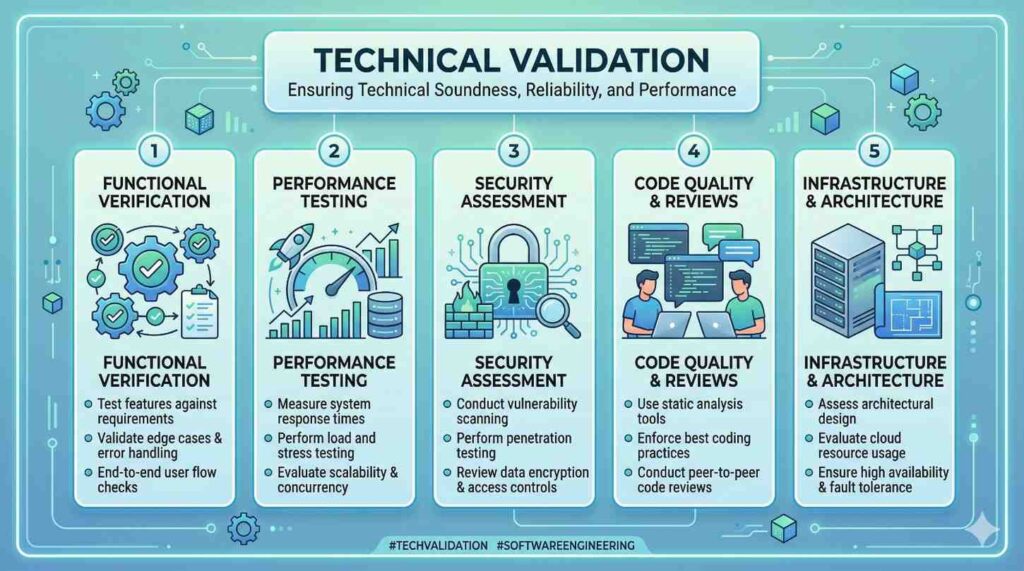
In AI, technical proof carries weight. If you can show benchmarks, performance metrics, or comparison against other systems, it helps.
But this must be honest. Investors can sense inflated claims. If you say your model is “10x better,” you need to explain how and in what context.
Even a small but clear improvement in a narrow task can be strong. For example, if your system reduces manual review time by 25 percent in a specific workflow, that is meaningful.
You do not need a full research paper. But you do need clarity. What did you test? What were the results? Why does it matter?
When you combine early user signals with technical validation, you build a stronger story. Now you are not just saying your AI works. You are showing it.
And when this is supported by a smart IP strategy, your position becomes even stronger. You are not only building value. You are protecting it.
If you want help building that protection from day one, you can apply at https://www.tran.vc/apply-now-form/.
Intellectual Property: The Hidden Lever in Pre-Seed AI
Why IP Is Not Optional in AI
Many founders think patents are something to think about later. They focus on product, growth, and fundraising first.
In AI, this is risky. The field moves fast. Competitors watch closely. If you wait too long, you may lose the chance to protect your core invention.
Investors know this. When they see an AI startup without a clear IP plan, they worry. They wonder if the technology is truly unique or just a thin layer over existing tools.
A strong IP strategy does not slow you down. When done right, it sharpens your focus. It forces you to define what is truly new about your system.
That clarity helps in fundraising. It helps in hiring. It helps in partnerships.
IP is not about being defensive. It is about being intentional.
Patents as a Signal of Depth
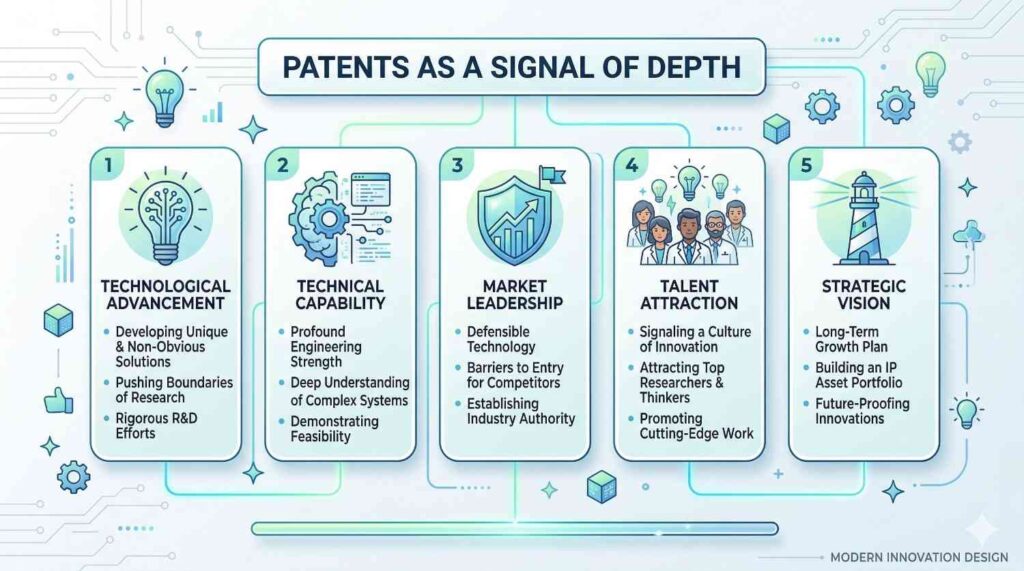
At the pre-seed stage, filing a provisional patent can be a strong move. It shows that you have identified a novel method, system, or process.
For AI startups, this could be around model training methods, data processing pipelines, inference optimization, or system architecture. The details matter.
When investors hear that you have filed around your core innovation, they listen differently. It tells them that you are building something deeper than an interface.
It also gives you leverage in conversations. You are not just pitching an idea. You are presenting protected intellectual property.
At Tran.vc, we invest up to $50,000 in in-kind patent and IP services for deep tech founders. We do this because we have seen how powerful this can be at the earliest stage.
You can turn your code and algorithms into real assets. Assets that show up in due diligence. Assets that increase your value.
If you are serious about building a strong foundation, you can apply anytime at https://www.tran.vc/apply-now-form/.
Building a Moat Before Product-Market Fit
Many founders wait until they find product-market fit before thinking about moats. In AI, that may be too late.
If your product starts to gain traction and you have not protected your core innovation, competitors can study your approach and move quickly.
Building a moat early does not mean building walls around nothing. It means identifying what could become valuable and protecting it while it is still fresh.
This could include your data strategy. It could include custom model tuning. It could include hardware-software integration if you are in robotics.
When you align your product roadmap with your IP roadmap, you build with intention. Each technical milestone strengthens your position.
Investors notice this alignment. It shows discipline. It shows long-term thinking.
And long-term thinking is rare at the pre-seed stage. That is why it stands out.
Structuring Your Pre-Seed Round the Smart Way
Raise for Milestones, Not Ego
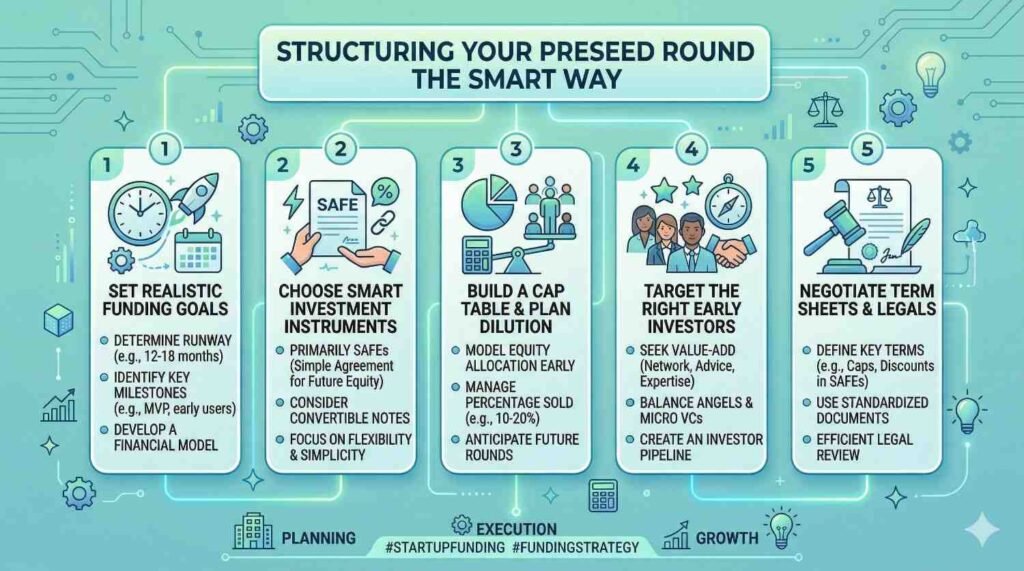
Pre-seed funding is meant to help you reach clear milestones. It is not meant to prove status. Smart founders raise what they need to hit the next level.
For an AI startup, that milestone might be a working prototype in a live environment. It might be securing three paid pilots. It might be filing key patents.
When you define your raise around milestones, investors feel safer. They see that you are careful with capital. They see that you know what progress looks like.
Raising too much too early can create pressure. It can push you to grow before your foundation is strong.
Raising too little can slow you down. The key is balance.
Choosing the Right Investors
Not all pre-seed investors understand AI. Some chase trends. Others focus only on quick growth.
You want investors who understand deep tech cycles. Investors who respect long development timelines. Investors who value intellectual property.
The right investor will ask hard questions, but they will also support you in building properly. They will not push you to cut corners.
At Tran.vc, we work closely with technical founders. We do not just write checks and disappear. We help shape IP strategy. We help refine positioning. We connect startups to strong seed investors when they are ready.
Our goal is simple. Help you raise with leverage, not desperation.
If that approach resonates with you, you can apply at https://www.tran.vc/apply-now-form/.
Using Leverage in Negotiations
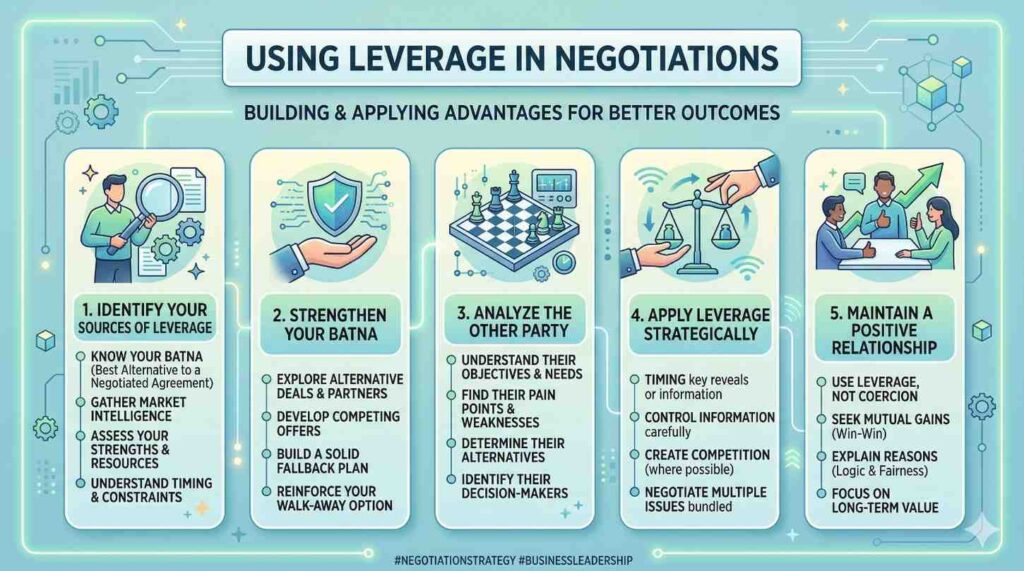
Leverage at pre-seed does not come from hype. It comes from strength.
If you have early traction, protected IP, and a clear roadmap, you negotiate from a better position.
Investors compete for strong opportunities. When your startup looks thoughtful and defensible, you create interest.
This can improve your valuation. It can improve your terms. It can give you better partners.
AI is crowded. But strong foundations are not.
If you focus on building depth instead of chasing noise, you stand out in a quiet but powerful way.
Common Mistakes Founders Make Between Pre-Seed and Seed
Chasing Funding Instead of Building Strength
One of the most common mistakes founders make is focusing too much on raising the next round. They treat pre-seed as a short step they need to finish quickly so they can move to seed.
This creates weak companies.
When your main goal is to raise, you start optimizing for what sounds good in a pitch instead of what builds real value. You may rush your product. You may ignore gaps in your technology. You may avoid hard questions about defensibility.
Investors can sense this.
Strong founders take a different path. They focus on building something solid first. Funding becomes a result of progress, not the goal itself.
If you are still early, slow down just enough to build properly. This is how you move faster later.
Ignoring IP Until It Is Too Late
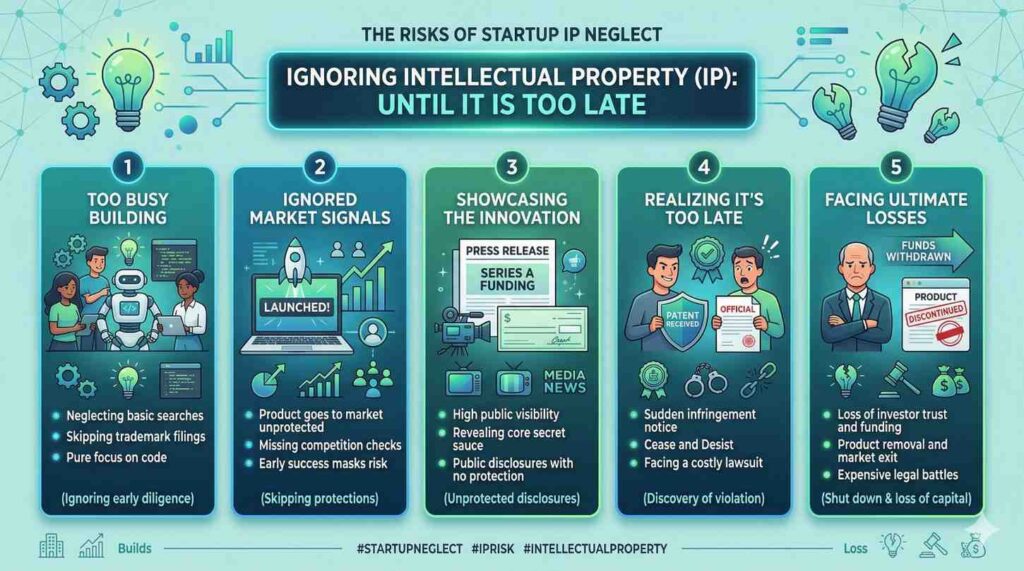
Many technical founders believe IP can wait. They think it is something to handle after traction, after funding, or after launch.
This delay can cost you more than you expect.
Once your work becomes public, your ability to protect it can reduce. If others move faster or file earlier, you may lose ownership of key ideas.
Fixing this later is not easy. It often leads to weaker protection or higher costs.
This is why smart founders think about IP early. Not in a heavy or complex way, but in a clear and strategic way.
At Tran.vc, we work closely with founders at this exact stage. We help you identify what matters and protect it before it becomes a problem.
You can apply anytime here: https://www.tran.vc/apply-now-form/
Raising Too Early Without Enough Proof
It can feel exciting to raise a seed round quickly. It may look like fast progress from the outside.
But raising too early can create pressure that your company is not ready for.
Once you take on a larger round, expectations rise. You need to show growth, traction, and direction. If your foundation is still weak, this pressure can slow you down instead of helping you grow.
You may spend more time fixing early decisions than building forward.
It is better to enter seed when you have clear proof and strong direction. This gives you confidence and control.
Giving Away Too Much, Too Soon

Equity decisions made early can shape your entire journey. Some founders give away large portions of their company at pre-seed because they feel they have no choice.
This often happens when there is urgency and limited options.
But when you build leverage, you create choice. You can negotiate better. You can protect your ownership. You can maintain control over key decisions.
Your goal is not to avoid sharing equity. It is to share it wisely.
Scaling Before You Are Ready
Another common mistake is trying to grow too fast after raising seed. Founders hire quickly, expand teams, and increase spending before the product is truly ready.
This creates stress inside the company.
Problems that could have been solved early become larger. Communication becomes harder. Burn rate increases without clear returns.
Growth should follow clarity. When you understand your product, your users, and your path, scaling becomes smoother.
How Tran.vc Helps You Bridge Pre-Seed to Seed
More Than Just Capital
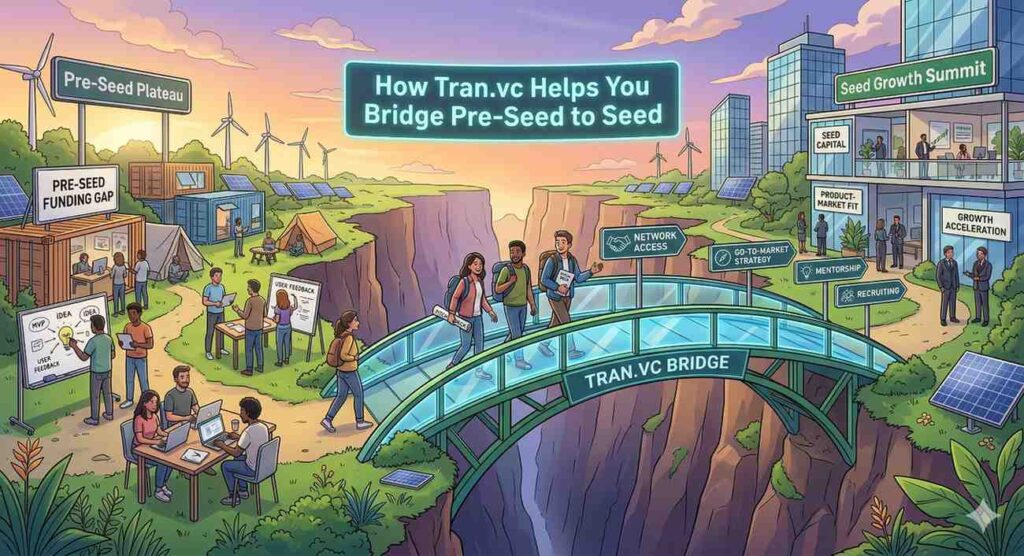
Most investors provide money and step back. Founders are left to figure out strategy, structure, and protection on their own.
Tran.vc takes a different approach.
We invest up to $50,000 in in-kind IP and patent services. This means you are not just receiving capital. You are receiving expert support to build a strong foundation.
We work with you closely. We help you think through your technology, your moat, and your long-term value.
Turning Technical Work Into Real Assets
If you are a technical founder, you are already creating valuable work. But without structure, this work may not turn into lasting assets.
We help you change that.
We guide you in identifying what is truly unique in your system. We help you protect it through clear and strategic patent work.
This turns your code and ideas into something investors can see and trust.
It also gives you confidence when you share your work with the world.
Helping You Raise From Strength

When you approach seed investors with protected technology and clear progress, the conversation changes.
You are not just another early-stage startup. You are a company with real assets and direction.
We help you prepare for this moment. We help you build the right story, backed by real substance.
We also connect you with strong investors who understand deep tech and value long-term thinking.
If you want to raise with leverage instead of pressure, this matters.
Building Companies That Last

Our goal is not just to help you raise your next round. Our goal is to help you build a company that lasts.
This means making decisions that support long-term value. It means protecting what matters early. It means growing with intention.
We have been founders ourselves. We understand the early challenges. We know how important the pre-seed stage is.
This is why we focus on it so deeply.
If you are building in AI, robotics, or deep tech, and you want to do it right from the start, you can apply here: https://www.tran.vc/apply-now-form/