Startup Basics

Defensive Publishing for Startups: When It Beats Filing a Patent

Most startup founders think there are only two choices: There is a third move that many teams miss. It can be faster. It can be cheaper. And in the right moment, it can protect you from a competitor trying to lock you out of your own work. That move is defensive publishing. Defensive publishing means […]

Defensive Publishing for Startups: When It Beats Filing a Patent Read More »
Biotech IP Strategy for Early Teams: Patents, Data, and Regulatory Timing

Biotech moves in a strange way. You can spend two years proving something works… and still lose the whole company because you waited six months too long to protect it. Or you file a patent too early, before you truly know what matters, and you lock yourself into a weak story you can’t fix later.

Biotech IP Strategy for Early Teams: Patents, Data, and Regulatory Timing Read More »

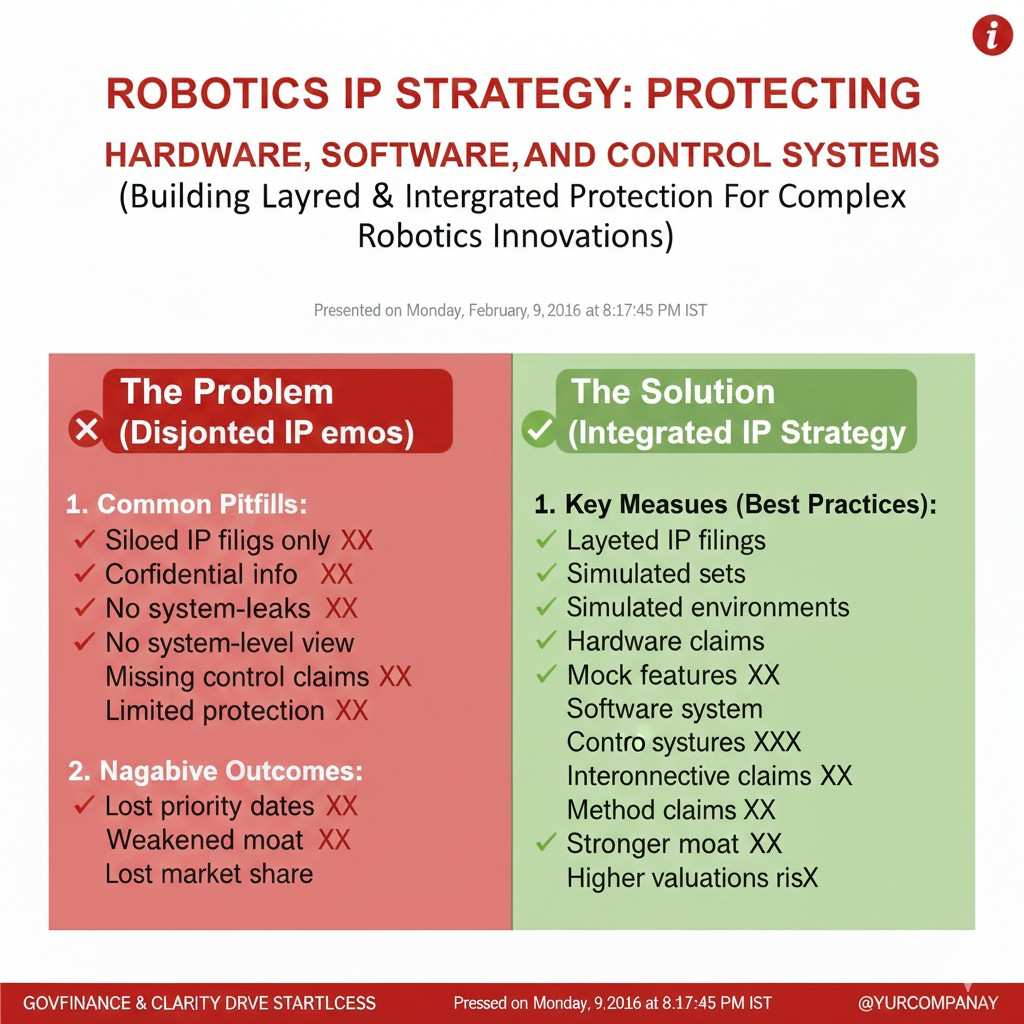
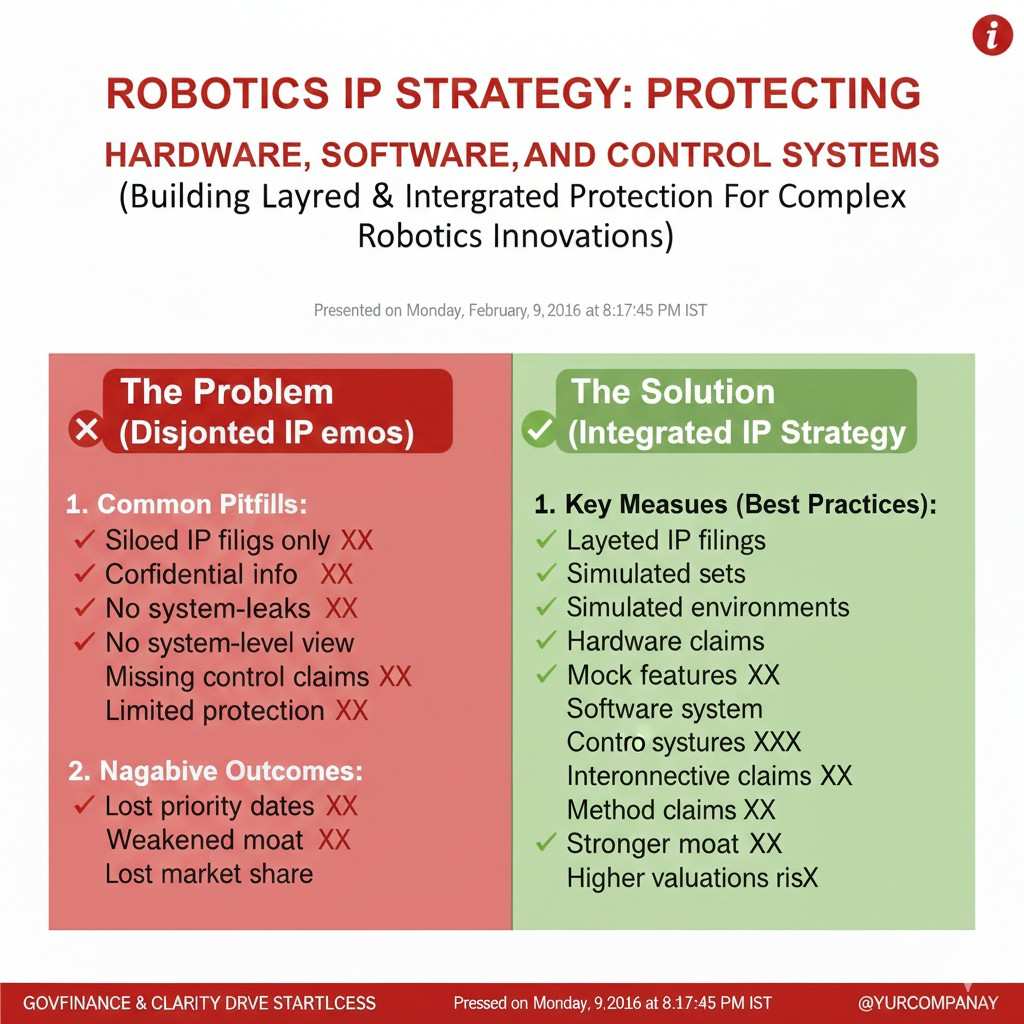
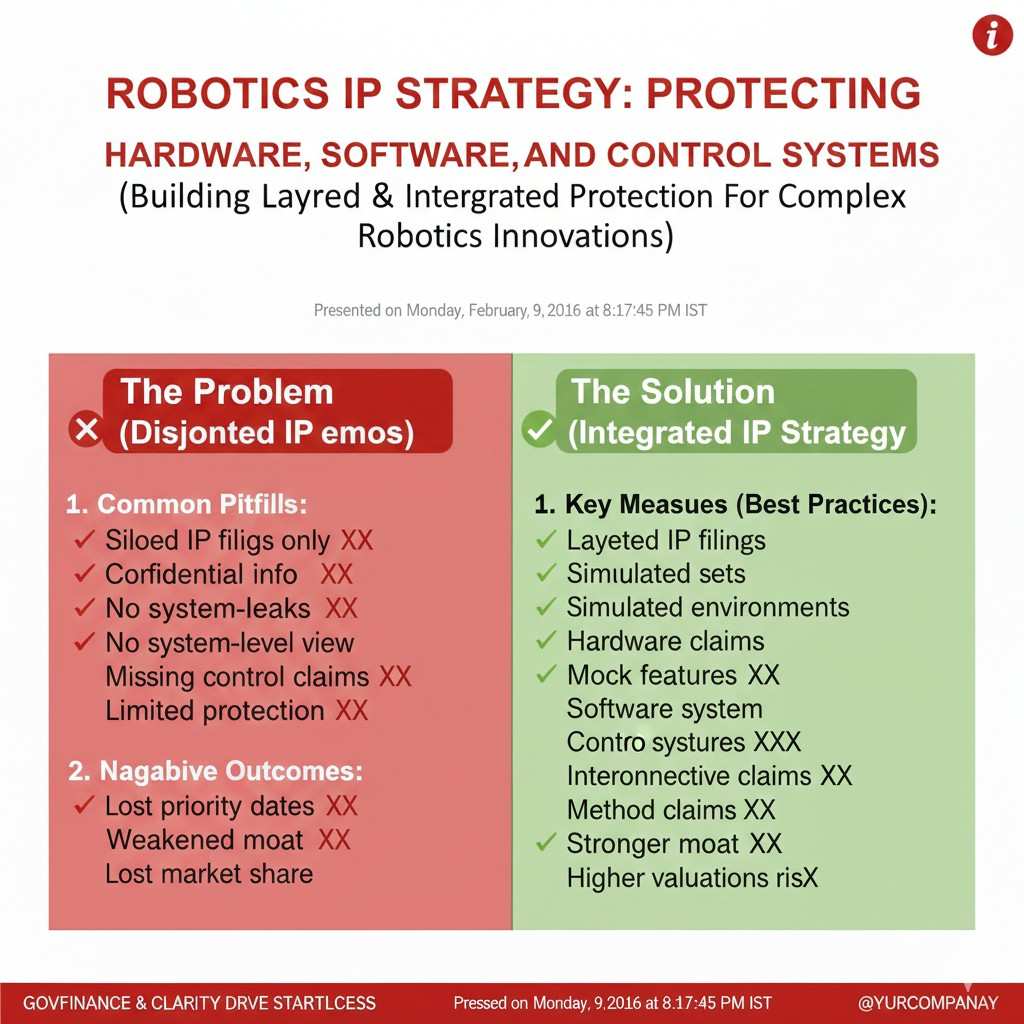
Robotics IP Strategy: Protecting Hardware, Software, and Control Systems

Robotics is hard. You are building real things that move in the real world. A small change in a gear, a motor driver, a sensor fuse, or a control loop can change everything. And yet, many robotics teams treat IP like paperwork they will “do later.” That is risky. Because robotics IP is not just

Robotics IP Strategy: Protecting Hardware, Software, and Control Systems Read More »

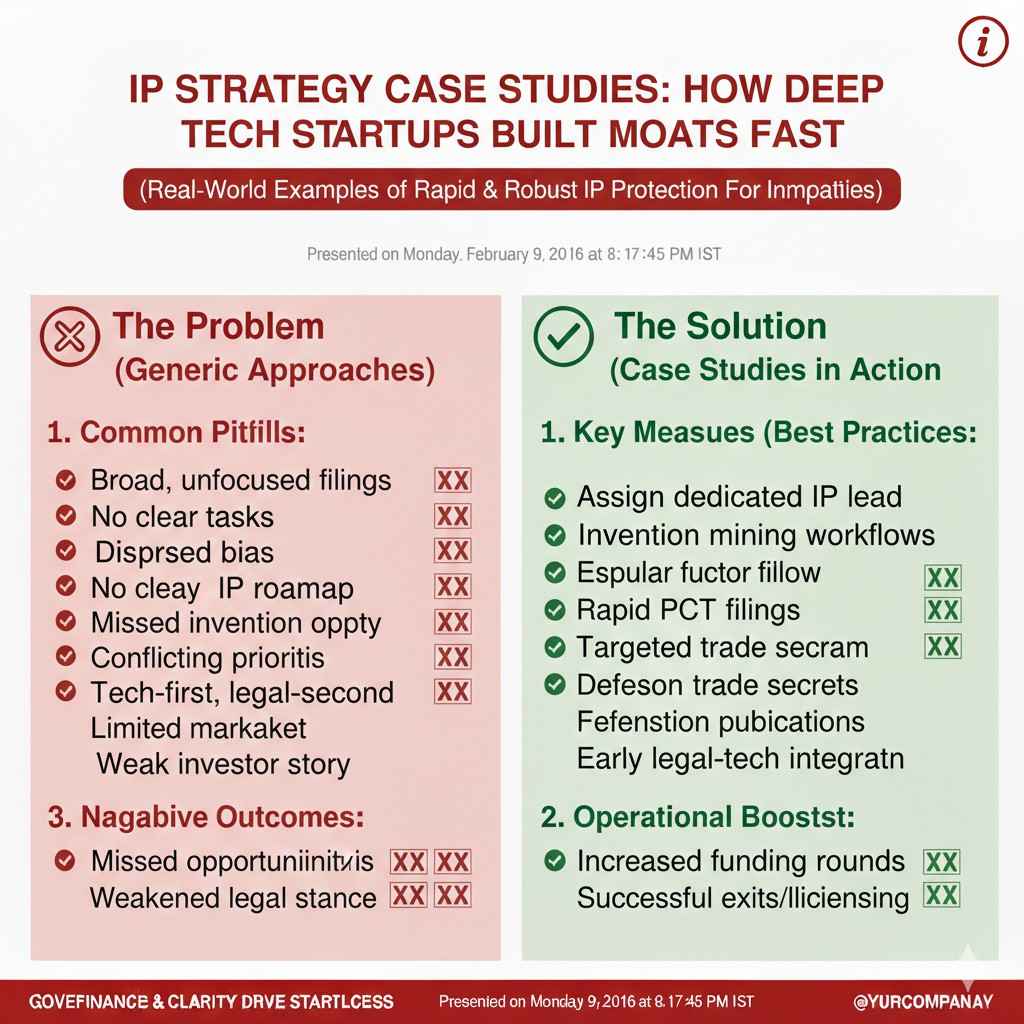
IP Strategy Case Studies: How Deep Tech Startups Built Moats Fast

Most deep tech founders do not lose because the tech is weak. They lose because someone bigger moves faster, copies what works, and wins the market with their own team and their own money. And when that happens, founders often say the same thing: “We should have protected this earlier.” That is what this article

IP Strategy Case Studies: How Deep Tech Startups Built Moats Fast Read More »

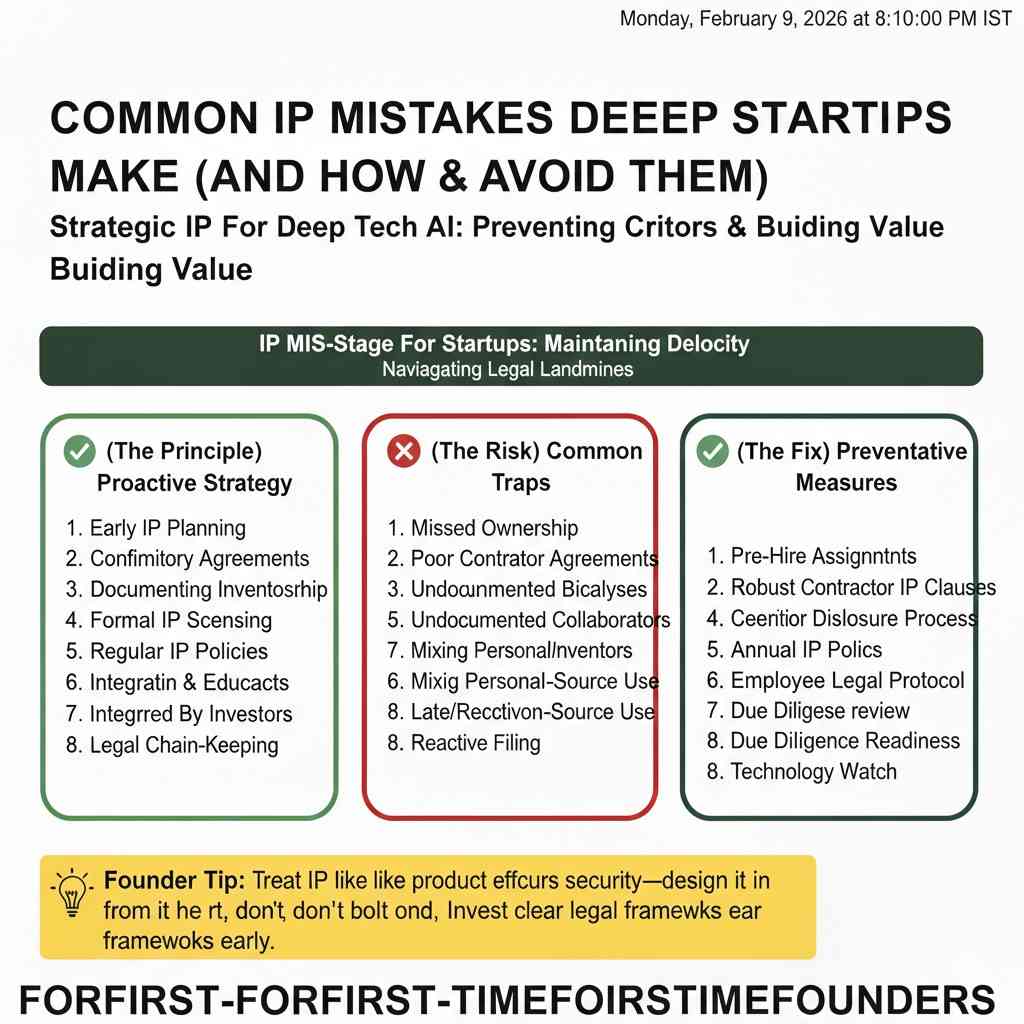
Common IP Mistakes Deep Tech Startups Make (and How to Avoid Them)

Most deep tech founders build fast. They ship code, train models, test robots, and chase real-world results. That is good. But IP moves slower than code, and the rules are strict. If you miss the right step early, you may not be able to “fix it later.” The painful part is this: many IP mistakes

Common IP Mistakes Deep Tech Startups Make (and How to Avoid Them) Read More »

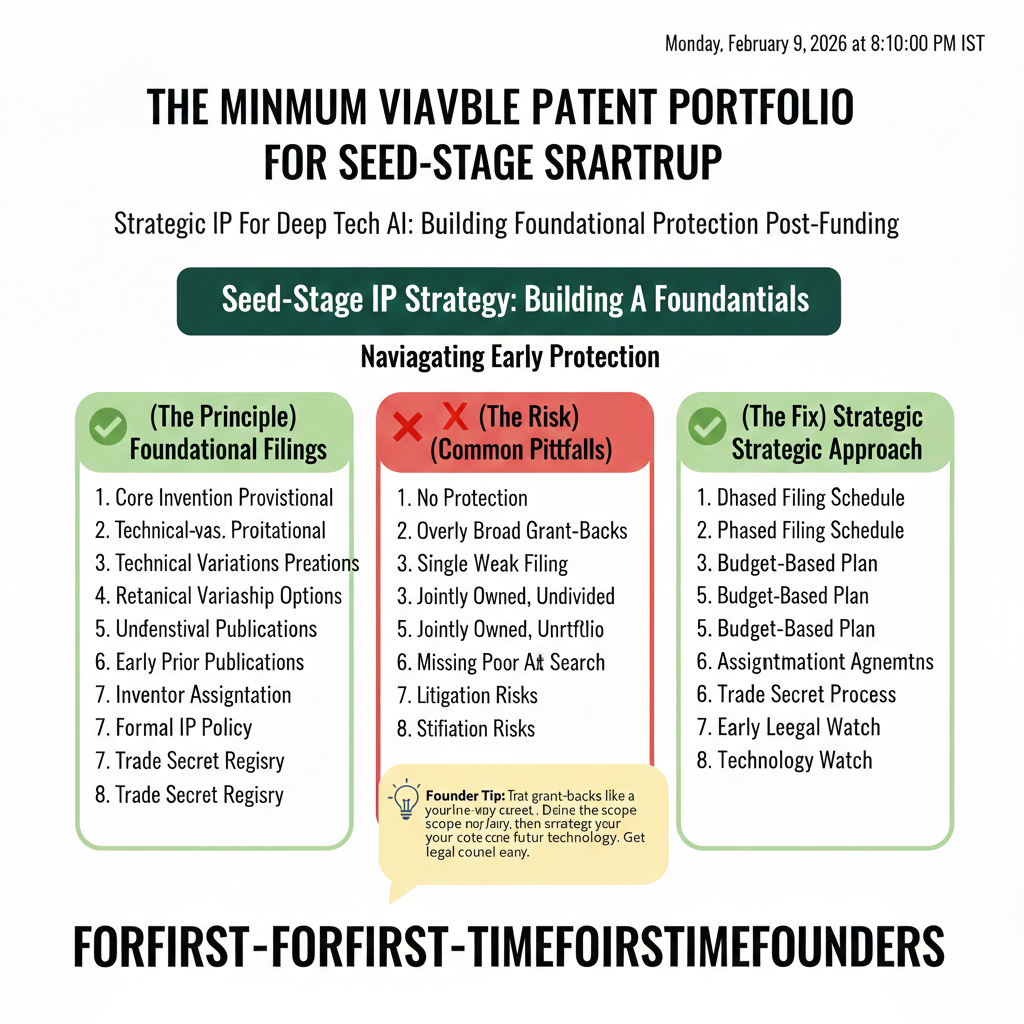
The Minimum Viable Patent Portfolio for a Seed-Stage Startup

Most seed-stage founders wait too long to think about patents. Not because they do not care. Mostly because they are busy building, hiring, shipping, fixing bugs, talking to users, and trying to stay alive. But here is the problem: by the time you “have time,” you may already have shared the best parts of your

The Minimum Viable Patent Portfolio for a Seed-Stage Startup Read More »