Startup Basics

Most founders treat

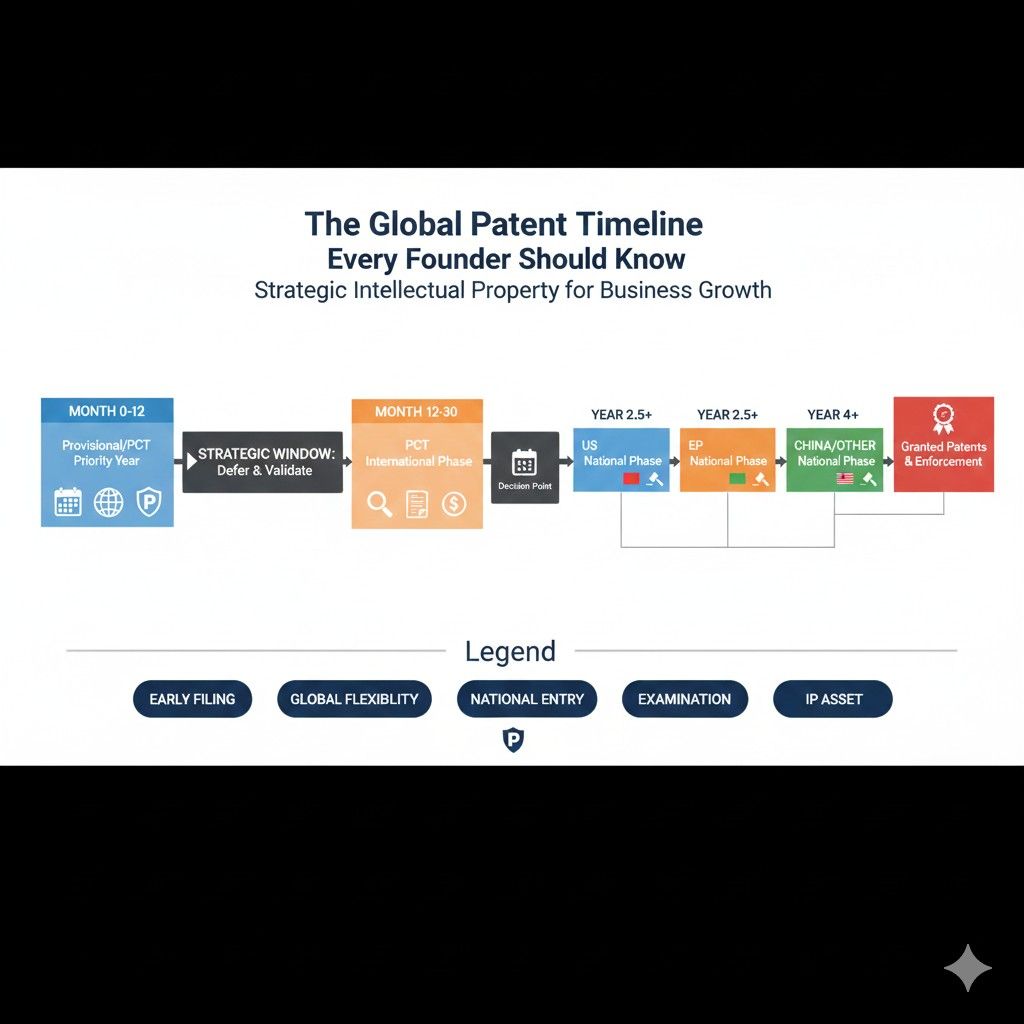
The Global Patent Timeline Every Founder Should Know

Most founders treat patents like a “later” problem. Then a deal comes up. An investor asks, “What’s protected?” A partner asks for a demo. A big company copies a feature. And suddenly you are trying to file fast, with messy notes, half-built code, and no clean story of what the invention really is. A patent […]

The Global Patent Timeline Every Founder Should Know Read More »

If you are building

Non-Provisional Timing: When to Convert for Global Leverage

If you are building real tech—robotics, AI, sensors, chips, autonomy, controls—your patent clock is not a side detail. It is part of your business plan. And one of the biggest “quiet” choices you will make is this: when to convert your provisional into a non-provisional. Many founders treat conversion like a date on a calendar.

Non-Provisional Timing: When to Convert for Global Leverage Read More »

If you are building

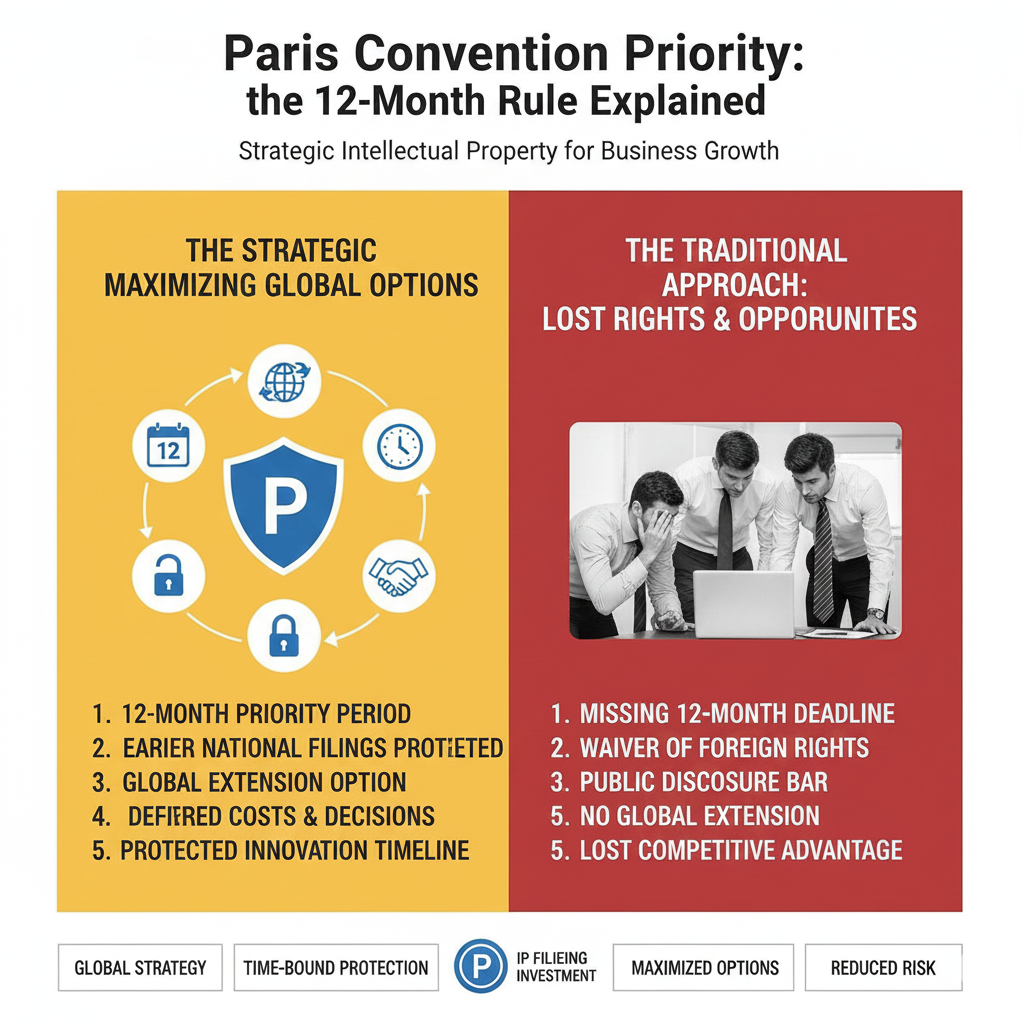
Paris Convention Priority: The 12-Month Rule Explained

If you are building real tech—AI models, robotics systems, sensors, chips, or anything hard to copy—your patent timing can either protect you or quietly hurt you. One rule matters more than most founders realize: the Paris Convention priority rule. People call it the 12-month rule. It sounds simple, but it can decide whether your international

Paris Convention Priority: The 12-Month Rule Explained Read More »

If you are building

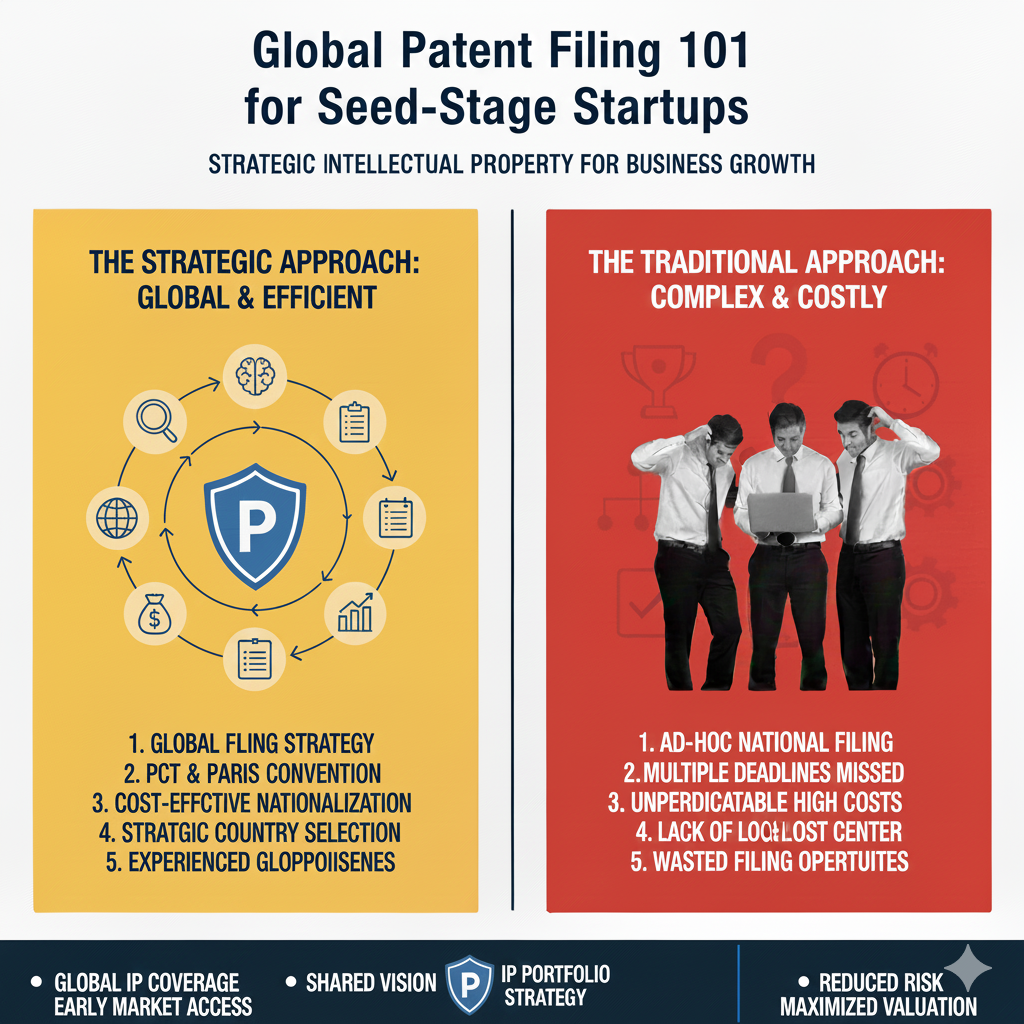
Global Patent Filing 101 for Seed-Stage Startups

If you are building a real tech startup—AI, robotics, sensors, chips, software that actually does something new—your patent plan is not a “later” problem. It is a “right now” advantage. Most seed-stage teams do not lose because they lack talent. They lose because they leak value. They share too much in pitch decks. They ship

Global Patent Filing 101 for Seed-Stage Startups Read More »

Most non-tech

Educating Non-Tech Co-Founders About IP Strategy

Most non-tech co-founders are doing ten hard jobs at once. They’re talking to customers. Writing the deck. Hiring. Managing cash. Chasing early partners. Keeping the team calm. And trying to turn a messy idea into a real company that can grow. So when a technical founder says, “We should think about patents,” a non-tech co-founder

Educating Non-Tech Co-Founders About IP Strategy Read More »