Funding

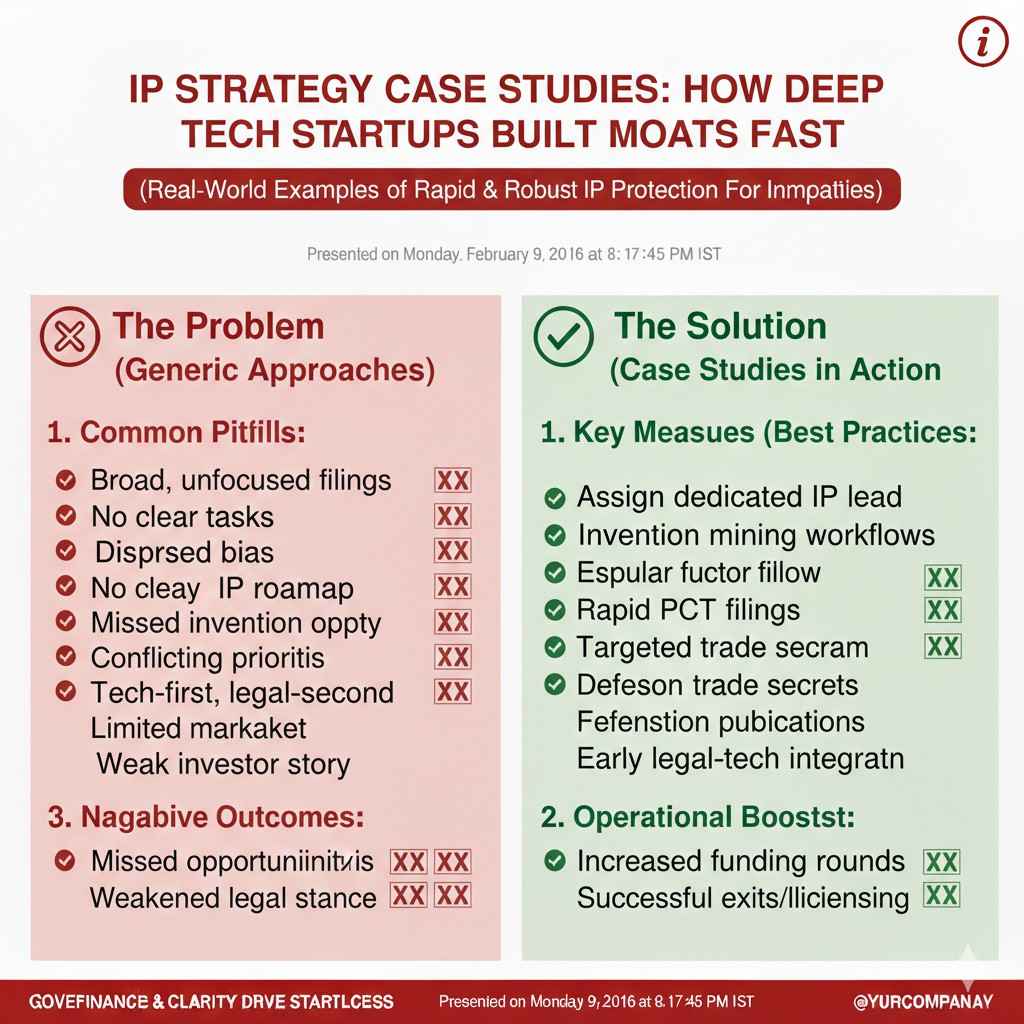
IP Strategy Case Studies: How Deep Tech Startups Built Moats Fast

Most deep tech founders do not lose because the tech is weak. They lose because someone bigger moves faster, copies what works, and wins the market with their own team and their own money. And when that happens, founders often say the same thing: “We should have protected this earlier.” That is what this article

IP Strategy Case Studies: How Deep Tech Startups Built Moats Fast Read More »

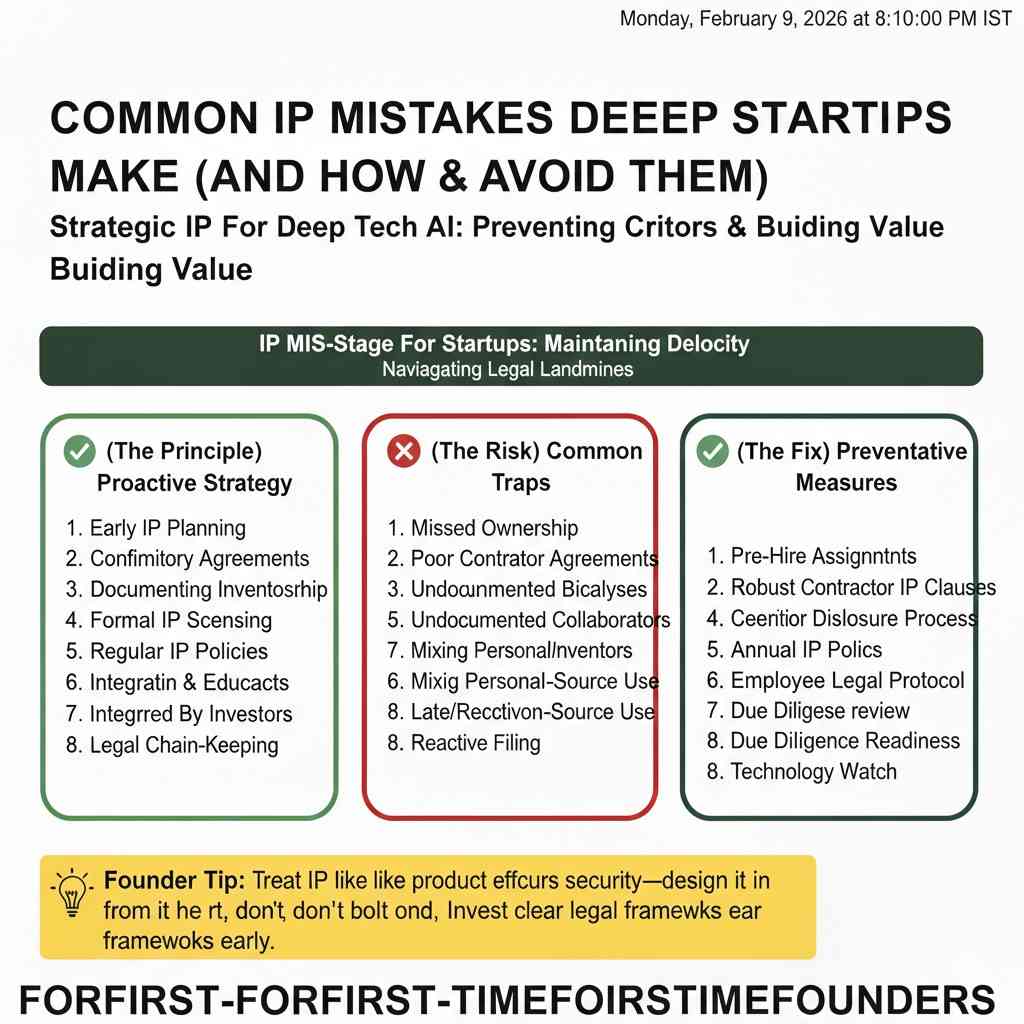
Common IP Mistakes Deep Tech Startups Make (and How to Avoid Them)

Most deep tech founders build fast. They ship code, train models, test robots, and chase real-world results. That is good. But IP moves slower than code, and the rules are strict. If you miss the right step early, you may not be able to “fix it later.” The painful part is this: many IP mistakes

Common IP Mistakes Deep Tech Startups Make (and How to Avoid Them) Read More »

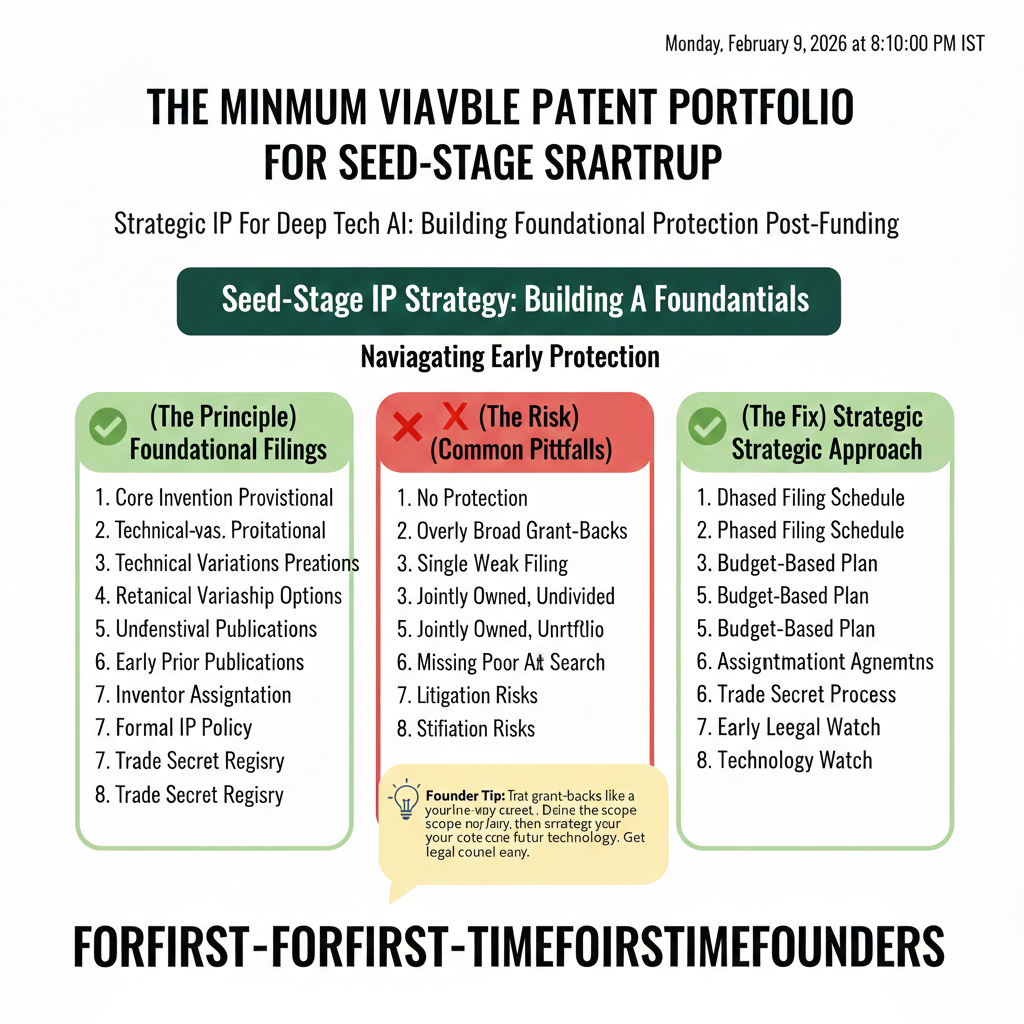
The Minimum Viable Patent Portfolio for a Seed-Stage Startup

Most seed-stage founders wait too long to think about patents. Not because they do not care. Mostly because they are busy building, hiring, shipping, fixing bugs, talking to users, and trying to stay alive. But here is the problem: by the time you “have time,” you may already have shared the best parts of your

The Minimum Viable Patent Portfolio for a Seed-Stage Startup Read More »

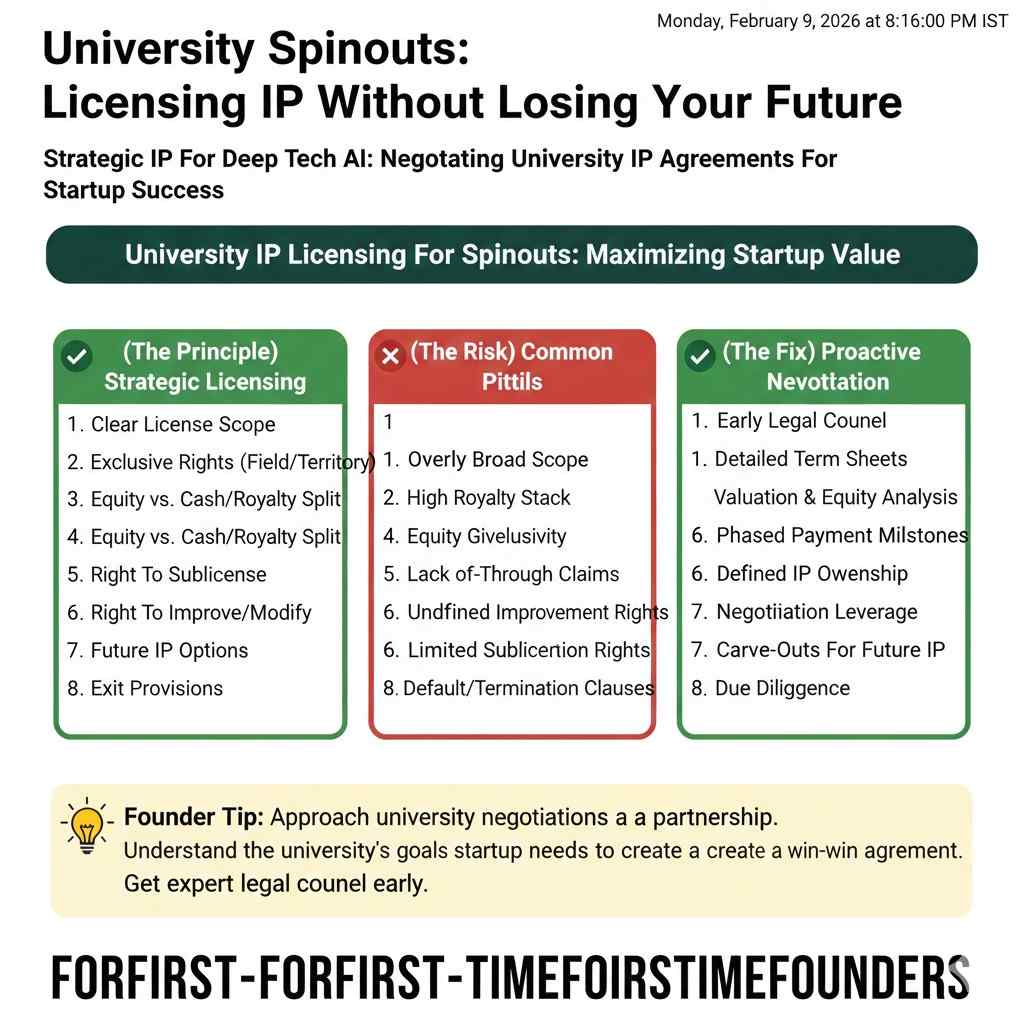
University Spinouts: Licensing IP Without Losing Your Future

Most university spinouts begin the same way. A lab result surprises you. A prototype works better than it should. A professor says, “This could be big.” And for the first time, you can see a real company at the end of your research. Then the licensing talk starts. Someone from the tech transfer office (TTO)

University Spinouts: Licensing IP Without Losing Your Future Read More »

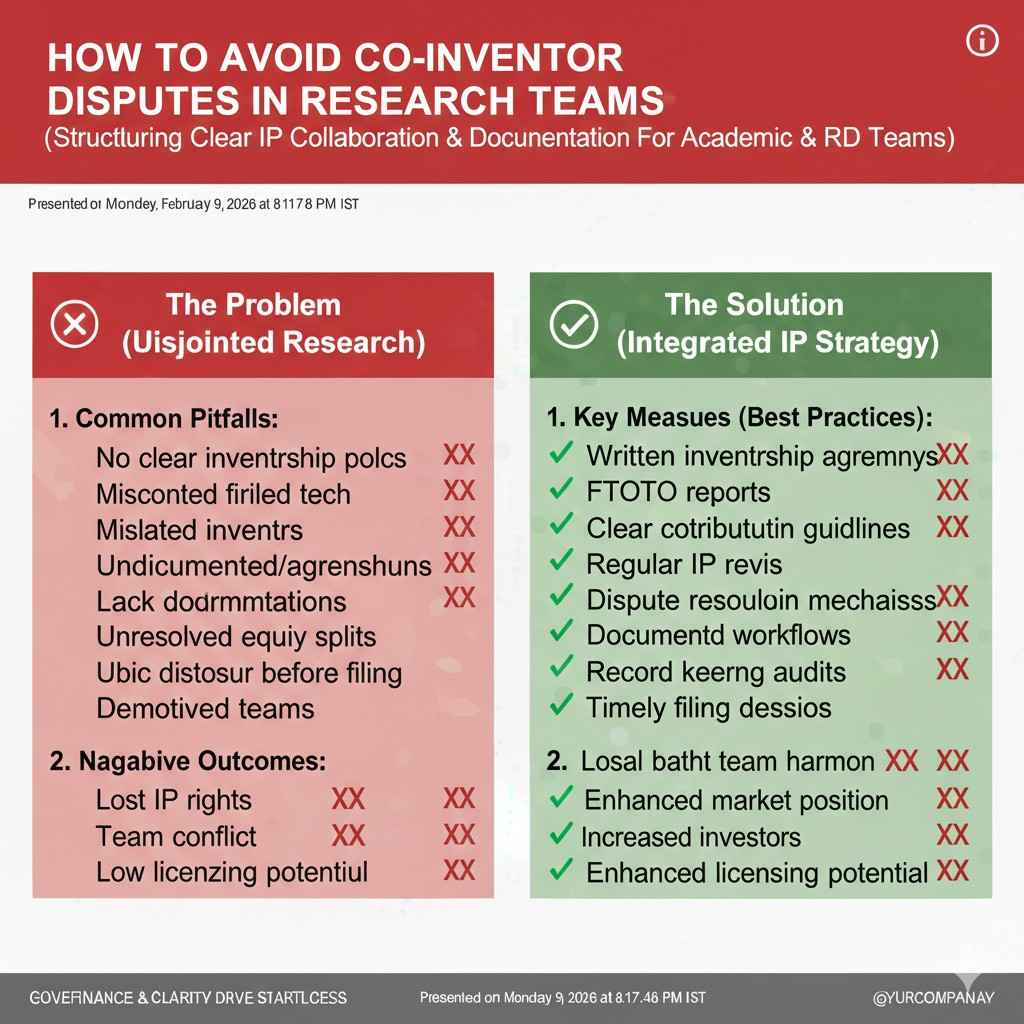
How to Avoid Co-Inventor Disputes in Research-Heavy Teams

If you build hard tech—AI, robotics, new sensors, new chips, new models—your work does not happen in a straight line. It happens in loops. One person tests. Another tweaks. Someone spots a bug. Someone else finds a new path. Over a few months, the “real” invention starts to feel like a shared thing. That is

How to Avoid Co-Inventor Disputes in Research-Heavy Teams Read More »